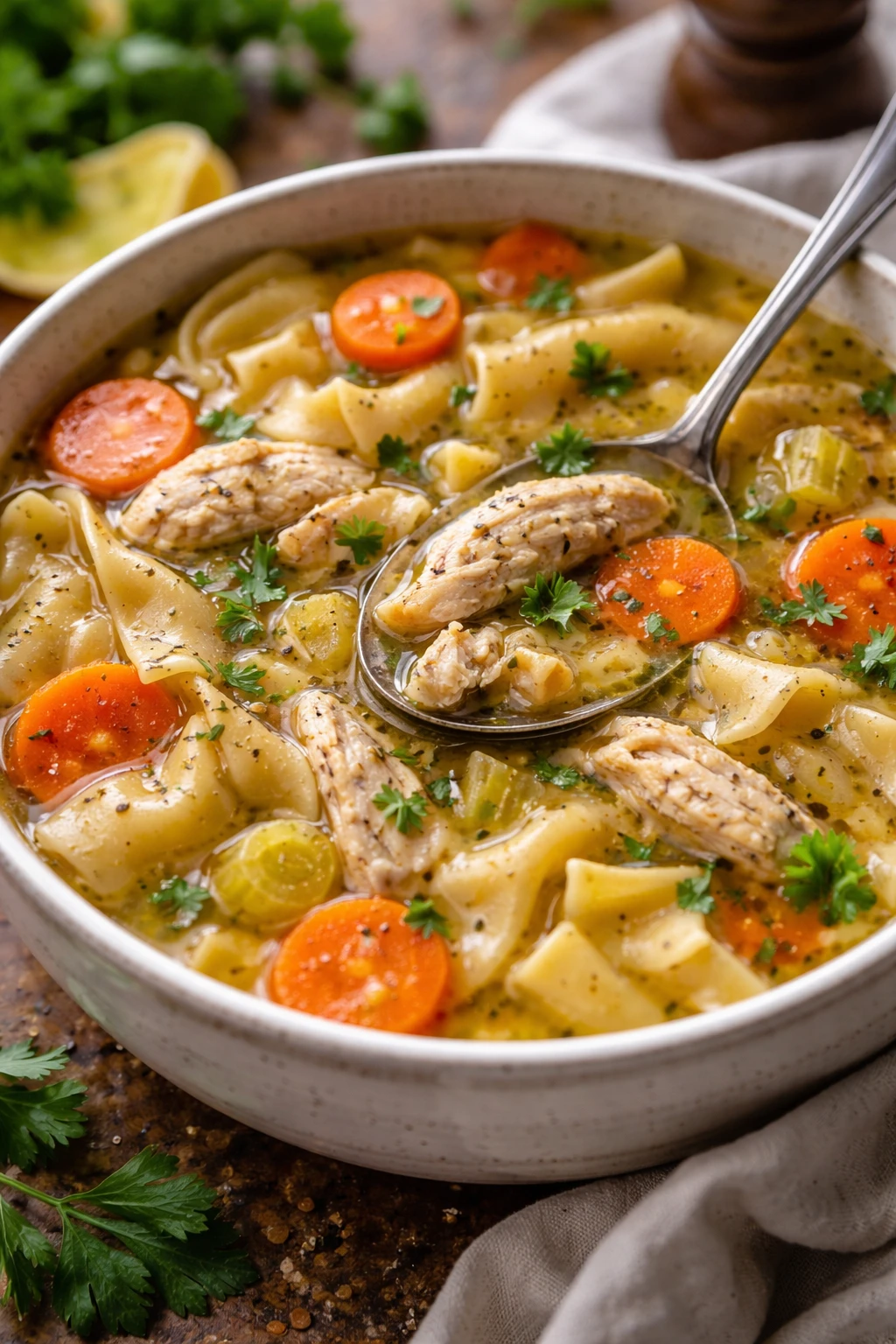
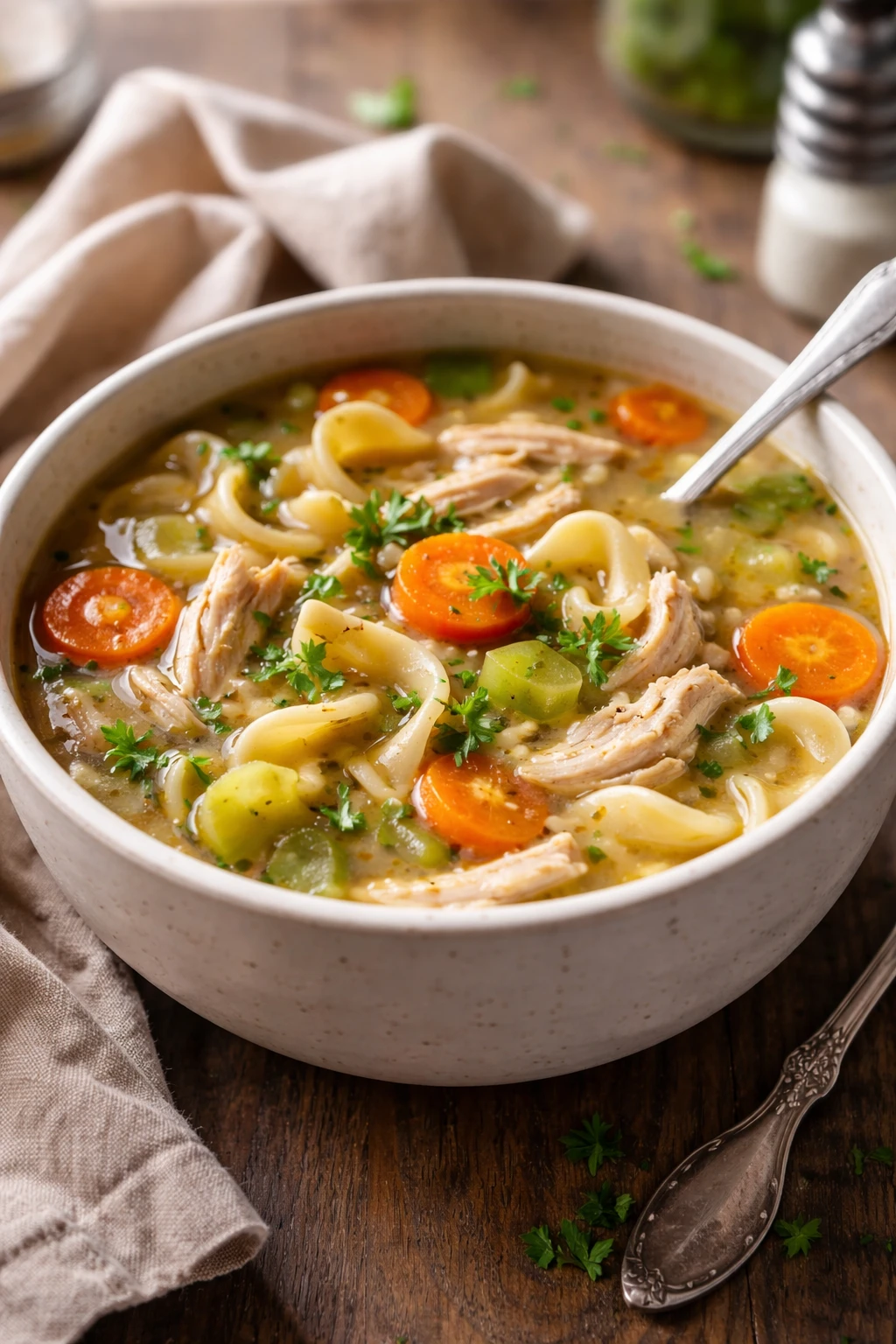
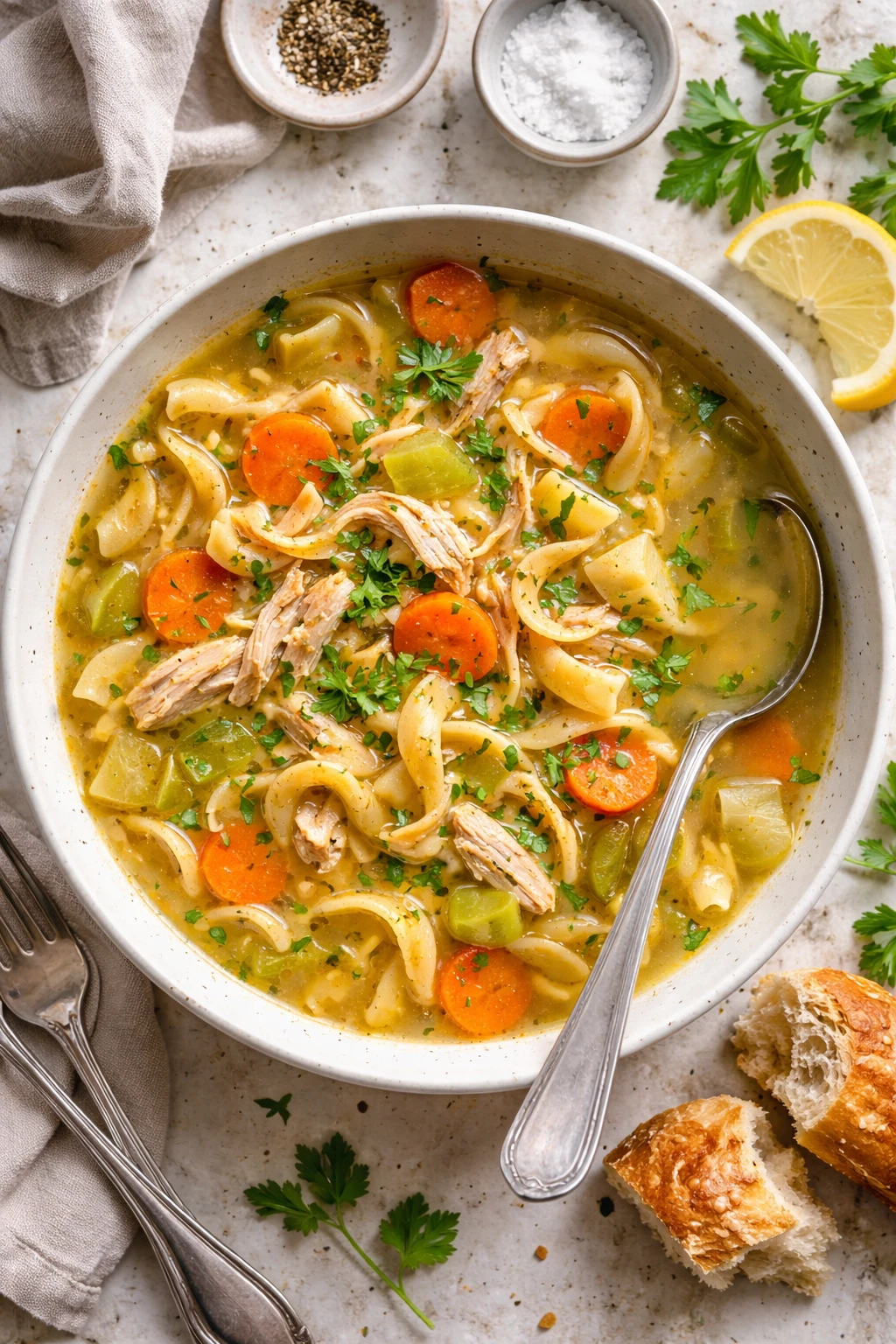
This chicken noodle soup is pure comfort in a bowl. The slow-simmered broth brings out rich flavors, while tender chicken and fresh noodles make it feel like a warm hug. Ideal for chilly evenings or when you need a little TLC.
Introduction
I first made this chicken noodle soup on a freezing winter evening when I was craving something soothing and homemade. The soup I found in my grandma’s old cookbook was good, but I wanted to deepen the flavor and make the chicken super tender without drying it out. After a few tries, I discovered that starting with a whole chicken and simmering the broth slowly for a full hour makes all the difference. The slow simmer extracts rich, layered flavors and keeps the meat juicy. Another trick I love is adding fresh egg noodles near the end to keep them tender but not mushy. This soup feels like a warm hug—perfect for cozy dinners or when you’re under the weather. It’s the kind of recipe that fills your kitchen with comforting aromas and leaves you feeling genuinely nourished. Plus, it’s pretty forgiving, so even if you’re not a soup pro, you’ll nail it easily!
What You'll Need
Approximately 8 cups, 6 servings
- 1 whole chicken (about 3-4 pounds), cleaned
- 12 cups cold water
- 3 large carrots, peeled and sliced
- 3 celery stalks, sliced
- 1 large onion, quartered
- 4 cloves garlic, smashed
- 2 bay leaves
- 1 teaspoon whole black peppercorns
- Salt to taste
- 8 ounces egg noodles, fresh or dried
- 2 tablespoons chopped fresh parsley
- 1 tablespoon olive oil
How To Do It
Step 1
Place the whole chicken in a large stockpot and cover with 12 cups of cold water. Starting with cold water and the whole bird helps to slowly extract maximum flavor and gelatin from the bones and skin. Bring to a gentle simmer over medium heat, skimming off any foam or impurities that rise to the surface. This prevents cloudy broth and keeps the flavor clean. Avoid boiling vigorously, as that can toughen the meat and make the broth cloudy. Maintain a gentle simmer for about 45 minutes.
⏱ Time: 45 minutes
✓ Doneness: Broth is clear with minimal foam, chicken is cooked through and starting to tenderize
Step 2
Add the carrots, celery, onion, garlic, bay leaves, peppercorns, and a generous pinch of salt to the pot. These aromatics infuse the broth with depth and balance the meaty richness. Simmer gently for another 30 minutes. Keep the pot partially covered to prevent too much evaporation but allow flavors to concentrate. If you rush this step, the broth won’t develop its signature richness and the vegetables won’t soften properly.
⏱ Time: 30 minutes
✓ Doneness: Vegetables are tender and broth is fragrant and flavorful
Step 3
Carefully remove the chicken from the pot and place it on a cutting board to cool slightly. Strain the broth through a fine mesh sieve into another large pot or bowl to remove solids. This step ensures a smooth, clear broth without bits of vegetable or peppercorns. Set the broth aside and return the strained vegetables to the compost or use for another purpose.
⏱ Time: 10 minutes
✓ Doneness: Broth is clear and free of solids, chicken is cool enough to handle
Step 4
Once the chicken is cool enough to handle, remove the skin and bones, then shred the meat into bite-sized pieces. Removing the skin helps keep the soup from becoming greasy, and shredding ensures every spoonful has tender chicken. Be gentle to avoid shredding the meat too finely, which can affect texture.
⏱ Time: 10 minutes
✓ Doneness: Chicken is shredded with no bones or skin remaining
Step 5
Return the strained broth to the stove and bring it back to a gentle simmer. Add the fresh or dried egg noodles and cook according to package instructions until just tender. Fresh noodles usually take less time, about 3-5 minutes, while dried noodles might take 7-9 minutes. Stir occasionally to prevent sticking. Overcooking noodles will make them mushy and ruin the texture of the soup.
⏱ Time: 5-9 minutes
✓ Doneness: Noodles are tender but still hold their shape
Step 6
While the noodles cook, heat olive oil in a small skillet over medium heat. Add a handful of chopped fresh parsley and sauté just until fragrant, about 30 seconds. This quick step releases the herbal oils and brightens the flavor, adding a fresh note to the soup.
⏱ Time: 2 minutes
✓ Doneness: Parsley is bright green and fragrant but not browned
Step 7
Add the shredded chicken back into the pot with the noodles and broth. Stir in the sautéed parsley and adjust salt to taste. Heat through gently for 2-3 minutes to meld flavors. Avoid boiling at this stage to keep the chicken tender and prevent the noodles from breaking down.
⏱ Time: 3 minutes
✓ Doneness: Soup is hot throughout, chicken and noodles are tender
Step 8
Taste the soup and adjust seasoning if needed—sometimes a little extra salt or a pinch of black pepper can brighten the whole dish. If you want a touch of acidity, a squeeze of fresh lemon juice is lovely here and cuts through the richness.
⏱ Time: 1 minute
✓ Doneness: Flavors are balanced and soup tastes fresh and comforting
Step 9
Serve the soup hot with crusty bread or your favorite crackers. The broth should be silky and flavorful, the chicken tender, and the noodles soft but not mushy. This soup is best enjoyed fresh but also reheats beautifully for leftovers.
⏱ Time: Immediate
✓ Doneness: Soup is steaming hot and ready to enjoy
Pro Tips
Always start with cold water when making the broth.
Starting with cold water allows proteins and collagen to slowly dissolve out of the chicken bones and skin, creating a rich, gelatinous broth. Hot water would cook proteins too quickly, causing them to coagulate and cloud the broth, which results in a less clear and less flavorful stock.
Skim the foam frequently during the first simmer.
The foam contains impurities and coagulated proteins that can make your broth cloudy and bitter. Removing it keeps the broth clear and ensures a clean, pure flavor. If you skip this step, your soup might taste off and look less appealing.
Add noodles only at the very end.
Noodles absorb liquid and soften quickly. Adding them too early leads to mushy noodles and a thickened broth. Cooking them just before serving keeps their texture firm and the soup balanced.
Remove chicken skin before shredding.
Chicken skin adds fat that can make the soup greasy and heavy. Removing it keeps the broth light and clean while still providing tender, flavorful meat.
Use a fine mesh strainer for the broth.
Straining removes vegetable bits, peppercorns, and impurities, resulting in a smooth, clear broth that looks and tastes professional. Skipping this step can leave unwanted textures and cloudiness.
Sauté fresh parsley in olive oil before adding.
This quick sauté releases the parsley’s essential oils, boosting the soup’s fresh herbal aroma and flavor. Adding raw parsley directly can sometimes taste grassy or bitter.
Season gradually and taste often.
Salt enhances all flavors but can quickly overpower. Adding salt in stages lets you control the final taste better and prevents over-salting, which is hard to fix later.
Common Mistakes to Avoid
Boiling the broth vigorously
Why it happens Many cooks rush the cooking process and crank the heat, thinking it will speed things up.
Fix Maintain a gentle simmer instead. Vigorous boiling breaks down proteins unevenly, resulting in cloudy broth and tougher meat. Slow simmering extracts flavors gradually and keeps the broth clear.
Adding noodles too early
Why it happens It’s tempting to cook everything together to save time.
Fix Add noodles only in the last few minutes of cooking. This prevents them from becoming mushy and keeps their texture pleasant.
Not skimming the foam
Why it happens Some skip this step due to impatience or unfamiliarity.
Fix Use a ladle to gently remove foam during the initial simmer. This keeps the broth clear and improves flavor.
Leaving chicken skin on
Why it happens Assuming skin adds flavor or forgetting to remove it.
Fix Remove skin after cooking to avoid greasy soup. It’s easy and makes the broth lighter without sacrificing taste.
Not straining the broth
Why it happens Skipping for convenience or to save time.
Fix Strain broth through a fine sieve to remove solids. It results in a smoother texture and cleaner appearance.
Variations
Spicy Chicken Noodle Soup
Add a diced jalapeño or a pinch of red pepper flakes with the aromatics for a gentle heat kick. You can also finish with a squeeze of lime for a fresh contrast. This version has a lively, warming flavor that’s perfect for spice lovers.
Note: Adjust the amount of spice depending on your tolerance and add it early with the vegetables so the heat infuses the broth.
Gluten-Free Chicken Noodle Soup
Swap egg noodles for gluten-free pasta or spiralized zucchini noodles. The broth and chicken remain the same, so you get all the comforting flavors without gluten. This option is great for sensitive diets.
Note: Add gluten-free noodles later in cooking as they tend to cook faster and can become mushy.
Herb-Infused Chicken Noodle Soup
Add fresh thyme and rosemary sprigs along with the bay leaves for a fragrant herbal boost. These herbs add complexity and a garden-fresh aroma that elevates the soup’s flavor profile.
Note: Remove woody herb stems before serving to avoid bitterness and tough textures.
Creamy Chicken Noodle Soup
Stir in 1/2 cup of cream or coconut milk at the end for a rich, velvety twist. This version feels indulgent and comforting, perfect for chilly days when you want something extra cozy.
Note: Add cream off heat and gently warm through to prevent curdling.
Vegetable-Packed Chicken Noodle Soup
Add diced potatoes, peas, or green beans with the carrots and celery for extra nutrition and texture. This makes the soup heartier and adds vibrant color to the bowl.
Note: Adjust cooking time to ensure additional vegetables are tender but not overcooked.
Nutrition
Per Serving:
Nutritional values are estimates and may vary based on specific ingredients used.
Storage & Tips
Room Temperature
You can keep the soup covered at room temperature safely for up to 2 hours. Beyond that, bacteria can start to grow, so it’s best to refrigerate promptly.
Refrigerator
Store soup in an airtight container in the fridge for up to 4 days. The noodles may absorb some broth and soften over time; reheat gently with a splash of water or broth to refresh texture.
Freezer
Freeze soup without noodles for up to 3 months in a freezer-safe container. To prevent freezer burn, leave some headspace and seal tightly. Thaw overnight in the fridge before reheating and add fresh noodles when warming up.
Reheating
Reheat soup gently on the stovetop over low heat or in the microwave at medium power. Add a splash of broth or water to loosen the noodles if needed. Avoid boiling to keep chicken tender and noodles intact.
Make Ahead
Prepare the broth and chicken up to 2 days ahead and store separately from noodles. Add fresh noodles and heat through on the day you plan to serve for best texture and flavor.
FAQ
Can I use chicken breasts instead of a whole chicken?
Yes, you can use chicken breasts for a quicker version, but the broth won’t be as rich or gelatinous since you’re missing the bones and skin. To boost flavor, consider adding chicken wings or carcasses for the broth and cooking breasts separately.
How do I keep the broth clear?
Start with cold water and simmer gently without boiling. Skim off foam frequently and strain the broth through a fine mesh sieve. Avoid stirring vigorously, which can cloud the broth.
Can I make this soup vegetarian?
For a vegetarian version, skip the chicken and use vegetable broth instead. Add hearty vegetables like mushrooms, carrots, and celery for depth. Keep in mind, flavor will be different without chicken gelatin.
How long can I store leftover soup?
Refrigerated soup lasts up to 4 days. For longer storage, freeze without noodles for up to 3 months. Add fresh noodles when reheating to maintain texture.
Can I use dried herbs instead of fresh parsley?
Dried parsley can be used but add earlier in cooking to allow flavors to develop. Fresh parsley added at the end gives a brighter, fresher flavor that dried herbs can’t fully replicate.
Why does my soup turn out greasy?
Leaving chicken skin and fat in the soup causes greasiness. Remove skin after cooking and skim fat from the broth surface while simmering to keep it light.
How do I prevent noodles from getting mushy?
Add noodles at the very end and cook just until tender. Avoid cooking noodles in leftover soup for too long as they absorb liquid and soften excessively.
Can I make the broth in advance?
Absolutely! Making the broth a day or two ahead enhances flavor as it sits. Store in the fridge and add fresh chicken and noodles when ready to serve.
Final Thoughts
I hope you enjoy making and sharing this cozy chicken noodle soup as much as I do. Don’t forget to tell me how it turns out or any tweaks you try!