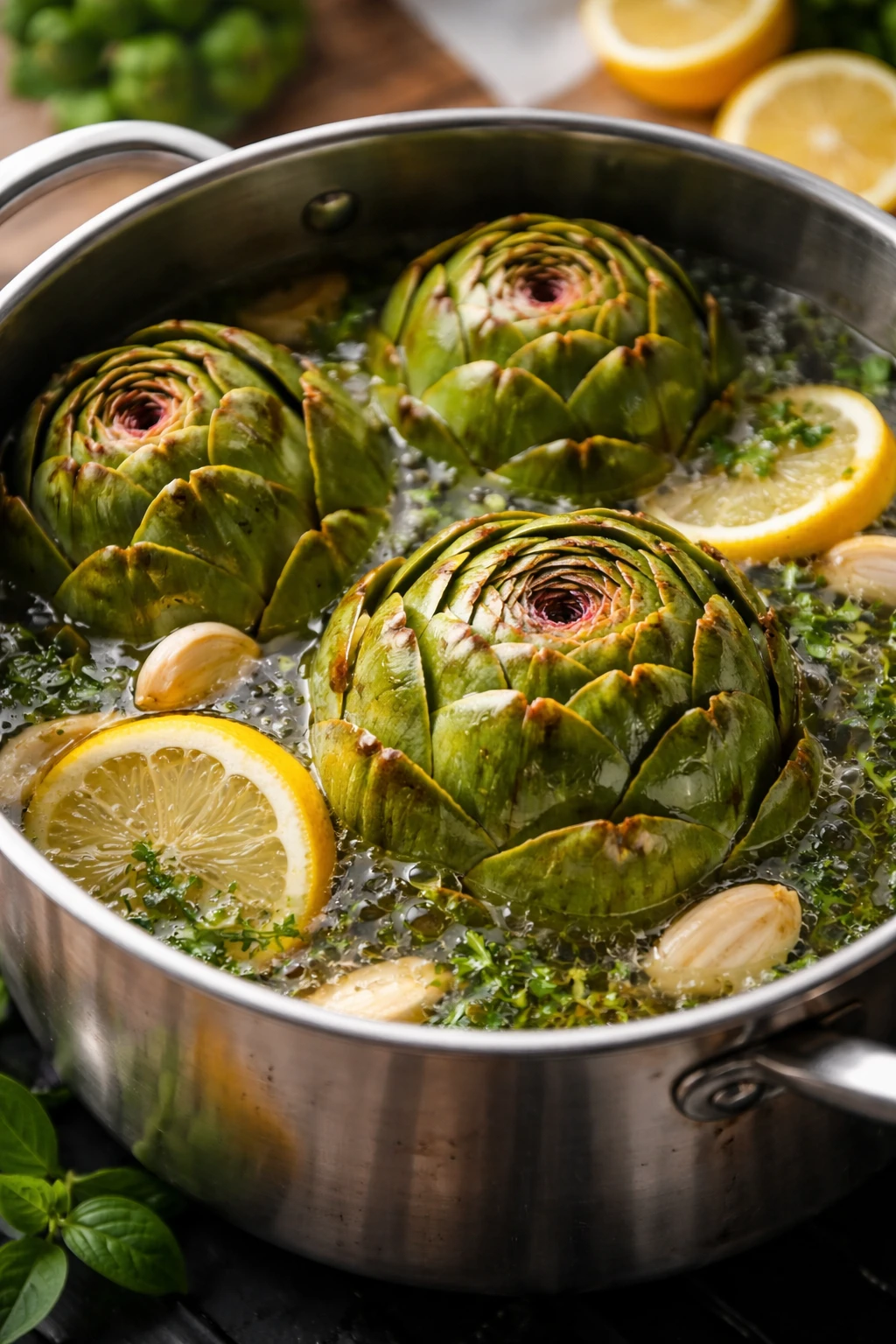
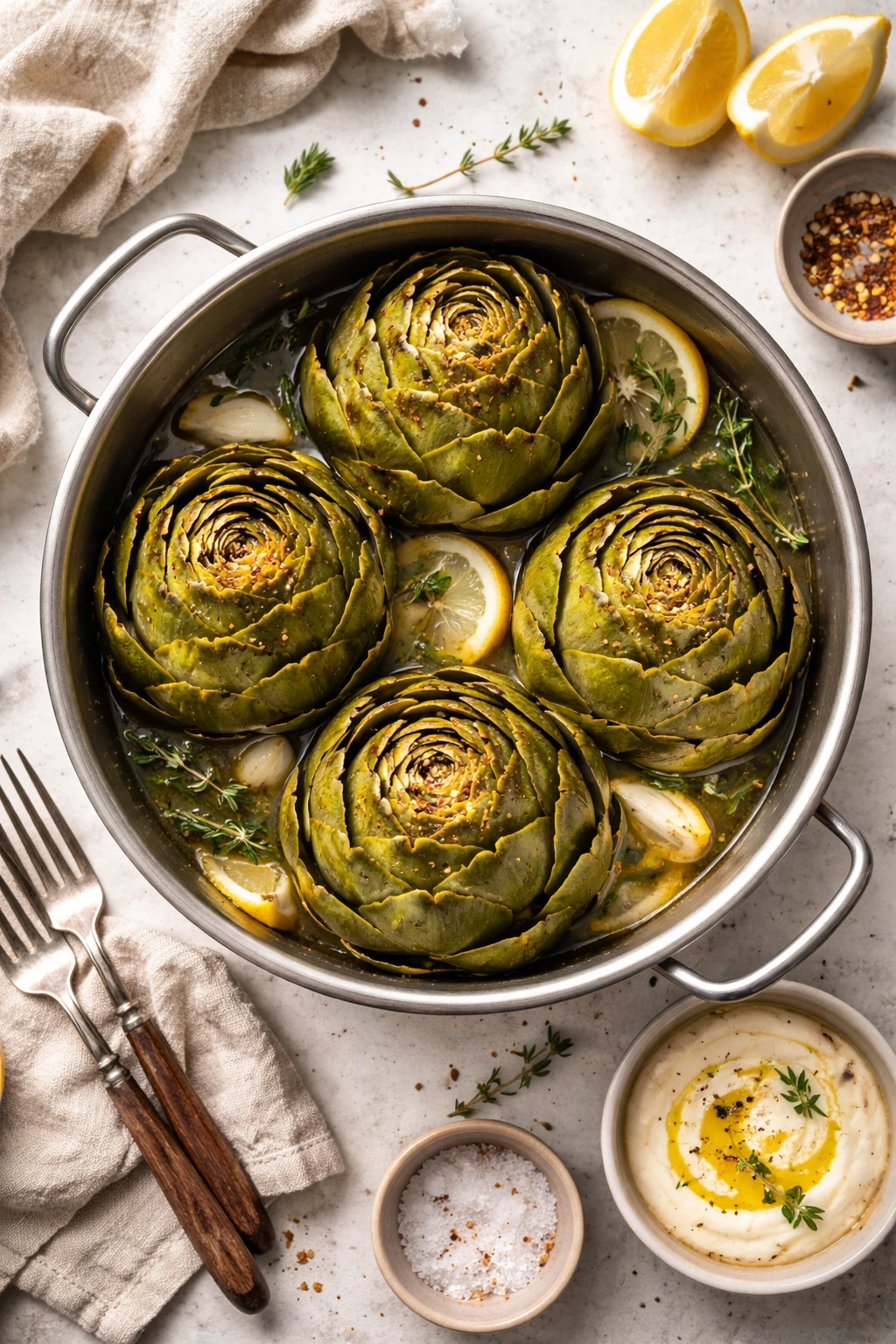
Steaming artichokes in a pot is surprisingly easy and yields tender, flavorful results. This simple method locks in their natural subtle flavors, making them a delightful snack or side any time of day.
Introduction
I remember the first time I tried steaming artichokes—I was honestly intimidated by their tough exterior and the whole process seemed complicated. But once I learned this simple pot steaming method, it became one of my go-to healthy snacks. What makes this version special is how gently the artichokes steam, preserving their delicate flavor and ensuring they’re tender without becoming mushy. I also squeeze fresh lemon juice into the water, which brightens the taste and prevents browning. It’s a little trick I picked up after a few early fails when my artichokes turned out dull and tough. The result is vibrant, tender leaves and a soft heart that’s perfect dipped in a bit of olive oil or your favorite sauce. Whether you’re serving them as a snack or a side, this recipe is straightforward and rewarding. Plus, it’s a great way to enjoy a veggie that often gets overlooked. I hope you find it as simple and satisfying as I do!
What You'll Need
4 tender steamed artichokes, serves 4
- 4 large fresh artichokes
- 1 lemon, halved
- 3 cloves garlic, smashed
- 1 teaspoon salt
- 2 cups water
How To Do It
Step 1
Start by preparing the artichokes: trim about an inch off the top of each artichoke and snip the sharp tips from the leaves with kitchen scissors. This step is important to remove any tough or prickly edges that can be unpleasant to eat. Also, peel off any small, dry leaves near the base and trim the stem to about an inch or leave a bit longer if you prefer. Rinse the artichokes under cold water to remove any dirt trapped between the leaves. Taking your time here ensures a clean, safe-to-eat vegetable and helps the steaming process cook the artichokes evenly.
⏱ Time: 10
✓ Doneness: Artichokes look trimmed and clean with no dry or sharp leaf tips
Step 2
Fill a large pot with about 2 cups of water, add the halved lemon and smashed garlic cloves, and sprinkle in a teaspoon of salt. The lemon juice not only adds subtle flavor but also helps keep the artichokes from browning during cooking. The garlic infuses the steam with a mild aroma that complements the artichokes. Place a steaming basket or rack inside the pot, making sure the water doesn’t touch the bottom of the basket. This setup allows the artichokes to steam gently rather than boil, preserving their texture and flavor.
⏱ Time: 5
✓ Doneness: Water simmers gently with fragrant steam rising
Step 3
Place the prepared artichokes stem-side down in the steaming basket. Cover the pot tightly with a lid to trap the steam inside. It’s crucial to keep the lid on during cooking so the artichokes steam evenly and don’t dry out. You’ll want to check occasionally to make sure the water hasn’t evaporated; add more hot water if needed to maintain steam. This ensures consistent heat and moisture, which results in tender leaves and a soft heart.
⏱ Time: 1
✓ Doneness: Artichokes arranged tightly but not overcrowded in the basket
Step 4
Steam the artichokes over medium heat for about 25 to 30 minutes. Cooking time depends on the size of the artichokes; larger ones may need a bit more time. To test for doneness, pull off a leaf near the center—it should come away easily and the base should be tender when bitten. Avoid overcooking, which can make them mushy and less flavorful. Patience here pays off with perfectly tender, flavorful artichokes.
⏱ Time: 25
✓ Doneness: Leaves pull away easily with tender, soft base
Step 5
Once steamed, carefully remove the artichokes from the pot using tongs or a slotted spoon and let them cool slightly before serving. This resting time allows the heat to even out inside, finishing the cooking gently. Serve with a drizzle of olive oil, a sprinkle of sea salt, or your favorite dipping sauce. The heart and inner leaves are the best parts, so don’t skip the dipping! This simple finish enhances the natural flavor without overpowering it.
⏱ Time: 5
✓ Doneness: Artichokes are warm, tender, and ready to enjoy
Step 6
If you plan to store leftovers, wrap each artichoke in plastic wrap or place in an airtight container once cooled. Refrigerate promptly to maintain freshness. Reheating gently with a splash of water in a covered pan helps restore moisture. Avoid microwaving uncovered, which can dry them out. Proper storage keeps your steamed artichokes tasting fresh for days.
⏱ Time: 5
✓ Doneness: Artichokes cooled and properly wrapped for storage
Step 7
Before serving leftovers, you can refresh them by briefly steaming again or warming in a covered skillet with a little water or broth. This helps loosen leaves and revives tenderness. Be careful not to overheat, or they’ll become mushy. This step is great for making the most of your artichoke batch without losing that fresh-steamed texture.
⏱ Time: 5
✓ Doneness: Artichokes warm and tender but still firm
Step 8
For added flavor, experiment with dipping sauces like garlic aioli, lemon butter, or vinaigrette. These enhance the mild, nutty flavor of the artichoke without overwhelming it. Making your own dipping sauce is easy and lets you customize according to your taste. Plus, it turns a simple snack into something special.
⏱ Time: 5
✓ Doneness: Sauce is smooth, flavorful, and ready to dip
Step 9
If you want to add a little extra flavor during steaming, toss in fresh herbs like thyme or rosemary into the water. This subtle infusion adds a lovely aroma and complexity. Just be sure not to overpower the artichokes’ natural taste. Small touches like this make a big difference in elevating a simple dish.
⏱ Time: 2
✓ Doneness: Herbs gently scent the steam without overpowering
Pro Tips
Trim artichoke leaves with kitchen scissors to remove sharp tips before cooking.
Removing the prickly tips makes eating the leaves more pleasant and prevents accidental scratches or discomfort. It also helps the artichokes steam more evenly by exposing the tender parts, improving the final texture.
Add lemon halves to the steaming water to prevent browning and add flavor.
Lemon juice acts as an antioxidant, stopping the artichokes from oxidizing and turning dull gray or brown. It also imparts a fresh, bright note that balances the vegetable’s earthiness.
Use a steaming basket to keep artichokes above the water level.
Steaming rather than boiling prevents waterlogging and nutrient loss. The basket allows hot steam to circulate evenly, cooking the artichokes gently and preserving their texture.
Check doneness by pulling a leaf near the center; it should come off easily.
This quick test ensures the artichoke is tender without overcooking. Overcooked artichokes become mushy and lose flavor, so this sensory check helps you stop cooking at just the right time.
Rest artichokes for a few minutes after steaming before serving.
Allowing them to rest redistributes heat inside the vegetable, finishing cooking gently and improving texture. It also makes handling easier and lets flavors settle.
Serve with simple dips like olive oil, lemon butter, or garlic aioli.
These sauces complement the mild artichoke flavor without overpowering it. They add richness and moisture, enhancing the eating experience.
Store leftovers in an airtight container and reheat gently with steam.
Proper storage keeps artichokes fresh and prevents drying out. Gentle reheating restores moisture and tenderness, making reheated artichokes almost as good as fresh.
Common Mistakes to Avoid
Not trimming the sharp leaf tips before cooking
Why it happens Many people overlook this step, assuming it’s unnecessary, or don’t realize how uncomfortable sharp tips can be to eat.
Fix Use kitchen scissors to carefully snip off the pointed ends of each leaf before steaming. This small step improves texture and makes eating safer and more enjoyable.
Boiling artichokes instead of steaming
Why it happens Boiling seems faster and easier, but it can waterlog the artichokes and wash out flavor.
Fix Always use a steaming basket so the artichokes cook in steam, not submerged water. This preserves flavor and texture much better.
Skipping the lemon in the steaming water
Why it happens People often forget the lemon or don’t know its purpose.
Fix Add lemon halves to the water to keep the artichokes from browning and to brighten their flavor naturally.
Overcooking the artichokes
Why it happens Rushing or guessing cooking time leads to mushy, flavorless artichokes.
Fix Test doneness by pulling a leaf near the center—it should come off easily but still taste tender. Adjust cooking time accordingly.
Not resting artichokes after cooking
Why it happens Impatience or lack of awareness causes skipping this step.
Fix Let artichokes rest for 5 minutes after steaming to allow heat to distribute evenly, improving texture and flavor.
Variations
Garlic Herb Steamed Artichokes
Add fresh herbs like thyme, rosemary, or parsley to the steaming water along with garlic for an aromatic twist. This variation infuses subtle herbal notes that pair beautifully with lemon and artichoke.
Note: Herbs should be fresh and added at the start of steaming to allow flavors to infuse fully without overpowering.
Spicy Lemon Butter Dip
Serve steamed artichokes with a spicy lemon butter sauce made by melting butter with lemon zest and a pinch of cayenne. This adds a rich, zesty kick that complements the mild vegetable.
Note: Prepare the sauce separately and serve warm alongside the artichokes for dipping.
Instant Pot Steamed Artichokes
Speed up the steaming process by using an Instant Pot or pressure cooker. This method cuts cooking time in half while still delivering tender results.
Note: Use the steam function and reduce cooking time to about 10-12 minutes under pressure, then quick release.
Grilled Steamed Artichokes
After steaming, slice artichokes in half and grill them briefly for a smoky char and added texture. Brush with olive oil and garlic before grilling for extra flavor.
Note: Grill on medium-high heat for 3-4 minutes per side to avoid drying out.
Stuffed Steamed Artichokes
Before steaming, stuff the artichokes with a mixture of breadcrumbs, Parmesan, garlic, and herbs. This makes a hearty appetizer or side with a crispy, flavorful filling.
Note: Stuff loosely to allow steam to penetrate and cook the filling evenly.
Nutrition
Per Serving:
Nutritional values are estimates and may vary based on specific ingredients used.
Storage & Tips
Room Temperature
Steamed artichokes can be kept at room temperature for up to 2 hours if covered tightly to prevent drying out. Beyond that, bacteria growth risk increases, so refrigeration is recommended.
Refrigerator
Store cooled artichokes in an airtight container for up to 4 days. The texture may firm up slightly when cold. Reheat gently in a steamer or covered skillet to restore tenderness before serving.
Freezer
You can freeze steamed artichokes for up to 2 months. Wrap tightly in plastic wrap and place in a freezer bag to prevent freezer burn. Thaw overnight in the refrigerator and reheat gently to avoid mushiness.
Reheating
Reheat steamed artichokes on the stovetop with a splash of water in a covered pan over low heat for 5-7 minutes, or steam briefly. Avoid microwaving uncovered, which dries them out.
Make Ahead
Prepare and steam artichokes 1-2 days ahead. Store refrigerated in airtight containers. On serving day, reheat gently and add fresh lemon juice or dipping sauce to refresh flavors.
FAQ
Can I use frozen artichokes instead of fresh for steaming?
Frozen artichokes are usually pre-cooked or blanched, so steaming them again can make them mushy. Fresh artichokes yield the best texture and flavor when steamed. If using frozen, consider warming or sautéing instead.
How do I know when my artichokes are fully cooked?
Pull a leaf from near the center; it should come away easily without resistance. The base of the leaf should be tender when bitten. If it’s tough or hard, continue steaming and test again every few minutes.
What dips go well with steamed artichokes?
Simple olive oil with lemon, garlic aioli, melted butter with herbs, or vinaigrettes all pair beautifully. Choose dips that complement the mild, nutty flavor without overpowering it.
Can I steam artichokes in a microwave?
You can steam artichokes in a microwave-safe bowl with a lid and some water, but the texture may be less even than stovetop steaming. Be sure to check frequently to avoid overcooking.
Is it necessary to trim the stem before steaming?
Trimming the stem to about an inch or removing it entirely helps the artichoke sit flat in the pot and steam evenly. Leaving a longer stem is fine if you prefer, but trim tough ends for best texture.
Can I add herbs to the steaming water for extra flavor?
Yes! Adding herbs like thyme, rosemary, or bay leaves to the water infuses a subtle aroma without overpowering the artichokes. Just don’t add too many strong herbs that mask their natural flavor.
How long can I store leftover steamed artichokes?
Stored in an airtight container in the fridge, steamed artichokes stay good for up to 4 days. Reheat gently before eating to restore softness and flavor.
What’s the best way to reheat steamed artichokes?
Reheat gently on the stovetop with a splash of water in a covered pan or steam briefly. Avoid microwaving uncovered, which can dry them out and toughen the leaves.
Final Thoughts
Give this simple steamed artichoke recipe a try—you'll love how tender and flavorful they turn out. Don’t forget to share how you enjoyed them!