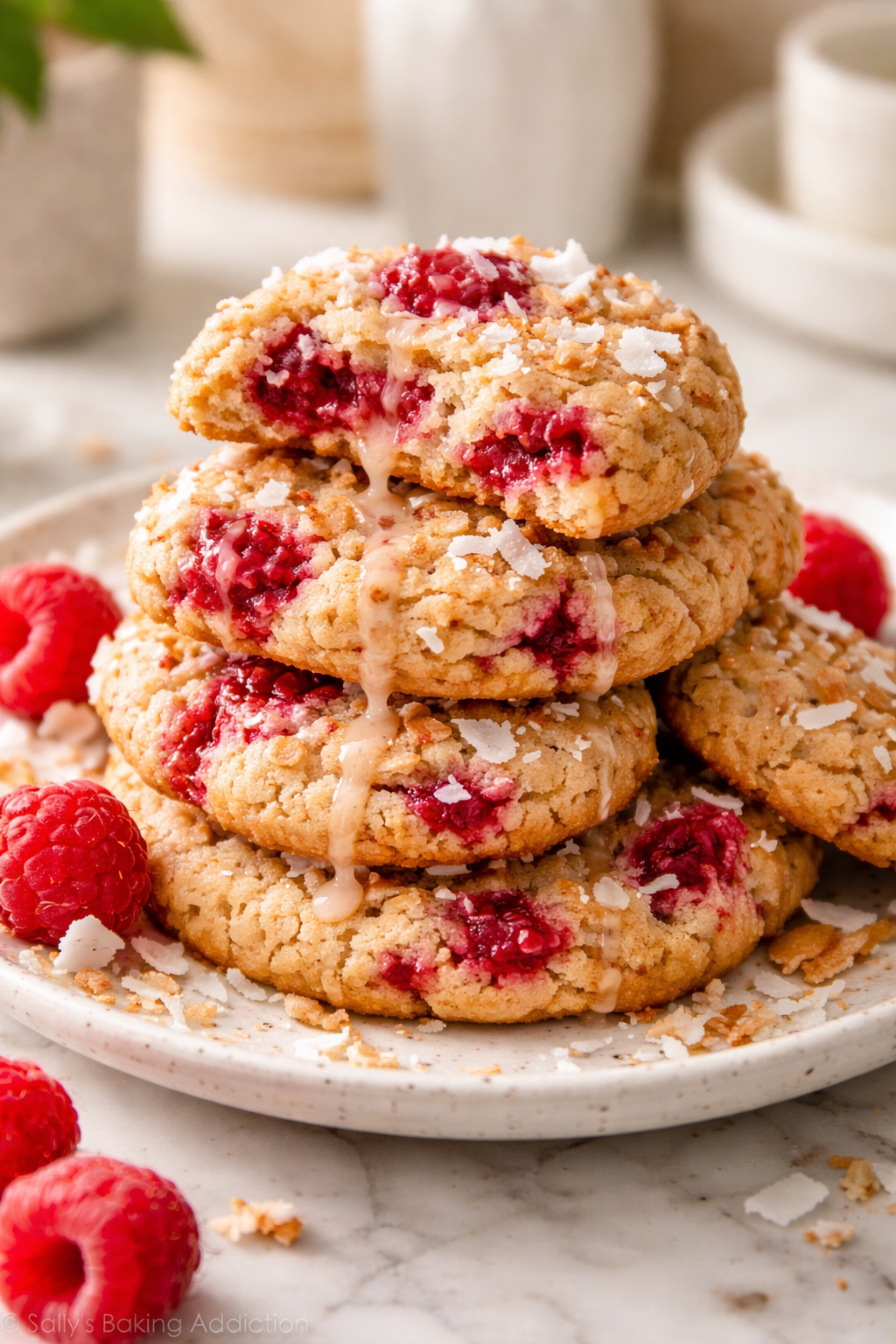
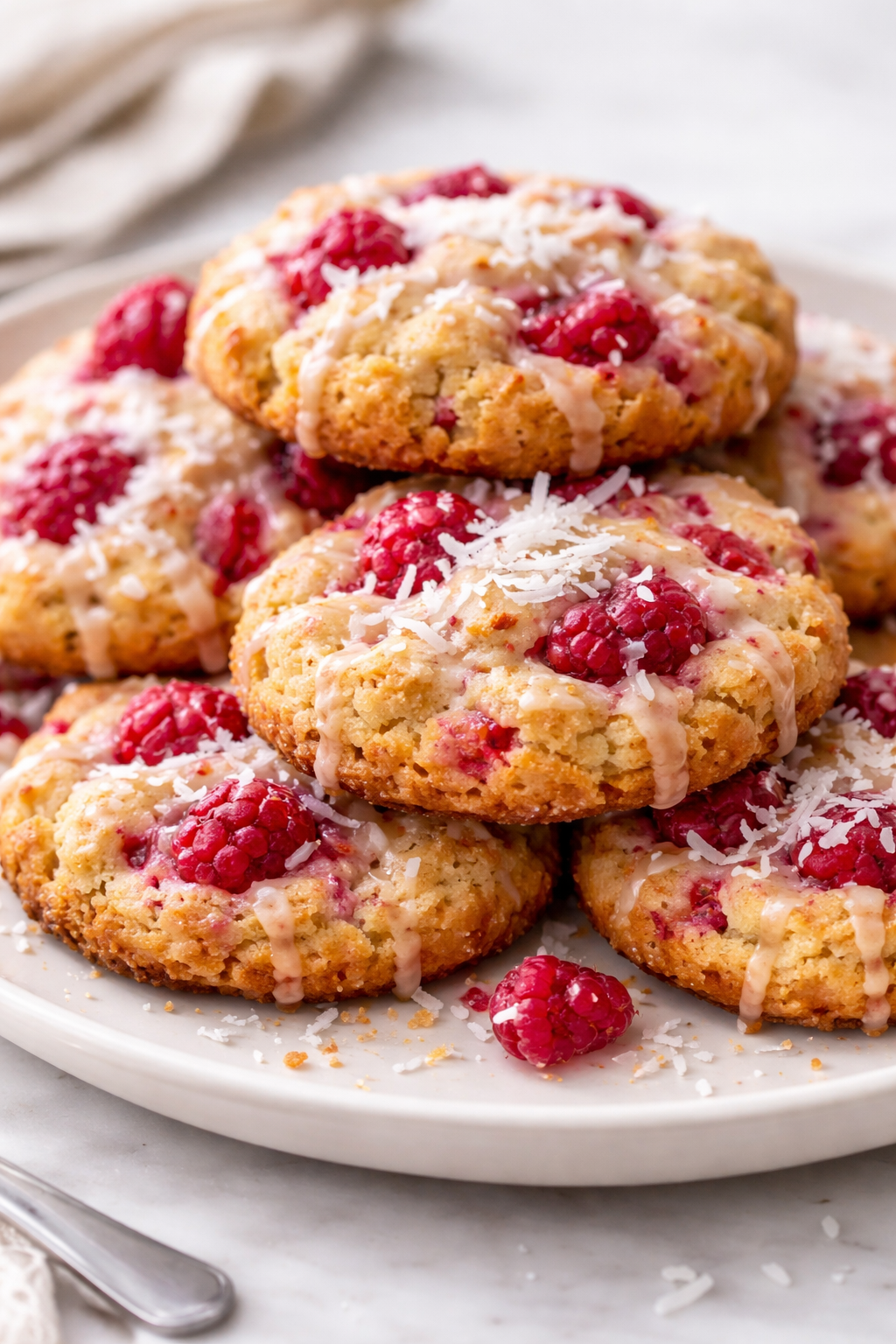
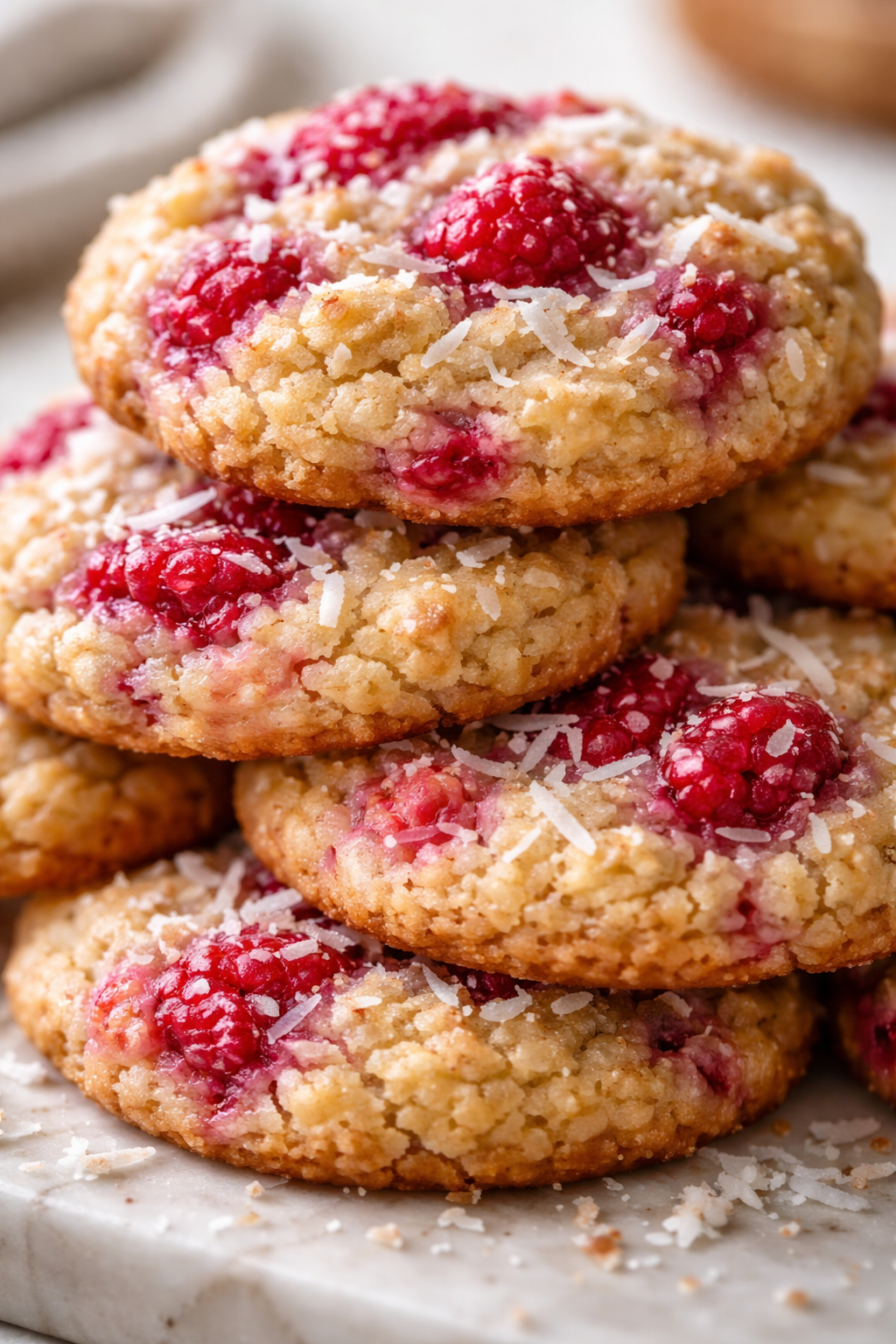
These raspberry coconut cookies are such a treat—soft, fruity, and just lightly sweetened. I love the fresh raspberries mixed with shredded coconut for a perfect afternoon snack or a small dessert. They never get dry!
Introduction
I first made these raspberry coconut cookies on a lazy Sunday when I was craving something sweet but didn’t want to feel weighed down afterward. The combination of fresh raspberries and shredded coconut caught my eye, and after a few experiments, I landed on this recipe that keeps the cookies soft and flavorful without being too sweet. I’ve tried other coconut cookies before, but they often end up dry or crumbly. The trick I learned here was to use just the right amount of butter and sugar, plus a gentle folding of the raspberries to keep them from breaking apart too much. The result is a batch of tender, lightly sweet cookies with bursts of juicy raspberry and a subtle coconut chew. They’re perfect with tea or as a quick snack. Honestly, they’re so good that my family often asks me to double the recipe. If you love simple, fresh flavors and soft cookies, this one’s for you!
How To Do It
Step 1
Preheat your oven to 350°F (175°C) and line a baking sheet with parchment paper. This sets the stage for even baking and prevents sticking. Make sure the oven is fully heated before placing the cookies inside to ensure they rise properly and bake evenly.
⏱ Time: 10 minutes
✓ Doneness: Oven reaches steady 350°F temperature
Step 2
In a medium bowl, whisk together the sifted flour, baking powder, salt, and shredded coconut. This dry mix ensures even distribution of leavening and flavor. Sifting helps avoid lumps and gives a lighter texture to the cookies.
⏱ Time: 5 minutes
✓ Doneness: Dry ingredients are fully combined and fluffy
Step 3
In a separate large bowl, cream the softened butter and granulated sugar until light and fluffy using a hand mixer or stand mixer. This step incorporates air, which helps the cookies stay soft and tender. Don’t rush this; it usually takes about 3-4 minutes.
⏱ Time: 4 minutes
✓ Doneness: Mixture looks pale and fluffy
Step 4
Beat in the egg and vanilla extract to the butter-sugar mixture until fully combined. The egg adds moisture and structure, while vanilla enhances the cookie’s flavor. Mix just until smooth to avoid overworking the batter.
⏱ Time: 2 minutes
✓ Doneness: Smooth and glossy batter without streaks
Step 5
Gently fold the dry ingredients into the wet mixture in two batches. Folding preserves the air you just incorporated and prevents overmixing, which can make cookies tough. Use a spatula and mix until just combined with no visible flour.
⏱ Time: 3 minutes
✓ Doneness: Dough is uniform with no dry flour patches
Step 6
Carefully fold in the fresh raspberries, being gentle to keep them mostly whole. This adds bursts of fresh fruit flavor and moisture. Overmixing here can break the berries and turn the dough purple and watery.
⏱ Time: 2 minutes
✓ Doneness: Raspberries evenly distributed but mostly intact
Step 7
Use a tablespoon or cookie scoop to drop dough balls onto the prepared baking sheet, spacing them about 2 inches apart. This spacing allows the cookies to spread without merging. If the dough feels too sticky, chill it for 10 minutes before scooping.
⏱ Time: 5 minutes
✓ Doneness: Evenly spaced dough balls on the sheet
Step 8
Bake the cookies in the preheated oven for 10-12 minutes or until the edges are lightly golden and the tops look set but still soft. Keep an eye on them to avoid overbaking, which dries them out. The centers should still look slightly soft when you remove them.
⏱ Time: 12 minutes
✓ Doneness: Edges lightly golden; centers set but soft
Step 9
Let the cookies cool on the baking sheet for 5 minutes before transferring to a wire rack to cool completely. This rest time helps the cookies firm up slightly but keeps them soft inside. Moving them too soon can cause breakage, and waiting too long can result in soggy bottoms.
⏱ Time: 10 minutes
✓ Doneness: Cookies firm enough to move without breaking
Pro Tips
Don’t overmix the dough once you add the flour.
Overmixing develops gluten, which can make cookies tough and chewy instead of soft and tender. Mixing just until combined keeps the texture light and delicate.
Use fresh raspberries and fold them in gently.
Fresh berries provide the best flavor and texture. Folding gently preserves their shape and prevents the dough from becoming too wet, which can cause flat, dense cookies.
Chill the dough if it feels too sticky before scooping.
Chilling firms up the dough, making it easier to handle and helping cookies keep their shape better during baking, leading to a more uniform appearance.
Line your baking sheet with parchment paper.
Parchment prevents sticking and promotes even baking, which helps cookies brown nicely on the bottom without burning.
Let cookies cool a few minutes on the baking sheet before transferring.
This resting time allows cookies to set so they don’t break apart. It also helps maintain softness by allowing moisture to redistribute evenly.
Use room temperature butter for creaming.
Soft butter creams more easily with sugar, trapping air that gives the cookies lift and a tender crumb. Cold butter won’t mix well and melted butter changes the texture.
Measure flour carefully by spooning and leveling.
Too much flour results in dry, crumbly cookies. Using the spoon-and-level method avoids packing flour into the cup, ensuring the right dough consistency.
Common Mistakes to Avoid
Overmixing the dough after adding flour
Why it happens Many cooks think mixing longer makes dough more uniform, but it actually develops gluten, making cookies tough.
Fix Mix just until you no longer see dry flour. Use a spatula to fold gently instead of stirring vigorously.
Using frozen raspberries instead of fresh
Why it happens Frozen berries are convenient but release extra juice when thawed, making dough watery.
Fix Use fresh, firm raspberries and fold them in gently to keep the dough from becoming too wet.
Skipping the parchment paper on the baking sheet
Why it happens Some assume nonstick pans are enough, but cookies can stick and brown unevenly.
Fix Always line your baking sheet with parchment or a silicone mat for best results.
Baking at too high a temperature
Why it happens Higher temps bake edges too fast and dry out cookies, leaving centers undercooked.
Fix Bake at 350°F and watch cookies closely to remove when edges are golden but centers still soft.
Not letting cookies cool before moving
Why it happens Warm cookies are fragile and can break if moved too soon.
Fix Let cookies sit on the baking sheet for 5 minutes to firm up before transferring to a rack.
Variations
Lemon Raspberry Coconut Cookies
Add 1 tablespoon of fresh lemon zest to the dough for a bright, citrus twist that complements the raspberries and coconut beautifully. These cookies will have a refreshing zing, perfect for spring or summer treats.
Note: Fold the lemon zest in with the dry ingredients to evenly distribute the flavor without adding moisture.
Chocolate Drizzled Raspberry Coconut Cookies
After baking, drizzle melted dark chocolate over the cooled cookies for a rich contrast to the fruity coconut base. This adds a decadent touch without overpowering the fresh flavors.
Note: Allow cookies to cool completely before drizzling chocolate to prevent melting and smudging.
Gluten-Free Raspberry Coconut Cookies
Swap all-purpose flour for a gluten-free blend with xanthan gum to keep the texture similar. These cookies remain soft and flavorful for those avoiding gluten.
Note: Check that your gluten-free flour blend contains xanthan gum or add 1/4 teaspoon for structure.
Vegan Raspberry Coconut Cookies
Replace the butter with coconut oil and the egg with a flax egg (1 tablespoon ground flaxseed + 3 tablespoons water). The coconut oil enhances the coconut flavor, and flax keeps the cookies tender.
Note: Chill the dough longer as vegan doughs tend to be softer and stickier.
Toasted Coconut Raspberry Cookies
Toast the shredded coconut lightly before adding it to the dough for a deeper, nuttier flavor. This variation adds a crunchy texture contrast to the soft cookie.
Note: Toast coconut in a dry skillet over medium heat, stirring frequently until golden, then cool before mixing.
Nutrition
Per Serving:
Nutritional values are estimates and may vary based on specific ingredients used.
Storage & Tips
Room Temperature
Cookies can be safely kept at room temperature for up to 2 days if stored in an airtight container. Keep them away from direct sunlight or heat to maintain softness and prevent drying out.
Refrigerator
Store cookies in an airtight container in the fridge for up to 5 days. They may firm up slightly when cold; bring to room temperature before serving for best texture.
Freezer
Freeze cookies in a sealed container or freezer bag for up to 2 months. Separate layers with parchment paper to prevent sticking. Thaw at room temperature for 1-2 hours before enjoying.
Reheating
Warm cookies briefly in a microwave for 10-15 seconds or in a 300°F oven for 5 minutes to restore softness. Avoid overheating, which can dry them out.
Make Ahead
You can prepare the dough a day ahead and keep it chilled in the fridge. Scoop and bake fresh on serving day for best texture and flavor.
FAQ
Can I use frozen raspberries instead of fresh?
Frozen raspberries tend to release extra moisture when thawed, which can make the cookie dough too wet and affect texture. If you must use frozen, thaw and drain them well, then fold in gently to minimize moisture impact.
How do I keep the cookies soft for longer?
Store cookies in an airtight container at room temperature and add a slice of bread to the container. The bread helps retain moisture and keeps cookies soft for several days.
Can I substitute shredded coconut with coconut flakes?
Coconut flakes are larger and less moist than shredded coconut, which may affect texture. If using flakes, chop them finely or expect a chewier cookie with more pronounced coconut bites.
What if I don’t have baking powder?
Baking powder is essential for a light texture. If unavailable, you can use 1/4 teaspoon baking soda plus 1/2 teaspoon cream of tartar as a substitute, but results may vary slightly.
Why did my cookies turn out dry?
Dry cookies often result from overbaking or too much flour. Measure flour carefully and watch baking time closely. Remove cookies when edges are golden but centers still look soft.
Can I make these cookies vegan?
Yes! Replace butter with coconut oil and egg with a flax egg (1 tbsp ground flaxseed + 3 tbsp water). Chill dough longer as vegan versions tend to be softer and stickier.
Should I use salted or unsalted butter?
Unsalted butter is best because it allows you to control the salt level in the recipe. Using salted butter can make the cookies slightly saltier than intended.
How do I prevent raspberries from bleeding into the dough?
Fold raspberries in at the very end gently to keep them intact. Avoid crushing or stirring vigorously, which releases juice and colors the dough.
Final Thoughts
I hope you give these soft raspberry coconut cookies a try—they’re a simple, fresh treat that always hits the spot. Don’t forget to share how they turn out!