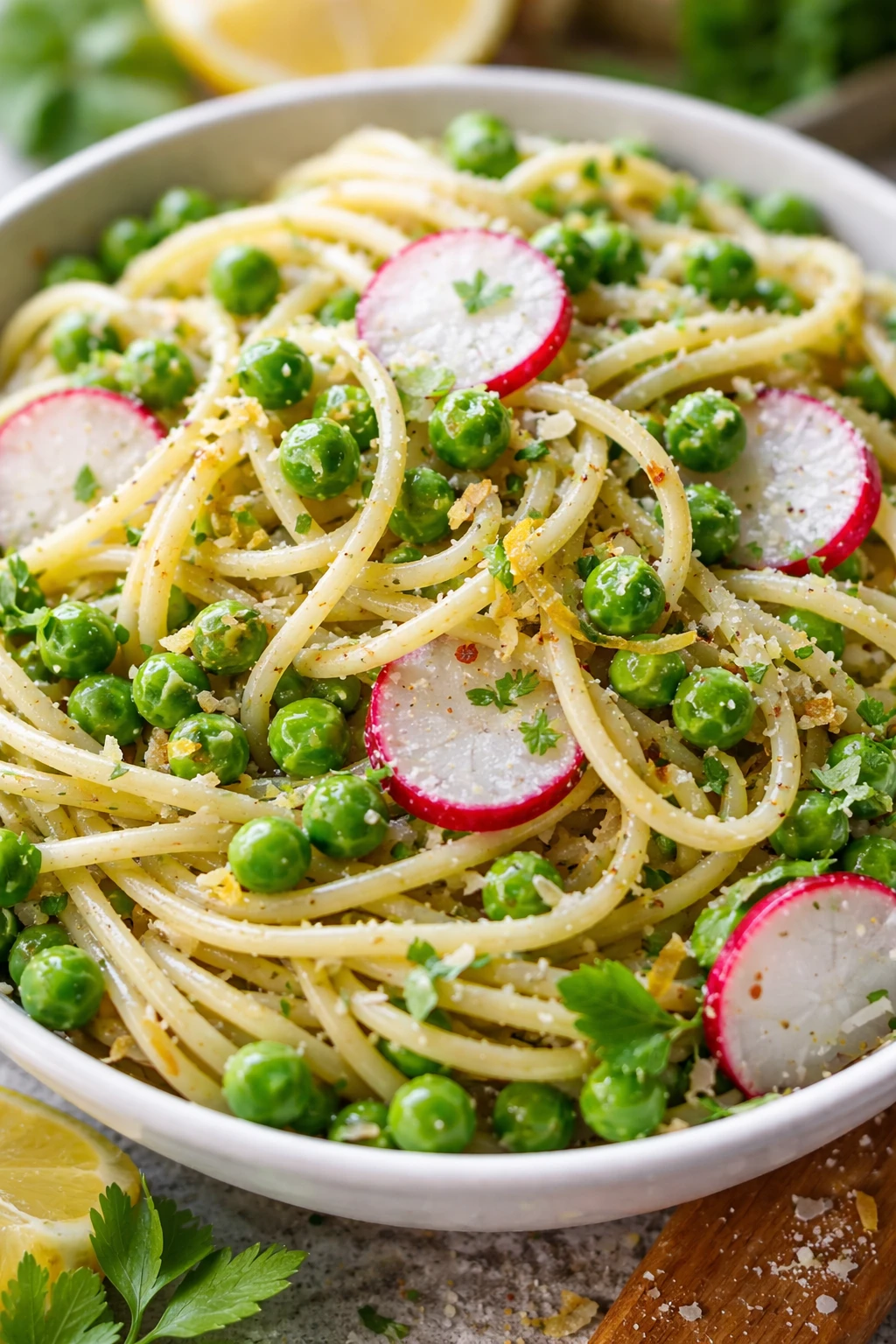
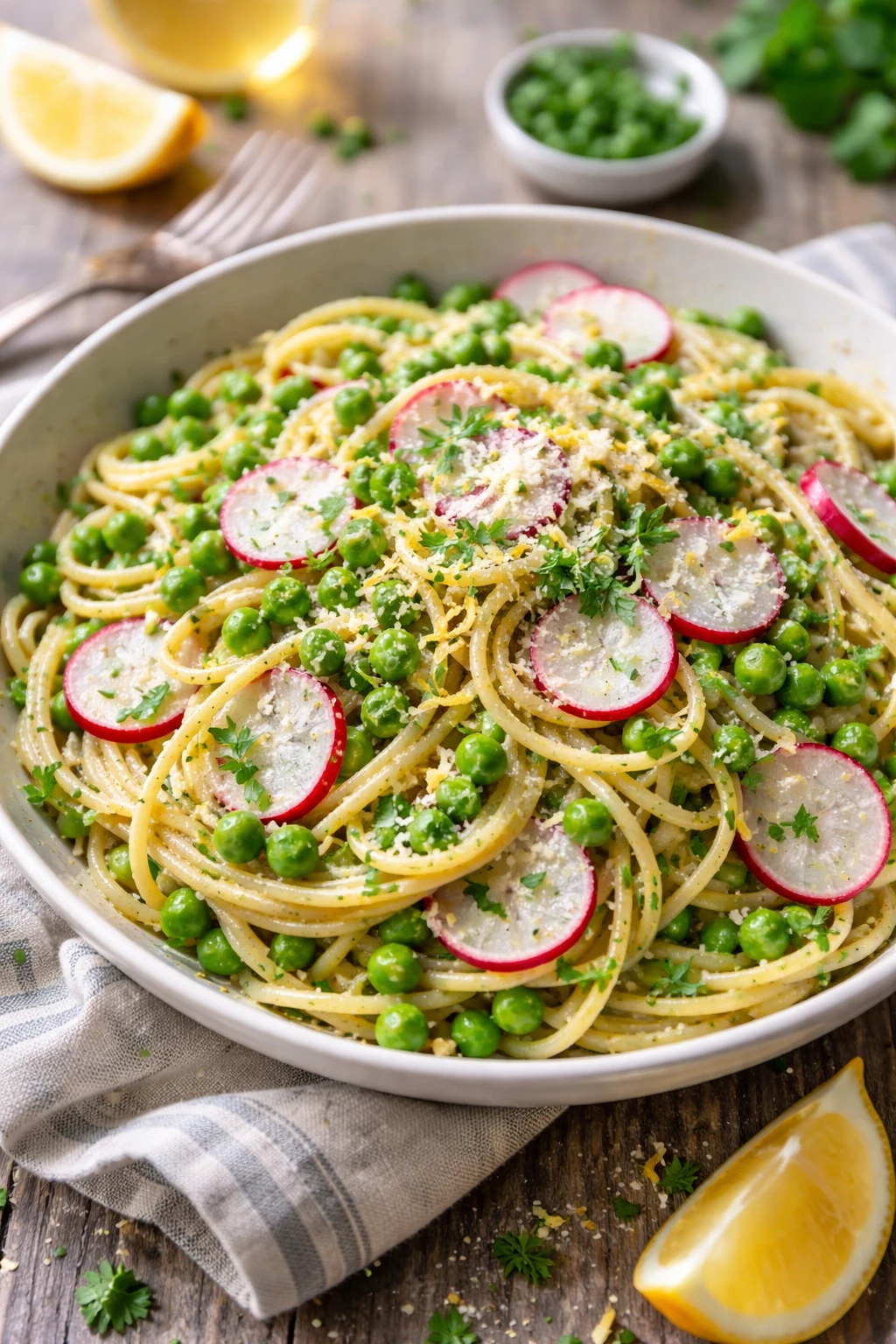
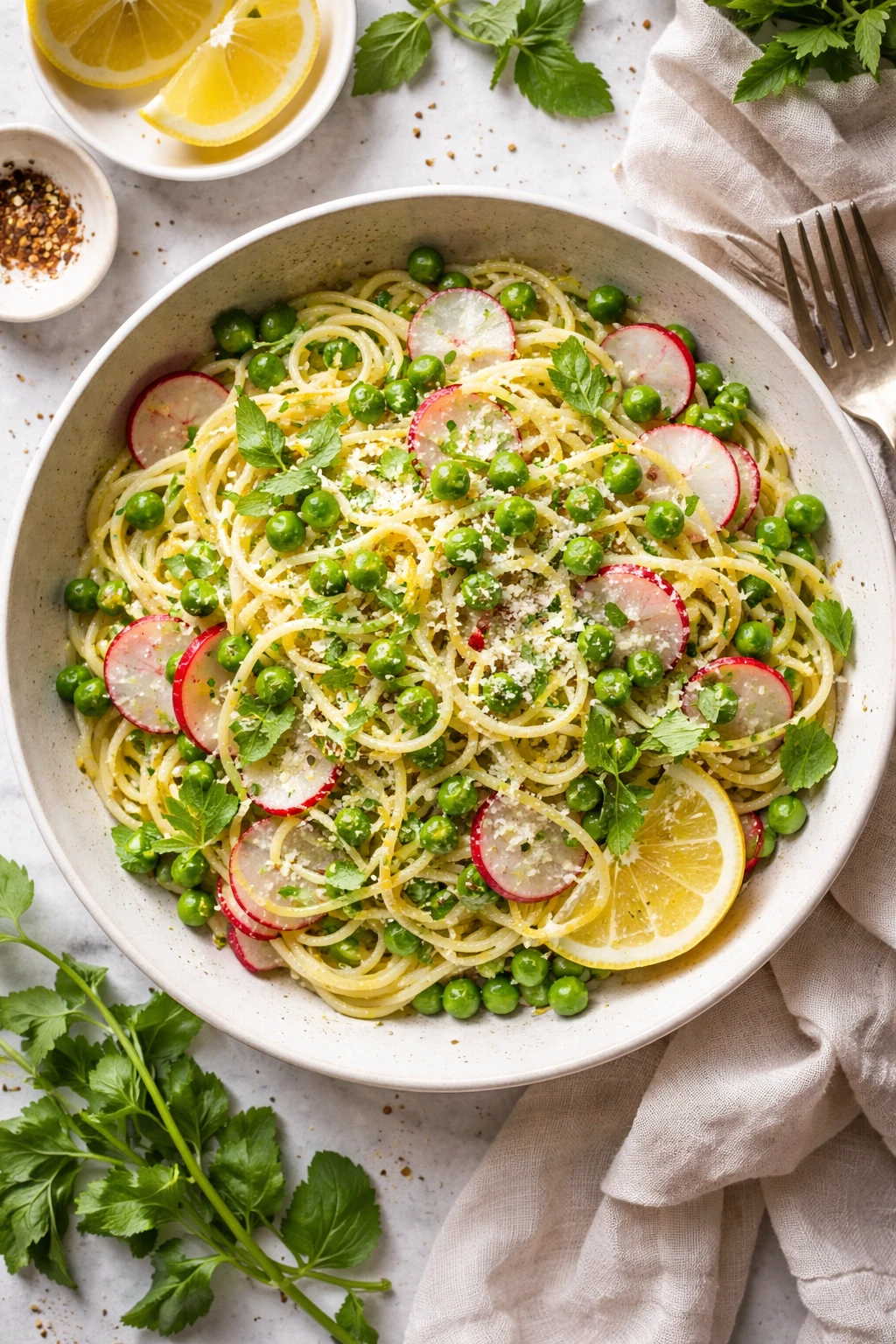
This bright pasta is a quick one-pot wonder bursting with sweet peas and peppery radishes. It’s light but filling — perfect for busy weeknights when you want fresh flavors without fuss.
Introduction
I first stumbled upon this pasta recipe during a hectic weeknight when I craved something fresh but didn’t want to dirty multiple pots. What I love most is how it combines bright springtime flavors — sweet peas and peppery radishes — in one easy pot. It’s a recipe that feels light and vibrant, yet still filling enough for dinner. I’ve tweaked it a bit over time, especially focusing on timing the pasta so it cooks just right in the broth, absorbing all those lovely flavors. The secret? Adding the peas and radishes toward the end keeps them crisp and fresh, giving the dish a wonderful pop of texture. Plus, a splash of lemon juice and a sprinkle of Parmesan really bring everything together. It’s my go-to when I want a quick, no-fuss meal that still feels special. The finished pasta has this beautiful balance of creaminess from the cheese, brightness from the lemon, and just the right peppery bite from the radishes. I think you’ll love how easy it is to make but still tastes like you put in way more effort than you did!
How To Do It
Step 1
Start by heating the olive oil in a large, deep skillet or pot over medium heat. Add the minced garlic and cook for about 1 minute until fragrant but not browned. This gentle cooking releases the garlic’s aroma without bitterness, setting a flavorful base for the pasta. Avoid high heat here as garlic can burn quickly and turn bitter, which will affect the whole dish.
⏱ Time: 2 minutes
✓ Doneness: Garlic is soft and fragrant, lightly golden but not brown.
Step 2
Add the dried spaghetti to the pot along with the vegetable broth, making sure the pasta is submerged. Increase heat to medium-high and bring to a gentle boil. Stir occasionally to prevent the pasta from sticking together or to the bottom. Cooking pasta directly in broth enhances flavor absorption, but stirring is key to avoid clumps.
⏱ Time: 10 minutes
✓ Doneness: Pasta is mostly tender but still has a slight bite (al dente).
Step 3
Once the pasta is nearly cooked, stir in the fresh or frozen peas. The peas only need a few minutes to warm through and retain their sweet pop. Adding them too early will make them mushy, so timing is important for texture contrast.
⏱ Time: 3 minutes
✓ Doneness: Peas are bright green and tender but not mushy.
Step 4
Add the thinly sliced radishes last, stirring gently to combine. Radishes should remain crisp and peppery, so adding them at the end preserves their fresh bite and vibrant color. Overcooking radishes can turn them soft and dull their flavor.
⏱ Time: 2 minutes
✓ Doneness: Radishes are slightly warmed but still crisp and colorful.
Step 5
Turn off the heat and stir in the lemon juice and grated Parmesan cheese. The acidity from the lemon brightens the dish, while the Parmesan adds a creamy, savory note that ties everything together. Stirring off the heat prevents the cheese from clumping or melting unevenly.
⏱ Time: 2 minutes
✓ Doneness: Cheese is melted smoothly into the sauce; dish has a glossy finish.
Step 6
Season with salt and freshly cracked black pepper to taste. Taste before adding salt because the broth and Parmesan already contribute saltiness. Seasoning at the end lets you balance flavors perfectly without overdoing it.
⏱ Time: 1 minute
✓ Doneness: Seasoning enhances flavor without overpowering the freshness.
Step 7
Let the pasta rest in the pot for a couple of minutes off the heat. This allows the flavors to meld and the sauce to thicken slightly. It also gives the pasta a chance to soak up any remaining liquid for a perfect consistency.
⏱ Time: 3 minutes
✓ Doneness: Pasta looks coated and moist but not watery.
Step 8
Transfer the pasta to serving bowls and garnish with fresh basil leaves. The basil adds a fragrant herbal note that complements the spring vegetables beautifully. If you like, add an extra drizzle of olive oil for richness.
⏱ Time: 1 minute
✓ Doneness: Dish is visually vibrant with green basil and bright radishes.
Step 9
Serve immediately while warm and fresh. This pasta is best enjoyed right away to appreciate the crispness of the radishes and peas alongside the creamy cheese and lemony broth. Leftovers can lose that fresh bite, so plan accordingly.
⏱ Time: Serve immediately
✓ Doneness: Pasta is warm, fresh, and inviting on the plate.
Pro Tips
Use a large enough pot to allow the pasta to cook evenly in broth without sticking.
A cramped pot causes pasta strands to clump and cook unevenly, resulting in mushy or undercooked bits. A roomy pot ensures pasta can move freely and absorb broth uniformly.
Add peas and radishes in stages to preserve their texture and color.
Peas need time to cook through, but radishes should stay crisp and bright. Adding them at the right moments keeps the dish visually appealing and texturally balanced.
Don’t rush stirring once the pasta is added; stir gently but frequently.
This prevents pasta from sticking to the bottom or clumping together, ensuring even cooking and a smooth sauce.
Use fresh lemon juice for the finishing touch instead of bottled.
Fresh lemon juice has a brighter, cleaner flavor that lifts the dish better than bottled versions, which can taste dull or bitter.
Let the pasta rest off heat for a few minutes before serving.
Resting allows the sauce to thicken slightly and flavors to meld, resulting in a creamier texture and more harmonious taste.
Grate Parmesan cheese fresh right before adding.
Freshly grated cheese melts more smoothly and has a richer flavor than pre-grated, which often contains additives affecting texture.
Taste the broth before adding salt since it contributes to overall seasoning.
Broth and cheese already contain salt, so adding more without tasting can lead to an overly salty dish.
Common Mistakes to Avoid
Overcooking the radishes.
Why it happens Many cooks add radishes too early, thinking they need to cook through like other vegetables.
Fix Add radishes in the last 1-2 minutes of cooking to keep their crunch and peppery flavor. This preserves their texture and color, enhancing the dish.
Not stirring the pasta enough during cooking.
Why it happens Assuming pasta will cook evenly on its own leads to clumping or sticking.
Fix Stir gently but regularly while pasta cooks in broth to prevent clumps and ensure even cooking and sauce distribution.
Using low-quality broth with overpowering flavors.
Why it happens Choosing a pre-made broth without checking ingredients can introduce unwanted spices or salt.
Fix Opt for mild, low-sodium vegetable broth or homemade stock to control flavor and salt balance.
Skipping the resting step before serving.
Why it happens Impatience to serve leads to a thinner sauce and less developed flavors.
Fix Let pasta rest off heat for a few minutes to thicken the sauce and meld flavors for a better finished dish.
Adding too much salt at the end.
Why it happens Not accounting for salt already in broth and cheese causes over-salting.
Fix Always taste before seasoning and add salt gradually to avoid overpowering the dish.
Variations
Add Crispy Bacon for Smoky Depth
Stir in cooked, crispy bacon pieces right before serving to add a smoky, savory crunch that complements the fresh peas and radishes. It transforms the dish into a heartier meal while keeping the bright flavors.
Note: Add bacon last to maintain crispness; avoid cooking bacon in the same pot to keep the broth light.
Swap Radishes for Asparagus Tips
Replace radishes with tender asparagus tips for a milder, earthy flavor. Add asparagus with the peas so they cook just until tender-crisp, giving a slightly different but still fresh spring twist.
Note: Adjust timing to ensure asparagus doesn’t become mushy — 3-4 minutes usually suffices.
Make it Vegan by Skipping Parmesan
Omit the Parmesan and boost flavor with nutritional yeast or a drizzle of extra olive oil and lemon zest. This keeps the dish light and fresh while respecting vegan dietary needs.
Note: Nutritional yeast adds umami but doesn’t melt; add off heat to maintain texture.
Use Whole Wheat Pasta for Added Fiber
Swap regular spaghetti for whole wheat to increase fiber and nutrients. The nuttier flavor pairs well with the bright vegetables, though whole wheat pasta may require slightly longer cooking.
Note: Check pasta package instructions and adjust broth quantity and cooking time accordingly.
Add Fresh Herbs Like Dill or Mint
Mix in chopped fresh dill or mint along with the basil for a fragrant twist that’s especially nice in spring. These herbs add complexity and a refreshing finish.
Note: Add delicate herbs at the end off heat to preserve their brightness and flavor.
Nutrition
Per Serving:
Nutritional values are estimates and may vary based on specific ingredients used.
Storage & Tips
Room Temperature
This pasta can safely sit out covered for up to 2 hours. Beyond that, it’s best to refrigerate to avoid spoilage. Keep it loosely covered to prevent drying out but allow some air circulation.
Refrigerator
Store leftovers in an airtight container for up to 3 days. The pasta will firm up and the radishes soften, so reheat gently with a splash of broth or water to revive texture. It can also be served cold as a spring pasta salad.
Freezer
Freezing is not recommended as the peas and radishes lose their texture and the pasta can become mushy upon thawing. If needed, freeze in airtight containers for up to 1 month and thaw in the fridge overnight before reheating gently.
Reheating
Reheat on the stovetop over low heat with a splash of broth or water to loosen the sauce. Avoid microwave reheating without added liquid as it can dry out the pasta. Stir frequently for even warming.
Make Ahead
You can prepare the pasta and broth base up to a day ahead, store separately, and combine with fresh peas and radishes just before serving. This keeps the vegetables crisp and the flavors fresh for dinner.
FAQ
Can I use regular water instead of vegetable broth?
You can, but using broth adds a lot of flavor to the pasta as it cooks. If you use water, consider adding extra seasoning or a bouillon cube to keep the dish tasty.
How do I keep the radishes from getting too soft?
Add radishes at the very end of cooking and only warm them through for 1-2 minutes. Overcooking radishes makes them lose their crunch and bright flavor.
Can I make this recipe gluten-free?
Absolutely! Use your favorite gluten-free pasta and check that your broth is gluten-free. Cooking times might vary slightly, so keep an eye on the pasta texture.
What if I don’t have fresh peas?
Frozen peas work just as well and are super convenient. Add them frozen right into the pot at the same stage to avoid overcooking.
Can I add protein to this dish?
Yes! Grilled chicken, shrimp, or crispy bacon all pair nicely. Add cooked proteins at the end just to warm through so they stay juicy and tender.
Is it okay to use bottled lemon juice?
Fresh lemon juice is best for bright, clean flavor. Bottled lemon juice can taste dull or slightly bitter, which might affect the dish’s freshness.
How do I prevent the pasta from sticking together?
Stir the pasta frequently during cooking, especially in the first few minutes, to keep strands separated and ensure even cooking.
Can I prepare this dish ahead of time?
You can prep the broth and pasta base a day ahead, but add the peas and radishes fresh just before serving to keep the textures vibrant.
Final Thoughts
I hope you give this bright, fresh pasta a try — it’s a true weeknight lifesaver with spring flavors! Let me know how it turns out and what variations you love.