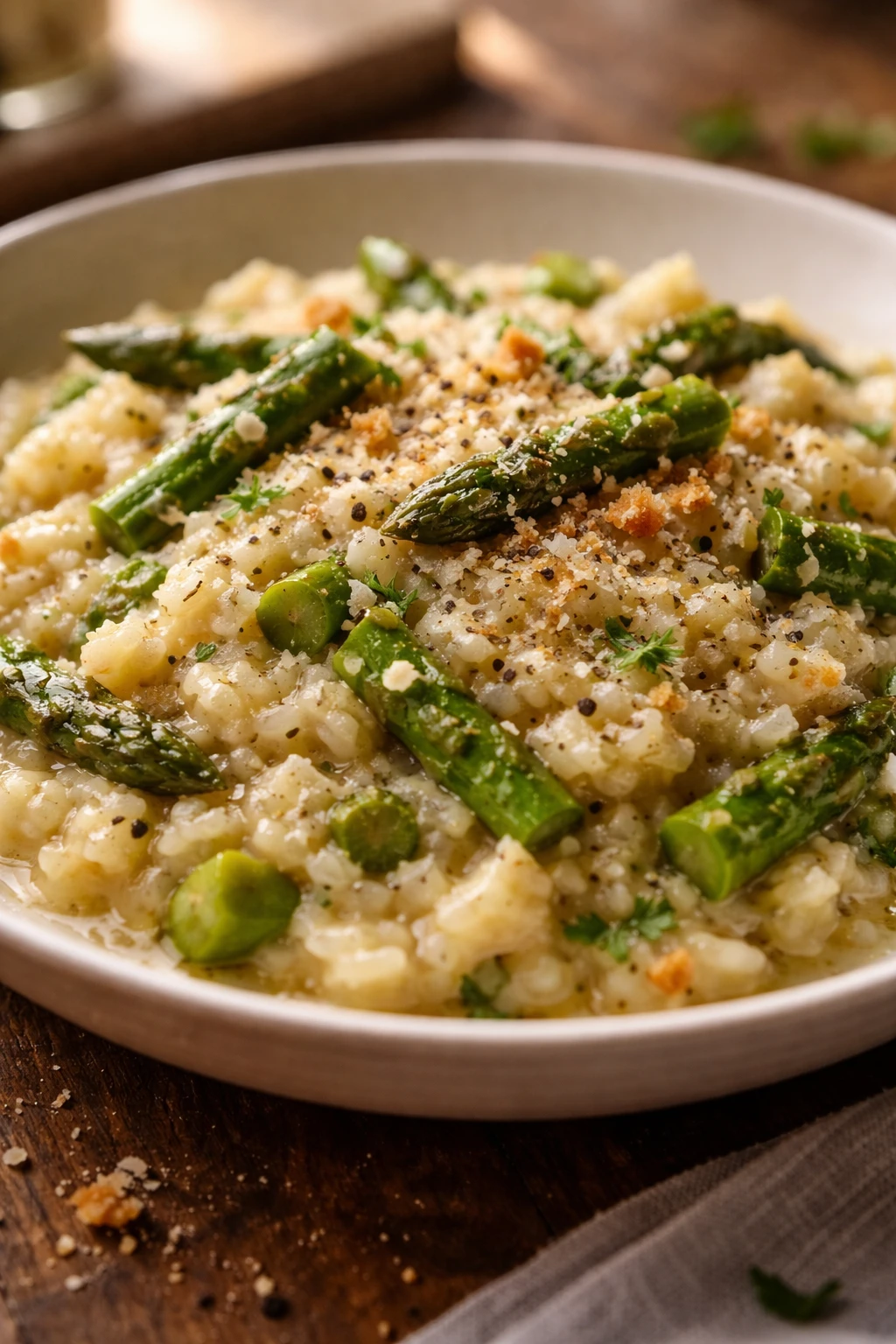
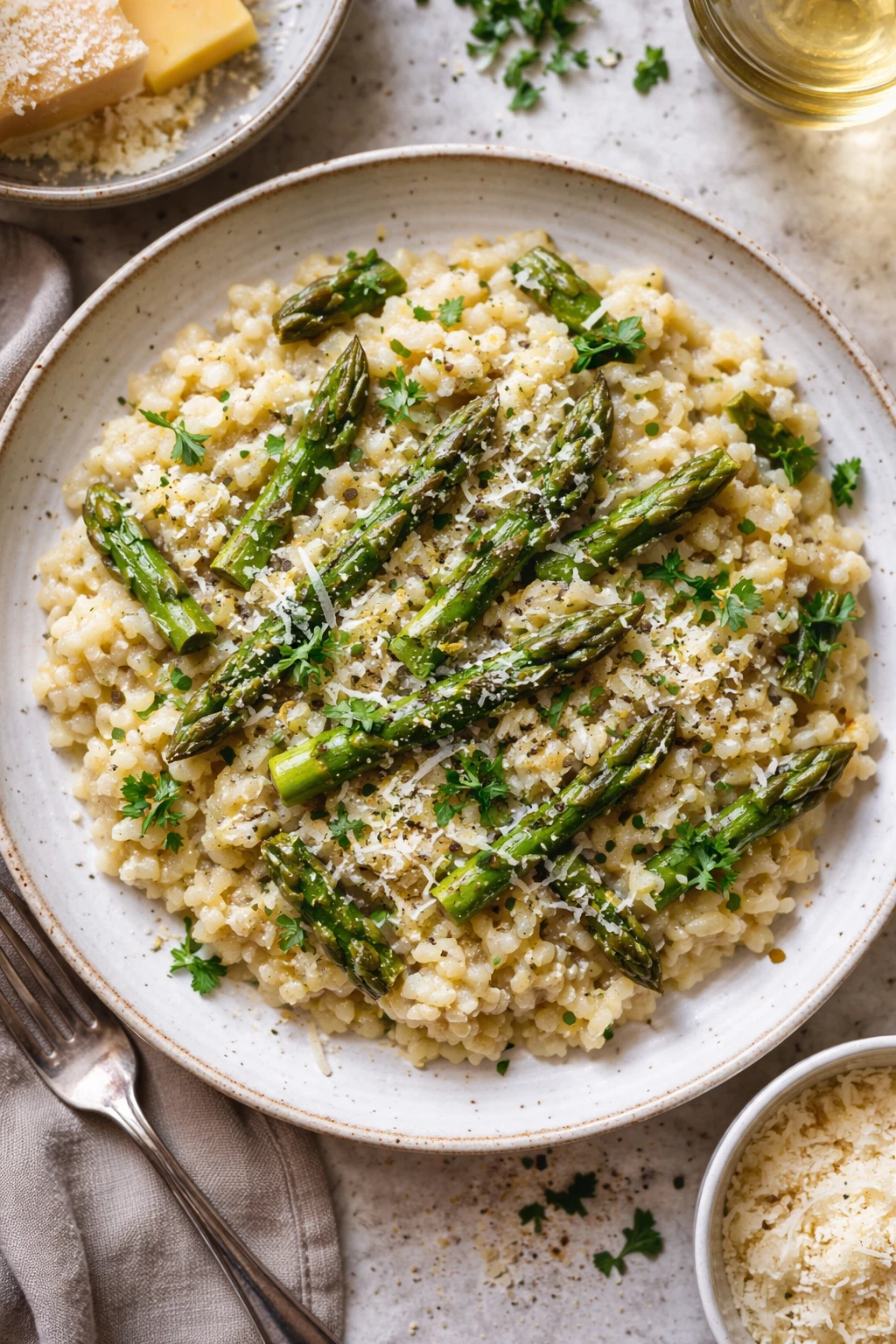
This risotto is my go-to when I want creamy comfort without spending all day cooking. The fresh asparagus adds a crisp pop and the Parmesan rounds it off perfectly. Ideal for a cozy dinner or a special lunch treat.
Introduction
I first fell in love with risotto years ago during a weekend trip to Italy, but honestly, making it at home always felt intimidating—until I found a way to speed things up without losing that creamy, dreamy texture. This asparagus Parmesan risotto quickly became my favorite because it’s both comforting and fresh, thanks to the bright crunch of asparagus. What sets this version apart is that I gently steam the asparagus separately to keep its vibrant color and crispness, then fold it in at the end so it doesn’t turn mushy. Plus, stirring the risotto slowly and patiently with warm broth releases the rice’s starches gradually, giving that signature creaminess. It’s a little labor of love but totally worth it. When it’s done, you get this luscious, cheesy risotto with pops of green that’s perfect for a cozy dinner or a special lunch with friends. I’ve had a few attempts where I rushed the stirring and ended up with clumpy rice, so trust me on the slow stir—it really makes all the difference!
How To Do It
Step 1
Heat the olive oil in a large heavy-bottomed pan over medium heat. Add the finely chopped onion and cook gently, stirring occasionally, until soft and translucent but not browned, about 5-7 minutes. This slow cooking releases the onion’s natural sweetness, which forms the flavor base for the risotto. Avoid turning up the heat too high to prevent burning, which would add bitterness to the dish.
⏱ Time: 7 minutes
✓ Doneness: Onions are translucent and soft with no golden edges
Step 2
Add the minced garlic and cook for 1 minute until fragrant, stirring constantly. Garlic burns easily, so keep a close eye and stir to avoid bitter burnt bits. This step infuses the oil and onions with aromatic flavors that carry through the entire risotto.
⏱ Time: 1 minute
✓ Doneness: Garlic aroma is noticeable but no browning occurs
Step 3
Stir in the Arborio rice, coating each grain with the onion and garlic mixture. Toast the rice for about 2 minutes until the edges become translucent but the center is still opaque. This toasting step helps the rice absorb liquids evenly and develop a nutty flavor without becoming mushy later.
⏱ Time: 2 minutes
✓ Doneness: Rice grains look glossy and slightly translucent at edges
Step 4
Pour in the dry white wine and stir continuously until the wine is mostly absorbed. This adds acidity that balances the richness of the cheese and butter later. If you rush this step, the risotto can taste flat, so let the alcohol cook off fully before adding broth.
⏱ Time: 3-4 minutes
✓ Doneness: Wine is mostly evaporated and rice looks creamy
Step 5
Add one ladle (about 1/2 cup) of warm vegetable broth to the rice and stir gently but constantly until the liquid is almost fully absorbed. Repeat this process, adding broth gradually and stirring often, until the rice is creamy and tender but still has a slight bite, about 25-30 minutes total. This slow addition and stirring coax out the rice's starch, creating that signature risotto creaminess.
⏱ Time: 25-30 minutes
✓ Doneness: Rice is tender with a slight firmness at center; mixture is creamy and not dry
Step 6
While the risotto cooks, steam the asparagus pieces in a steamer basket or over boiling water for 3-4 minutes until bright green and just tender-crisp. Steaming separately prevents overcooking and preserves their vibrant color and fresh texture.
⏱ Time: 4 minutes
✓ Doneness: Asparagus is bright green and yields slightly when pressed
Step 7
Once the rice is cooked to the right texture, gently fold in the steamed asparagus. This keeps the asparagus fresh and adds a nice textural contrast without turning it mushy from prolonged heat exposure.
⏱ Time: 2 minutes
✓ Doneness: Asparagus is evenly distributed and still vibrant
Step 8
Remove the risotto from heat and stir in the butter and freshly grated Parmesan cheese until melted and fully combined. This enriches the risotto with silky texture and cheesy depth. Add salt and freshly ground black pepper to taste, adjusting seasoning carefully because Parmesan adds saltiness.
⏱ Time: 3 minutes
✓ Doneness: Risotto looks glossy, creamy, and evenly cheesy
Step 9
Let the risotto rest covered for 1-2 minutes before serving. This short rest allows the flavors to meld and the texture to settle perfectly. Serve immediately for the best creamy experience.
⏱ Time: 2 minutes
✓ Doneness: Risotto is thick but still creamy and moist
Pro Tips
Keep your broth warm throughout cooking.
Adding cold broth shocks the rice, slowing the cooking process and reducing starch release, which results in less creamy risotto. Warm broth keeps the temperature steady, allowing the starch granules to swell properly and create that signature smooth texture.
Stir gently but constantly during cooking.
Stirring helps release starch from the rice grains, which thickens the liquid and creates creaminess. However, stirring too vigorously can break the grains, leading to a gummy texture. A gentle, steady stir is the sweet spot for perfect risotto.
Toast the rice before adding liquid.
Toasting the rice grains in oil or butter coats them with fat, helping them hold their shape during cooking. This step also adds a subtle nutty flavor and prevents the rice from becoming mushy or sticking to the pan.
Add asparagus towards the end, steamed separately.
Asparagus cooks quickly and loses its bright green color and crunch if overcooked. Steaming it separately and folding it in at the end preserves its texture and adds a fresh contrast to the creamy risotto.
Use freshly grated Parmesan cheese.
Freshly grated cheese melts smoothly and evenly, enhancing the risotto’s flavor and texture. Pre-grated cheese often contains additives that can affect melting and flavor, resulting in a less creamy finish.
Rest the risotto briefly before serving.
Allowing the risotto to sit covered for a minute or two lets the flavors meld and the texture settle, making it creamier and more cohesive. Serving immediately after resting ensures the best mouthfeel.
Season carefully at the end.
Parmesan and broth already contain salt, so add salt gradually after these ingredients are combined. Over-salting early can’t be fixed later, and risotto’s flavor balance is delicate.
Common Mistakes to Avoid
Rushing the broth additions
Why it happens Many cooks want to speed up the process and add too much liquid at once, thinking it will cook faster. This often comes from impatience or misunderstanding how risotto works.
Fix Add broth gradually, one ladle at a time, stirring until the liquid is almost absorbed before adding more. This slow process helps release starch from the rice, creating the creamy texture risotto is known for.
Using cold broth
Why it happens Sometimes cooks forget to warm the broth or don’t realize it affects cooking temperature.
Fix Always keep your broth warm on the stove during cooking. Cold broth lowers the pan temperature and interrupts starch release, resulting in uneven cooking and less creaminess.
Overcooking asparagus
Why it happens Adding asparagus too early or boiling it too long makes it mushy and dull in color.
Fix Steam asparagus separately just until tender-crisp, then fold in near the end of cooking to keep it vibrant and fresh.
Not stirring enough
Why it happens Some assume risotto cooks like regular rice and neglect stirring, or get distracted during cooking.
Fix Stir gently but consistently to release starch from the rice grains. This is essential for the creamy texture and prevents sticking or burning on the pan bottom.
Using the wrong rice
Why it happens Lack of knowledge about Arborio rice leads some to use long-grain or jasmine rice.
Fix Use Arborio or other short-grain risotto-specific rice. These have the right starch content and texture for creamy risotto.
Variations
Mushroom and Thyme Risotto
Swap out asparagus for sautéed mushrooms and add fresh thyme for an earthy twist. The mushrooms add umami richness that pairs beautifully with the creamy rice. Expect a deeper, woodsy flavor and slightly earthier texture.
Note: Sauté mushrooms separately until golden to avoid sogginess, then fold in at the end like the asparagus.
Lemon and Pea Risotto
Add fresh peas and a splash of lemon juice and zest for a bright, spring-inspired risotto. The citrus cuts through the richness and adds a refreshing zing. The peas add a sweet pop and vibrant color.
Note: Add peas in the last few minutes of cooking to keep their fresh snap and avoid overcooking.
Butternut Squash Risotto
Roast diced butternut squash and fold it into the risotto for a sweet, creamy variation. This adds a lovely golden hue and naturally sweet flavor that pairs well with Parmesan.
Note: Roast squash until tender and caramelized; add at the end to preserve texture.
Seafood Risotto
Add cooked shrimp or scallops along with the asparagus for a luxurious seafood version. The briny seafood enhances the risotto’s flavor profile and makes it a perfect special occasion dish.
Note: Cook seafood separately to avoid overcooking, then fold in at the end.
Vegan Asparagus Risotto
Replace butter and Parmesan with vegan butter and nutritional yeast for a dairy-free version that’s still creamy and flavorful. The nutritional yeast adds a cheesy flavor without dairy.
Note: Add vegan butter and nutritional yeast off the heat to preserve flavor and texture.
Nutrition
Per Serving:
Nutritional values are estimates and may vary based on specific ingredients used.
Storage & Tips
Room Temperature
Risotto should not be left out at room temperature for more than 2 hours due to dairy and rice content. Cover loosely if serving buffet-style but refrigerate promptly after the meal.
Refrigerator
Store leftovers in an airtight container for up to 3 days. Risotto thickens when cold; reheat gently with a splash of broth or water to restore creaminess. Avoid overheating, which can dry it out.
Freezer
Risotto can be frozen for up to 1 month. Cool completely, then transfer to a freezer-safe container or bag, removing excess air. Thaw in the refrigerator overnight before reheating gently.
Reheating
Reheat risotto on the stovetop over low heat, stirring frequently with a splash of broth or water to loosen it. Avoid microwaving without adding liquid, as it can dry out quickly.
Make Ahead
You can prepare the risotto base (onion, garlic, toasted rice) a day ahead and refrigerate. Warm broth and finish cooking the rice the next day for fresher texture. Steam asparagus just before serving and fold in last minute.
FAQ
Can I use regular long-grain rice for risotto?
Long-grain rice lacks the starch needed to create risotto’s creamy texture. Arborio or other short-grain risotto rice is essential because it releases starch slowly and holds its shape, resulting in that signature creaminess. Using long-grain rice will yield a drier, less cohesive dish.
Why does my risotto sometimes turn out too thick or dry?
This usually happens if you add broth too quickly or don’t stir enough. Adding liquid gradually and stirring gently allows the rice to absorb moisture evenly and release starch, creating creaminess. Also, reheating risotto without adding liquid can dry it out, so add broth when warming leftovers.
Can I make risotto ahead of time?
You can prepare some components ahead, like chopping onions or toasting rice, but risotto is best served fresh. If made in advance, it can be refrigerated and gently reheated with added broth. The texture won’t be quite the same but still delicious.
How do I keep asparagus bright green and crisp in risotto?
Steam asparagus separately until just tender-crisp, then fold it in near the end of cooking. Adding asparagus too early or boiling it too long causes it to lose color and become mushy.
What wine should I use in risotto?
Dry white wines like Pinot Grigio or Sauvignon Blanc work best, adding acidity and depth. Avoid sweet wines, which can throw off the flavor balance. If you prefer not to use wine, substitute with extra broth and a splash of lemon juice.
Is it okay to use pre-grated Parmesan?
Pre-grated Parmesan often contains anti-caking agents that affect melting and texture. Freshly grated cheese melts better and imparts a richer flavor, which is important for risotto’s creamy finish.
How do I know when risotto is done?
Risotto should be tender but still have a slight bite in the center (al dente). The texture is creamy and loose, not dry or mushy. Taste frequently towards the end to catch the perfect moment.
Can I make this risotto vegan?
Yes! Replace butter with vegan butter or olive oil, and swap Parmesan for nutritional yeast or a vegan cheese alternative. The texture will still be creamy, though the flavor will differ slightly.
Final Thoughts
I hope you give this asparagus Parmesan risotto a try—it’s one of my favorite comforting dishes. Let me know how it turns out and share your own twists!