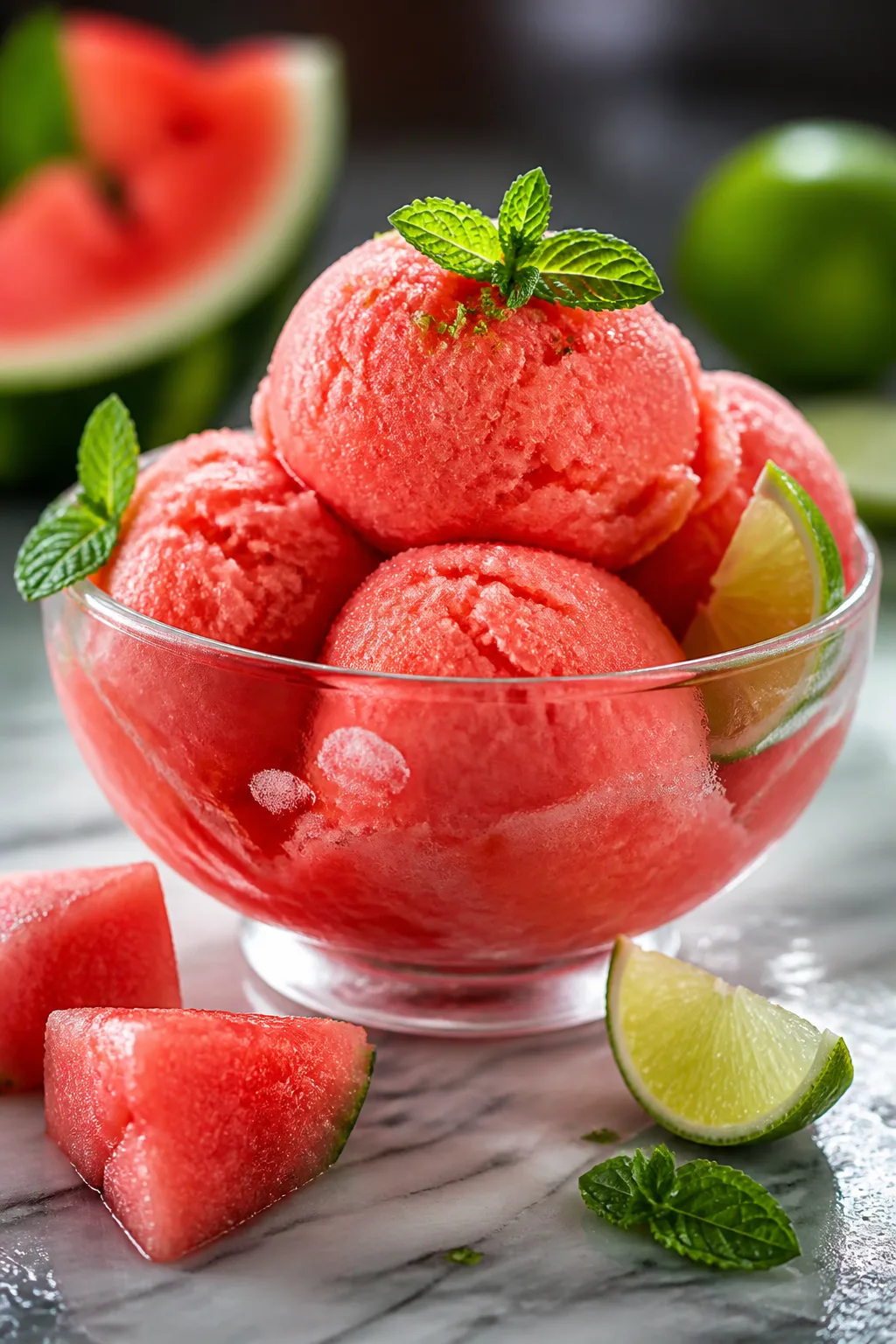
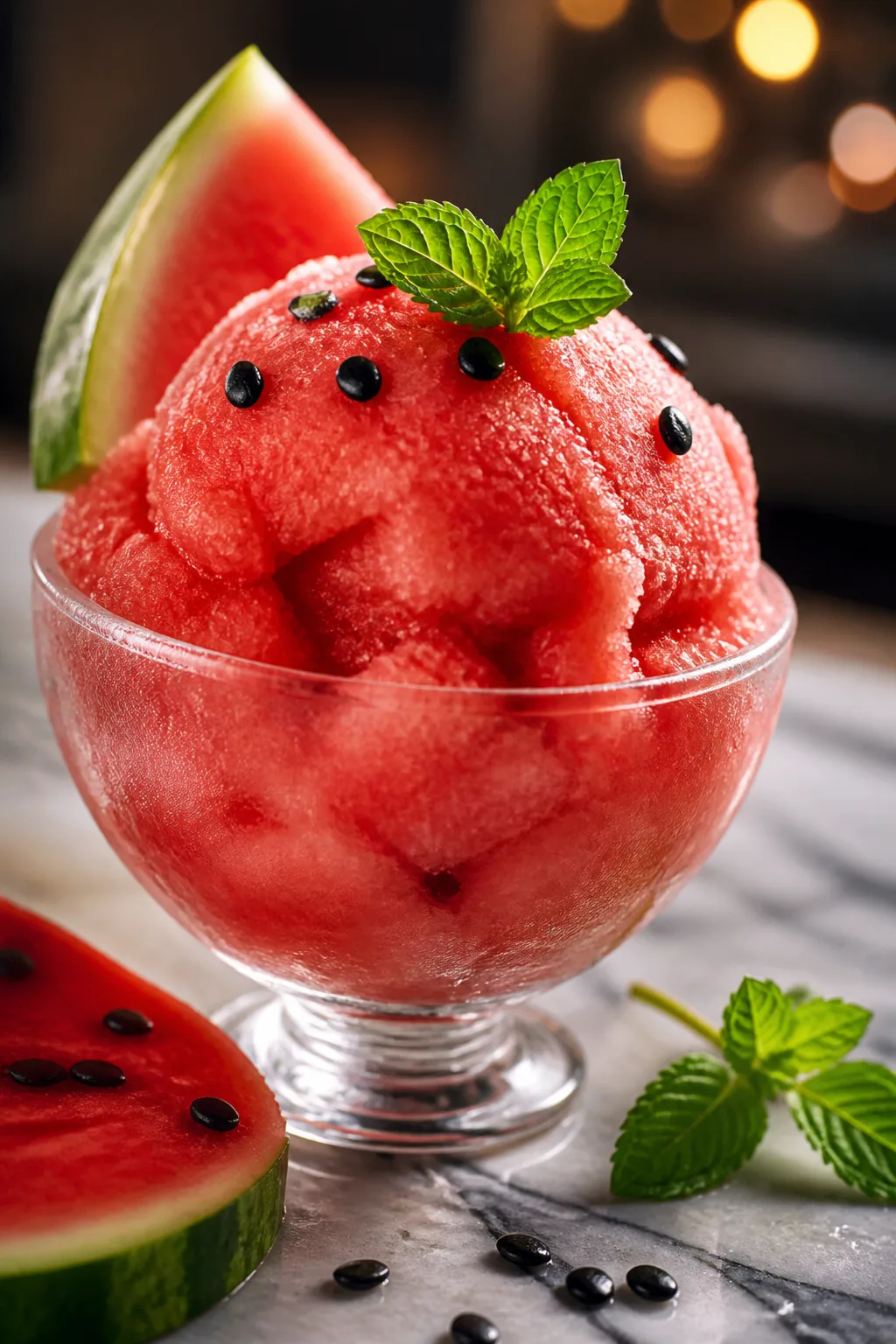
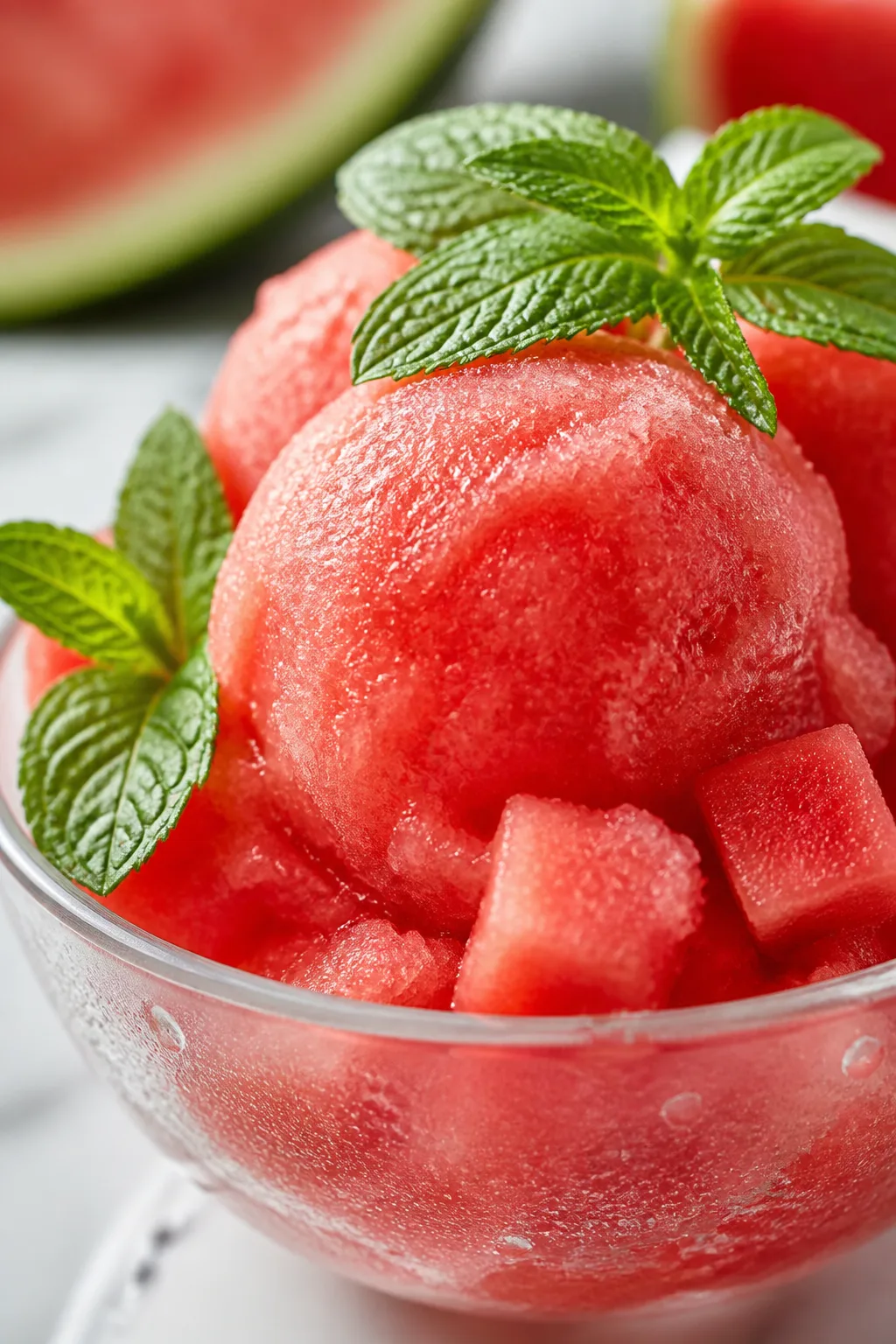
This watermelon sorbet is super simple and perfect for cooling off. It’s just fresh watermelon, a touch of sugar, and lemon juice, making it naturally sweet and hydrating. Ideal for summer afternoons or after grilling!
Introduction
I first made this watermelon sorbet on a scorching summer afternoon when I desperately needed something cold and refreshing. What I love about this recipe is how incredibly simple it is—just watermelon, sugar, and lemon juice—but it tastes way more special than you'd expect. Instead of using heavy creams or fancy ingredients, this sorbet lets the natural sweetness of watermelon shine. One trick I learned is to freeze the watermelon chunks first; it helps the sorbet get that smooth, icy texture without needing an ice cream maker. Another secret is balancing the sweetness with a splash of lemon juice, which brightens the flavor and stops it from tasting flat. The finished sorbet is light, juicy, and melts perfectly on your tongue—like a summer breeze in dessert form. It’s perfect for cooling down after a day outside or serving at a barbecue with friends. Honestly, it’s become a staple in my house every summer because it’s so easy and always hits the spot when the heat is on.
What You'll Need
Approximately 4 cups, 4 servings
- 4 cups fresh watermelon chunks, seeds removed
- 1/4 cup granulated sugar
- 2 tablespoons fresh lemon juice
How To Do It
Step 1
Start by cutting the watermelon into chunks, removing all seeds. Then, spread the chunks on a baking sheet lined with parchment paper and freeze them for at least 4 hours or until solid. Freezing the watermelon first is crucial because it helps achieve that perfect sorbet texture without needing an ice cream maker. If you skip this step, the sorbet will be more watery and less creamy. Make sure the pieces are evenly spread so they freeze quickly and uniformly.
⏱ Time: 4 hours freezing
✓ Doneness: Watermelon chunks are completely solid and frozen through
Step 2
Once your watermelon chunks are frozen solid, place them in a powerful food processor or blender. Add the granulated sugar and fresh lemon juice. The sugar helps to balance the tartness and brings out the watermelon’s natural sweetness, while the lemon juice adds a bright, fresh note. Blend everything on high speed until smooth and creamy. If your blender struggles, pulse and scrape down the sides to get an even consistency. Rushing this step might leave chunks unblended or cause the motor to overheat.
⏱ Time: 5-7 minutes blending
✓ Doneness: Smooth, bright pink sorbet mixture with no large chunks
Step 3
Taste your sorbet mixture and adjust the sweetness or acidity if needed. If it’s not sweet enough, add a bit more sugar, or if it feels flat, a little more lemon juice can help. Blend again briefly to combine any additions. This step ensures your sorbet has the perfect flavor balance and is refreshing but not too sweet or sour.
⏱ Time: 2 minutes
✓ Doneness: Balanced flavor with a refreshing sweet-tart taste
Step 4
Transfer the blended sorbet into a shallow airtight container. Smooth the top with a spatula, then cover tightly with a lid or plastic wrap. This prevents ice crystals from forming and keeps the texture creamy. Place the container back in the freezer to firm up for at least 1 hour before serving. This resting time lets the sorbet set properly and improves scoopability.
⏱ Time: 1 hour freezing
✓ Doneness: Sorbet is firm but still scoopable
Step 5
When you’re ready to serve, remove the sorbet from the freezer and let it sit at room temperature for 5 minutes. This softens it slightly, making it easier to scoop. Use an ice cream scoop dipped in warm water for neat, round servings. Serving it too cold makes it hard to scoop, while too warm will cause it to melt quickly.
⏱ Time: 5 minutes resting
✓ Doneness: Sorbet softens just enough for clean scoops
Step 6
For a fun garnish, add fresh mint leaves or a small wedge of watermelon on the side. This adds a pop of color and a hint of fresh aroma that complements the sorbet beautifully. Garnishing makes it look more inviting and elevates the simple dessert for guests.
⏱ Time: 2 minutes
✓ Doneness: Attractive presentation with fresh garnish
Step 7
If you want a smoother texture, you can process the sorbet again after the initial freezing, then refreeze it. This second blending breaks up any ice crystals formed and results in a creamier, more professional consistency. It's a little extra work but worth it if you prefer silky sorbet.
⏱ Time: 5 minutes blending + 1 hour refreezing
✓ Doneness: Ultra smooth sorbet texture without icy bits
Step 8
Avoid leaving the sorbet out too long once served, as it melts quickly due to its high water content. Serve in chilled bowls or glasses to keep it cold longer. This helps maintain the refreshing cold sensation and prevents it from becoming a watery mess.
⏱ Time: Serve immediately
✓ Doneness: Sorbet remains firm and refreshing while eating
Step 9
Clean your blender or food processor right after use to prevent watermelon juice from drying and sticking. This makes cleanup easier and keeps your equipment in good condition for next time. Watermelon juice can be sticky and stain if left too long.
⏱ Time: 5 minutes cleanup
✓ Doneness: Appliance clean and ready for next use
Pro Tips
Freeze watermelon chunks on a flat tray in a single layer before blending.
Freezing the fruit evenly prevents clumping and makes it easier to blend into a smooth sorbet. If the chunks freeze in a pile, parts remain soft and can create uneven texture or watery spots in the final sorbet.
Use fresh lemon juice instead of bottled for best flavor.
Fresh lemon juice provides a bright, clean acidity that balances sweetness and enhances freshness. Bottled lemon juice often has preservatives and a duller taste that can affect the sorbet’s bright flavor profile.
Don’t skip the resting time after blending before serving.
Allowing the sorbet to firm up in the freezer helps it hold shape and improves scoopability. Serving immediately after blending results in a runny texture and less satisfying mouthfeel.
Pulse the blender and scrape down sides during blending.
This ensures all frozen chunks are evenly processed and prevents the motor from overheating. It results in a smoother, creamier sorbet without chunks or uneven texture.
Adjust sugar and lemon juice after blending to taste.
Since watermelon sweetness varies, tasting and tweaking ensures perfect balance. Too much sugar makes it cloying; too little makes it icy. Lemon juice brightens flavor and prevents flatness.
Serve sorbet in chilled bowls to keep it cold longer.
Chilled dishes slow melting, keeping the sorbet refreshing longer. This enhances the eating experience, especially on hot days.
Clean your blender promptly after use to avoid sticky residue.
Watermelon juice dries quickly and can be tough to clean if left. Prompt cleaning preserves your equipment and saves time.
Common Mistakes to Avoid
Not freezing the watermelon chunks before blending
Why it happens Some assume blending fresh watermelon with ice will achieve the same result, or they rush the process without freezing.
Fix Make sure to freeze watermelon chunks fully before blending. This step is crucial to get the right sorbet texture — smooth and creamy rather than watery or icy.
Using bottled lemon juice instead of fresh
Why it happens Bottled lemon juice is convenient and often used as a substitute without considering flavor impact.
Fix Always use fresh lemon juice for the best bright flavor and aroma. It makes a noticeable difference in balancing the sweetness and freshness.
Adding too little or too much sugar
Why it happens Not tasting the mixture before freezing or assuming watermelon sweetness is consistent.
Fix Taste the blended mixture and adjust sugar gradually. Too little sugar makes it icy; too much masks the watermelon flavor. Find the sweet spot for your fruit.
Skipping the resting/final freezing step after blending
Why it happens Impatience or not knowing this step improves texture and scoopability.
Fix After blending, freeze the sorbet for at least one hour to firm it up properly. This step is key for a satisfying sorbet texture.
Overfilling the blender or food processor
Why it happens Trying to blend too much at once can overwhelm the appliance or cause uneven blending.
Fix Blend in batches if needed. Overloading leads to uneven texture and can strain your blender.
Variations
Mint-Infused Watermelon Sorbet
Add a handful of fresh mint leaves to the blender with the watermelon chunks for a cool, herbal twist. The mint pairs beautifully with the sweet watermelon and bright lemon, creating a more complex flavor. Expect a refreshing and slightly aromatic sorbet perfect for summer evenings.
Note: Blend the mint leaves thoroughly to avoid large bits, and strain if desired for a smoother texture.
Spicy Watermelon Sorbet with Jalapeño
For a surprising kick, add a small amount of seeded jalapeño to the blender. The subtle heat contrasts with the sweet, juicy watermelon, adding depth and excitement. This variation is great for adventurous eaters and pairs well with grilled foods.
Note: Start with a very small amount of jalapeño and taste before blending fully to control spice level.
Coconut Watermelon Sorbet
Replace half the watermelon with coconut water for a tropical flavor boost and extra hydration. This version is lighter and has a delicate coconut aroma, making it a perfect beach day treat.
Note: Adjust sugar slightly as coconut water may add natural sweetness; blend well to mix liquids and solids.
Watermelon Lime Sorbet
Swap lemon juice for fresh lime juice to give the sorbet a zesty, slightly more tart flavor. Lime adds a vibrant citrus note that complements watermelon nicely, perfect for serving with Mexican-inspired dishes.
Note: Lime juice can be more intense, so start with less and adjust to taste.
Watermelon Sorbet with Honey Instead of Sugar
Use honey to sweeten your sorbet instead of granulated sugar for a floral sweetness and a bit more depth. This is a great natural alternative, but the sorbet may freeze slightly harder due to honey’s different freezing properties.
Note: Warm the honey slightly to blend smoothly, and consider adding a splash of water if the mixture is too thick.
Nutrition
Per Serving:
Nutritional values are estimates and may vary based on specific ingredients used.
Storage & Tips
Room Temperature
Because of its high water content, watermelon sorbet should not be left at room temperature for more than 15-20 minutes. Cover it loosely if you plan to serve it shortly to prevent contamination and drying.
Refrigerator
Store the sorbet in an airtight container in the freezer, not the refrigerator, as it will melt quickly. If kept in the fridge, it will become watery and lose texture within an hour.
Freezer
Freeze the sorbet in an airtight container for up to 2 months. To prevent freezer burn, press plastic wrap directly on the surface before sealing the lid. Thaw slightly in the fridge or at room temperature for 5-10 minutes before serving to soften.
Reheating
Sorbet is best served cold and doesn’t require reheating. If too hard, let it sit at room temperature for 5 minutes or scoop with a warm spoon for easier serving. Avoid microwaving, which will melt the texture unevenly.
Make Ahead
You can prepare and freeze the watermelon chunks 1-2 days ahead. Blend and sweeten the day you plan to serve for the freshest flavor and best texture. Alternatively, make the sorbet fully and freeze, then let soften before serving.
FAQ
Can I use frozen watermelon from the store?
Frozen watermelon can work in a pinch, but it’s often less juicy and may have a different texture due to freezing methods. For best results, use fresh watermelon chunks that you freeze yourself, ensuring optimal flavor and texture.
How do I make this sorbet without a food processor?
A high-powered blender is ideal for smooth sorbet. If you only have a basic blender, blend in small batches and pulse frequently, scraping down sides. You might end up with a chunkier texture, but it will still taste great!
Can I substitute sugar with a natural sweetener?
Yes, honey or agave syrup can substitute sugar, but they may affect freezing and texture slightly. Use a bit less liquid sweetener and blend well. Keep in mind the sorbet might freeze a bit harder or softer depending on the sweetener.
Why is my sorbet icy instead of smooth?
This usually happens if the watermelon wasn’t fully frozen before blending or if there wasn’t enough sugar. Make sure to freeze chunks solid and balance sweetness. Also, blending thoroughly and freezing again after blending helps break up ice crystals.
How long does watermelon sorbet keep in the freezer?
Up to 2 months in an airtight container with proper wrapping to prevent freezer burn. For best flavor and texture, consume within the first month.
Can I make this sorbet without sugar if I want it sugar-free?
You can omit sugar, but the sorbet will freeze much harder and taste less sweet, which might not be as enjoyable. Consider using a sugar substitute or a little natural sweetener to improve texture and flavor.
Is it necessary to add lemon juice?
Lemon juice isn’t mandatory, but it brightens the flavor and balances sweetness, making the sorbet taste fresher. Without it, the sorbet might taste flat or overly sweet.
Can I add alcohol to the sorbet?
Adding a small amount of vodka or rum can keep the sorbet softer by lowering the freezing point. However, too much will prevent it from freezing properly. Add no more than 1-2 tablespoons and blend well.
Final Thoughts
I hope you give this watermelon sorbet a try this summer! It’s such a simple, refreshing treat that always impresses. Don’t forget to share how yours turns out!