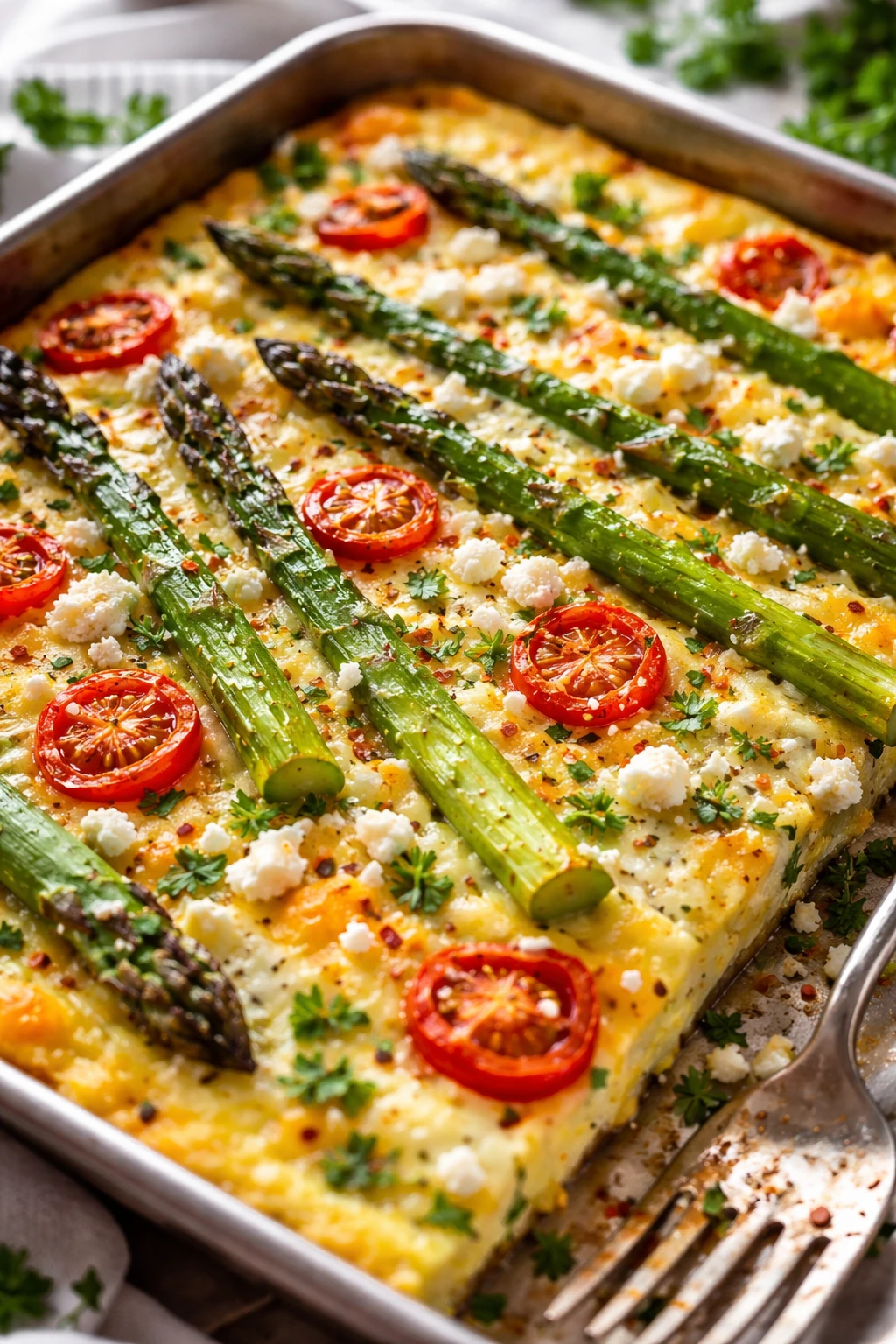
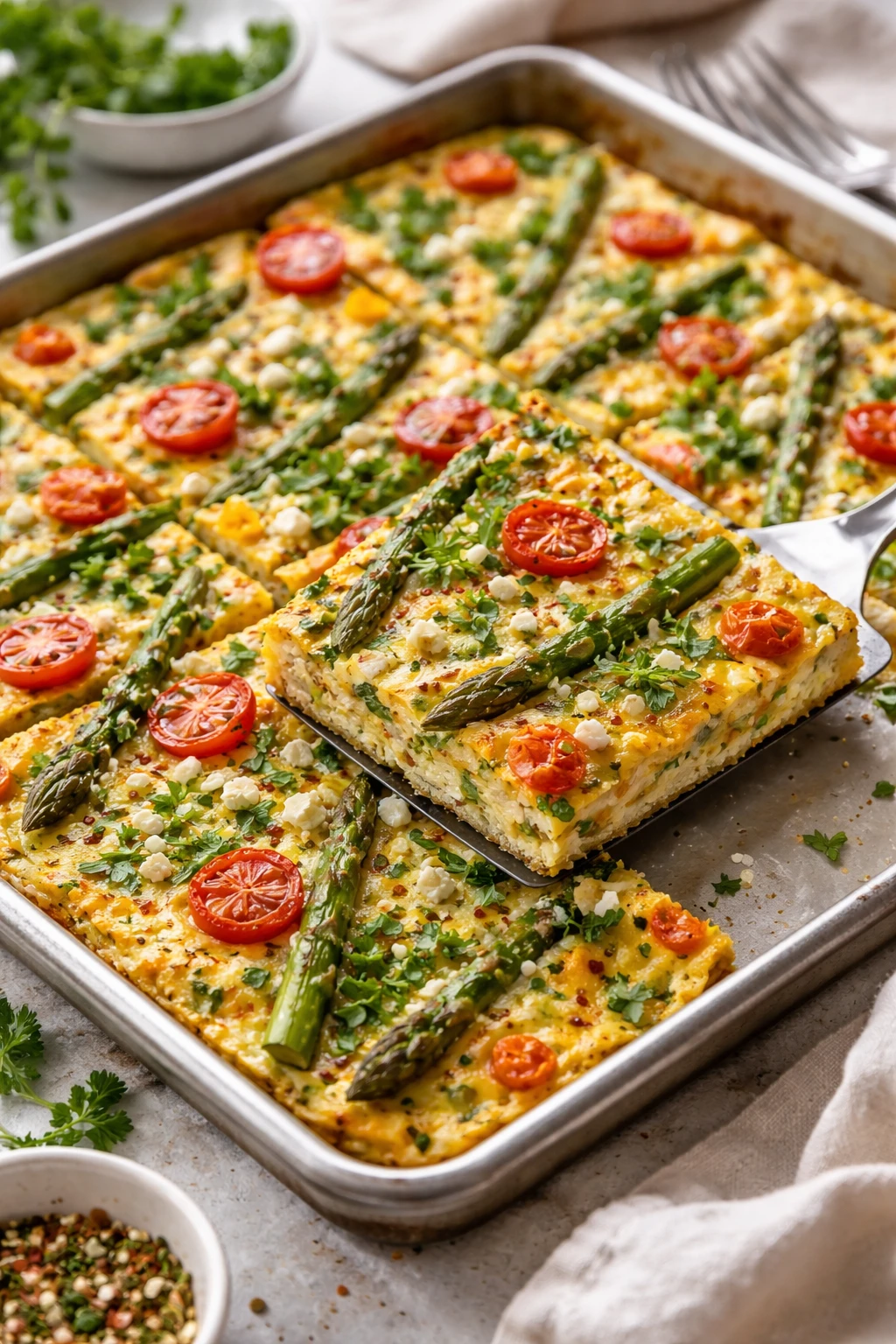
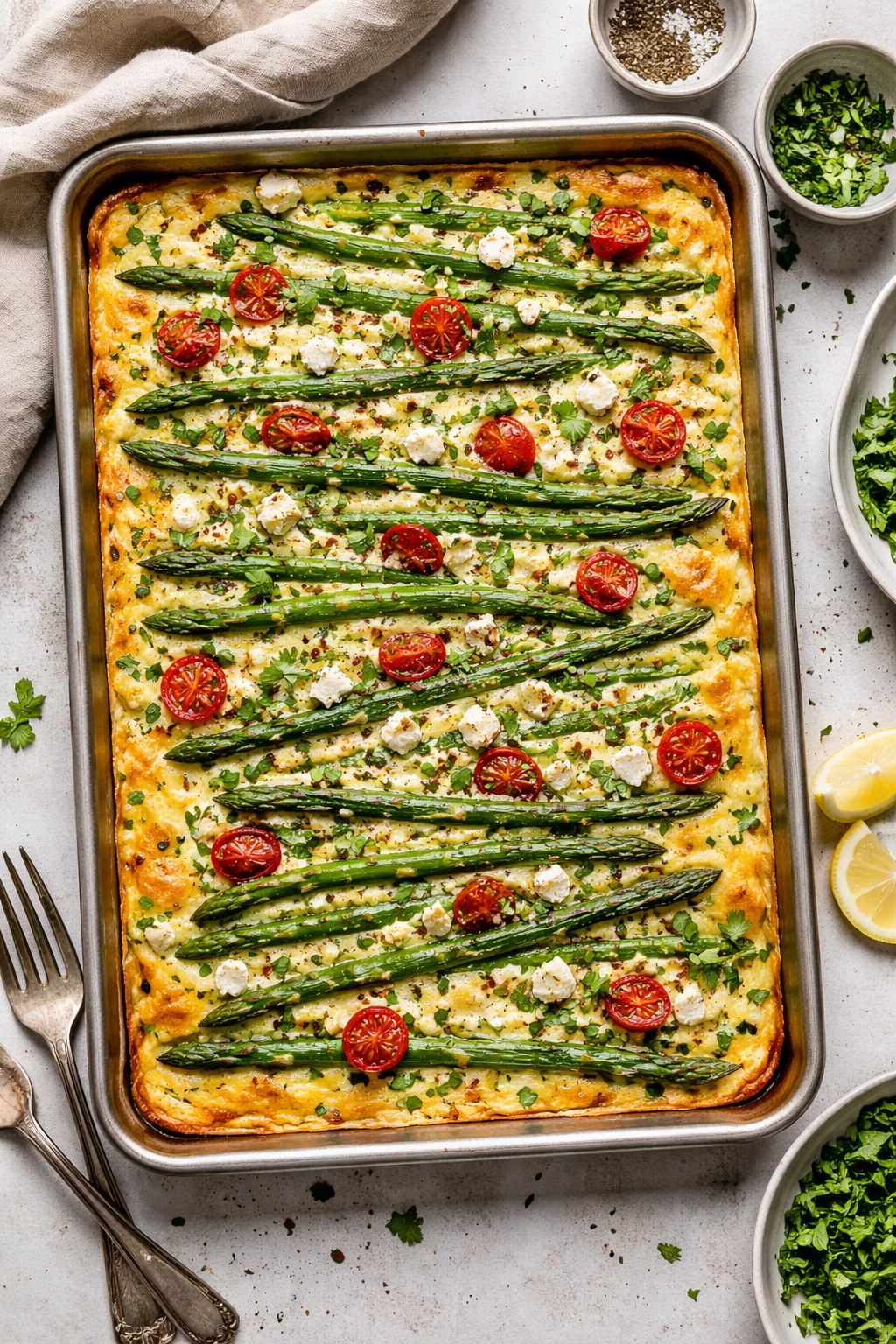
This asparagus frittata is a breeze to whip up and packed with fresh veggies. Roasting the asparagus right on the pan gives it a lovely smoky flavor. Perfect for a laid-back brunch or light dinner any day of the week!
Introduction
I first made this sheet pan asparagus frittata on a lazy Sunday morning when I wanted something light but filling without too much fuss. Honestly, I’d been intimidated by frittatas before, thinking they required constant attention on the stove or careful flipping. But roasting everything on one sheet pan changed the game totally. The trick I learned is roasting the asparagus and onions right on the pan before pouring the egg mixture over — it deepens the flavors and adds a subtle smokiness that you just don’t get from steaming or boiling. Plus, using whole milk keeps the frittata creamy but not heavy, and the mozzarella melts into little pockets of gooey goodness. When it’s done, the edges get slightly golden and the center stays tender, which makes every bite a perfect balance of textures. It’s become my go-to for brunch with friends or a quick, healthy dinner when I don’t want to spend ages cooking but still want something homemade. I think you’ll love how easy it is to prep and how impressive it looks coming out of the oven.
How To Do It
Step 1
Preheat your oven to 375°F (190°C). Lightly grease a large sheet pan with olive oil to prevent sticking. This step is crucial because it ensures the frittata edges crisp up nicely without burning or sticking to the pan, which helps with easy serving later on.
⏱ Time: 5 minutes
✓ Doneness: Pan surface evenly coated and slightly shimmering with oil
Step 2
Toss the asparagus pieces and sliced red onion with 2 tablespoons of olive oil, salt, pepper, and dried oregano directly on the sheet pan. Spread them out evenly in a single layer. This even distribution helps the veggies roast uniformly, preventing soggy spots and encouraging caramelization for deeper flavor.
⏱ Time: 3 minutes
✓ Doneness: Veggies are lightly coated and arranged in one layer
Step 3
Roast the asparagus and onions in the preheated oven for about 12 minutes. Keep an eye on them so they start to soften and get a little golden but don’t overcook. The roasting brings out a smoky sweetness that’s key to the frittata’s flavor, and under-roasting will leave the veggies too firm and raw-tasting.
⏱ Time: 12 minutes
✓ Doneness: Veggies are tender with slightly browned edges
Step 4
While the veggies roast, whisk together the eggs and whole milk in a large bowl until well combined and slightly frothy. This aeration adds lightness to the frittata, helping it puff up gently in the oven rather than becoming dense or rubbery.
⏱ Time: 5 minutes
✓ Doneness: Egg mixture is smooth and pale yellow with bubbles
Step 5
Once the veggies are roasted, remove the pan from the oven and scatter the cherry tomatoes evenly over the veggies. Pour the egg and milk mixture slowly over the veggies, tilting the pan slightly to spread it evenly. This gradual pouring helps the eggs settle around the veggies without displacing them, ensuring every bite has a perfect balance.
⏱ Time: 3 minutes
✓ Doneness: Egg mixture evenly covers veggies with no dry spots
Step 6
Sprinkle the shredded mozzarella cheese evenly over the top. The cheese melts during baking, creating a creamy, slightly browned topping that adds richness and a satisfying texture contrast to the tender eggs and veggies below.
⏱ Time: 2 minutes
✓ Doneness: Cheese is evenly distributed and ready for baking
Step 7
Return the sheet pan to the oven and bake for 15-18 minutes until the frittata is set and lightly golden on top. Avoid opening the oven frequently, as this can cause the eggs to deflate. The frittata is done when the center is firm to the touch but still slightly jiggly, indicating it’s moist and tender inside.
⏱ Time: 15-18 minutes
✓ Doneness: Top is golden and center is set but slightly jiggly
Step 8
Remove the frittata from the oven and let it rest for 5 minutes before slicing. Resting allows residual heat to finish cooking the center and helps the frittata firm up for clean slices. Cutting too soon can cause it to crumble or fall apart.
⏱ Time: 5 minutes
✓ Doneness: Frittata is slightly cooled and firmer to the touch
Step 9
Garnish with fresh basil leaves if desired and serve warm. The fresh herbs add a bright, aromatic note that contrasts beautifully with the roasted flavors. This dish pairs well with a crisp salad or crusty bread for a complete meal.
⏱ Time: 2 minutes
✓ Doneness: Fresh herbs visibly vibrant and evenly scattered
Pro Tips
Trim the asparagus ends and cut into uniform pieces for even roasting.
Uniform size ensures all the asparagus cooks at the same rate, preventing some pieces from being undercooked while others burn. This consistency is key to the overall texture and flavor balance in the frittata.
Whisk eggs and milk vigorously until slightly frothy before pouring.
Incorporating air into the egg mixture helps the frittata puff up and stay tender after baking, avoiding a dense or rubbery texture that often happens when eggs are mixed too gently.
Don’t overcrowd the sheet pan when roasting veggies.
Crowding traps steam and prevents proper caramelization. Roasting requires dry heat circulation to develop those lovely browned edges that add smoky flavor and texture contrast.
Let the frittata rest before slicing.
Resting allows the eggs to finish cooking gently and helps the structure set, so it slices cleanly without crumbling or sticking to the pan.
Use a wide, rimmed sheet pan for even cooking.
A larger surface area prevents the egg mixture from pooling too thickly in one spot, promoting even cooking and a consistent texture throughout the frittata.
Add fresh herbs after baking instead of before.
Fresh herbs retain their bright flavor and color when added at the end, whereas cooking them can dull their taste and appearance.
Use whole milk rather than skim or cream.
Whole milk strikes the perfect balance of creaminess and moisture, keeping the frittata tender without making it too heavy or greasy.
Common Mistakes to Avoid
Skipping the roasting step for the veggies
Why it happens Some cooks rush to combine everything and bake without roasting, thinking it saves time or effort.
Fix Roast the asparagus and onions first to develop sweetness and prevent watery frittata. It only adds a few minutes but drastically improves flavor and texture.
Overcrowding the pan with vegetables
Why it happens Trying to fit all ingredients in a small pan or not spreading them evenly.
Fix Use a large sheet pan and spread veggies in a single layer for even roasting and caramelization. This prevents steaming and soggy textures.
Not whisking eggs enough
Why it happens In a hurry, sometimes eggs are just lightly mixed.
Fix Whisk eggs and milk vigorously to incorporate air for a fluffier, lighter frittata instead of dense and rubbery.
Cutting the frittata immediately after baking
Why it happens Eager to eat, some slice too soon while still hot and fragile.
Fix Let it rest for 5 minutes to firm up so slices hold shape and don’t crumble.
Using pre-shredded cheese with anti-caking agents
Why it happens Convenience or unaware of cheese types.
Fix Opt for fresh or block mozzarella shredded at home to ensure smooth melting and avoid clumps.
Variations
Add Mushrooms and Spinach for Extra Earthiness
Sauté sliced mushrooms and fresh spinach before roasting with the asparagus to add umami depth and a green boost. This variation makes the frittata heartier and even more veggie-packed.
Note: Cook mushrooms until they release moisture and it evaporates to avoid soggy frittata. Add spinach last as it wilts quickly.
Swap Mozzarella for Feta and Add Sun-Dried Tomatoes
Use crumbled feta cheese and sun-dried tomatoes for a tangy, Mediterranean twist. The salty feta contrasts nicely with the smoky roasted asparagus for a bold flavor profile.
Note: Feta doesn’t melt as smoothly, so sprinkle it on after the egg mixture but before baking to allow slight softening.
Make it Vegan with Tofu and Nutritional Yeast
Replace eggs with silken tofu blended with nutritional yeast and a pinch of turmeric for color. Roast the veggies as usual for a plant-based version that’s creamy and satisfying.
Note: Bake at a slightly lower temperature and for longer to set the tofu mixture without drying.
Spicy Kick with Jalapeños and Pepper Jack Cheese
Add diced jalapeños and use pepper jack cheese for a spicy, smoky frittata that wakes up your taste buds. Great for brunches where you want a little heat.
Note: Remove seeds from jalapeños if you prefer milder heat and adjust cheese quantity to balance spice.
Herb-Infused with Dill and Chives
Mix fresh dill and chives into the egg mixture for a bright, fresh flavor that complements the roasted asparagus perfectly. This gives the frittata a delicate garden-fresh aroma.
Note: Add herbs just before pouring eggs over veggies to preserve their flavor during baking.
Nutrition
Per Serving:
Nutritional values are estimates and may vary based on specific ingredients used.
Storage & Tips
Room Temperature
You can safely keep the frittata at room temperature for up to 2 hours if covered loosely with foil or a clean kitchen towel. Beyond that, refrigerate to avoid bacterial growth.
Refrigerator
Store leftovers in an airtight container for up to 4 days. The frittata tastes good cold but reheating gently in the oven or microwave brings back the creamy texture and warmth.
Freezer
Freeze frittata slices wrapped tightly in plastic wrap and foil for up to 2 months. To thaw, place in the fridge overnight and reheat in the oven at 325°F until warmed through to restore texture.
Reheating
Reheat on a baking sheet in a 350°F oven for 10–15 minutes or microwave covered for 1–2 minutes. Add a splash of milk if it feels dry to maintain creaminess. Avoid overheating to prevent rubbery eggs.
Make Ahead
You can roast the veggies and prepare the egg mixture 1 day ahead. Store them separately in the fridge and assemble just before baking to keep veggies fresh and eggs aerated.
FAQ
Can I use frozen asparagus for this frittata?
Frozen asparagus tends to release more water when cooking, which can make the frittata watery. If using frozen, thaw and pat dry thoroughly, then roast longer to evaporate excess moisture before adding eggs.
What can I substitute for mozzarella cheese?
You can use cheddar, feta, or goat cheese depending on your taste preference. Keep in mind that sharper cheeses will change the flavor profile, and some cheeses melt differently, affecting texture.
How do I know when the frittata is fully cooked?
The frittata is done when the edges are golden and firm, and the center is set but still slightly jiggly when you gently shake the pan. Overcooking can dry it out, so remove it promptly.
Can I make this recipe dairy-free?
Yes! Substitute the milk with unsweetened plant-based milk and use dairy-free cheese or nutritional yeast for flavor. The texture may be slightly different but still delicious.
Is it okay to use egg whites only?
Using egg whites will reduce fat and calories but can make the frittata less creamy and more rubbery. Adding a splash of milk or a little cream can help maintain tenderness.
Can I add other vegetables to the frittata?
Definitely! Peppers, mushrooms, spinach, or zucchini all work well. Just roast them with the asparagus to ensure even cooking and flavor development.
What’s the best way to reheat leftovers?
Reheat gently in the oven at 350°F for 10-15 minutes or microwave covered for 1-2 minutes. Adding a splash of milk can help keep it moist and creamy.
Why did my frittata turn out watery?
This usually happens if the vegetables weren't roasted well and released excess water, or if too much milk was used. Make sure to roast veggies properly and measure liquids accurately.
Final Thoughts
Give this sheet pan asparagus frittata a try and enjoy a simple, flavorful meal with minimal fuss. I’d love to hear how it turns out for you!