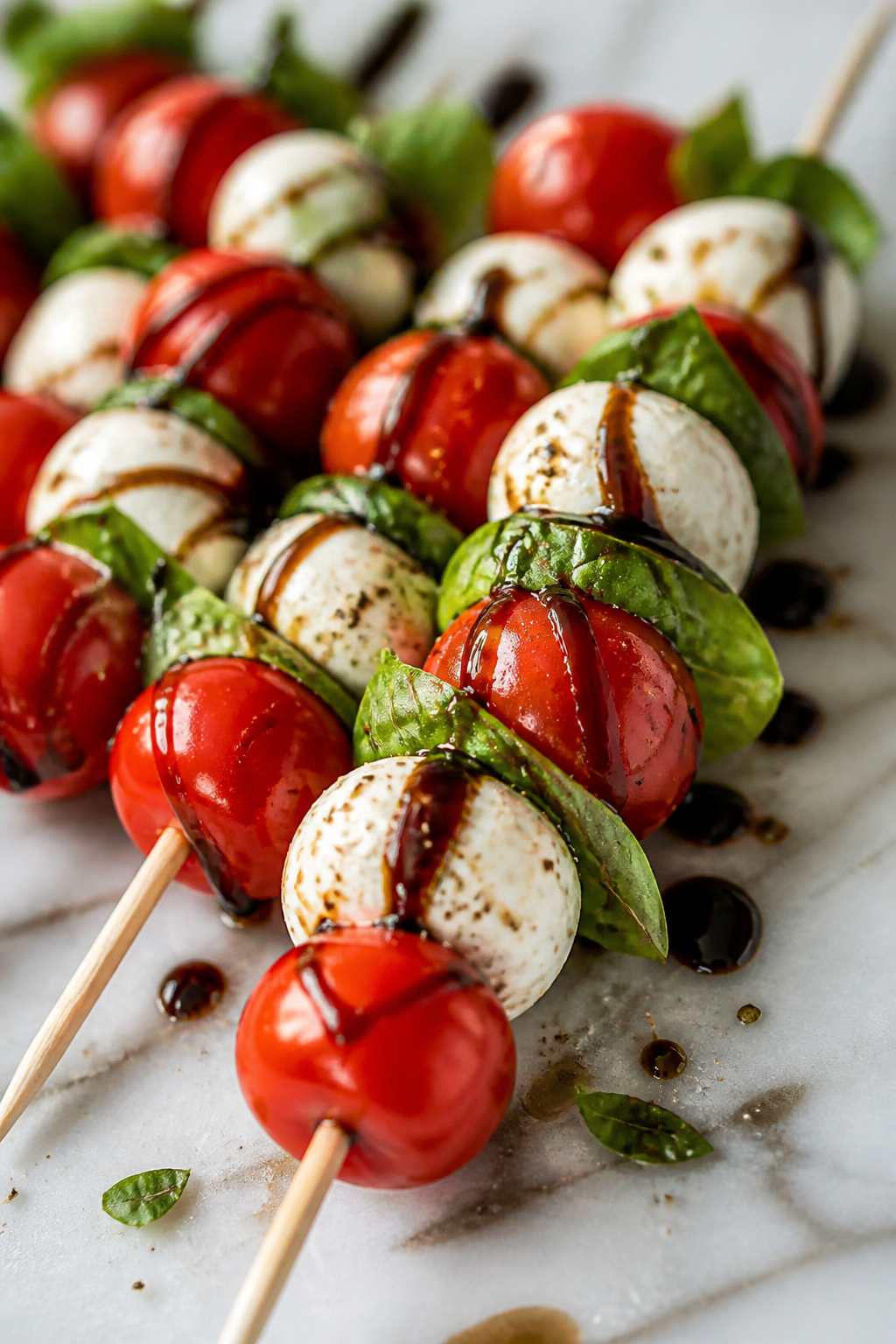
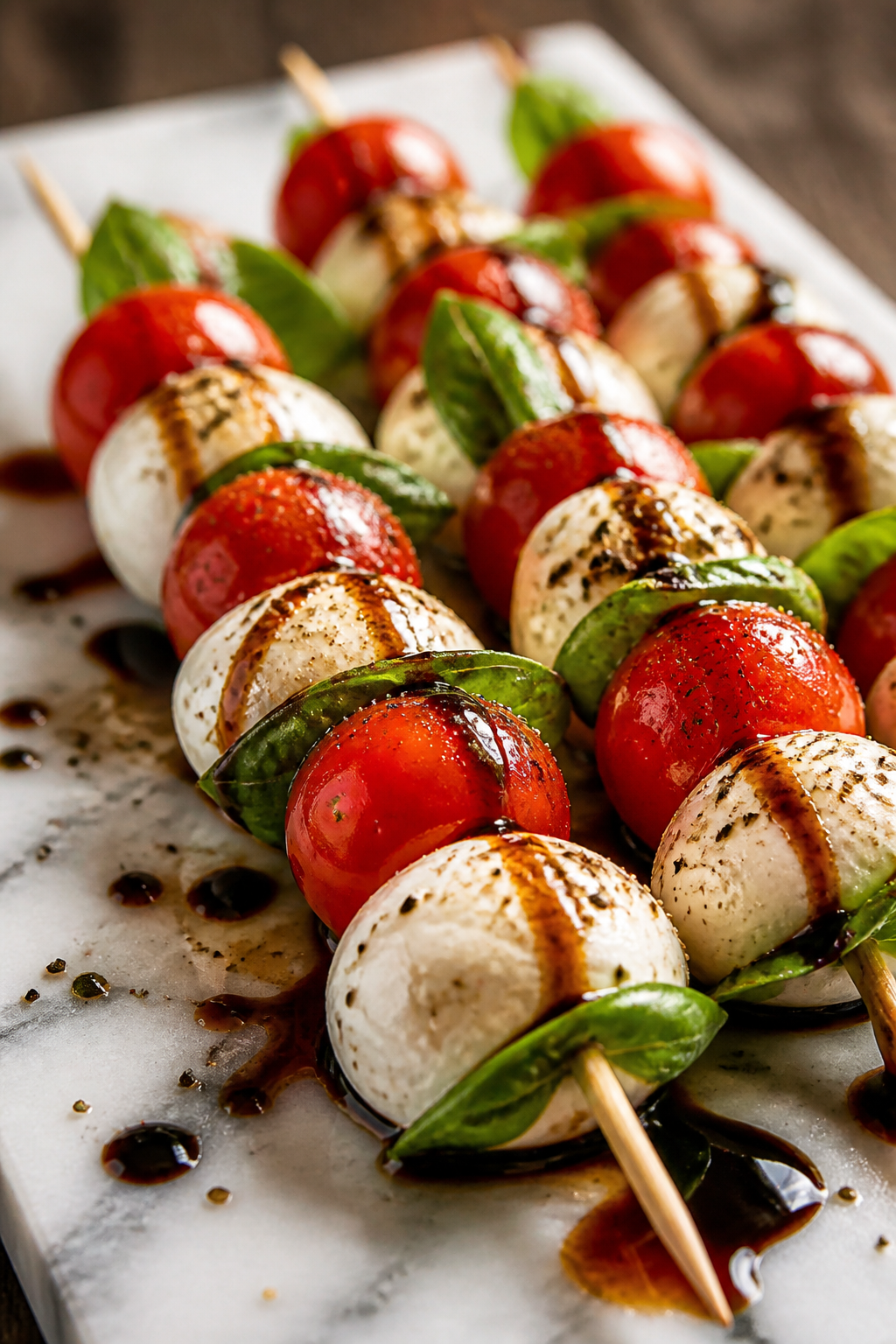
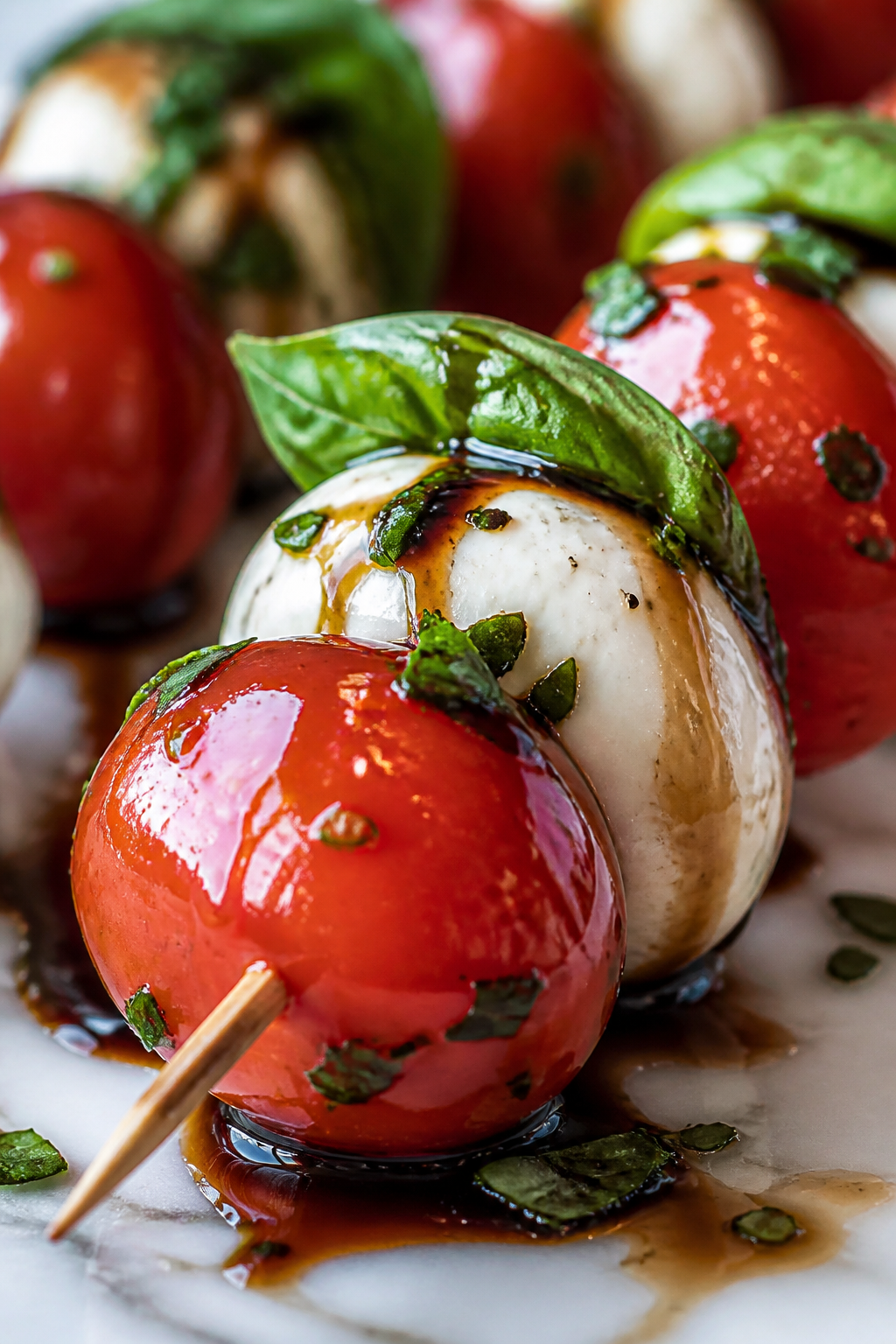
These Caprese skewers are a fresh, light snack perfect for summer. Juicy cherry tomatoes, creamy mozzarella, and fragrant basil come together with a tangy balsamic glaze. Great for casual get-togethers or an easy appetizer!
Introduction
I first stumbled upon Caprese skewers at a summer picnic years ago, and I was hooked instantly. They’re like the perfect little bites of Italy—simple, fresh, and bursting with flavor. I love that you don’t need to fuss with cooking or complicated prep; just assemble and enjoy. Over time, I tweaked the balance of ingredients a bit, making sure the mozzarella is fresh and the basil leaves are just the right size to fit on the skewers without overpowering the other flavors. One trick I learned is to drizzle the balsamic glaze right before serving so it stays glossy and doesn’t make the skewers soggy. These skewers look beautiful on a platter, and they’re always the first to disappear at any party I bring them to. The combination of creamy mozzarella, juicy tomatoes, and fragrant basil, all kissed with a bit of tangy sweetness from the glaze, makes them a refreshing snack or appetizer any time you want something light and tasty. Plus, they’re naturally gluten-free and vegetarian, which is a huge bonus when feeding a crowd with different dietary needs. Honestly, these skewers have become my go-to for summer get-togethers, and I’m excited to share my version with you because they’re just that good and easy!
What You'll Need
Approximately 20 skewers, serves 6 as appetizer
- 20 cherry tomatoes, ripe
- 10 oz fresh mozzarella balls (bocconcini), drained
- 20 fresh basil leaves
- 2 tablespoons balsamic glaze
- 20 small wooden skewers or toothpicks
- Salt and freshly ground black pepper, to taste
- 1 tablespoon extra virgin olive oil (optional)
How To Do It
Step 1
Start by washing the cherry tomatoes and fresh basil leaves thoroughly under cold water. Pat them dry gently with a clean kitchen towel or paper towels. Drying is crucial here because any moisture left on the ingredients can dilute the flavors and make the balsamic glaze slide off. Also, wet ingredients can make the skewers soggy later, so take your time to get them as dry as possible. I usually lay them out on a towel and let them air dry for a few minutes while prepping other things.
⏱ Time: 5 minutes
✓ Doneness: Tomatoes and basil leaves feel dry to the touch without any water droplets remaining
Step 2
Drain the fresh mozzarella balls well in a fine-mesh sieve or colander to remove excess liquid. If you have larger mozzarella, tear or cut it into bite-sized pieces that will fit nicely on a skewer with the tomatoes and basil. This step prevents watery skewers and keeps the cheese firm so it doesn’t fall apart when eating. If you skip draining, the cheese can get mushy and affect the overall texture of the appetizer.
⏱ Time: 5 minutes
✓ Doneness: Mozzarella balls feel firm and no longer release water when gently pressed
Step 3
Assemble the skewers by threading one cherry tomato, one basil leaf (folded if large), and one mozzarella ball onto each wooden skewer or toothpick. Repeat the order if your skewers are longer or to add more layers. The order matters for a balanced bite: the acidity of the tomato, the creaminess of the mozzarella, and the aromatic freshness of basil all come through best this way. Be gentle when handling the basil to avoid tearing it.
⏱ Time: 7 minutes
✓ Doneness: Each skewer holds the ingredients securely without falling apart
Step 4
Lay the assembled skewers on a serving platter in a single layer. Drizzle them evenly with about 2 tablespoons of balsamic glaze. The glaze adds a sweet and tangy finish that elevates the simple ingredients beautifully. Avoid drizzling too far ahead of time to keep the skewers fresh and prevent sogginess. If you like, you can also brush a light coating of extra virgin olive oil on top for added richness.
⏱ Time: 3 minutes
✓ Doneness: Skewers have a glossy, even coating of balsamic glaze and olive oil (if used)
Step 5
Season lightly with salt and freshly ground black pepper to taste. The salt brings out the natural sweetness of the tomatoes and balances the creaminess of the mozzarella. Be careful not to over-salt since the cheese already has some saltiness. A light sprinkle is usually enough. Freshly cracked pepper adds a subtle kick that complements the basil’s herbal notes.
⏱ Time: 2 minutes
✓ Doneness: Seasoning evenly distributed without overpowering the fresh flavors
Step 6
If you’re making these ahead of time, cover the platter loosely with plastic wrap and refrigerate until ready to serve. Don’t drizzle the balsamic glaze until just before serving to keep the presentation looking fresh and prevent the skewers from getting soggy. When ready, remove from fridge about 15 minutes before serving to take the chill off and allow flavors to come through more fully.
⏱ Time: 5 minutes prep if ahead
✓ Doneness: Skewers look fresh and vibrant with no excess moisture pooling on the platter
Step 7
For a twist, try adding a small fresh basil leaf or a tiny piece of prosciutto between the tomato and mozzarella for extra flavor and texture. This is optional but adds a nice salty dimension. Just be sure to keep the skewer balanced so it doesn’t fall apart when served.
⏱ Time: 3 minutes
✓ Doneness: Additional ingredients are securely threaded and complement the original flavors
Step 8
Serve the Caprese skewers immediately after assembling and glazing for the best flavor and texture experience. If left too long, the basil can wilt and the tomatoes might release juices that dampen the mozzarella. These are best enjoyed fresh and at room temperature or slightly chilled.
⏱ Time: Immediate serving recommended
✓ Doneness: Skewers look fresh, vibrant, and hold their shape well on the platter
Step 9
Clean up is a breeze since there’s no cooking involved. Just toss the used skewers and wipe down your prep area. These skewers make a perfect starter, snack, or part of a picnic spread, and they’re guaranteed to impress without much effort.
⏱ Time: 2 minutes
✓ Doneness: Prep area tidy and ready for next cooking adventure
Pro Tips
Dry all ingredients thoroughly before assembling the skewers.
Excess moisture from wet tomatoes, basil, or mozzarella can dilute the flavors and cause the balsamic glaze to slide off, making the skewers soggy and less appealing. Drying ensures the glaze sticks well and the ingredients maintain their texture.
Add the balsamic glaze just before serving.
The glaze’s sticky texture is perfect for finishing the skewers, but if applied too early, it can soak into the mozzarella and tomatoes, causing a mushy texture. Applying it last keeps the skewers fresh and visually appealing.
Use small wooden skewers or toothpicks for easy serving and eating.
These allow for balanced bites and make the appetizer easy to handle at parties. Larger skewers can overpower the delicate ingredients or make the serving platter look cluttered.
Fold larger basil leaves to fit neatly on the skewers.
Folding basil keeps the herb proportionate to the tomato and mozzarella, preventing it from overpowering the flavors and making the bites easier to eat without falling apart.
Serve the skewers at room temperature.
Chilled mozzarella loses some creaminess and tomatoes become less sweet when cold. Allowing the skewers to sit at room temp for 10-15 minutes enhances the overall flavor and texture.
Season lightly with salt and freshly ground black pepper.
Salt enhances the natural sweetness of the tomatoes and the creaminess of mozzarella. Pepper adds a subtle heat that complements the basil’s herbal notes, balancing the flavor profile.
Prepare skewers shortly before serving for best freshness.
While you can prep ahead, assembling too early can cause the basil to wilt and moisture to build up. Freshly assembled skewers look vibrant and taste their best.
Common Mistakes to Avoid
Using wet or un-drained mozzarella and tomatoes
Why it happens Many assume a quick rinse is enough, but not properly drying ingredients leads to watery skewers.
Fix Drain mozzarella thoroughly and pat dry tomatoes and basil. This prevents sogginess and keeps flavors concentrated.
Drizzling balsamic glaze too early
Why it happens Sometimes people prep everything in advance and add glaze at the start to save time.
Fix Add glaze just before serving to maintain texture and prevent the glaze from soaking into the ingredients.
Overloading skewers with too many ingredients
Why it happens Trying to make skewers look fuller can lead to imbalance and ingredients falling apart.
Fix Stick to one tomato, one basil leaf, and one mozzarella ball per skewer for perfect bite-sized balance.
Using large basil leaves without folding
Why it happens Large leaves can overpower the skewer and make it hard to eat neatly.
Fix Fold or tear basil leaves so they fit nicely and complement other ingredients without taking over.
Serving skewers too cold straight from the fridge
Why it happens People often refrigerate and serve immediately to keep fresh.
Fix Let skewers sit at room temperature for 10-15 minutes before serving to enhance flavor and texture.
Variations
Prosciutto Wrapped Caprese Skewers
Add a thin slice of prosciutto between the tomato and mozzarella for a salty, savory twist that pairs beautifully with the fresh basil and balsamic glaze. These skewers have a richer flavor and a bit more texture, perfect for guests who love a meaty bite.
Note: Be sure to slice the prosciutto thinly and fold it neatly so it doesn’t overpower the skewer or cause it to fall apart.
Pesto Drizzled Caprese Skewers
Swap the balsamic glaze for a drizzle of fresh basil pesto. This variation adds a herby, nutty flavor and a bit more oiliness, which complements the creamy mozzarella and juicy tomatoes in a different but equally delicious way.
Note: Use a smooth pesto and drizzle lightly to avoid making the skewers too oily or heavy.
Caprese Skewers with Avocado
Add small cubes of ripe avocado for a creamy, buttery texture that pairs nicely with the fresh ingredients. This makes the skewers more filling and adds a subtle richness that’s perfect for a light lunch or snack.
Note: Add avocado last and serve immediately to prevent browning; squeeze a bit of lemon juice on avocado cubes to keep them fresh longer.
Spicy Caprese Skewers with Chili Flakes
Sprinkle a pinch of red chili flakes over the assembled skewers for a little kick. This variation adds heat that contrasts with the mild mozzarella and sweet tomatoes, giving the appetizer a fun, unexpected twist.
Note: Add chili flakes sparingly and adjust to taste to avoid overpowering the fresh flavors.
Caprese Skewers with Marinated Mozzarella
Marinate the mozzarella balls in olive oil, garlic, and herbs for a few hours before assembling. This infuses the cheese with extra flavor and adds depth to the classic bite, making it more aromatic and savory.
Note: Drain marinated mozzarella well before skewering to avoid excess oil dripping off.
Nutrition
Per Serving:
Nutritional values are estimates and may vary based on specific ingredients used.
Storage & Tips
Room Temperature
Caprese skewers can be safely kept at room temperature for up to 2 hours covered with a clean cloth or plastic wrap to prevent drying out. Beyond this, the fresh ingredients may wilt or lose their texture.
Refrigerator
Store in an airtight container in the fridge for up to 2 days. The basil may wilt and the tomatoes soften, so it’s best to add balsamic glaze just before serving and let skewers come to room temperature for 10-15 minutes before eating.
Freezer
Freezing is not recommended as fresh mozzarella and tomatoes lose their texture and become watery upon thawing. It’s best to enjoy these skewers fresh.
Reheating
These skewers are best served cold or at room temperature and should not be reheated. If you want a warm appetizer, consider roasting tomatoes separately.
Make Ahead
You can prep all ingredients ahead by washing and drying tomatoes and basil, draining mozzarella, and storing each separately in the fridge. Assemble skewers and drizzle with balsamic glaze just before serving to maintain freshness.
FAQ
Can I use regular mozzarella instead of fresh mozzarella balls?
Regular shredded mozzarella doesn’t work well for Caprese skewers because it lacks the creamy texture and shape needed for skewering. Fresh mozzarella balls (bocconcini) are best since they hold their shape and provide the right creaminess and moisture balance.
How do I keep the basil from wilting before serving?
Keep basil leaves dry and store them separately in a paper towel-lined container in the fridge until assembly. Assemble skewers shortly before serving and avoid adding balsamic glaze too early, as moisture and acidity can cause basil to wilt quickly.
What can I substitute if I don’t have balsamic glaze?
You can reduce balsamic vinegar on the stove to a syrupy consistency at home or use a high-quality aged balsamic vinegar sparingly. Alternatively, a drizzle of honey mixed with a splash of vinegar can mimic the sweet-tangy flavor, but the glaze’s thickness is hard to replicate.
Can I make these skewers ahead of time?
You can prep ingredients in advance, but assemble skewers and add balsamic glaze just before serving. Pre-assembled skewers left too long can become soggy and basil may wilt, so for best results, keep assembly close to serving time.
How do I prevent the mozzarella from falling off the skewer?
Make sure mozzarella balls are drained well and not too soft. Thread the skewer gently through the center of the mozzarella to secure it. Using small balls or cutting larger mozzarella into firm bite-sized pieces also helps keep them stable.
What’s the best way to serve these at a party?
Arrange skewers on a large platter and drizzle with balsamic glaze just before guests arrive. Serve at room temperature for best flavor. You can provide small plates and napkins so guests can easily grab and enjoy without mess.
Can I add other ingredients to the skewers?
Absolutely! You can add items like olives, cucumber slices, or even small pieces of prosciutto for variety. Just be mindful of balance so the flavors complement each other and the skewers remain easy to eat.
Why do some Caprese skewers turn out soggy?
Sogginess usually comes from excess moisture in the mozzarella or tomatoes and adding balsamic glaze too early. Drying ingredients thoroughly and adding glaze at the last minute prevents this, keeping the skewers fresh and crisp.
Final Thoughts
I hope you enjoy making these fresh Caprese skewers as much as I do! They’re simple, stunning, and always a hit—don’t forget to share your results with friends and family.