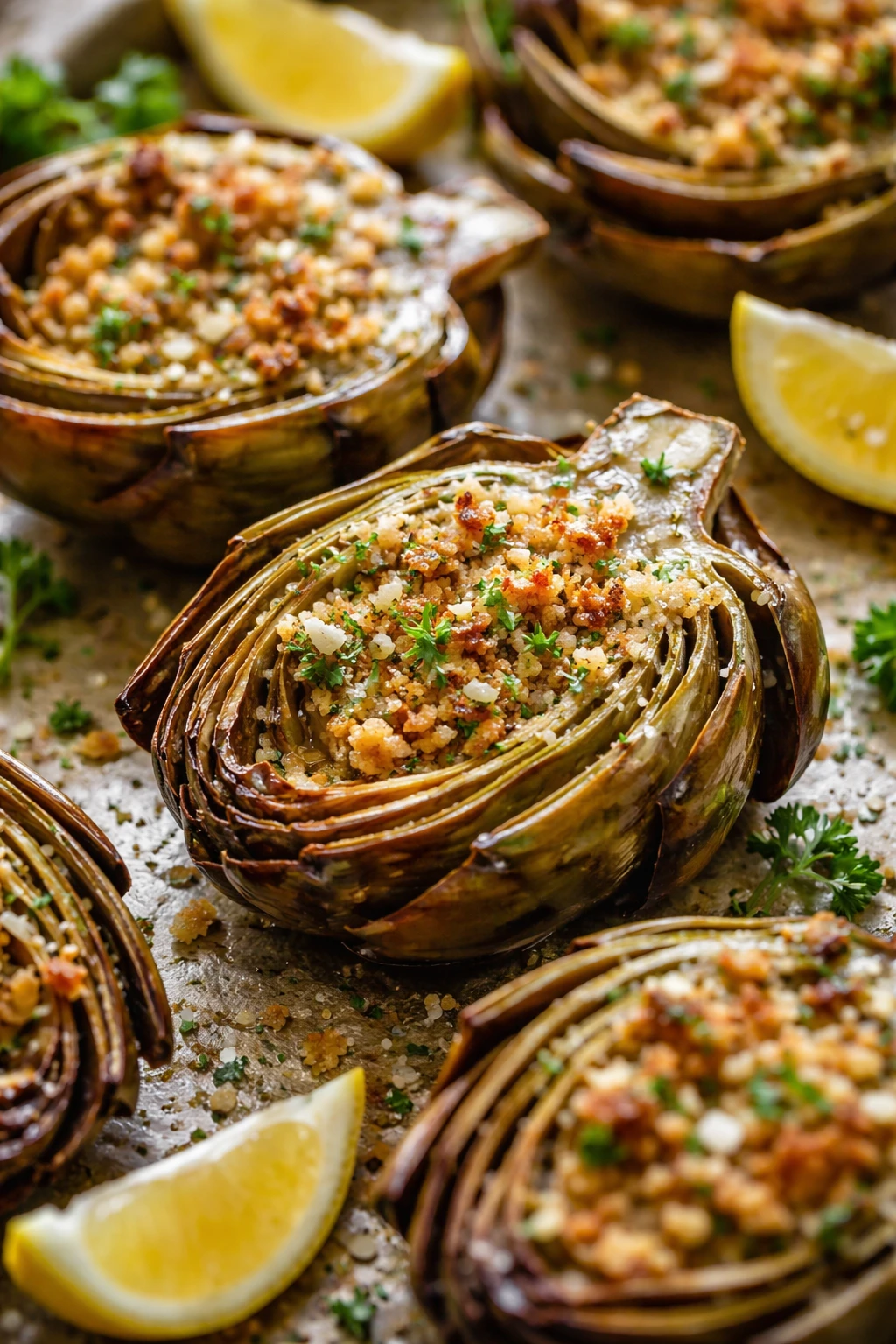
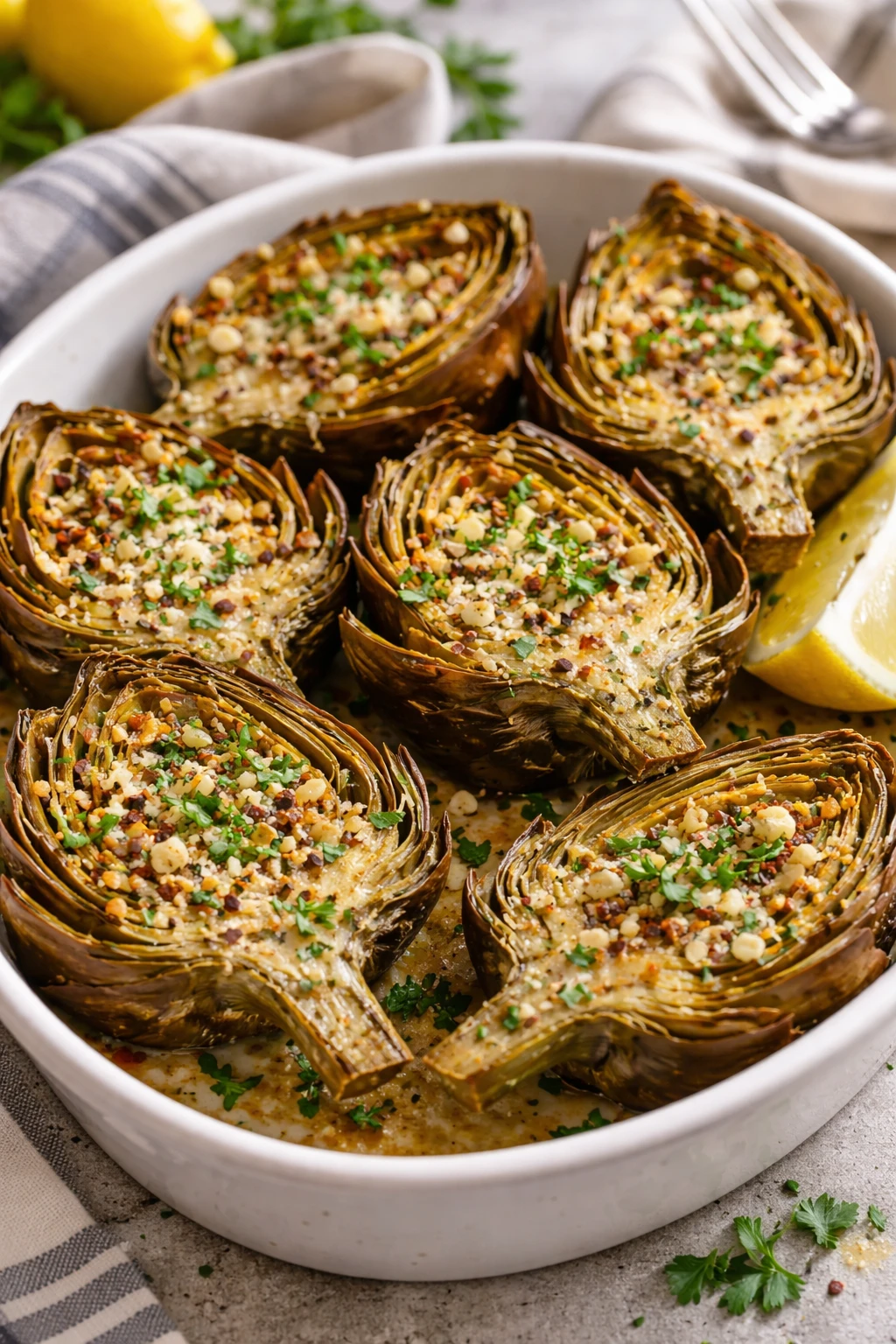
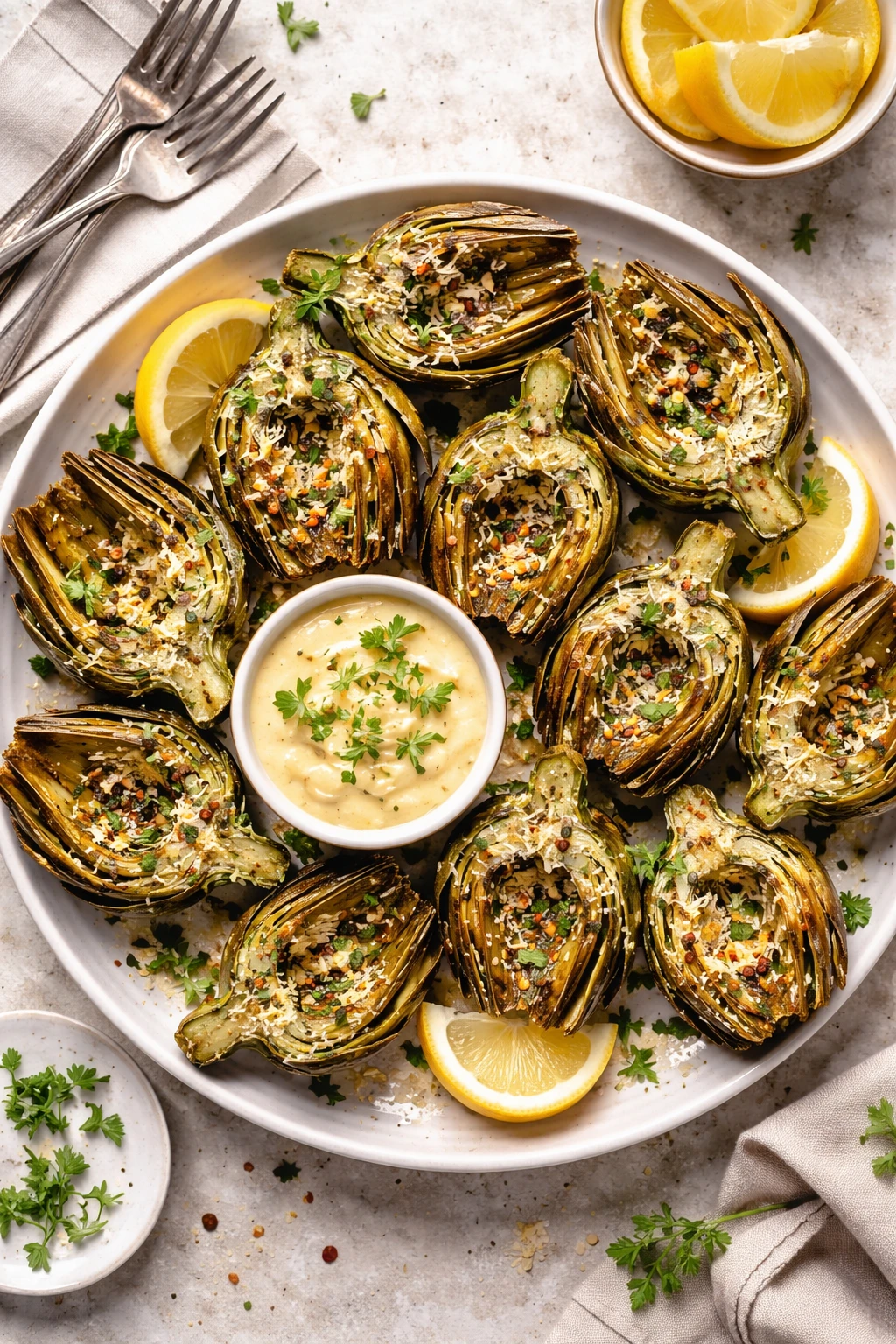
These baked artichokes are tender and bursting with bright lemon and garlic flavors. The roasting process softens them perfectly, making a great snack or side dish any time you want something fresh and easy.
Introduction
I first stumbled upon roasting artichokes on a lazy weekend when I wanted something easy but a little different from my usual vegetable sides. I used to steam or boil artichokes, but roasting them with garlic and lemon unlocked a whole new flavor profile — tender hearts with a bright, garlicky tang. What makes this version stand out is the simple technique of slicing garlic thinly and layering it inside the leaves, so every bite has a little burst of flavor. Plus, roasting caramelizes the edges slightly, giving a nice depth you don’t get with boiling. I’ve made these for casual family dinners and even as a fancy appetizer for friends, and they always disappear fast. The finished artichokes come out soft yet still hold their shape, with a fresh lemon zing that keeps it light. If you’re a fan of veggies with a bit of punch, this recipe is a keeper — simple, satisfying, and surprisingly elegant.
How To Do It
Step 1
Start by prepping your artichokes. Trim the stem so they can sit flat, and snip off the sharp tips of the leaves with kitchen scissors to make them easier to eat. Then, spread the leaves apart a little to create room for the garlic slices. This step is crucial because it allows the garlic and lemon flavors to infuse deeply into the artichoke as it roasts. Avoid skipping the trimming; those sharp tips can be unpleasant to eat and make handling tricky.
⏱ Time: 10 minutes
✓ Doneness: Artichokes trimmed with leaves gently pulled apart, garlic slices nestled between leaves
Step 2
In a small bowl, mix olive oil with lemon juice, lemon zest, salt, and pepper. Drizzle some of this mixture over and inside the artichokes, making sure to coat the garlic slices too. This oil-lemon mix not only adds flavor but also helps keep the artichokes moist during roasting. Don’t rush this step; thorough coating ensures the citrus and garlic flavors penetrate well, resulting in a balanced taste throughout.
⏱ Time: 5 minutes
✓ Doneness: Artichokes evenly coated with a glossy, lemony olive oil mixture
Step 3
Preheat your oven to 400°F (200°C). Place the artichokes upright in a baking dish or on a rimmed sheet pan. Cover tightly with foil to trap steam, which helps cook the artichokes evenly and tenderize them without drying out. This cover is key to achieving soft hearts while keeping the garlic from burning. If you don’t cover them, the garlic can become bitter and the artichokes dry.
⏱ Time: 5 minutes to prep, 25 minutes to cook
✓ Doneness: Artichokes steaming under foil in a hot oven
Step 4
Roast the artichokes covered for 25 minutes. Then, carefully remove the foil and roast uncovered for another 5-10 minutes to let the tops caramelize slightly. This final step adds a subtle nuttiness and texture contrast that makes the dish extra special. Watch closely to avoid burning the garlic slices, which can happen quickly once uncovered.
⏱ Time: 30 minutes total
✓ Doneness: Artichokes tender when pierced with a knife and edges lightly browned
Step 5
Once out of the oven, let the artichokes cool slightly before serving. Sprinkle with chopped fresh parsley for a pop of color and freshness. The parsley brightens the rich garlic and lemon flavors and adds a lovely herbal note that rounds out the dish. Skipping this garnish won’t ruin the dish but it definitely elevates it.
⏱ Time: 5 minutes
✓ Doneness: Artichokes garnished with fresh green parsley, ready to serve
Step 6
To eat, pull off the leaves one by one and scrape the tender flesh with your teeth. When you reach the heart, it’s the best part — soft, flavorful, and perfect for dipping or eating plain. This texture contrast between the slightly fibrous leaves and the creamy heart is what makes artichokes so fun and unique. Don’t rush this step; take your time to enjoy each bite.
⏱ Time: No cooking time
✓ Doneness: Leaves pull away easily, heart is soft and creamy
Step 7
If you want to add a little extra zing, serve the artichokes with a small bowl of melted butter or aioli for dipping. The richness pairs beautifully with the tangy lemon and garlic, creating a balanced flavor experience. This optional step is great for entertaining or when you want to feel a bit indulgent.
⏱ Time: No cooking time
✓ Doneness: Dipping sauce prepared and ready alongside artichokes
Step 8
Leftovers can be reheated gently in the oven or eaten cold in salads. To reheat, cover loosely with foil and warm at 350°F (175°C) for about 10 minutes to avoid drying them out. This method keeps the artichokes tender and preserves the infused flavors. Avoid microwaving as it can make them rubbery.
⏱ Time: 10 minutes reheating
✓ Doneness: Artichokes warmed through but still moist
Step 9
For the best flavor, use fresh, firm artichokes with tightly packed leaves. Older or wilted artichokes tend to be tougher and less flavorful. When choosing artichokes, look for a fresh green color and a slight squeak when you squeeze the leaves. This selection ensures your roasted dish will be tender and delicious every time.
⏱ Time: No cooking time
✓ Doneness: Fresh artichokes selected, firm and green
Pro Tips
Trim the artichoke leaves carefully, snipping the sharp tips with kitchen scissors.
This makes the artichokes easier and safer to handle and eat. Sharp leaf tips can be unpleasant and cause discomfort while eating, so trimming ensures a better experience without altering the texture or flavor.
Slice garlic thinly and tuck it between the artichoke leaves.
Thin slices roast evenly and infuse the artichoke with flavor gradually. This prevents the garlic from burning, which would create bitterness, and allows the mellow roasted garlic flavor to develop throughout.
Cover the artichokes with foil during roasting.
Covering traps steam and moisture, gently cooking the artichokes to tender perfection without drying them out. It also protects the garlic from burning and helps the lemon and oil flavors penetrate deeply.
Roast uncovered at the end to caramelize the edges.
Removing the foil for the last few minutes allows the Maillard reaction to develop on the surface, adding savory depth and a slightly crisp texture that contrasts beautifully with the soft interior.
Use fresh lemon zest and juice instead of bottled lemon juice.
Fresh lemon zest adds essential oils and brightness that bottled juice lacks, enhancing aroma and flavor complexity. The lemon juice adds brightness and acidity that balances the richness of olive oil and garlic.
Let the artichokes cool slightly before serving.
Cooling allows flavors to settle and makes the artichokes easier to handle. It also lets the natural juices redistribute, resulting in a juicier bite rather than losing moisture when cut or pulled apart too soon.
Serve with a simple dipping sauce like melted butter or aioli.
The richness complements the bright, tangy artichokes and adds a creamy texture contrast. This elevates the dish from simple roasted veggies to a more indulgent appetizer or snack.
Common Mistakes to Avoid
Not trimming the artichoke leaves properly.
Why it happens Many cooks underestimate how sharp the leaf tips are and skip this step to save time.
Fix Use kitchen scissors to snip off the sharp points carefully before cooking. This makes eating much more pleasant and safer, preventing accidental cuts or pokes.
Using bottled lemon juice instead of fresh.
Why it happens Bottled lemon juice is convenient and often on hand, so it’s an easy substitution.
Fix Always use fresh lemon juice and zest for best flavor. The fresh zest adds aromatic oils that bottled juice lacks, giving a brighter, fresher taste.
Roasting without covering the artichokes.
Why it happens Some might think roasting uncovered speeds up cooking or makes it crispier.
Fix Cover artichokes with foil for most of the cooking time to trap steam and soften the vegetable. Remove foil only at the end for a brief caramelization step.
Overcooking the artichokes until mushy.
Why it happens Trying to get them very soft can lead to loss of texture and unpleasant mushiness.
Fix Check doneness by piercing the heart with a knife; it should be tender but still hold shape. Remove from oven once this happens to keep ideal texture.
Skipping the garlic or adding too much.
Why it happens Some avoid garlic fearing overpowering flavor, or add too many slices hoping for more taste.
Fix Add garlic thinly and sparingly between leaves to infuse flavor without overwhelming. Roasting mellows garlic, but too much can dominate the dish.
Variations
Spicy Roasted Artichokes
Add a pinch of red pepper flakes to the olive oil and lemon mixture before roasting to give these artichokes a gentle heat kick. The spicy notes contrast nicely with the lemon’s brightness and garlic’s sweetness, creating a more complex flavor profile.
Note: Incorporate the chili flakes early with the oil to allow the heat to infuse evenly. Watch for overheating the garlic to prevent bitterness.
Parmesan Crusted Roasted Artichokes
Sprinkle grated Parmesan cheese over the artichokes during the last 5 minutes of roasting. This adds a salty, nutty crust that pairs beautifully with the lemon and garlic flavors, making the dish richer and more indulgent.
Note: Add the cheese only after removing foil to allow it to melt and brown without burning.
Herb-Infused Roasted Artichokes
Mix fresh thyme or rosemary into the olive oil and lemon mixture before coating the artichokes. The herbs add an earthy aroma and complement the garlic and lemon, bringing a fragrant twist to the classic recipe.
Note: Use fresh herbs finely chopped and distribute evenly to avoid clumping or burning.
Vegan Aioli Dipping Sauce
Serve the roasted artichokes with a homemade vegan aioli made from blended silken tofu, garlic, lemon juice, and olive oil. This creamy, flavorful dip keeps the dish plant-based and adds a luscious texture contrast.
Note: Prepare the aioli ahead to let flavors meld; keep chilled until serving.
Grilled Roasted Artichokes
After roasting, finish the artichokes on a hot grill for 2-3 minutes per side to add smoky char marks and deepen flavor. This variation adds a rustic touch and pairs well with summer barbecues.
Note: Handle artichokes carefully on the grill to avoid leaf damage and watch closely to prevent burning.
Nutrition
Per Serving:
Nutritional values are estimates and may vary based on specific ingredients used.
Storage & Tips
Room Temperature
Roasted artichokes can be kept at room temperature for up to 2 hours if covered loosely with foil or a clean cloth to avoid drying. Beyond this, bacterial growth risk increases, so refrigerate promptly for safety.
Refrigerator
Store cooled roasted artichokes in an airtight container in the fridge for up to 3 days. Flavors may mellow slightly when cold; reheat gently in the oven or enjoy cold in salads for a different texture and experience.
Freezer
Freeze roasted artichokes for up to 1 month. Wrap tightly in plastic wrap and then place in a freezer-safe container to prevent freezer burn. Thaw overnight in the refrigerator before reheating to maintain texture.
Reheating
Reheat in a preheated oven at 350°F (175°C) for about 10 minutes, covered loosely with foil to retain moisture. Avoid microwaving as it can make artichokes rubbery and unevenly heated. Adding a splash of water or olive oil before reheating helps keep them moist.
Make Ahead
You can prepare and roast the artichokes 1 day ahead, then cool and refrigerate. Reheat gently before serving. Alternatively, prep and trim artichokes up to 2 days ahead, storing them submerged in lemon water in the fridge to prevent browning.
FAQ
Can I use canned or frozen artichokes instead of fresh?
While canned or frozen artichokes are convenient, they won't achieve the same texture or flavor as fresh ones in this recipe. Fresh artichokes hold up better to roasting and absorb the garlic and lemon flavors more effectively. If using canned, consider a different preparation method like sautéing.
How do I know when the artichokes are fully cooked?
Check doneness by inserting a knife or skewer into the base or heart; it should slide in easily without resistance. The leaves should pull away easily but not be mushy. Overcooking leads to a mushy texture, so start checking around 25 minutes.
What if I don’t have fresh garlic? Can I use garlic powder?
Fresh garlic slices are important for roasting because they release moisture and mellow their flavor. Garlic powder won’t provide the same texture or depth and can burn easily. If needed, add garlic powder sprinkled on after roasting for aroma but not as a substitute inside the leaves.
Can I prepare these artichokes in advance for a party?
Yes! You can trim and prep artichokes 1-2 days ahead, storing them submerged in lemon water to prevent browning. Roasting can be done the day of or in advance and reheated gently before serving. This makes entertaining easier without sacrificing freshness.
Why do I need to cover the artichokes during roasting?
Covering traps steam released from the artichokes, which helps cook them evenly and keeps them moist. Without covering, they can dry out and the garlic may burn, resulting in bitter flavors and tougher texture. Uncover only at the end for browning.
What’s the best way to eat roasted artichokes?
Pull off the leaves one by one and scrape the tender flesh with your teeth. The heart is the most tender and flavorful part and can be cut into pieces for easy eating. Pairing with a dipping sauce like aioli or melted butter enhances the experience.
Can I add other herbs or spices to this recipe?
Absolutely! Fresh herbs like thyme or rosemary add a lovely aroma. You can also add chili flakes for heat or Parmesan for richness. Just add these during the oil and lemon coating step or toward the end of roasting, depending on the ingredient.
How do I prevent the garlic from burning?
Slice garlic thinly and place it between the leaves where it’s protected somewhat from direct heat. Roasting covered with foil also prevents burning by maintaining moisture. Avoid adding garlic on top uncovered early in cooking.
Final Thoughts
Give these roasted garlic lemon artichokes a try — they’re one of my favorite easy veggie dishes that always impress. I’d love to hear how yours turn out!