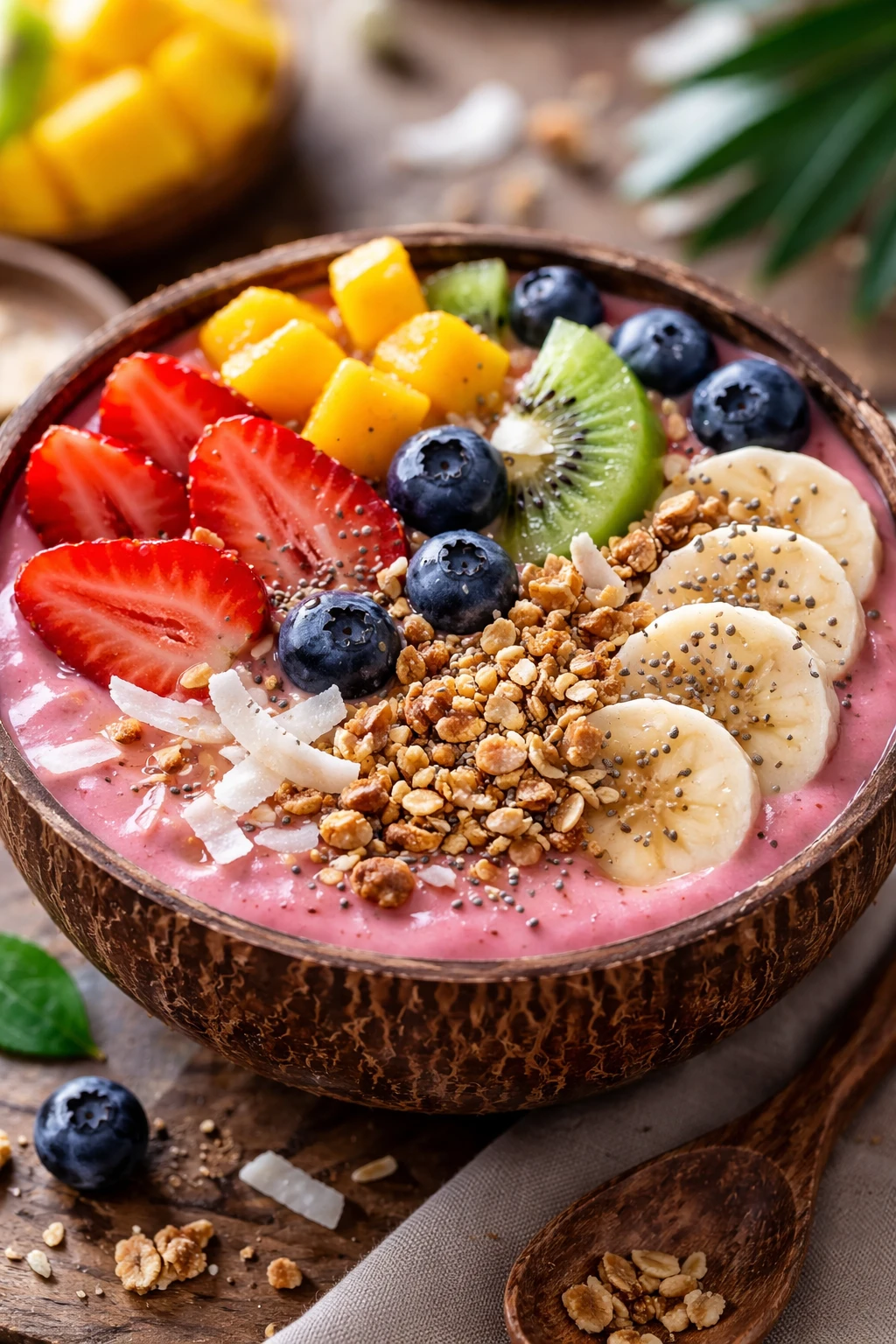
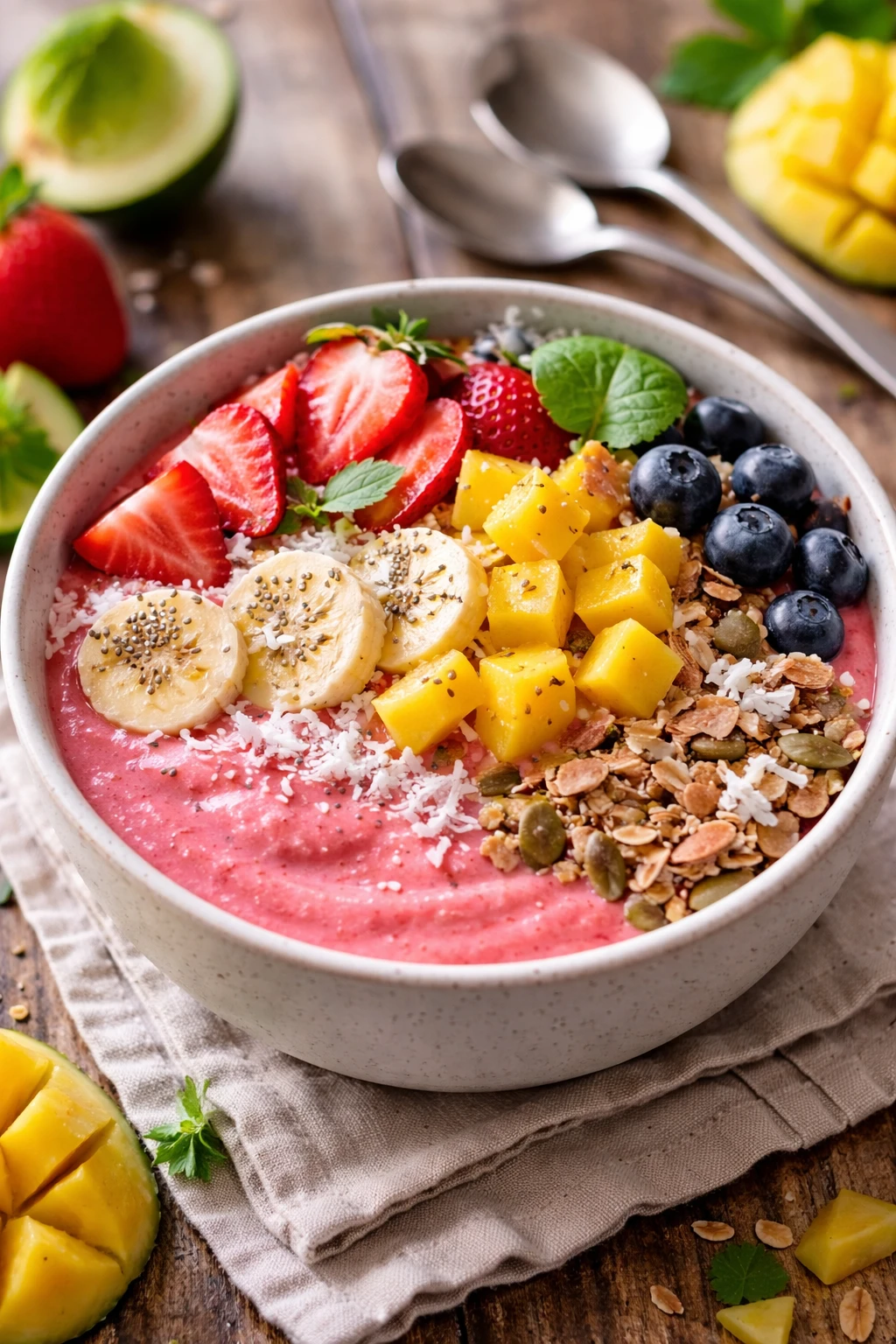
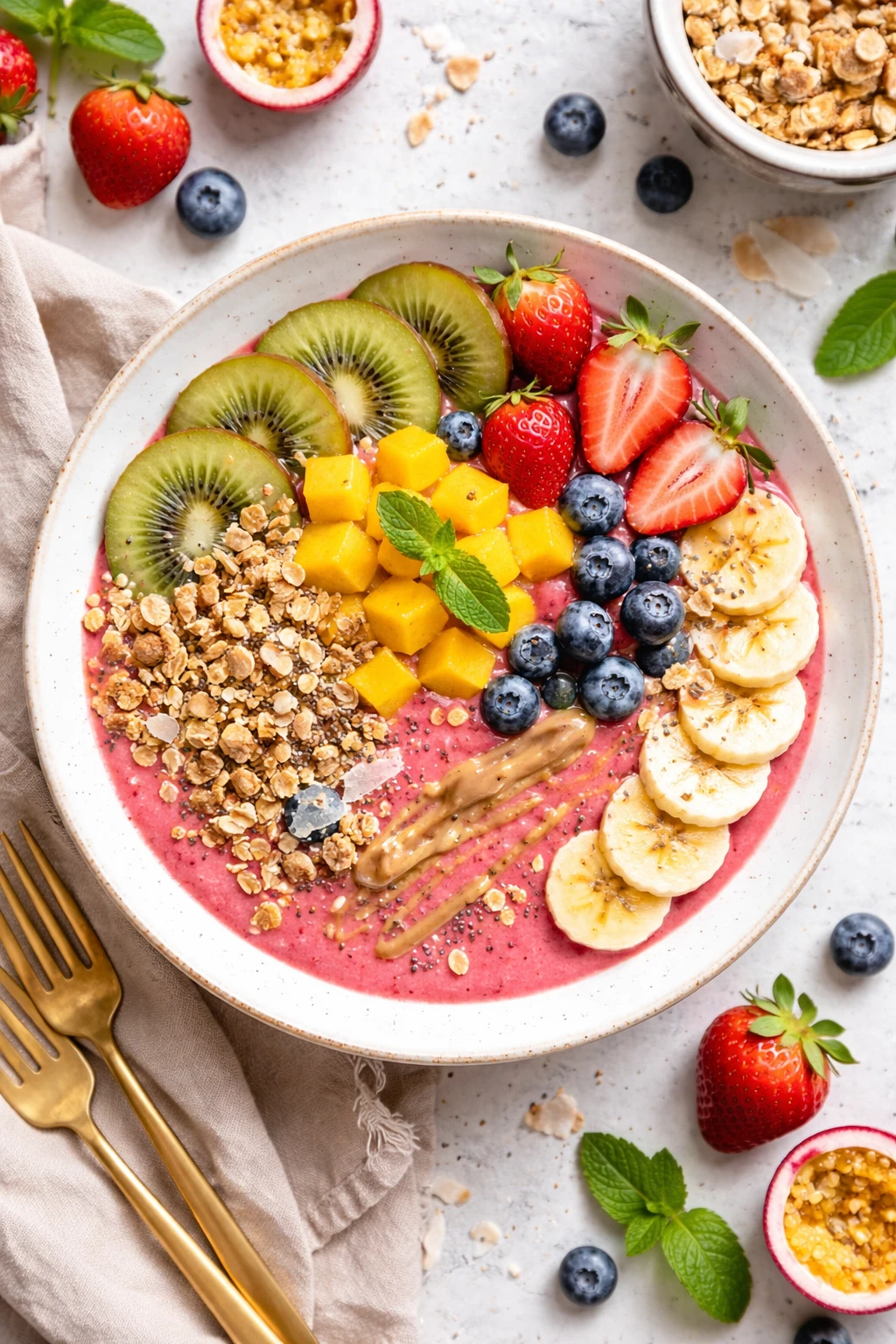
This tropical smoothie bowl is a fresh, creamy treat packed with protein and vibrant fruits. Using coconut water as the base keeps it light and refreshing. Great for sunny mornings or after a workout!
Introduction
I first made this tropical smoothie bowl on a hot summer morning when I wanted something cool, refreshing, and nourishing all at once. The idea of blending frozen tropical fruits with coconut water sounded perfect, but the real game changer was adding a scoop of protein powder and Greek yogurt for creaminess and staying power. Unlike typical smoothie bowls that can feel heavy or overly sweet, this one strikes a balance — light and hydrating from the coconut water, but still filling because of the protein. I also like to top it with colorful fresh fruits and a sprinkle of chia seeds for a little crunch. The trick I learned was to use frozen fruit chunks instead of fresh to get that thick, spoonable texture without needing ice, which can water down the flavor. Plus, coconut water adds a subtle sweetness and electrolytes, making it ideal after workouts or as a bright start to the day. When you take that first spoonful, you’ll notice the creamy texture with bursts of tropical flavors that feel like a mini vacation in a bowl. It’s quick, easy, and always hits the spot when I want something healthy but exciting.
How To Do It
Step 1
Begin by gathering all your frozen fruits – mango, pineapple, and banana. Using frozen fruit is key to achieving the thick, creamy texture that makes smoothie bowls so satisfying. Add them to your blender first so they blend easily without needing additional ice, which can dilute the flavor. This step sets the foundation for the bowl’s texture and flavor, so don’t skip the frozen fruit or substitute fresh unless you add ice.
⏱ Time: 3 minutes
✓ Doneness: You should see a thick, icy mixture with no large chunks of fruit left.
Step 2
Pour in the coconut water and add the Greek yogurt and vanilla protein powder. The coconut water keeps the smoothie light and hydrating, while the yogurt and protein powder add creaminess and help the bowl keep you full longer. Blend everything on high until smooth and creamy, but thick enough to eat with a spoon. Rushing this step can leave chunks or make the texture uneven.
⏱ Time: 2 minutes
✓ Doneness: The mixture should be smooth, thick, and creamy, not runny.
Step 3
Taste your smoothie base and adjust sweetness if needed. Sometimes the frozen fruits are perfectly sweet, but if you want a bit more, add a teaspoon of honey or maple syrup and blend briefly. This customization lets you control the sweetness without overpowering the natural fruit flavors.
⏱ Time: 1 minute
✓ Doneness: Smoothie tastes balanced — fruity with a hint of sweetness.
Step 4
Spoon the smoothie mixture into bowls carefully. Aim to keep the surface smooth and even, as this will make adding toppings easier and more visually appealing. Presentation matters here because the toppings add texture and color that make the bowl inviting.
⏱ Time: 2 minutes
✓ Doneness: Bowls are filled evenly with a smooth surface ready for topping.
Step 5
Add your favorite toppings like sliced kiwi, shredded coconut, fresh berries, and chia seeds. These toppings add texture contrasts and extra nutrition. For example, chia seeds add fiber and omega-3s, while fresh fruits add brightness and freshness. Arrange toppings thoughtfully to create a colorful, appetizing look.
⏱ Time: 3 minutes
✓ Doneness: Toppings are evenly distributed, colorful, and fresh-looking.
Step 6
Serve immediately to enjoy the fresh, creamy texture. Smoothie bowls are best eaten right away because they start to melt and lose their thick texture if left sitting. If you must wait, keep them in the fridge but expect a thinner consistency.
⏱ Time: Immediate
✓ Doneness: Smoothie bowl is cold, thick, and creamy at serving.
Step 7
If you want to prepare ahead, blend the smoothie base and store it in an airtight container in the fridge for up to 24 hours. Just give it a good stir before serving and add fresh toppings. This is a handy trick for busy mornings.
⏱ Time: 5 minutes
✓ Doneness: Smoothie base is smooth after stirring and ready to serve.
Step 8
Experiment with adding a squeeze of fresh lime juice or a small piece of ginger before blending to add a zesty kick. These fresh flavors brighten the bowl and complement the tropical fruits wonderfully.
⏱ Time: 1 minute
✓ Doneness: Smoothie has a subtle tang or spice without overpowering sweetness.
Step 9
Clean your blender immediately after use to avoid dried fruit residue, which can be tough to remove. Rinse with warm water and a drop of dish soap, then blend briefly with clean water. This keeps your blender fresh and ready for next time!
⏱ Time: 3 minutes
✓ Doneness: Blender is clean with no sticky fruit residue.
Pro Tips
Always use frozen fruit chunks instead of fresh with ice.
Frozen fruit provides the thick, creamy texture essential for a smoothie bowl without watering down the flavor like ice cubes would. The natural sugars and fiber in frozen fruit give body and sweetness, while ice melts quickly and dilutes the taste.
Add protein powder and Greek yogurt for staying power.
Protein helps balance the natural sugars in fruit and keeps you full longer. Greek yogurt adds creaminess and a slight tang that enhances flavor complexity. Without these, the bowl might be refreshing but leave you hungry soon after.
Use coconut water as your liquid base instead of juice or milk.
Coconut water hydrates and adds subtle sweetness without heaviness. Juices can be overly sweet and milk can make the bowl too rich or thick. Coconut water keeps the smoothie light and refreshing, especially great for warm weather or post-workout.
Don’t rush the blending process — blend until smooth but thick.
Blending well breaks down frozen fruit to a creamy texture but overblending can warm the mixture and thin it out. Stop blending when smooth but thick enough to hold a spoon to get the best texture.
Top your bowl with fresh fruit and crunchy seeds right before serving.
Toppings add texture contrast and fresh flavor layers. Adding them too early causes sogginess and loss of crunch. Fresh toppings also make the bowl visually appealing and more satisfying.
Experiment with a squeeze of lime or a small piece of fresh ginger.
These additions add brightness and a subtle zing that complements tropical fruits beautifully. They enhance flavor complexity without overpowering sweetness and make the bowl more refreshing.
Clean your blender immediately after use.
Fruit residues dry quickly and become sticky, making cleanup harder. Rinsing and blending soapy water right after keeps your equipment fresh and ready for next time, saving you time and effort.
Common Mistakes to Avoid
Using fresh fruit with ice instead of frozen fruit.
Why it happens Many think ice is a good substitute for frozen fruit to chill the smoothie, but ice dilutes flavor as it melts and doesn’t provide the same creamy texture.
Fix Always use frozen fruit chunks. If you don’t have frozen fruit, freeze fresh fruit in advance or add less liquid and blend carefully to keep a thick texture.
Skipping protein or yogurt, resulting in a thin, unsatisfying bowl.
Why it happens Some try to keep it simple or dairy-free but forget protein and yogurt add creaminess and satiety.
Fix Add a scoop of protein powder and a dollop of Greek yogurt or a plant-based alternative to keep the texture creamy and filling.
Overblending and warming the smoothie.
Why it happens Blending too long generates heat, which melts frozen fruit and thins the smoothie.
Fix Blend in short bursts, checking texture often, and stop when smooth but thick.
Adding toppings too early causing sogginess.
Why it happens Toppings absorb moisture and lose crunch if left sitting.
Fix Add fresh toppings just before serving for best texture.
Using flavored protein powders that clash with fruit flavors.
Why it happens Strong artificial flavors can overpower the natural tropical fruit taste.
Fix Choose mild vanilla or unflavored protein powders for balanced flavor.
Variations
Green Tropical Smoothie Bowl
Add a handful of spinach or kale to the blender for a nutrient boost without sacrificing the tropical flavor. The greens blend smoothly with the frozen fruit and coconut water, giving the bowl a vibrant green hue and extra vitamins.
Note: Blend the greens thoroughly to avoid leafy chunks and slightly increase coconut water if the mixture gets too thick.
Coconut Almond Tropical Bowl
Swap Greek yogurt for coconut yogurt and add a tablespoon of almond butter for a dairy-free, nutty twist. The almond butter adds richness and healthy fats, making the bowl more indulgent and creamy.
Note: Add almond butter gradually to avoid over-thickening and blend well to incorporate fully.
Spiced Tropical Smoothie Bowl
Add a pinch of ground turmeric and cinnamon for a warm spice note. These spices complement the tropical fruits and add anti-inflammatory benefits, perfect for a comforting yet refreshing breakfast.
Note: Start with small amounts of spices to avoid overpowering the fruit flavors.
Berry Tropical Smoothie Bowl
Mix in a handful of frozen berries like blueberries or raspberries for added antioxidants and a tart contrast to the sweet tropical fruits. This variation adds a beautiful color gradient and extra depth of flavor.
Note: Adjust sweetness by tasting since berries can add tartness; add a touch of honey if needed.
Chocolate Tropical Smoothie Bowl
Add a tablespoon of cocoa powder or chocolate protein powder for a chocolatey twist on the tropical base. The rich cocoa flavor pairs surprisingly well with coconut water and mango, making it a fun dessert-style breakfast.
Note: Use unsweetened cocoa powder and adjust sweetness accordingly to balance flavors.
Nutrition
Per Serving:
Nutritional values are estimates and may vary based on specific ingredients used.
Storage & Tips
Room Temperature
Smoothie bowls are best enjoyed fresh and should not be left at room temperature for more than 1 hour to avoid spoilage, especially due to dairy content. Cover with plastic wrap if sitting briefly.
Refrigerator
Store leftover smoothie base in an airtight container in the fridge for up to 24 hours. The texture may thicken or separate slightly; stir well before serving. Add fresh toppings just before eating as they don’t store well.
Freezer
You can freeze the smoothie base in a sealed container for up to 1 month. Thaw overnight in the fridge and stir well before serving. Texture may be slightly less creamy but still delicious.
Reheating
Smoothie bowls are served cold and should not be reheated. If too thick after refrigeration, stir in a splash of coconut water to loosen the texture.
Make Ahead
Prepare the smoothie base up to 24 hours ahead and store in the fridge. Keep toppings separate and add just before serving for the freshest texture and flavor.
FAQ
Can I use fresh fruit instead of frozen?
You can, but you’ll need to add ice cubes to get the thick, creamy texture typical of smoothie bowls. Using fresh fruit without ice results in a thinner smoothie more like a drink. For best texture, freezing your fruit beforehand is ideal.
What if I don’t have protein powder?
You can omit the protein powder, but the bowl will be less filling. To compensate, add more Greek yogurt or nut butter for extra protein and creaminess. This keeps the smoothie satisfying without the powder.
Can I make this dairy-free?
Yes! Swap Greek yogurt for coconut or almond yogurt and choose a plant-based protein powder. The texture might be slightly different but still delicious and creamy.
How do I prevent the smoothie bowl from being too runny?
Use frozen fruit chunks and blend just until smooth. Avoid adding too much coconut water at once; start with less and add more only if needed. Overblending can also thin the texture, so blend in short bursts.
What toppings work best?
Fresh tropical fruits, berries, shredded coconut, chia seeds, and nuts are all great choices. They add crunch, color, and extra nutrients. Add toppings right before serving to keep them fresh and crisp.
Can I prepare the smoothie bowl the night before?
You can prepare the smoothie base and store it in the fridge overnight. Stir well before serving and add fresh toppings in the morning. The texture might thicken slightly but still tastes great.
Why does my smoothie bowl taste bitter sometimes?
Bitterness can come from overripe or underripe fruit or certain protein powders with strong flavors. Using ripe fruit and mild-flavored protein powder helps avoid this. Also, adding a touch of natural sweetener balances any bitterness.
Is coconut water necessary?
Coconut water adds natural sweetness and electrolytes, making the smoothie light and refreshing. You can substitute with plain water or almond milk, but it will change the flavor and hydration benefits.
Final Thoughts
I hope you give this tropical smoothie bowl a try—it’s one of my favorite refreshing breakfasts to brighten the day. Don’t forget to share how yours turns out!