A tried-and-true recipe for fluffy vanilla cupcakes paired with smooth buttercream frosting, decorated with simple candy bunny faces. This recipe balances texture and sweetness, making it an ideal treat for Easter brunch or springtime celebrations. I’ll walk through the science behind the cupcake crumb and frosting consistency to help you get consistent results.
Introduction
I’ve made these Easter Bunny cupcakes many times for family gatherings in early spring. What makes this version standout is the attention to balancing the vanilla cupcake’s tender crumb with a smooth, not-too-sweet buttercream. I remember the first time I tried a cupcake that was dry or had grainy frosting—it just took away from the experience. Over time, I’ve refined the method to ensure moistness and a creamy frosting texture that holds up well to decorating. These cupcakes are ideal for kids’ parties or Easter brunch when you want a festive treat that’s approachable but still satisfying. The candy decorations add a playful touch without overwhelming the flavors. Here’s how to get consistent results every time.
What You'll Need
12 standard-sized cupcakes
- Cupcakes
- 1 1/2 cups (190g) all-purpose flour
- 1 1/2 tsp baking powder
- 1/4 tsp salt
- 1/2 cup (115g) unsalted butter, softened
- 1 cup (200g) granulated sugar
- 2 large eggs, room temperature
- 2 tsp pure vanilla extract
- 1/2 cup (120ml) whole milk, room temperature
- Buttercream Frosting
- 1 cup (230g) unsalted butter, softened
- 3-4 cups (360-480g) powdered sugar, sifted
- 2-3 tbsp (30-45ml) heavy cream or whole milk
- 1 tsp pure vanilla extract
- Pinch of salt
- Decoration
- Small candy eyes or mini chocolate chips
- Pink jelly beans or pink candy-coated chocolates for noses
- Mini marshmallows or white candy melts for ears
- Edible food-safe markers (optional)
How To Do It
Step 1
Preheat the oven to 350°F (175°C). Line a 12-cup muffin tin with paper liners or lightly grease the cups.
⏱ Time: 5 minutes
✓ Doneness: Oven fully preheated; muffin tin prepared
Step 2
In a medium bowl, whisk together the flour, baking powder, and salt until evenly combined. This ensures the leavening agent is well distributed, preventing uneven rising.
⏱ Time: 2-3 minutes
✓ Doneness: Dry ingredients uniformly mixed with no clumps
Step 3
In a large bowl, beat the softened butter and granulated sugar on medium speed with a hand mixer or stand mixer until pale, fluffy, and increased in volume, about 3-5 minutes. This creaming step traps air that helps the cupcakes rise and creates a tender crumb.
⏱ Time: 3-5 minutes
✓ Doneness: Mixture is light in color, fluffy texture, no visible sugar grains
Step 4
Add eggs one at a time, beating well after each addition, then mix in the vanilla extract. This gradual incorporation prevents the batter from curdling and maintains a smooth texture.
⏱ Time: 2-3 minutes
✓ Doneness: Batter appears smooth and slightly thickened, no streaks
Step 5
With the mixer on low speed, alternately add the flour mixture and milk in three additions, starting and ending with flour. Mix just until combined after each addition to avoid overworking gluten, which would toughen the cupcakes.
⏱ Time: 2-3 minutes
✓ Doneness: Batter is smooth and homogeneous, slightly thick but pourable
Step 6
Divide the batter evenly among the prepared muffin cups, filling each about two-thirds full. This allows room for rising without overflow.
⏱ Time: 2 minutes
✓ Doneness: Cupcake liners filled uniformly with batter
Step 7
Bake in the preheated oven for 16-18 minutes. Check doneness by inserting a toothpick into the center of a cupcake; it should come out clean or with a few moist crumbs but no raw batter.
⏱ Time: 16-18 minutes
✓ Doneness: Cupcakes are golden around edges, spring back gently when pressed
Step 8
Remove cupcakes from oven and allow to cool in the pan for 5 minutes, then transfer to a wire rack to cool completely before frosting. Cooling prevents the buttercream from melting during application.
⏱ Time: 30-40 minutes
✓ Doneness: Cupcakes are fully cooled to room temperature, no warm steam
Step 9
To prepare the buttercream, beat the softened butter on medium speed until creamy, about 2 minutes. Gradually add sifted powdered sugar, one cup at a time, mixing on low until combined. Add vanilla, salt, and 2 tablespoons of cream, then increase speed to medium-high and beat for 3-4 minutes until light and fluffy. Adjust consistency with additional cream or powdered sugar as needed.
⏱ Time: 10-12 minutes
✓ Doneness: Frosting is smooth, spreadable, and holds soft peaks
Step 10
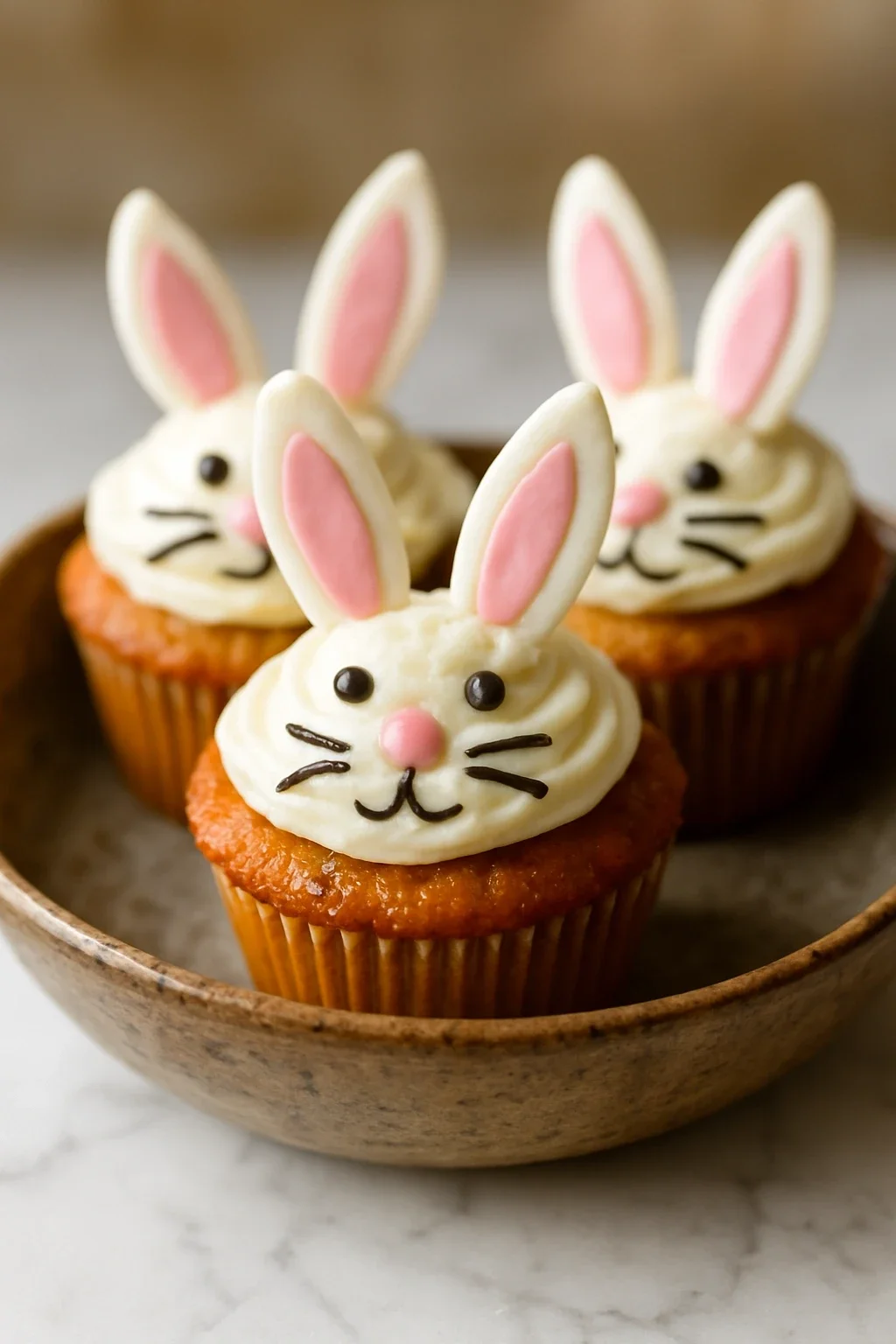
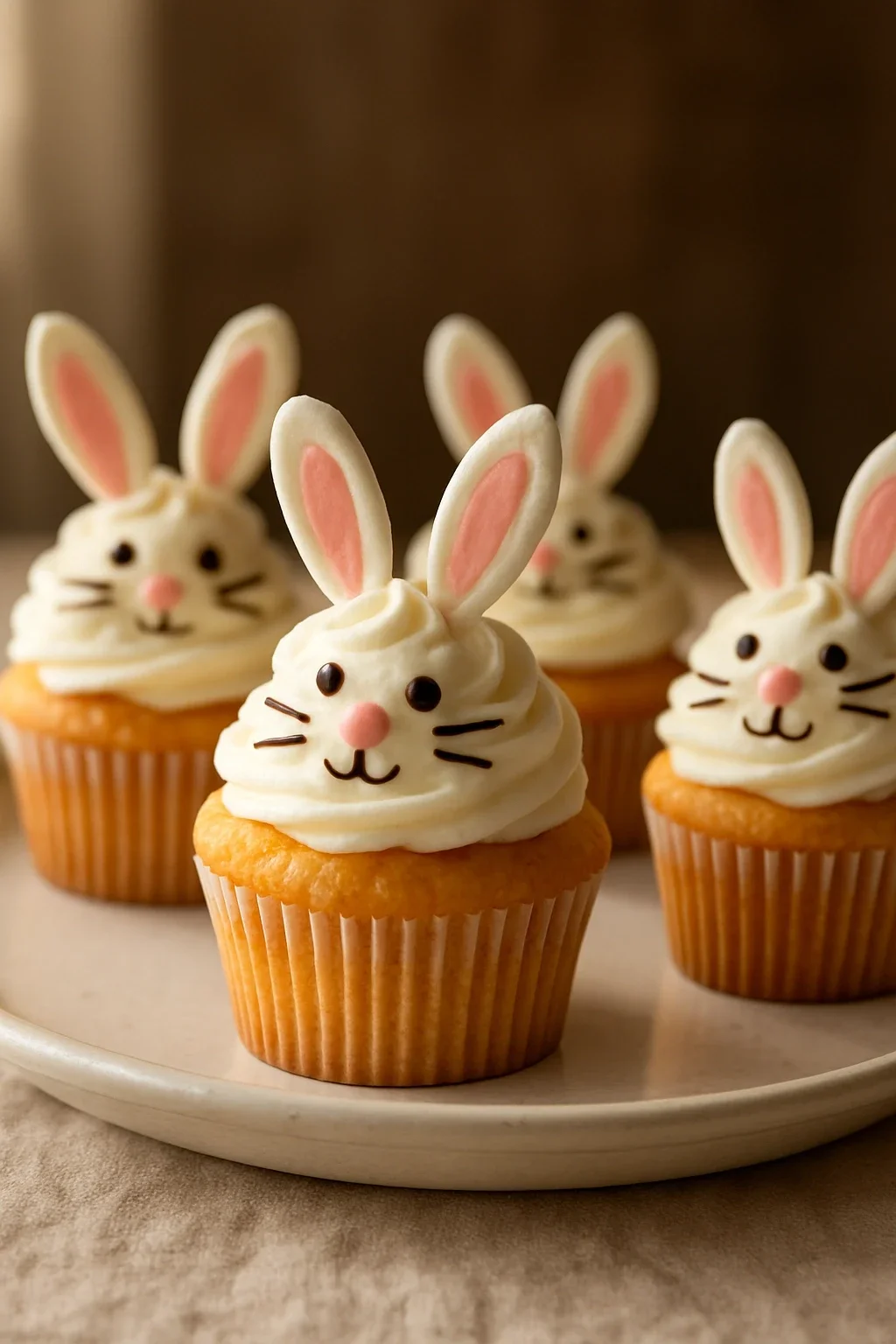
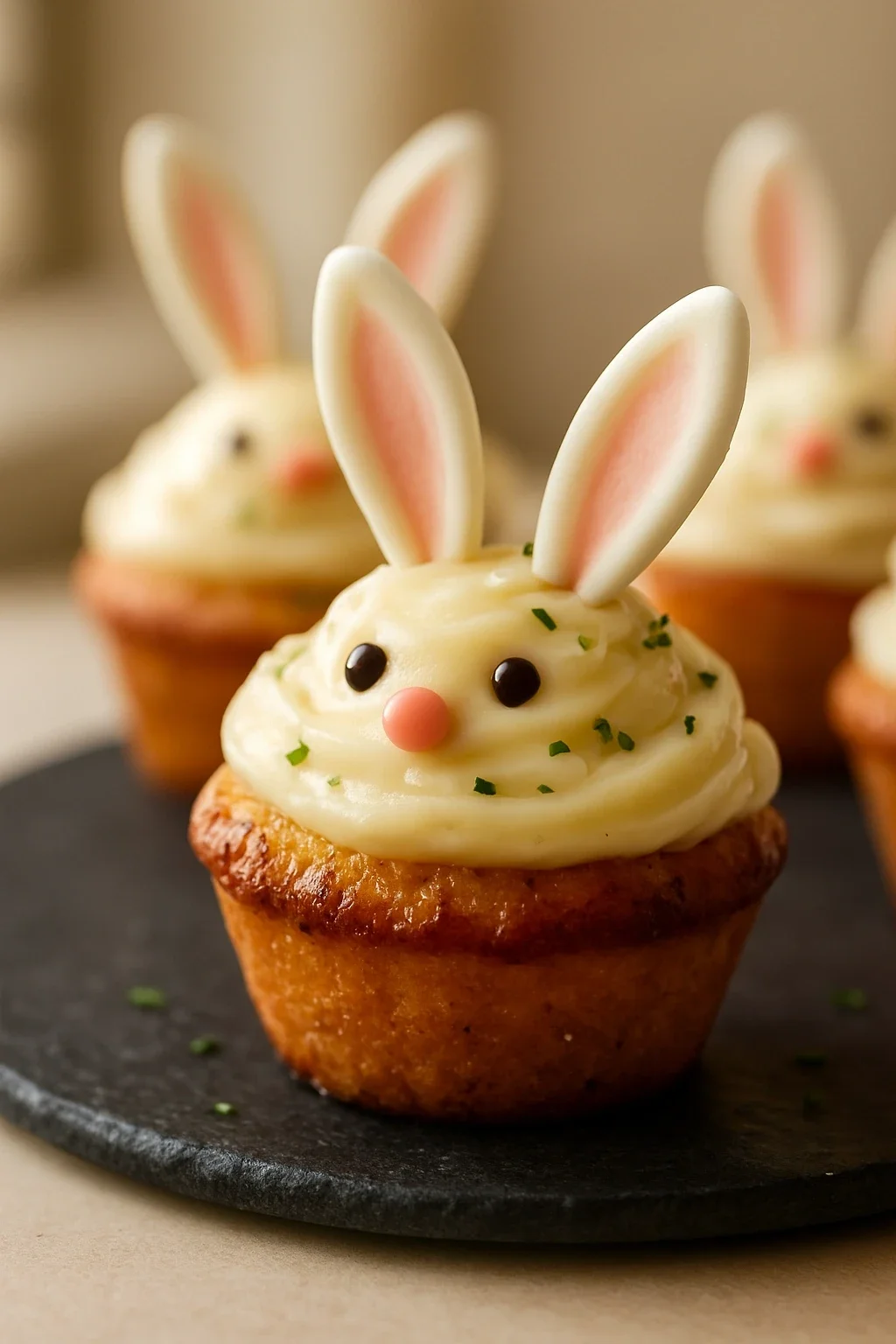
Pipe or spread buttercream onto cooled cupcakes. Use candies to create bunny faces by placing candy eyes, a pink candy nose, and mini marshmallow ears. Optionally, use edible markers to add whiskers or mouth details. Serve immediately or store until ready.
⏱ Time: 15-20 minutes
✓ Doneness: Frosting is evenly applied, candy decorations secure and intact
Pro Tips
Use room temperature ingredients for batter.
Eggs and milk at room temperature incorporate more easily and create a smoother batter, resulting in an even crumb and consistent rise.
Do not overmix the batter after adding flour.
Overmixing develops gluten which toughens cupcakes and reduces tenderness. Mix just until no dry flour remains.
Sift powdered sugar before adding to buttercream.
Sifting prevents lumps and produces a silky smooth frosting that is easier to pipe and spreads evenly.
Cool cupcakes completely before frosting.
Warm cupcakes cause buttercream to melt, making decoration messy and frosting runny.
Use a piping bag with a round or star tip for frosting application.
Piping creates a more polished and uniform look that better holds candy decorations in place.
Store cupcakes in a cool place but avoid refrigeration unless necessary.
Refrigeration can dry out cupcakes and cause frosting to harden. If storing longer than a day, keep in an airtight container at room temperature.
Common Mistakes to Avoid
Adding cold eggs or milk directly to batter.
Why it happens Cold ingredients do not mix well with butter, causing the batter to curdle and resulting in dense cupcakes.
Fix Bring eggs and milk to room temperature before mixing.
Overbaking cupcakes.
Why it happens Leaving cupcakes in the oven too long dries them out and toughens the crumb.
Fix Start checking for doneness at 16 minutes using a toothpick. Remove as soon as it comes out clean or with moist crumbs.
Skipping the creaming step or under-creaming butter and sugar.
Why it happens Insufficient creaming reduces trapped air, leading to flat and dense cupcakes.
Fix Beat butter and sugar until pale and fluffy, about 3-5 minutes.
Applying frosting on warm cupcakes.
Why it happens Warm cakes cause buttercream to melt and slide off, ruining the decorative effect.
Fix Ensure cupcakes are completely cooled before frosting.
Variations
Gluten-Free Vanilla Cupcakes
Substitute all-purpose flour with a 1-to-1 gluten-free baking flour blend. Add 1/4 tsp xanthan gum if not included in the blend to improve structure.
Note: Gluten-free flours lack the protein that forms gluten, so xanthan gum helps mimic elasticity and hold the cupcake’s shape.
Vegan Easter Bunny Cupcakes
Replace butter with vegan margarine, use flaxseed meal mixed with water (1 tbsp flaxseed + 3 tbsp water = 1 egg) as egg substitute, and use plant-based milk such as almond or oat milk.
Note: Flaxseed acts as a binder similar to eggs. Vegan butter and plant milk maintain fat and moisture needed for tender crumb.
Lemon-Infused Easter Cupcakes
Add 1 tbsp finely grated lemon zest to the batter and replace vanilla extract with lemon extract for a bright citrus note. Use lemon juice instead of vanilla in the frosting.
Note: Citrus zest oils add aromatic freshness. Be careful not to add too much liquid lemon juice to frosting as it can thin consistency.
Chocolate Easter Bunny Cupcakes
Replace 1/4 cup flour with 1/4 cup unsweetened cocoa powder in the batter for a chocolate version. Adjust sugar by reducing 1-2 tbsp to compensate for cocoa’s bitterness.
Note: Cocoa powder absorbs moisture differently; balancing sugar prevents overly bitter or dry cupcakes.
Nutrition
Per Serving:
approximately 320
Calories
Values are estimates and may vary depending on specific ingredient brands and decoration quantities.
Storage & Tips
Room Temperature
Store unfrosted cupcakes in an airtight container at room temperature for up to 1 day. Frosted cupcakes should be kept covered to prevent drying.
Refrigerator
Frosted cupcakes can be refrigerated up to 3 days in a sealed container. Bring to room temperature before serving for best texture.
Freezer
Freeze unfrosted cupcakes wrapped tightly in plastic wrap and placed in airtight containers for up to 2 months. Thaw overnight at room temperature before frosting.
Reheating
Cupcakes are best served at room temperature. Reheating is not generally recommended as it can dry the cake or soften frosting.
Make Ahead
Bake cupcakes up to 2 days ahead. Cool and store unfrosted in airtight containers. Prepare buttercream and decorate on the day of serving for freshest appearance.
FAQ
Can I make Easter Bunny cupcakes ahead of time?
Yes, you can bake the cupcakes 1-2 days in advance and store them unfrosted in an airtight container. Frost and decorate them the day you plan to serve for best results.
Why is my cupcake crumb dense or dry?
Common reasons include overmixing the batter after adding flour, overbaking, or using cold ingredients. Use room temperature ingredients and mix just until combined.
Can I use vegetable oil instead of butter?
While vegetable oil can keep cupcakes moist, it lacks the flavor and structure butter provides. This recipe relies on creamed butter for ideal texture and taste.
How long do decorated cupcakes last in the fridge?
Frosted cupcakes can be stored in the refrigerator for up to 3 days in an airtight container. Allow them to come to room temperature before serving.
Can I substitute cream for milk in the frosting?
Yes, heavy cream makes the frosting richer and easier to whip, but you can use milk for a lighter texture. Adjust quantity to achieve desired consistency.
How do I prevent frosting from melting on cupcakes?
Make sure cupcakes are completely cooled before applying frosting, and keep them in a cool environment away from direct sunlight or heat.
Final Thoughts
These Easter Bunny cupcakes bring a simple, satisfying treat to spring gatherings. I’d love to hear if you try this recipe or have your own decorating tips—feel free to share your experience in the comments.