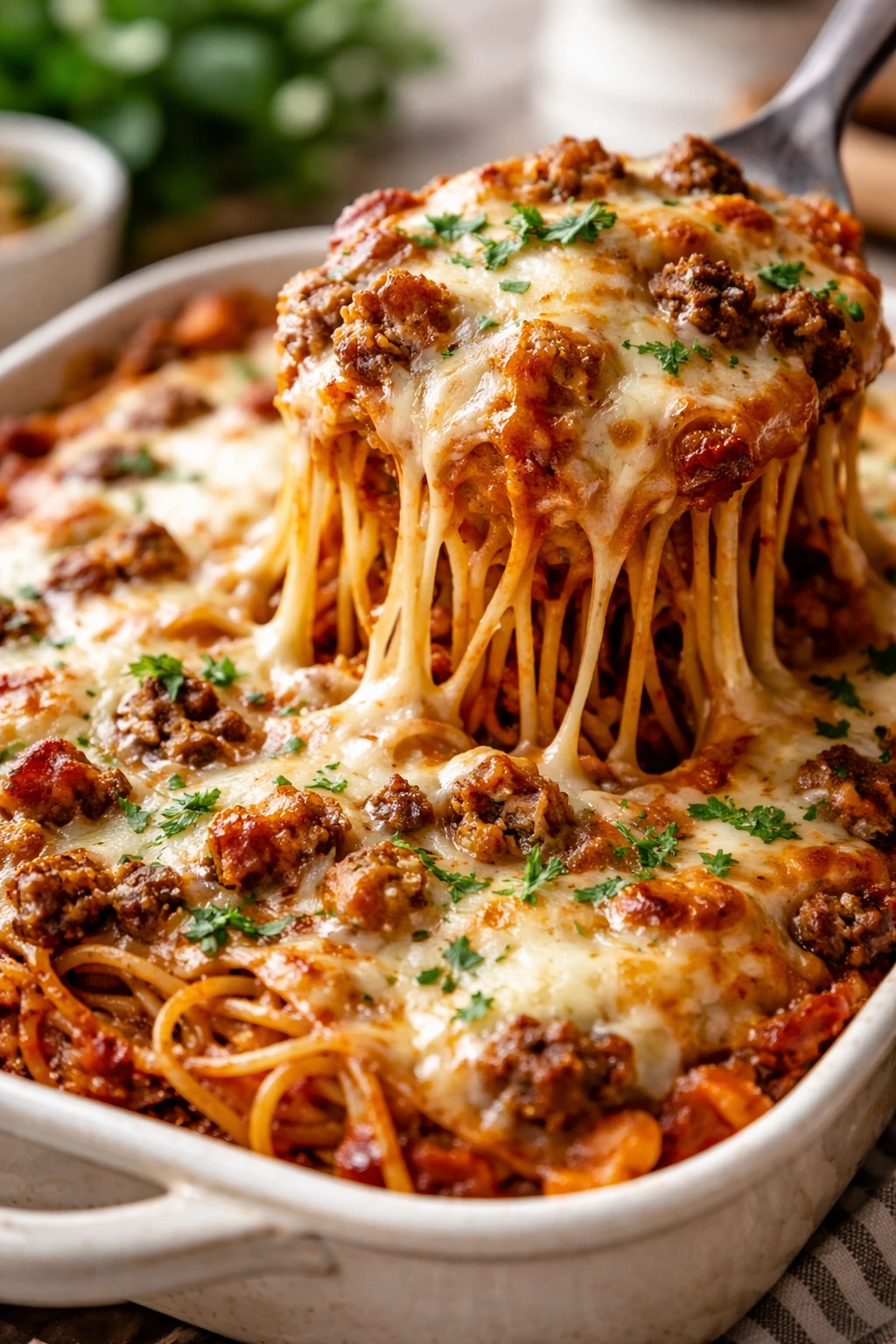
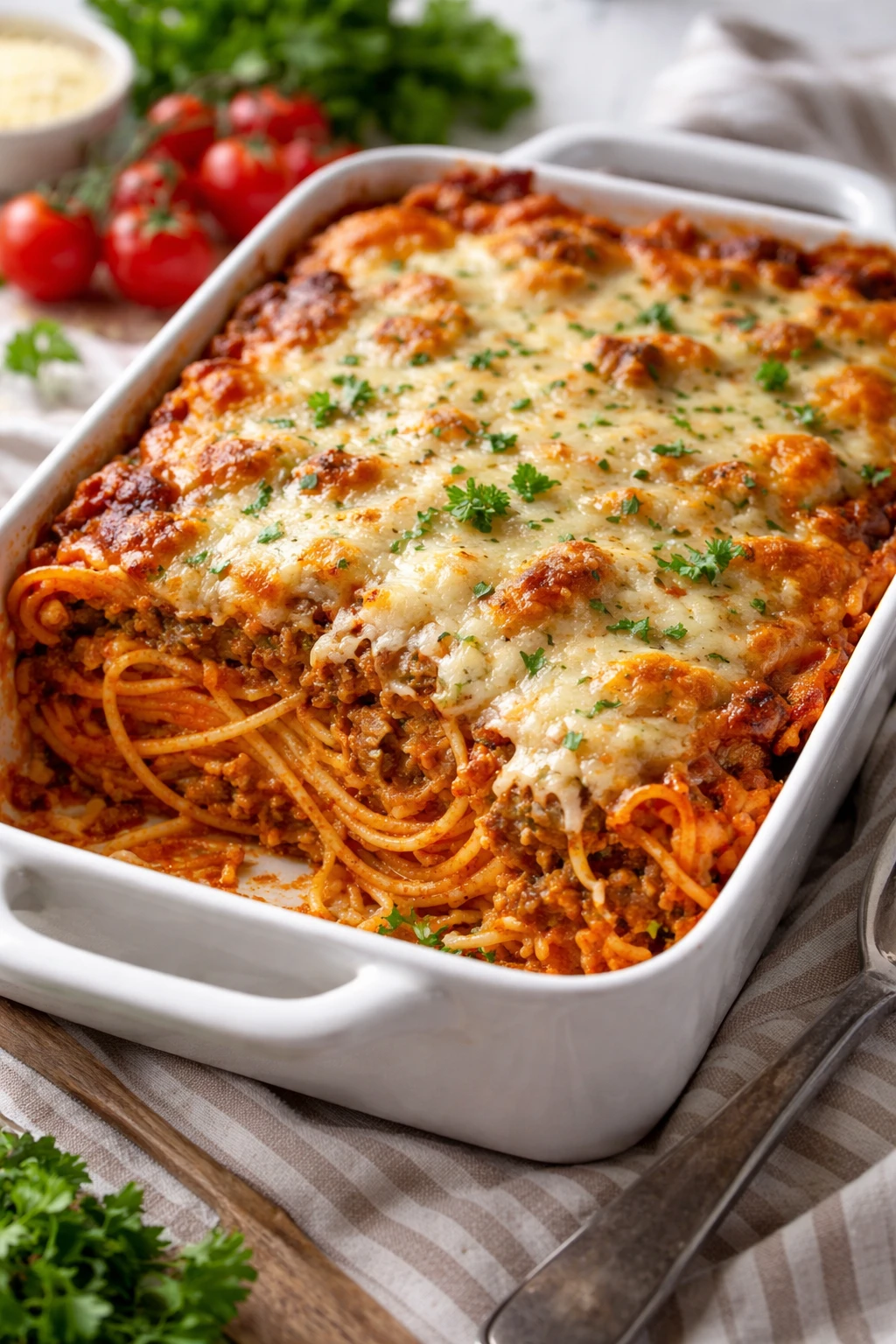
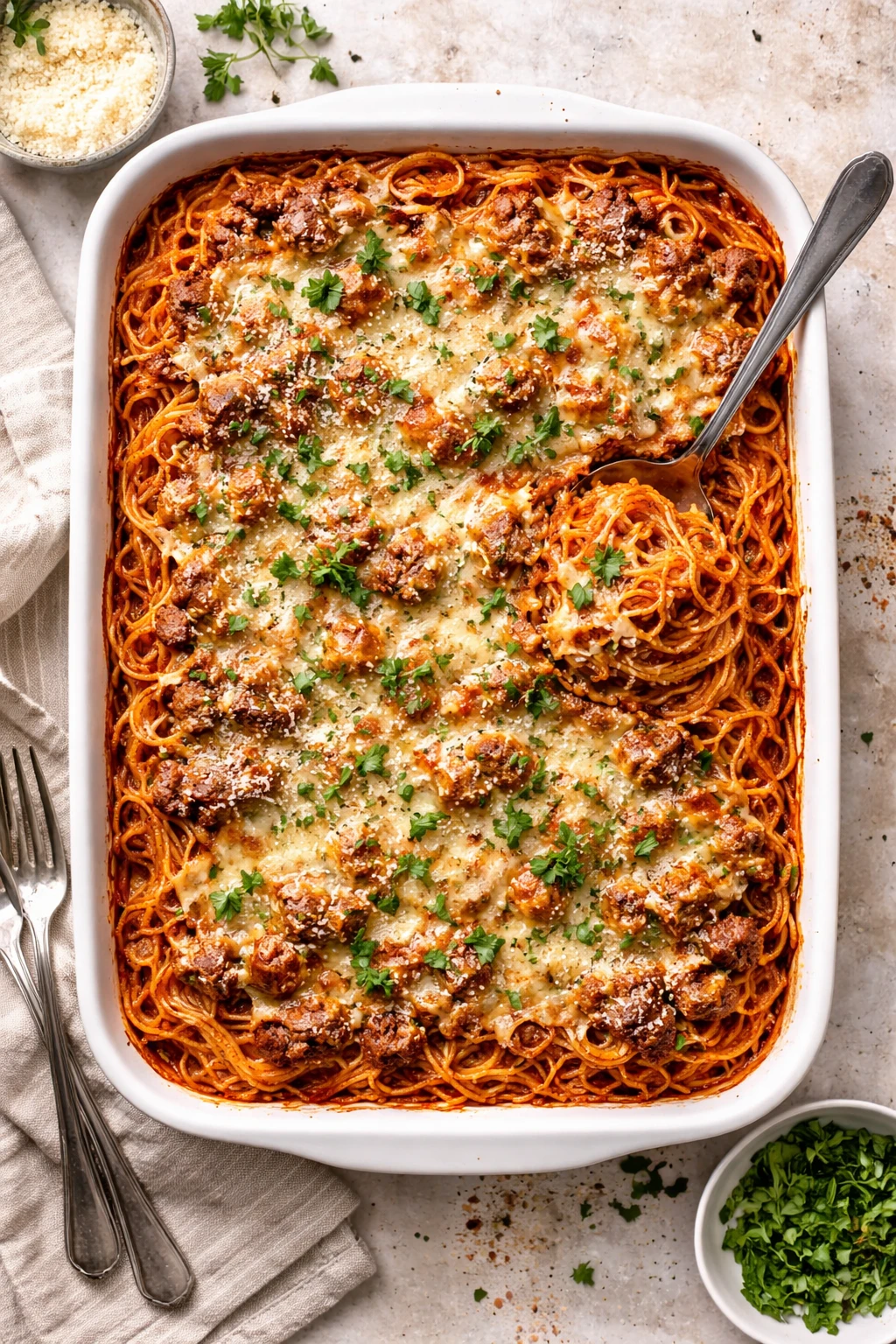
This baked spaghetti casserole is pure comfort in a dish. It’s loaded with melty cheese and rich tomato sauce, topped with a golden crust that’s just irresistible. Perfect for easy family dinners or chilly weekend meals!
Introduction
I first made this baked spaghetti casserole on a chilly weekend when I wanted something cozy but simple. I’ve always loved baked pasta dishes, but this one stands out because of the way the ricotta adds a creamy layer that balances the tangy tomato sauce perfectly. The trick I learned is to cook the spaghetti just shy of al dente so it finishes cooking in the oven without turning mushy. Also, layering the cheese in between helps create that gooey texture throughout, not just on top. The final dish has a bubbly, golden crust with tender, flavorful layers underneath. It’s exactly the kind of comfort food that feels like a warm hug after a long day. I’ve made it countless times since, and it’s always a hit with my family and friends. Plus, it’s one of those meals you can prep ahead and pop in the oven when you’re ready. Honestly, it’s become my go-to for casual dinners and even small gatherings because it’s so easy yet impressive.
How To Do It
Step 1
Start by bringing a large pot of salted water to a boil and cook the spaghetti until just under al dente—about 1-2 minutes less than the package suggests. This is important because the pasta will continue to cook in the oven, and overcooked noodles can turn mushy. Drain and toss the spaghetti with a tablespoon of olive oil to prevent sticking. Set aside while you prepare the sauce and cheese layers.
⏱ Time: 10
✓ Doneness: Pasta should be tender but still firm to the bite, not soft or falling apart.
Step 2
In a mixing bowl, combine the ricotta cheese with garlic powder, dried Italian seasoning, salt, and pepper. This seasoning mix gives the ricotta a flavorful punch and prevents it from tasting bland. Stir until smooth and creamy. This mixture will add a luscious texture and subtle seasoning to balance the tangy tomato sauce later.
⏱ Time: 5
✓ Doneness: Ricotta mixture should be smooth with evenly distributed seasoning and no lumps.
Step 3
Preheat your oven to 375°F (190°C). In a baking dish, spread a thin layer of marinara sauce on the bottom; this prevents the pasta from sticking and adds moisture. Then layer half the cooked spaghetti evenly over the sauce. This layering technique ensures every bite has a perfect balance of pasta, sauce, and cheese.
⏱ Time: 5
✓ Doneness: Sauce should cover the bottom thinly but evenly, pasta spread in an even layer.
Step 4
Spoon half of the ricotta mixture evenly over the spaghetti layer, then sprinkle with a third of the shredded mozzarella cheese. The ricotta adds creaminess while the mozzarella melts and binds everything together. Don’t skip this layering—it’s what makes the casserole so rich and satisfying.
⏱ Time: 5
✓ Doneness: Ricotta and mozzarella layers should be spread evenly without clumps or bare spots.
Step 5
Add the remaining spaghetti on top of the cheese layer, then pour the rest of the marinara sauce over it. Spread it gently so the sauce seeps through the pasta layers, keeping everything moist. Proper sauce distribution is key to avoid dry spots in the casserole.
⏱ Time: 5
✓ Doneness: The top pasta layer should be well coated with sauce but not swimming in it.
Step 6
Top the casserole with the remaining ricotta mixture and mozzarella cheese, then sprinkle the grated Parmesan evenly over everything. The Parmesan helps create that irresistible golden crust when baked. It also adds a nutty, salty finish that elevates the whole dish.
⏱ Time: 5
✓ Doneness: Cheese layers should cover the top evenly to ensure a crispy, bubbly crust.
Step 7
Drizzle the remaining tablespoon of olive oil over the top to encourage browning and add flavor. Then cover the dish loosely with foil and bake in the preheated oven for 20 minutes. Covering traps steam so the casserole heats through without drying out, while the oil helps the cheese crisp nicely.
⏱ Time: 20
✓ Doneness: Casserole should be hot and bubbly under the foil at the end of baking.
Step 8
Remove the foil and bake uncovered for an additional 10 minutes to let the cheese brown and crisp up. Keep an eye on it to avoid burning. This step gives you the signature golden, bubbly crust that makes baked spaghetti so comforting and visually appealing.
⏱ Time: 10
✓ Doneness: Top cheese should be golden brown and bubbly with some crispy edges.
Step 9
Let the casserole rest for 5-10 minutes before serving. This resting time allows the layers to set, making it easier to cut and serve without falling apart. Garnish with fresh basil leaves if you like, and enjoy that melty, cheesy goodness!
⏱ Time: 10
✓ Doneness: Casserole should be warm but set enough to hold its shape when sliced.
Pro Tips
Cook pasta just under al dente for baking.
Pasta continues to cook in the oven with the sauce, so starting with undercooked noodles prevents mushiness. Overcooked pasta will turn limp and lose texture after baking.
Drain ricotta before mixing if it’s watery.
Excess moisture in ricotta can make the casserole runny. Draining ensures the cheese layer is creamy but not soggy, maintaining the dish's structure.
Use foil to cover during initial baking.
Covering traps steam and heat, allowing the casserole to heat evenly without drying out. Removing foil later lets the top brown perfectly.
Drizzle olive oil on top before baking.
Olive oil promotes a beautiful golden crust and adds subtle richness. It also helps the cheese brown evenly without burning.
Let casserole rest before serving.
Resting allows layers to set and makes slicing easier. Serving immediately can cause the casserole to fall apart or be too hot to enjoy.
Use freshly grated Parmesan for topping.
Fresh Parmesan browns better and adds more flavor than pre-grated powders, enhancing both taste and appearance.
Season ricotta with herbs and spices.
Ricotta alone can be bland, so adding garlic powder and Italian seasoning boosts flavor, creating depth in the cheese layers.
Common Mistakes to Avoid
Overcooking spaghetti before baking.
Why it happens Many cooks assume pasta should be fully cooked before baking, leading to mushy casserole.
Fix Cook pasta 1-2 minutes less than package instructions so it finishes cooking in the oven. This keeps noodles firm and prevents sogginess.
Skipping the resting period after baking.
Why it happens Impatience or lack of awareness causes serving immediately, which can cause the casserole to fall apart.
Fix Allow 5-10 minutes resting time after baking so layers set, making it easier to slice and serve neatly.
Using watery ricotta.
Why it happens Some ricotta brands contain excess moisture which can make the casserole runny.
Fix Drain ricotta in a fine sieve or cheesecloth before mixing to remove excess water and maintain creamy texture.
Not layering ingredients evenly.
Why it happens Rushing or neglecting layering causes uneven flavor and texture distribution.
Fix Take time to spread sauce, pasta, and cheese evenly in each layer to ensure every bite has balanced flavor and texture.
Skipping olive oil drizzle on top.
Why it happens Some omit this step thinking it’s unnecessary, missing out on crust development.
Fix Drizzle olive oil on top before baking to encourage browning and add flavor to the crust.
Variations
Spicy Baked Spaghetti
Add red pepper flakes to the ricotta mixture and use a spicy arrabbiata sauce instead of marinara. This gives the casserole a nice kick and warmth. You can also sprinkle sliced jalapeños on top before baking for extra heat.
Note: Spicy ingredients may intensify during baking, so adjust heat levels to your preference to avoid overpowering the dish.
Vegetarian Baked Spaghetti
Incorporate sautéed mushrooms, bell peppers, and spinach into the sauce layers for a veggie-packed casserole. This boosts nutrition and adds texture without changing the core technique.
Note: Cook vegetables thoroughly to remove excess moisture, preventing sogginess in the casserole.
Meat Lover’s Baked Spaghetti
Brown ground beef or Italian sausage and mix it into the marinara sauce before assembling. This adds protein and depth of flavor, making the dish heartier for meat fans.
Note: Drain excess fat from cooked meat to keep the casserole from becoming greasy.
Gluten-Free Version
Use gluten-free pasta and ensure marinara sauce is gluten-free. This makes the casserole accessible for gluten-sensitive eaters without sacrificing comfort or flavor.
Note: Gluten-free pasta can be more delicate; handle gently when mixing and layering.
Cheesy Four-Cheese Baked Spaghetti
Add shredded provolone and fontina cheeses to the mozzarella and Parmesan for a richer, more complex cheese flavor. This variation is ultra creamy and indulgent.
Note: Mix cheeses evenly and monitor baking time to avoid over-browning the top.
Nutrition
Per Serving:
Nutritional values are estimates and may vary based on specific ingredients used.
Storage & Tips
Room Temperature
You can keep the baked spaghetti casserole covered at room temperature for up to 2 hours safely. Beyond that, bacteria growth can increase, so refrigerate promptly. Cover with foil or plastic wrap to prevent drying out.
Refrigerator
Store leftovers in an airtight container for up to 4 days. The casserole may firm up and flavors meld further. Reheat in the oven or microwave until warmed through. Adding a splash of water or sauce before reheating helps maintain moisture.
Freezer
Freeze the casserole in a freezer-safe container for up to 3 months. Wrap tightly with plastic wrap and foil to prevent freezer burn. Thaw overnight in the fridge before reheating. Texture may soften slightly but remains delicious.
Reheating
Reheat leftovers covered in a 350°F oven for 20-25 minutes or microwave in short bursts. Add a little sauce or water if it seems dry. Avoid overheating to prevent drying out or toughening the pasta.
Make Ahead
Assemble the casserole up to 1 day ahead and keep refrigerated covered tightly. Bake fresh when ready to serve for best texture. Alternatively, prepare all components separately and layer just before baking.
FAQ
Can I use a different type of pasta for this casserole?
Absolutely! While spaghetti is classic, penne, rigatoni, or ziti also work well. Just adjust cooking times slightly since different shapes cook differently. Make sure to still undercook the pasta before baking to avoid mushiness.
What if I don’t have ricotta cheese?
You can substitute ricotta with cottage cheese blended smooth or mascarpone for a creamier texture. Keep in mind that cottage cheese has more moisture, so drain it well to avoid a runny casserole.
How do I prevent the casserole from becoming watery?
Drain pasta well and avoid watery sauces or cheeses. Also, layering evenly and covering with foil during baking helps trap moisture without letting it escape. Resting the casserole before serving also allows excess moisture to redistribute.
Can I make this casserole vegan?
Yes, by using plant-based cheeses and a vegan marinara sauce. Tofu can replace ricotta when blended smooth with seasonings. Baking times remain similar but watch cheese melting as vegan options vary.
How do I get a crispy top without burning the cheese?
Bake covered initially to cook through, then uncover for the last 10 minutes to brown the cheese gently. Keep an eye on it during this step to avoid burning.
Is it better to use homemade or store-bought marinara sauce?
Both work fine! Homemade sauce allows you to control seasoning and texture, but a high-quality store-bought marinara saves time and still tastes great. Choose one with good flavor and thickness.
Can I freeze the baked spaghetti casserole after baking?
Yes, but freezing after baking can change texture slightly. It’s better to freeze before baking if possible. If freezing cooked casserole, wrap tightly and thaw in the fridge before reheating gently.
What’s the best way to reheat leftovers without drying them out?
Reheat covered in the oven at 350°F with a splash of sauce or water to keep moist. Microwaving in short bursts with a cover also works well. Avoid overheating to maintain texture.
Final Thoughts
Give this baked spaghetti casserole a try—you’ll love how comforting and satisfying it is. I can’t wait to hear what you think and see your cheesy creations!