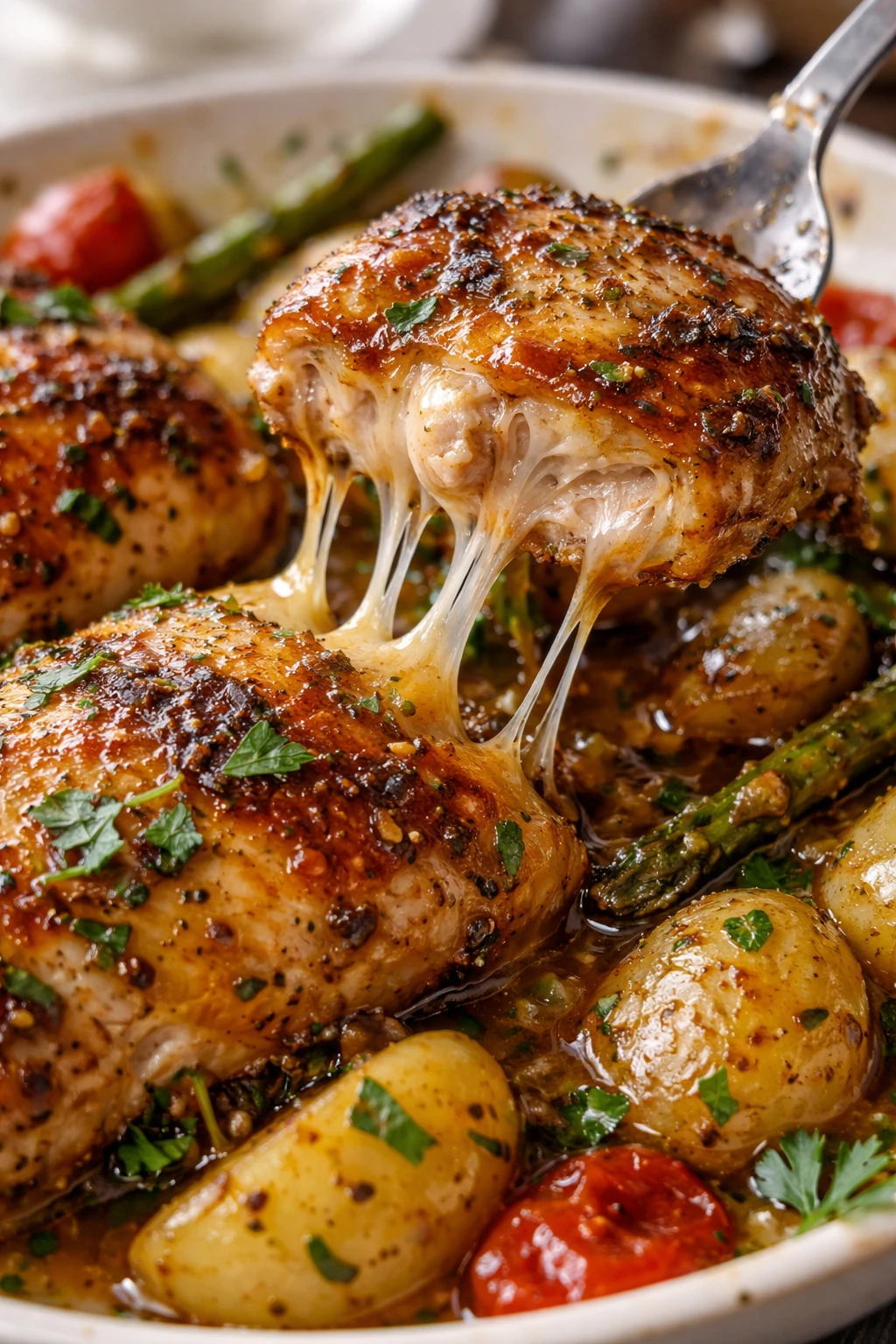
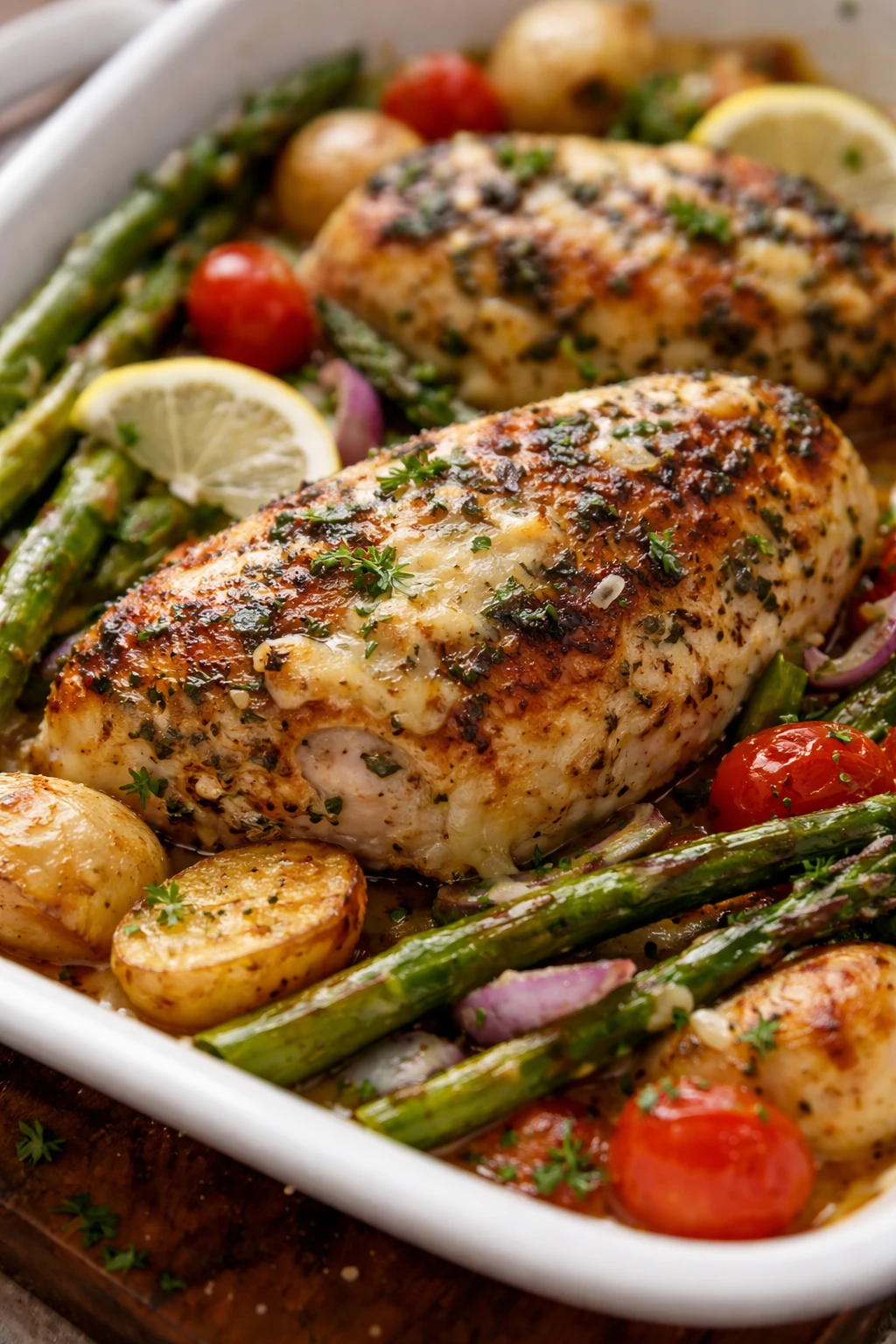
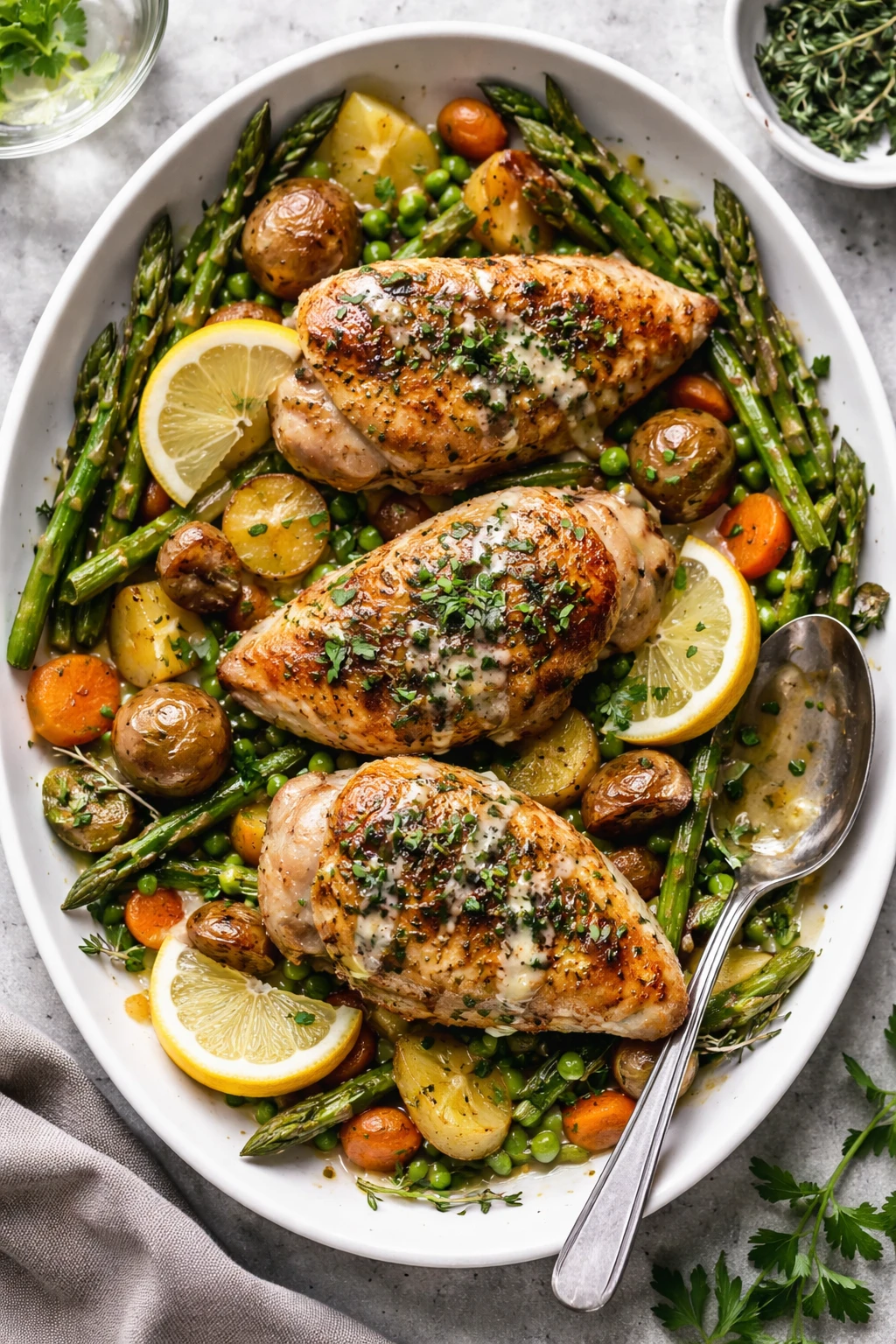
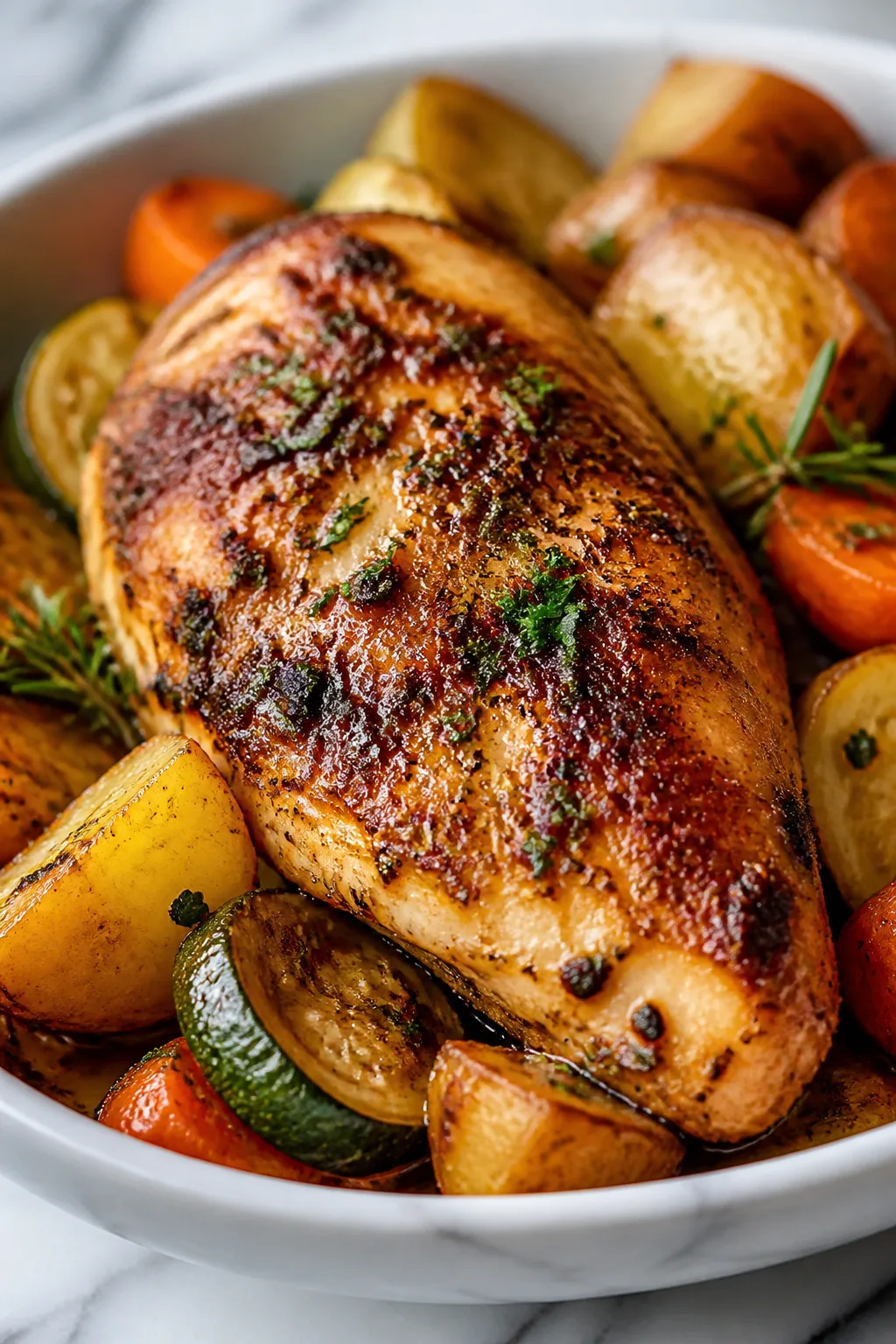
This roasted chicken is brightened by fresh lemon and herbs, making every bite juicy and flavorful. Tossed with tender spring veggies, it’s a simple all-in-one meal perfect for cozy weeknights when you want something fresh but fuss-free.
Introduction
I first made this lemon herb roasted chicken a few years ago when I wanted a fresh, bright dinner that didn’t require juggling multiple pots. What I love about this recipe is how the lemon and herbs really lift the chicken’s natural flavors without overpowering it. Plus, roasting everything together means the veggies soak up those delicious pan juices, making it a complete meal in one dish. I’ve tweaked the herb mix a bit over time, adding more thyme and a splash of lemon juice before roasting to keep the chicken juicy and fragrant. One trick I learned is to pat the chicken dry before rubbing it with olive oil and herbs—it helps the skin crisp up beautifully. When it comes out of the oven, you get that golden, crackly skin and tender meat inside. The spring veggies roast perfectly alongside, getting tender but not mushy. It’s such a satisfying meal that feels light yet comforting—ideal for those cozy weeknights when you want something quick but still special. Honestly, it’s become my go-to for easy Sunday dinners, and my family always asks for seconds!
How To Do It
Step 1
Preheat your oven to 425°F (220°C). While it heats, pat the chicken dry with paper towels—this step is crucial because dry skin crisps better during roasting. Then, rub the entire chicken with olive oil, ensuring every part is coated. This not only helps the skin brown but also locks in moisture. Season generously with salt and pepper, then sprinkle on the minced garlic, thyme, and rosemary, pressing the herbs gently into the skin. Stuff the cavity with a few lemon slices to infuse subtle citrus flavor from the inside as it cooks. Avoid skipping the drying step, or the skin might steam rather than crisp.
⏱ Time: 15
✓ Doneness: Skin looks dry and coated with herbs, chicken feels slightly tacky from oil
Step 2
Arrange the baby carrots, pearl onions, and asparagus in a roasting pan or large baking dish. Drizzle with olive oil, season with salt and pepper, and toss to coat evenly. Spread the veggies out so they roast rather than steam. Place the prepared chicken on top of the veggies, breast side up. The high heat will crisp the skin and roast the veggies perfectly. If you rush this step or pile the veggies too tightly, they’ll steam and become soggy, so give them some breathing room.
⏱ Time: 10
✓ Doneness: Veggies are evenly coated and spread out without crowding
Step 3
Roast the chicken and veggies in the preheated oven for about 25-30 minutes. About halfway through, baste the chicken with pan juices to keep it moist and flavorful. This also helps the skin develop a beautiful golden color. Keep an eye on the veggies; if they start browning too quickly, you can tent the pan with foil to prevent burning. The chicken is done when the internal temperature reaches 165°F (74°C) in the thickest part of the thigh and the juices run clear.
⏱ Time: 30
✓ Doneness: Golden brown skin, internal temp 165°F, veggies tender and slightly caramelized
Step 4
Remove the chicken from the oven and let it rest for 10 minutes before carving. Resting allows the juices to redistribute, making the meat more tender and juicy. Meanwhile, give the roasted veggies a gentle toss in the pan to coat them in the flavorful pan juices. This step ensures every bite is full of zest and herb aroma. Avoid carving immediately after roasting, or the juices will spill out and the chicken will be dry.
⏱ Time: 10
✓ Doneness: Chicken feels warm but not hot, juices clear when poked
Step 5
Carve the chicken by first removing the legs and thighs, then slicing the breast meat against the grain for tenderness. Arrange the slices on a serving platter alongside the roasted veggies. Sprinkle chopped fresh parsley on top for a pop of color and fresh flavor. The lemon slices from inside the cavity can be served on the side or discarded. This presentation makes for a beautiful, inviting meal that’s as pleasing to the eye as it is to the palate.
⏱ Time: 10
✓ Doneness: Even slices of juicy meat, vibrant veggies, and fresh herb garnish
Step 6
For an extra zing, squeeze fresh lemon juice over the chicken and veggies just before serving. This brightens the flavors and adds a fresh citrus punch. You can also drizzle a little more olive oil if the veggies seem dry after roasting. This final touch balances the richness of the roasted chicken skin with a lively acidity, making every bite feel fresh and light. Don’t skip this step unless you prefer a milder flavor profile.
⏱ Time: 5
✓ Doneness: Visible droplets of lemon juice glistening, aroma of fresh citrus
Step 7
Serve the roasted chicken and veggies warm, ideally with crusty bread or a simple green salad to round out the meal. The leftovers reheat well if stored properly, making this recipe great for planning ahead. As you eat, notice the contrast between the crisp skin and tender meat, complemented by the sweet roasted veggies. This balance is what makes the dish so satisfying and comforting.
⏱ Time: 0
✓ Doneness: Meal served warm and inviting
Step 8
If you want to add some extra flavor depth, try rubbing the chicken skin with a bit of smoked paprika or chili flakes before roasting. This adds a subtle smoky or spicy note without overpowering the lemon and herbs. It’s a simple tweak that can elevate the dish for special occasions or when you want a little twist. Just be careful not to add too much spice, as it might clash with the fresh lemony brightness.
⏱ Time: 0
✓ Doneness: Evenly coated skin with spice, aroma slightly smoky or spicy
Step 9
For best results, use a meat thermometer to check doneness rather than relying solely on time. Oven temperatures vary, and a thermometer ensures your chicken is perfectly cooked—juicy inside and safe to eat. Insert it into the thickest part of the thigh without touching bone. This small investment can prevent overcooking or undercooking, giving you confidence every time you make this recipe.
⏱ Time: 0
✓ Doneness: Thermometer reads 165°F (74°C)
Pro Tips
Always pat your chicken dry before seasoning and roasting.
Dry skin ensures proper roasting rather than steaming, which results in a crisp, golden-brown crust. Moisture on the skin creates steam that prevents browning and leads to soggy textures. This simple step dramatically improves the final appearance and mouthfeel.
Use a meat thermometer to check for doneness.
Ovens vary in temperature, and visual cues can be misleading. A thermometer ensures the chicken reaches the safe internal temperature of 165°F (74°C) without overcooking. This prevents dry meat and food safety issues, giving consistent results every time.
Roast vegetables spread out in a single layer.
Crowding traps steam, which softens veggies instead of roasting them. Spreading them allows hot air to circulate, promoting caramelization and a pleasant texture. Proper roasting enhances natural sweetness and flavor complexity.
Baste the chicken halfway through cooking.
Basting with pan juices keeps the skin moist and encourages even browning. It also distributes flavors from the herbs and lemon throughout the surface. Skipping this can cause uneven color and drier skin patches.
Let the chicken rest before carving.
Resting allows juices to redistribute within the meat fibers. Cutting immediately causes juices to run out, resulting in dry meat. A 10-minute rest yields tender, juicy slices and a better eating experience.
Add fresh lemon juice just before serving.
Lemon juice added too early can cause the chicken to dry out or become bitter. Adding it last brightens the dish and balances richness with fresh acidity, enhancing overall flavor without overpowering.
Use fresh herbs rather than dried.
Fresh herbs release essential oils during roasting, providing vibrant aroma and flavor. Dried herbs can taste muted or bitter under high heat. Properly massaging fresh herbs into the skin maximizes infusion.
Common Mistakes to Avoid
Skipping the drying step before roasting.
Why it happens Many people overlook drying the chicken, assuming seasoning is enough. Moist skin traps steam during cooking, preventing crispness.
Fix Always pat the chicken dry thoroughly with paper towels before oiling and seasoning. This simple step ensures the skin crisps properly and browns evenly.
Overcrowding the roasting pan with vegetables.
Why it happens Trying to fit all veggies tightly to save space is common but causes steaming rather than roasting.
Fix Use a large enough pan and spread vegetables out in a single layer. This allows hot air circulation and caramelization, giving better texture and flavor.
Not using a meat thermometer.
Why it happens Many rely on cooking time or appearance, which can be unreliable due to oven variation.
Fix Invest in a good meat thermometer and check for an internal temperature of 165°F (74°C). This guarantees safety and juiciness.
Skipping the resting period after roasting.
Why it happens Eagerness to serve often leads to carving right away, causing juice loss.
Fix Let the chicken rest loosely covered for 10 minutes post-roasting. This lets juices settle, resulting in moist meat.
Adding lemon juice too early.
Why it happens Some add lemon juice before cooking, which can dry out or toughen the meat.
Fix Add fresh lemon juice right before serving to preserve brightness and moisture without bitterness.
Variations
Garlic Butter Roasted Chicken
Swap olive oil for melted garlic butter to add richness and a deep savory flavor. Use fresh garlic cloves under the skin for an aromatic punch. This version yields a more indulgent and buttery crust, perfect for special occasions.
Note: Butter has a lower smoke point than olive oil, so roast at slightly lower temperature (400°F) and watch carefully to avoid burning.
Spicy Lemon Herb Chicken
Add chili flakes or cayenne pepper to the herb rub for a spicy kick. This variation adds warmth and complexity without overpowering the fresh lemon notes, ideal if you like a bit of heat.
Note: Be cautious with spice quantities; too much can mask the delicate herb flavors. Adjust to your taste preference.
Mediterranean Style with Olives and Feta
Add pitted olives and crumbled feta cheese to the roasting pan for a Mediterranean twist. The salty feta complements the lemon and herbs, while olives add briny depth. Expect a tangy, savory flavor profile.
Note: Add feta in the last 5 minutes of roasting to prevent it from melting completely and losing texture.
Honey Lemon Glazed Chicken
Brush the chicken with a honey-lemon glaze before roasting for a sweet and tangy finish. The glaze caramelizes, creating a sticky, flavorful crust that pairs beautifully with the herbs and veggies.
Note: Monitor roasting closely as honey can burn quickly; reduce oven temperature to 400°F and baste frequently.
Herb-Rubbed Chicken Thighs
Use bone-in, skin-on chicken thighs instead of a whole bird. The thighs cook faster and stay juicy, making this a quicker alternative with the same bright herb and lemon flavors.
Note: Reduce cooking time to about 25 minutes and ensure internal temperature reaches 165°F.
Nutrition
Per Serving:
Nutritional values are estimates and may vary based on specific ingredients used.
Storage & Tips
Room Temperature
The roasted chicken and veggies can safely sit at room temperature, covered, for up to 2 hours. Beyond that, bacteria growth increases, so refrigerate promptly to maintain food safety and freshness.
Refrigerator
Store leftovers in an airtight container for up to 3-4 days. The chicken may dry slightly but reheating gently with a splash of broth or water helps retain moisture. Veggies may lose some crispness but remain flavorful.
Freezer
Freeze cooked chicken and veggies separately in airtight containers or heavy-duty freezer bags for up to 3 months. Wrap tightly to prevent freezer burn. Thaw overnight in the refrigerator before reheating to preserve texture.
Reheating
Reheat gently in a 350°F oven covered with foil for 15-20 minutes, or microwave with a splash of water to prevent drying. Avoid overheating which can toughen the meat and mush the veggies.
Make Ahead
You can prep the herb rub and slice lemons 1-2 days ahead, storing them separately. The chicken can be seasoned and refrigerated overnight to deepen flavor. Assemble and roast on the day of serving for best texture and freshness.
FAQ
Can I use chicken breasts instead of a whole chicken?
Yes, you can use bone-in skin-on chicken breasts, but cooking times will be shorter, about 25-30 minutes at 425°F. Breasts cook faster and can dry out more easily, so watch closely and use a thermometer to avoid overcooking. The flavor will be similar but the presentation less rustic.
What if I don’t have fresh herbs?
Dried herbs can be used in a pinch, but reduce quantity to about one-third since dried herbs are more concentrated. Fresh herbs provide a brighter, more aromatic flavor that really lifts the dish. If using dried, add them earlier in the cooking process to help release their flavors.
How do I know when the chicken is fully cooked?
The most reliable method is using a meat thermometer inserted into the thickest part of the thigh without touching bone. It should read 165°F (74°C). The juices should run clear, and the skin will be golden brown and crisp. Avoid guessing by time alone, as ovens vary.
Can I prepare this recipe in advance?
You can season the chicken and prep veggies a day ahead, storing them covered in the fridge. Roast everything fresh on the day you plan to serve for best texture and flavor. Fully cooked leftovers store well but freshly roasted tastes best.
How can I make this recipe spicier?
Add chili flakes, cayenne pepper, or smoked paprika to the herb rub before roasting. Start with small amounts to avoid overpowering the lemon and herbs. You can also serve with a spicy dipping sauce or hot sauce on the side for customizable heat.
What sides go well with this roasted chicken?
Crusty bread, a simple green salad, or roasted potatoes complement this dish nicely. The chicken and veggies are flavorful and light, so pairing with something hearty like mashed potatoes or rice works well for a balanced meal.
Is it necessary to baste the chicken during roasting?
Basting helps keep the skin moist and promotes even browning, but it’s optional. If you prefer a hands-off approach, you can skip it, though the skin might be slightly less crisp. Basting also redistributes pan juices, enhancing flavor.
Can I use other vegetables instead of spring veggies?
Absolutely! Root vegetables like potatoes, parsnips, or Brussels sprouts roast well alongside chicken. Just adjust cooking times to ensure all veggies are tender. Denser veggies may need to be cut smaller or added earlier in the roasting process.
Final Thoughts
I hope you give this lemon herb roasted chicken a try soon—it’s a simple, fresh meal that’s always a crowd-pleaser. Don’t forget to share how it turns out!