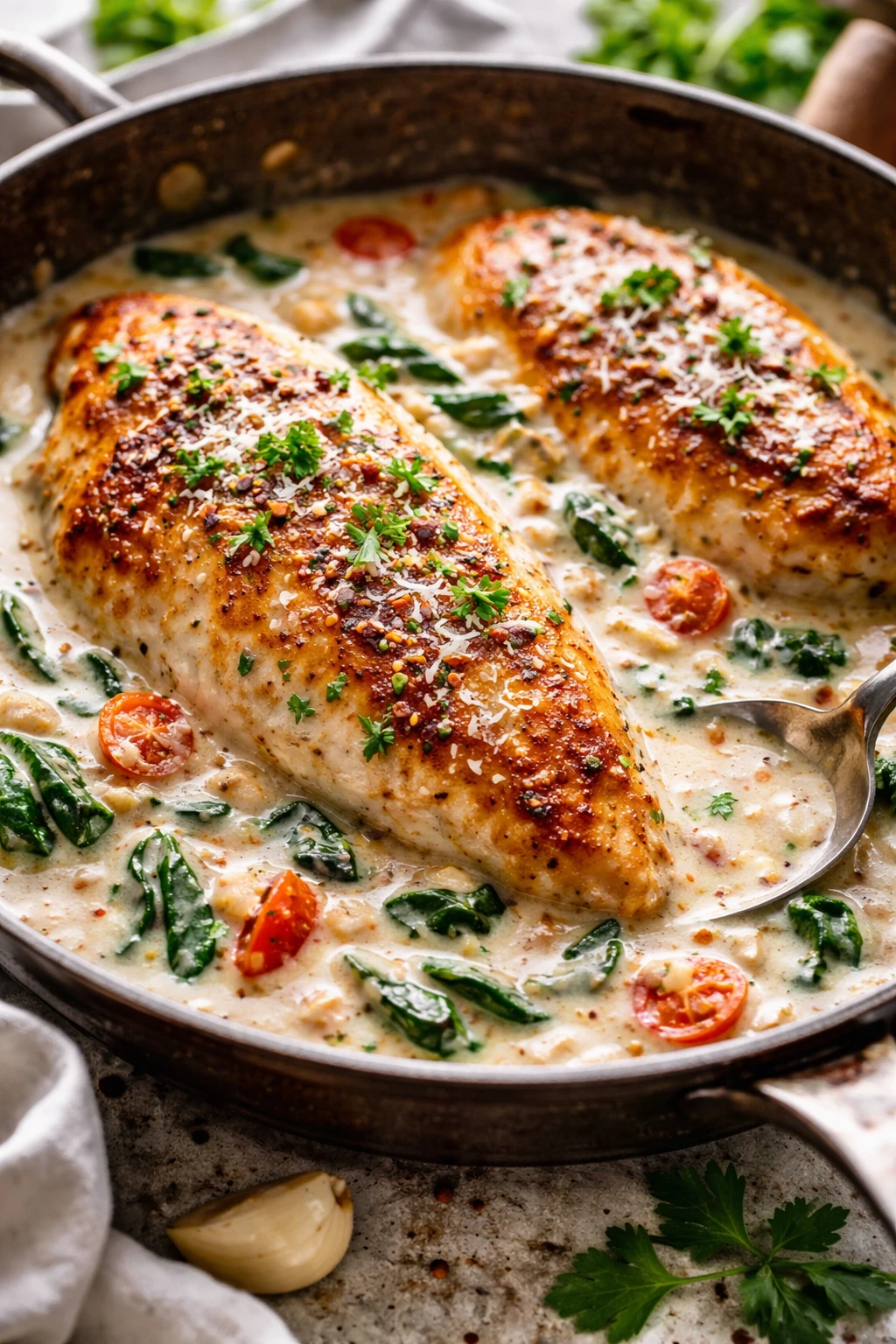
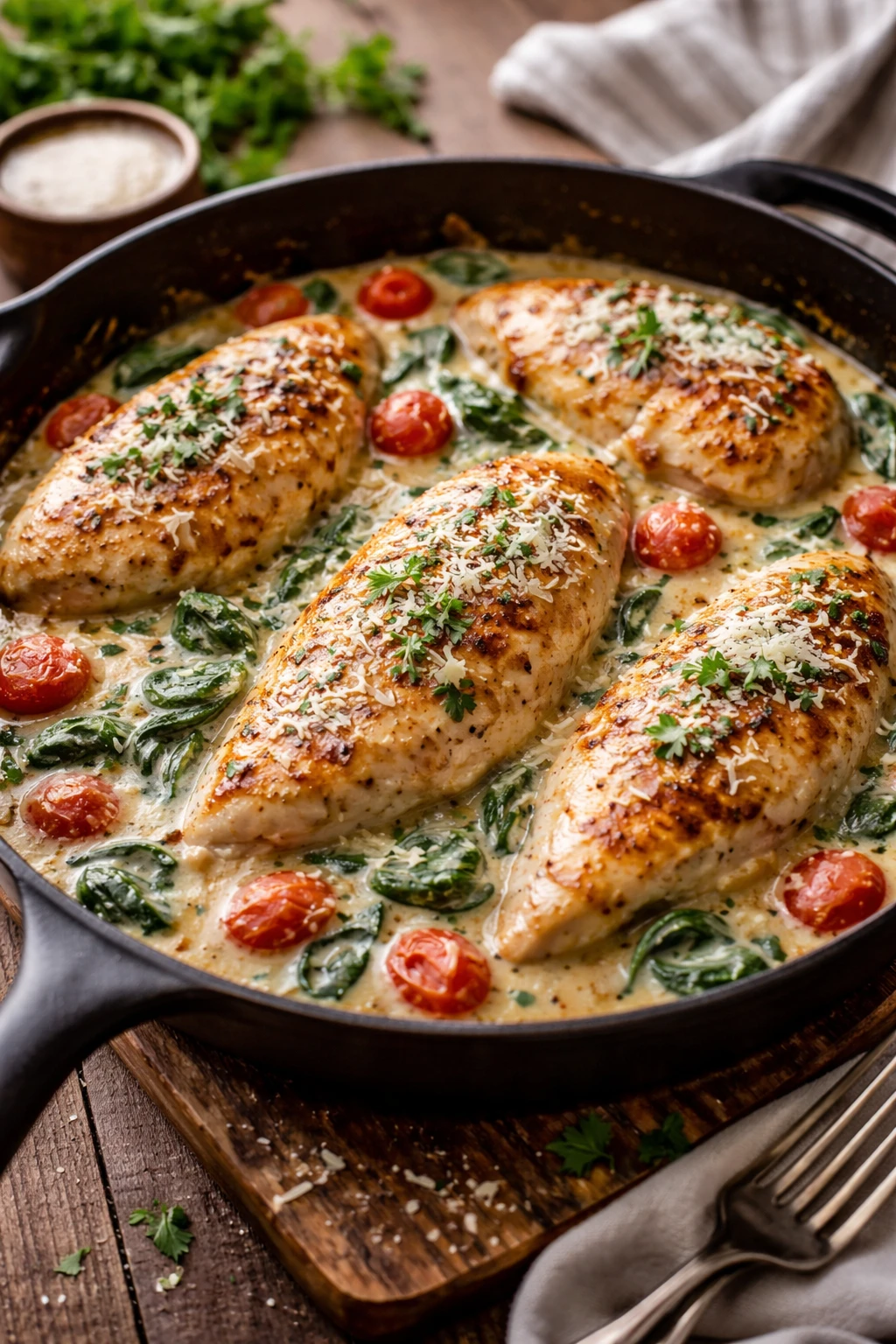
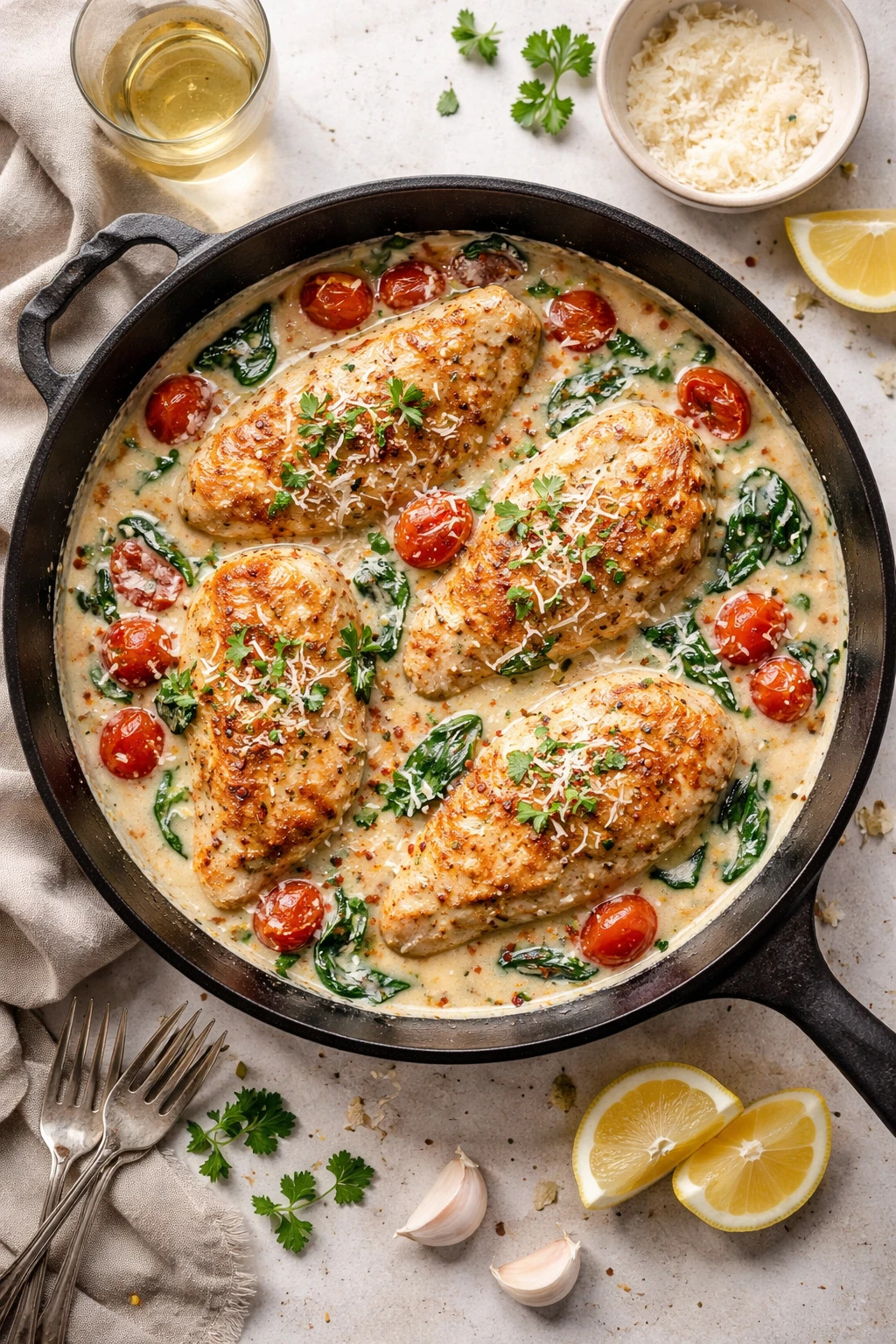
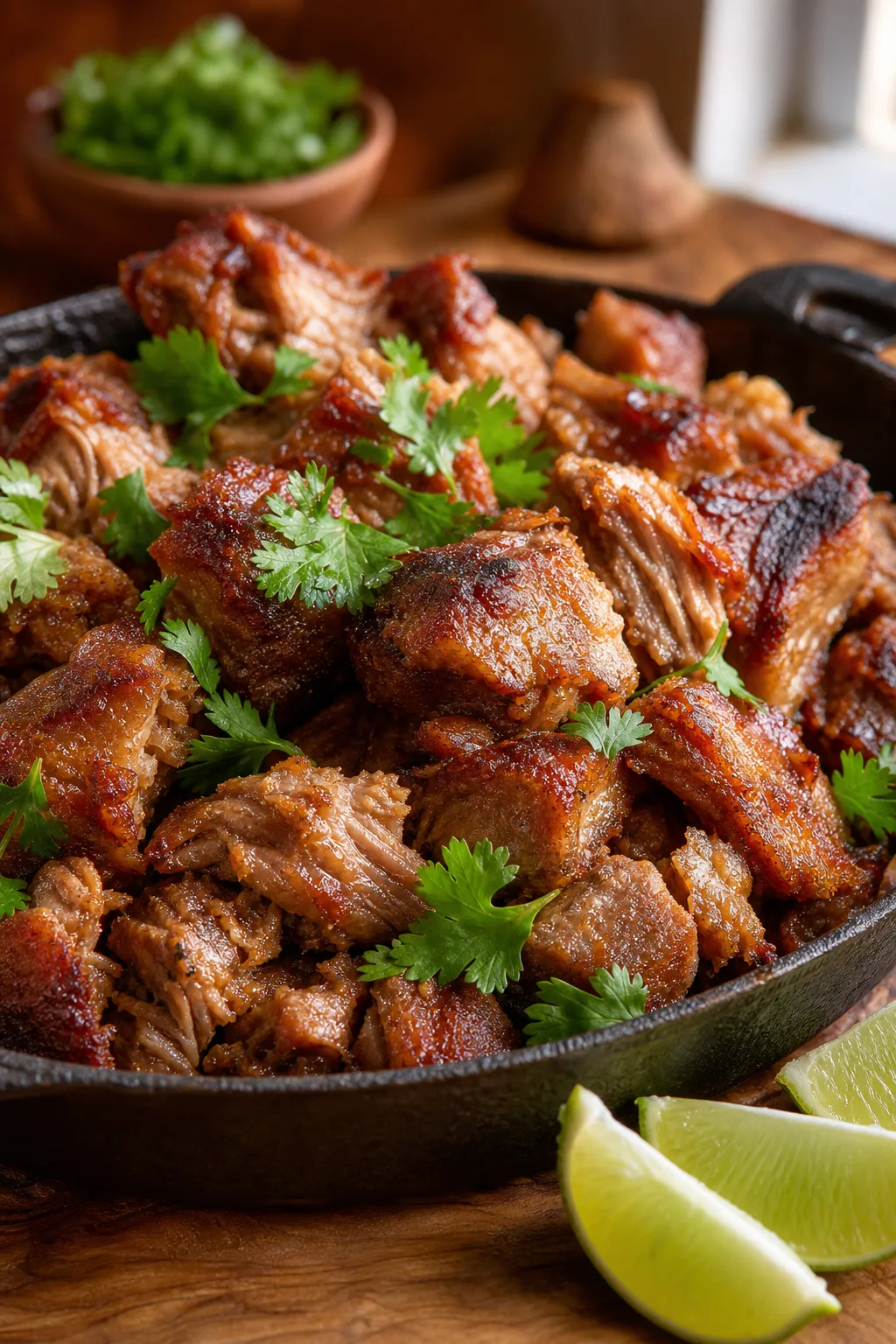
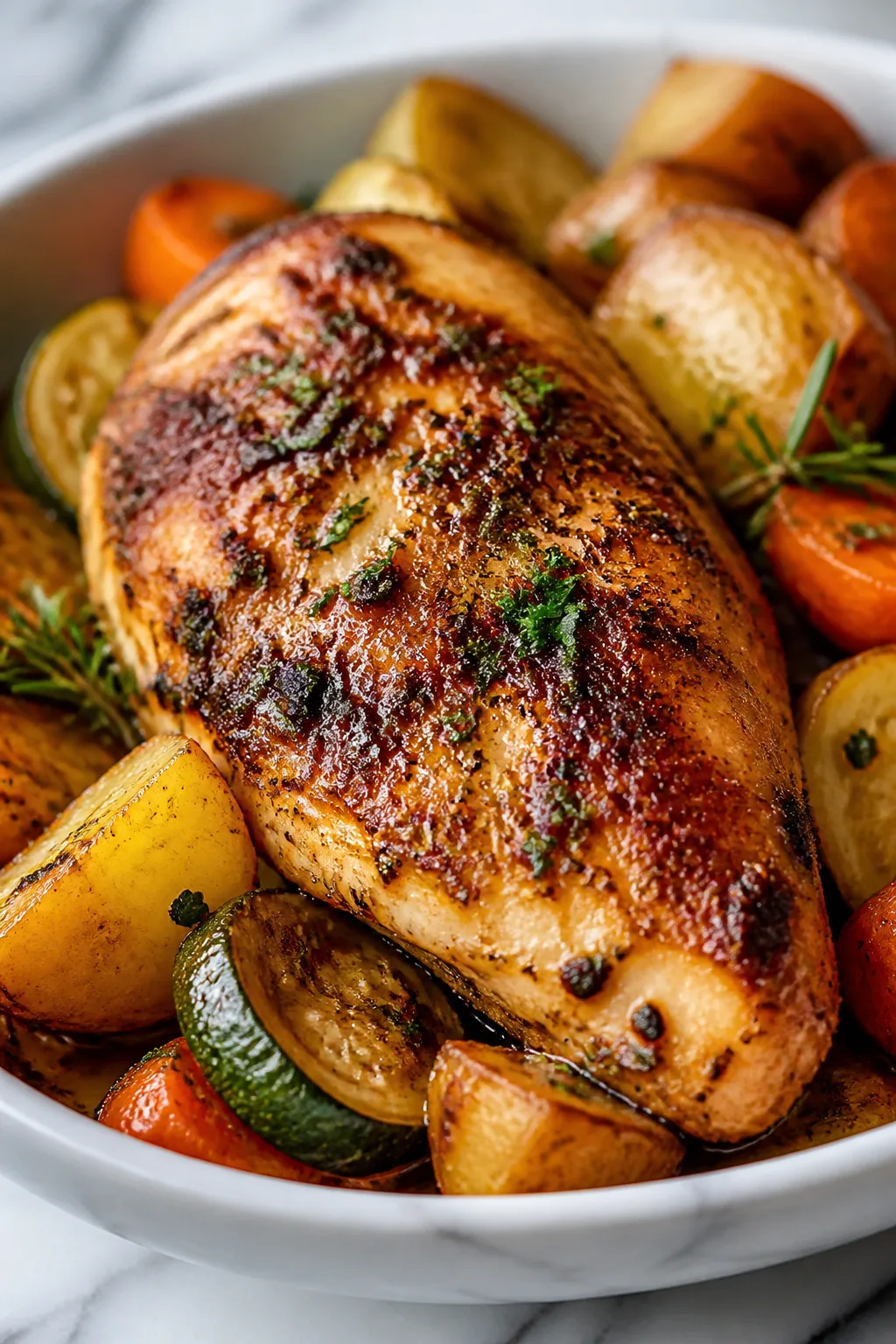
This skillet chicken is pure comfort—juicy pieces bathed in a garlicky, cheesy sauce with a splash of cream and fresh Parmesan. It’s super easy and perfect for cozy weeknights when you want something rich but fuss-free.
Introduction
I’ve been making this creamy garlic Parmesan chicken skillet for years, and it’s one of those dishes that never fails to impress. The first time I tried something similar was at a friend’s house, but I always felt their version was a bit too heavy or bland. So, I played around with the balance of garlic, cream, and Parmesan until I nailed the perfect combo that feels indulgent but not overwhelming. The trick I learned is to gently simmer the sauce so it thickens just right without curdling, and to use freshly grated Parmesan for that sharp, nutty flavor that pre-grated just can’t match. What you end up with is tender, juicy chicken coated in a velvety, flavorful sauce that’s rich but still light enough to enjoy any night of the week. It’s always a hit when I make it for my family, and honestly, it’s one of my go-to quick dinners when I want something comforting but fuss-free. You’ll love how simple it is but how gourmet it tastes!
How To Do It
Step 1
Start by seasoning the chicken breasts generously with salt and freshly ground black pepper on both sides. This step is crucial because seasoning early helps the chicken develop flavor throughout, not just on the surface. Make sure to pat the chicken dry with paper towels before seasoning to help it brown better in the pan. Avoid skipping this or under-seasoning, as it can lead to bland results.
⏱ Time: 5
✓ Doneness: Chicken is evenly seasoned and surface is dry to the touch
Step 2
Heat the olive oil in a large skillet over medium-high heat until shimmering but not smoking. Add the chicken breasts and cook undisturbed for about 5-6 minutes per side, depending on thickness, until golden brown and cooked through. Don’t rush this step by turning too often; letting the chicken sear properly forms a flavorful crust and locks in juices. If you flip too soon, the chicken can stick and tear.
⏱ Time: 12
✓ Doneness: Golden brown crust on both sides; internal temperature reaches 165°F
Step 3
Remove the chicken from the skillet and set aside on a plate, tented lightly with foil to keep warm. This resting period lets the juices redistribute, keeping the chicken moist when you slice it later. Leaving the chicken in the pan while making the sauce can cause overcooking, so don’t skip this step.
⏱ Time: 5
✓ Doneness: Chicken rests off heat, juices settle
Step 4
Reduce the heat to medium and add the butter to the skillet. Once melted, add the minced garlic and sauté for about 1 minute until fragrant but not browned. Garlic burns quickly and turns bitter, so keep a close eye and stir constantly. This step infuses the butter with garlic flavor, forming the base for your sauce.
⏱ Time: 2
✓ Doneness: Garlic becomes aromatic and slightly softened without browning
Step 5
Pour in the heavy cream and stir to combine with the garlic butter. Bring the mixture to a gentle simmer over medium heat. Simmering allows the cream to thicken slightly and concentrate flavors. Avoid boiling vigorously, which can cause the cream to separate or curdle.
⏱ Time: 5
✓ Doneness: Cream thickens slightly and bubbles gently
Step 6
Stir in the freshly grated Parmesan cheese and Italian seasoning, continuing to simmer gently. The cheese melts into the cream, creating a luscious, velvety sauce. Using freshly grated Parmesan is key here — pre-grated cheese often contains anti-caking agents that prevent smooth melting.
⏱ Time: 3
✓ Doneness: Sauce is smooth, creamy, and thick enough to coat the back of a spoon
Step 7
Return the chicken breasts to the skillet, spooning sauce over the top. Simmer everything together for 3-5 minutes so the chicken rewarms and soaks up some sauce flavor. This step finishes the dish and melds all the flavors perfectly. Don’t skip it or the chicken might taste dry.
⏱ Time: 5
✓ Doneness: Chicken is hot throughout and sauce clings to the meat
Step 8
Taste the sauce and adjust seasoning with salt and pepper as needed. Sometimes the Parmesan adds enough saltiness, so it’s best to taste before adding more. Balancing seasoning here ensures the dish isn't too salty or bland.
⏱ Time: 2
✓ Doneness: Sauce tastes balanced and flavorful
Step 9
Garnish with chopped fresh parsley for a pop of color and freshness. Serve immediately with your favorite sides like steamed veggies, mashed potatoes, or crusty bread to soak up all that sauce. The fresh herbs brighten the dish and make it feel complete.
⏱ Time: 1
✓ Doneness: Parsley looks vibrant and fresh; dish ready to serve
Pro Tips
Pat chicken dry before seasoning and searing.
Moisture on the chicken surface causes it to steam instead of sear, preventing that flavorful crust. Drying the chicken ensures better Maillard reaction and locks in juices.
Simmer the cream gently, don’t boil.
Boiling can cause cream to separate or curdle, ruining the sauce texture. A gentle simmer thickens the sauce evenly and keeps it silky.
Use freshly grated Parmesan cheese.
Pre-grated cheese contains anti-caking agents that stop smooth melting, resulting in grainy sauce. Freshly grated melts better and adds a richer flavor.
Let the chicken rest after cooking.
Resting allows juices to redistribute inside the meat, keeping it moist when sliced. Cutting immediately causes juice loss and dry chicken.
Don’t overcrowd the skillet when searing chicken.
Overcrowding lowers pan temperature, causing steaming instead of searing. Cook in batches if needed to get a good crust.
Add garlic to melted butter and cook until fragrant but not brown.
Burnt garlic tastes bitter and ruins the sauce. Cooking just until fragrant extracts the best flavor without bitterness.
Finish cooking chicken in the sauce for extra flavor.
Simmering the chicken in sauce lets it absorb the creamy garlic flavors, making every bite deliciously juicy.
Common Mistakes to Avoid
Skipping the chicken resting step.
Why it happens Many cooks want to serve immediately and assume resting isn’t necessary, but cutting too soon causes juices to run out.
Fix After searing, transfer chicken to a plate and tent loosely with foil for 5 minutes. This lets juices redistribute, resulting in tender, juicy meat.
Boiling the cream sauce.
Why it happens Rushing the sauce thickening by increasing heat can cause the cream to break and separate.
Fix Keep the heat at medium or medium-low and stir frequently. Let the sauce gently simmer and thicken slowly for the best texture.
Using pre-grated Parmesan cheese.
Why it happens Convenience often leads to using pre-grated cheese, but it contains additives that prevent smooth melting.
Fix Grate fresh Parmesan yourself using a microplane or fine grater to ensure a creamy, smooth sauce.
Not drying chicken before seasoning.
Why it happens Skipping patting dry is common due to hurry or oversight, but moisture causes poor browning.
Fix Use paper towels to thoroughly dry chicken before seasoning to promote a crisp, golden crust.
Overcrowding the pan when searing.
Why it happens Trying to cook all chicken at once leads to steaming instead of searing.
Fix Cook chicken in batches if necessary, leaving space between pieces for proper browning.
Variations
Add Mushrooms for Earthy Flavor
Sauté sliced mushrooms with the garlic before adding cream to introduce a deep, earthy note. This adds texture and makes the dish feel more substantial without changing the base technique.
Note: Cook mushrooms until browned and their moisture evaporates to avoid watering down the sauce.
Make It Spicy with Red Pepper Flakes
Sprinkle in 1/4 to 1/2 teaspoon of crushed red pepper flakes when sautéing garlic for a subtle heat that complements the creamy sauce beautifully.
Note: Add flakes early with garlic to infuse the oil and evenly distribute the spice.
Use Half-and-Half Instead of Heavy Cream
For a lighter sauce, substitute half-and-half for heavy cream, but be aware the sauce will be thinner and less rich. Reduce the sauce slightly longer to thicken.
Note: Simmer gently and watch closely to prevent curdling with lower fat content.
Serve Over Pasta or Rice
Turn this skillet chicken into a one-pan meal by serving it over cooked pasta or rice, letting the sauce soak in. This creates a hearty, comforting dinner with minimal extra effort.
Note: Add some reserved pasta water to the sauce if needed to loosen it for coating noodles.
Swap Chicken for Turkey Cutlets
Use thin turkey cutlets instead of chicken breasts for a leaner protein option. The cooking times remain similar but watch closely to avoid overcooking.
Note: Turkey tends to dry out faster, so rest briefly and serve immediately.
Nutrition
Per Serving:
Nutritional values are estimates and may vary based on specific ingredients used.
Storage & Tips
Room Temperature
This dish can safely sit at room temperature for up to 2 hours if covered loosely to prevent contamination. Beyond that, refrigerate promptly to avoid food safety risks.
Refrigerator
Store leftovers in an airtight container for up to 3 days. The sauce may thicken when chilled; gently reheat on the stovetop with a splash of cream or water to restore a creamy consistency. Serving cold is possible but less flavorful.
Freezer
Freeze in a sealed, freezer-safe container for up to 2 months. Wrap tightly to prevent freezer burn. Thaw overnight in the refrigerator before reheating to keep texture intact.
Reheating
Reheat gently on the stovetop over low heat, stirring occasionally. Add a splash of cream or broth to loosen the sauce if it thickens too much. Avoid microwaving at high heat as this can cause the sauce to separate.
Make Ahead
You can prepare the sauce and cook the chicken separately a day ahead. Store both refrigerated, then combine and reheat in the skillet before serving to keep chicken tender and sauce fresh.
FAQ
Can I use chicken thighs instead of breasts?
Absolutely! Boneless skinless thighs work well and stay juicy. They may need slightly longer cooking time and can handle a bit more robust seasoning. Just adjust searing time to ensure they’re cooked through but still tender.
What if I don’t have heavy cream?
You can substitute half-and-half or whole milk, but the sauce will be thinner and less rich. To compensate, simmer the sauce longer to reduce and thicken, but watch closely to avoid burning or curdling.
Can I make this recipe dairy-free?
For a dairy-free version, use coconut cream or a cashew cream substitute and a dairy-free Parmesan alternative. The flavor will differ but it can still be creamy and delicious with some adjustments.
How do I prevent the sauce from curdling?
Keep the heat moderate, avoid boiling the cream, and add cheese gradually while stirring. High heat or rushing this step can cause the sauce to separate. Gentle simmering is key.
Is it okay to use pre-minced garlic?
Fresh garlic is best for flavor and aroma. Pre-minced garlic often lacks brightness and can taste muted or bitter. If you must use it, add it later in cooking to reduce bitterness.
Can I prepare this dish ahead of time?
Yes! Cook chicken and sauce separately and refrigerate. Combine and gently reheat just before serving to keep the chicken tender and sauce fresh.
What sides go best with this chicken skillet?
Steamed veggies, mashed potatoes, pasta, or crusty bread all pair wonderfully. The sauce is great for mopping up, so choose sides that soak it up well.
How do I know when the chicken is done?
Use a meat thermometer—165°F internal temperature is safe. The chicken should be golden brown outside and no longer pink inside. Rest before slicing for juiciness.
Final Thoughts
Give this creamy garlic Parmesan chicken a try—you’ll love how easy and comforting it is. Let me know how it turns out and what sides you paired it with!