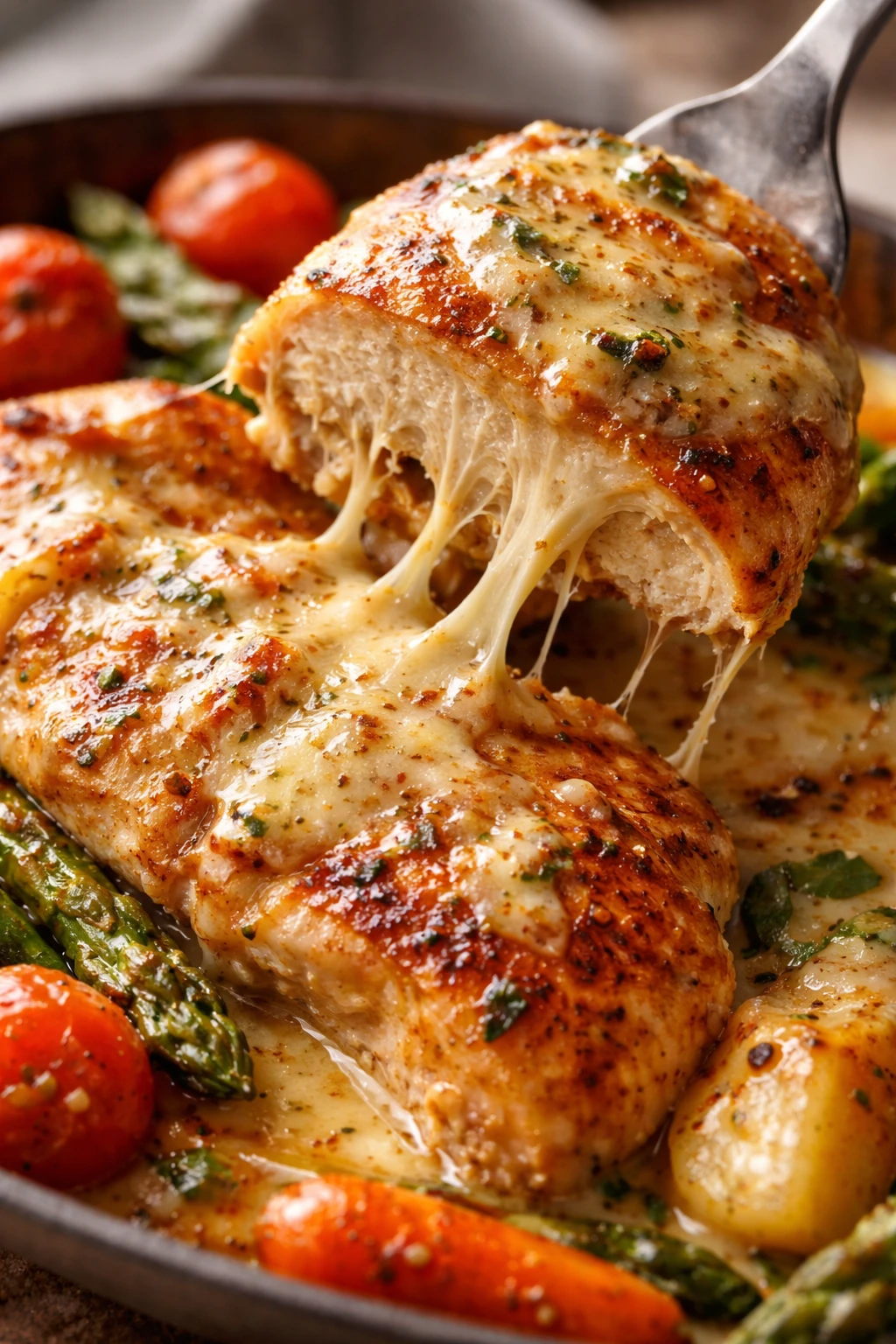
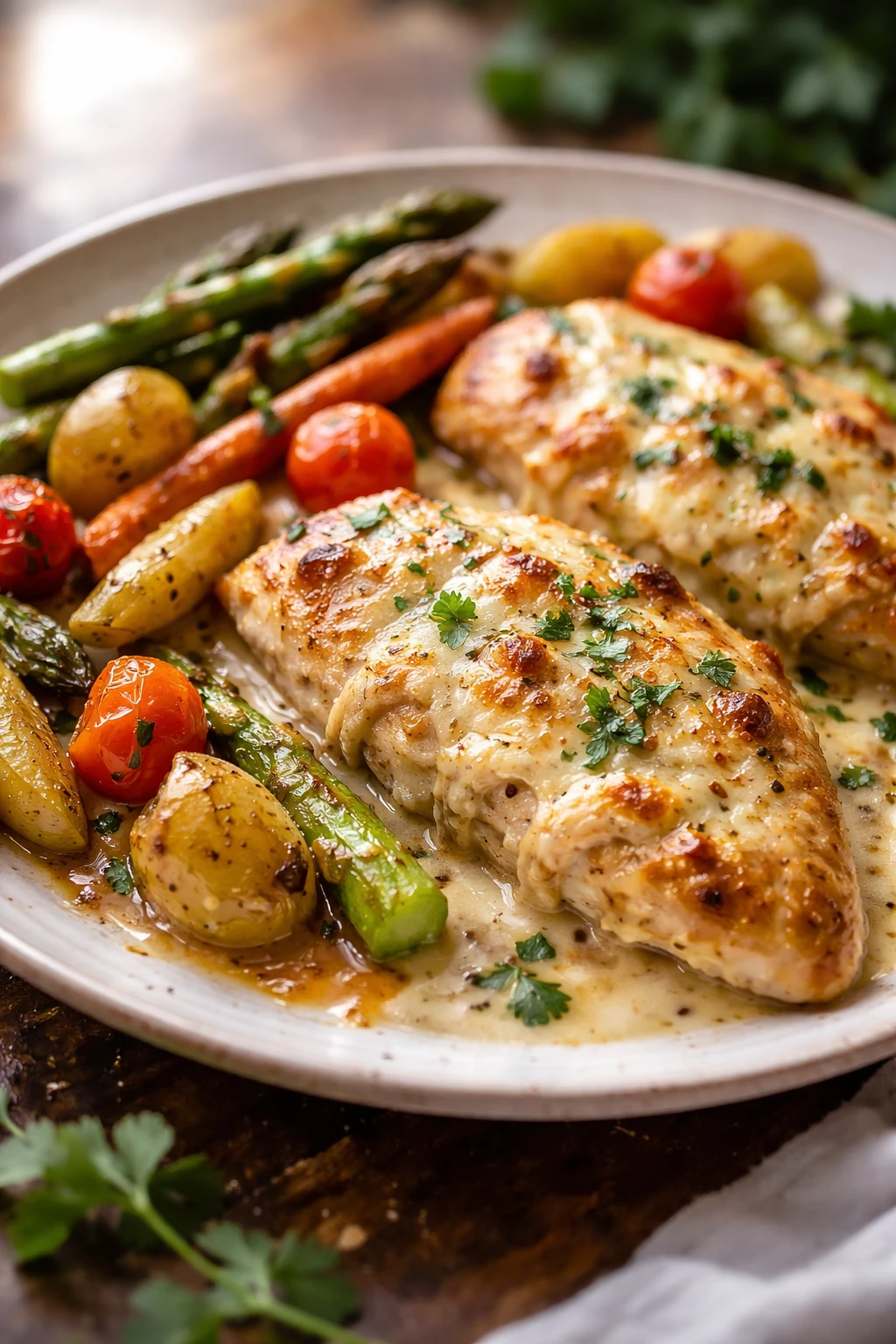
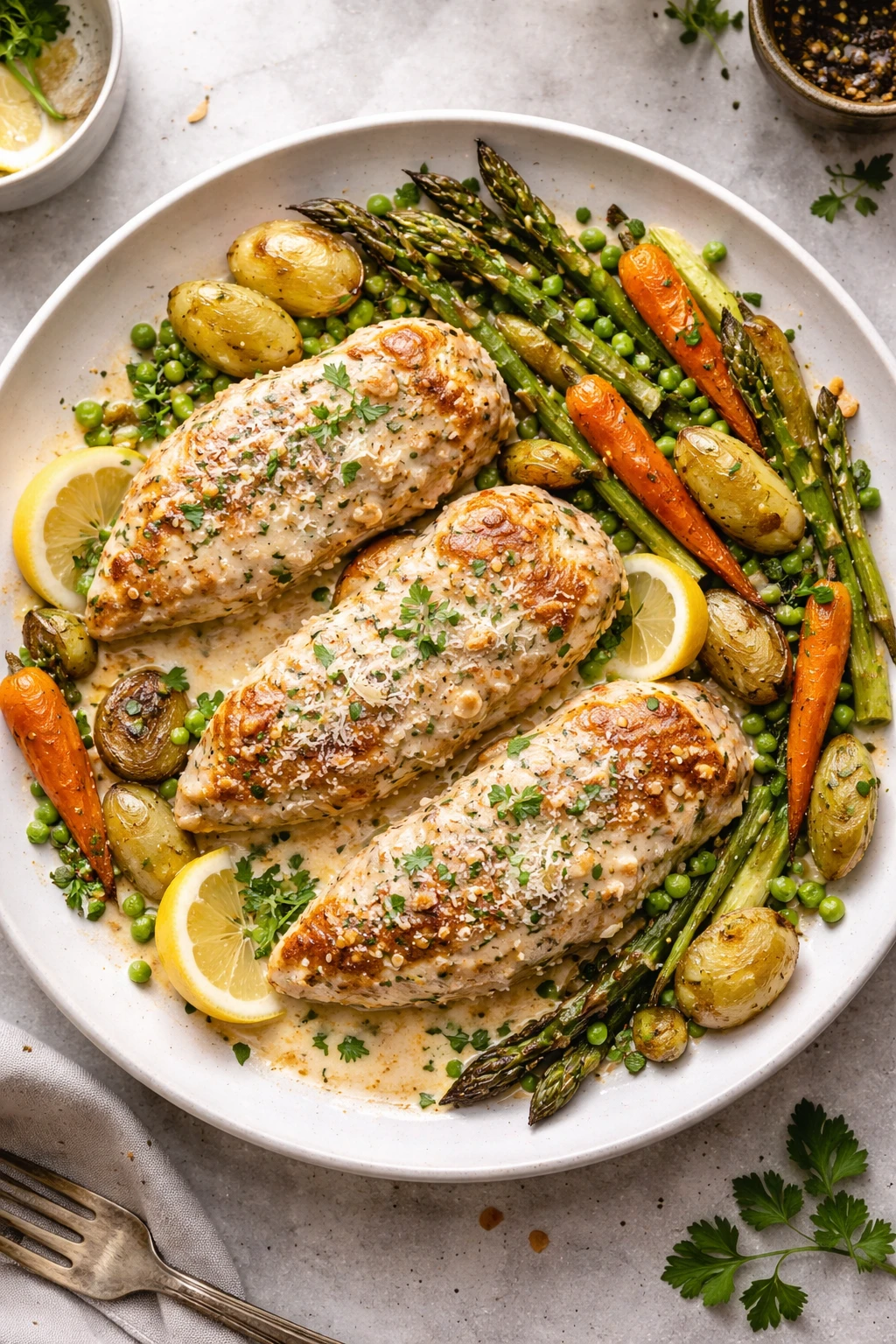
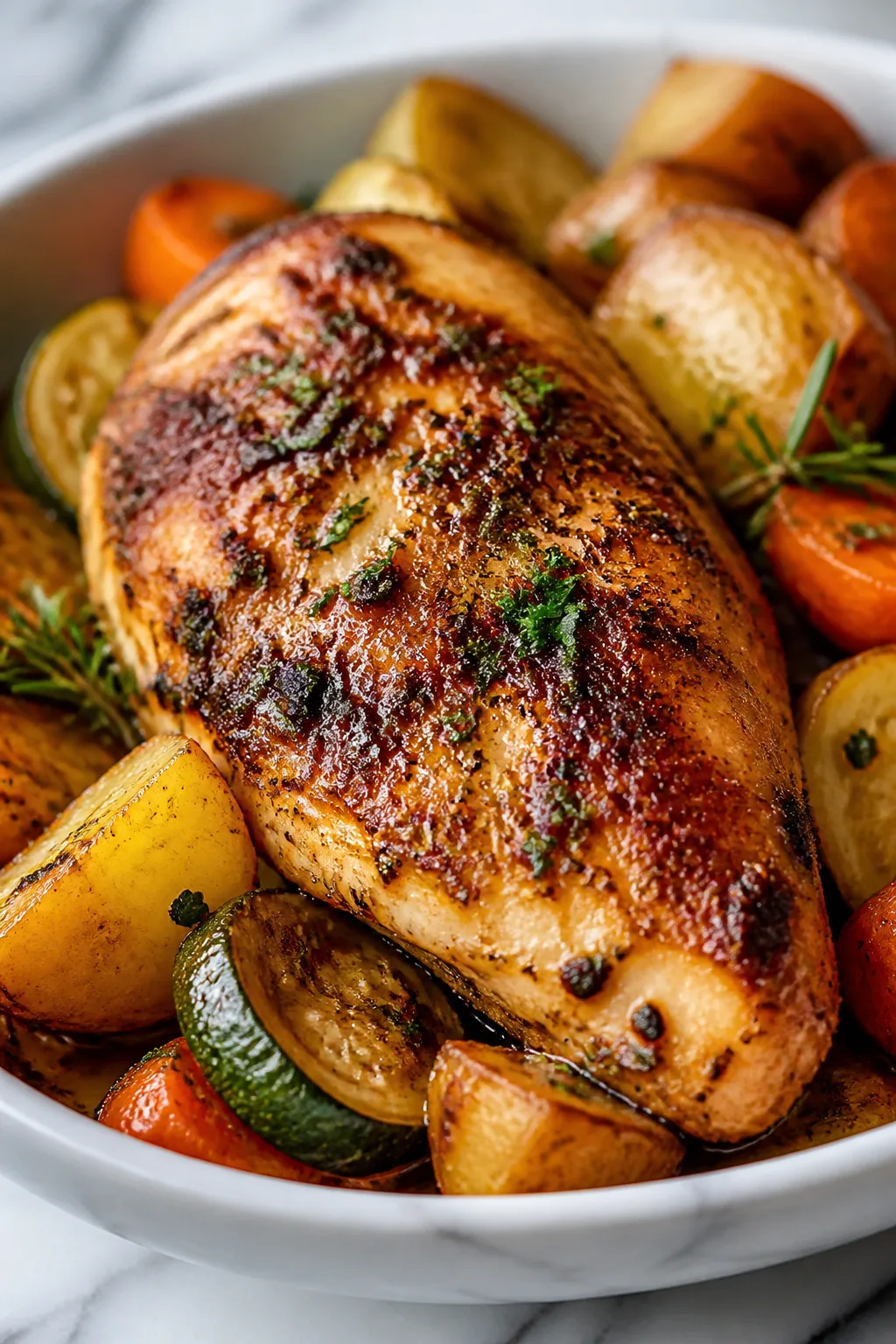
This creamy garlic parmesan chicken is tender and bursting with flavor, paired with slow-roasted spring veggies that caramelize beautifully. It’s my go-to for cozy weekend dinners when I want something comforting yet fresh.
Introduction
I stumbled upon this creamy garlic parmesan chicken recipe during a chilly spring weekend when I craved something comforting yet fresh. My first attempt was a bit dry — I didn’t sear the chicken properly, so it lacked that juicy tenderness I wanted. But once I mastered the sear and added a slow-roasted veggie side, it became my go-to meal. What sets this apart is the rich, garlicky sauce that clings to the chicken, combined with veggies roasted just enough to caramelize but still keep their crunch. I love how the slow roasting brings out the natural sweetness in the carrots and snap peas, balancing the creamy sauce perfectly. If you’re after a dish that feels indulgent but isn’t complicated, this is it. Plus, the leftovers reheat beautifully, making it a winner for busy nights. The trick I learned? Don’t rush the sear and let the veggies roast low and slow so they develop those golden edges. The finished plate looks vibrant and tastes like a cozy hug on a fork — rich, creamy, and fresh all at once.
How To Do It
Step 1
Start by patting your chicken breasts dry with paper towels — this helps the sear develop a nice crust. Season both sides with salt and pepper evenly. Heat olive oil in a large skillet over medium-high heat until shimmering but not smoking. Place the chicken in the pan without crowding it, letting it cook undisturbed for about 5 minutes. This step is crucial because a good sear locks in juices and creates flavor through the Maillard reaction. Avoid moving the chicken too soon, or it won’t brown properly.
⏱ Time: 5 minutes
✓ Doneness: Golden-brown crust on the underside, chicken releases easily from the pan
Step 2
Flip the chicken breasts and add the minced garlic to the pan, stirring quickly so it doesn’t burn. Pour in the heavy cream, then sprinkle the Parmesan cheese and Italian seasoning evenly over the chicken. Reduce heat to medium-low and add butter to enrich the sauce. Let this simmer gently for 10-12 minutes, spooning sauce over the chicken occasionally. The gentle simmer allows the sauce to thicken and flavors to meld without curdling the cream. Rushing this could result in a watery sauce or dry chicken.
⏱ Time: 12 minutes
✓ Doneness: Sauce thickens to creamy consistency, chicken reaches internal temp of 165°F and looks opaque
Step 3
While the chicken simmers, preheat your oven to 400°F (200°C). Toss the spring vegetables in a bowl with olive oil, salt, and pepper. Spread them evenly on a baking sheet in a single layer to ensure they roast rather than steam. Roast in the oven for 20-25 minutes, turning halfway through. This slow roasting caramelizes the veggies’ natural sugars, enhancing their flavor and adding a slight crunch that contrasts beautifully with the creamy chicken.
⏱ Time: 25 minutes
✓ Doneness: Edges of vegetables are golden brown and slightly crisp, veggies tender but not mushy
Step 4
Once the chicken has cooked through and the sauce is thickened, remove the skillet from heat. Let the chicken rest for a few minutes; this helps redistribute the juices, keeping it moist when sliced. During resting, the sauce will thicken slightly more, coating the chicken perfectly. Avoid slicing immediately or the juices will run out, making the chicken dry.
⏱ Time: 5 minutes
✓ Doneness: Chicken feels firm but springy to touch, sauce thick and glossy
Step 5
Plate the roasted vegetables alongside the creamy garlic parmesan chicken. Spoon extra sauce over the top and sprinkle with fresh parsley for a pop of color and fresh flavor. This finishing touch brightens the dish and makes it look restaurant-worthy. Serve immediately to enjoy the contrast between warm, creamy chicken and crisp, caramelized veggies.
⏱ Time: 2 minutes
✓ Doneness: Dish looks vibrant with creamy sauce glistening and veggies golden
Step 6
If you want to add a little extra zing, try squeezing a bit of fresh lemon juice over the chicken just before serving. The acid cuts through the richness of the sauce and lifts the flavors. This is optional but highly recommended for balance and freshness.
⏱ Time: 1 minute
✓ Doneness: Subtle brightness in aroma and taste
Step 7
To make this recipe gluten-free, ensure your Parmesan cheese is labeled gluten-free and avoid any seasoning blends that might have additives. The recipe is naturally gluten-free but always double-check labels to be safe.
⏱ Time: 0 minutes (prep note)
✓ Doneness: N/A
Step 8
For an extra creamy sauce, you can add a splash of chicken broth or white wine during the simmering step. This adds depth and helps loosen the sauce if it gets too thick before the chicken is fully cooked. Just be sure to simmer long enough for alcohol to cook off if using wine.
⏱ Time: 0 minutes (optional adjustment)
✓ Doneness: Sauce has smooth, velvety texture without being watery
Step 9
If you want to prep ahead, you can chop and season the vegetables the day before and keep them refrigerated in a sealed container. The chicken can be seasoned but cooked fresh for best texture. Reheat the veggies in a hot oven to regain crispness before serving.
⏱ Time: 0 minutes (prep tip)
✓ Doneness: Veggies reheat without becoming soggy
Pro Tips
Pat the chicken dry before searing to get a better crust.
Moisture on the chicken’s surface steams it instead of searing, preventing browning. Dry chicken allows the Maillard reaction to create that flavorful golden crust which seals in juices and adds texture.
Simmer the sauce gently to avoid curdling.
Heavy cream can separate if boiled too hard. Keeping the heat moderate lets the fat and cheese emulsify smoothly, resulting in a creamy sauce instead of grainy or broken texture.
Roast vegetables in a single layer with space between pieces.
Crowding causes steaming instead of roasting, which softens veggies and prevents caramelization. Spreading them out helps moisture evaporate and sugars brown, adding flavor and crunch.
Let the chicken rest after cooking.
Resting allows juices to redistribute throughout the meat. Cutting immediately causes juices to spill out, leaving the chicken dry. This step keeps the meat juicy and tender.
Use freshly grated Parmesan cheese.
Pre-grated cheeses often contain anti-caking agents that prevent smooth melting. Freshly grated cheese melts evenly and adds richer flavor to the sauce.
Add garlic just after flipping the chicken.
Adding garlic too early risks burning it, which creates bitterness. Adding it after flipping allows it to soften and infuse the sauce without burning.
Keep an eye on the sauce thickness.
If the sauce gets too thick before the chicken is done, add a splash of chicken broth or water to loosen it. This prevents over-reduction and maintains a silky texture.
Common Mistakes to Avoid
Skipping the sear and baking chicken directly.
Why it happens People often assume baking is easier or healthier and skip searing, not realizing it affects flavor and moisture retention.
Fix Always sear the chicken first in a hot pan to develop a golden crust that locks in juices. This step adds depth and prevents dry, bland chicken.
Overheating the cream sauce causing curdling.
Why it happens High heat cooks the cream too aggressively, breaking the emulsion and causing the sauce to separate.
Fix Simmer the sauce gently on medium-low heat and stir frequently. Remove from heat if it starts to boil vigorously.
Overcrowding vegetables on the baking tray.
Why it happens Trying to roast too many veggies at once reduces air circulation, causing steaming instead of roasting.
Fix Use a large enough baking sheet or roast in batches to ensure each piece has space to brown evenly.
Not resting chicken after cooking.
Why it happens Impatience or lack of awareness leads to cutting immediately, which loses juices.
Fix Let the chicken rest for at least 5 minutes before slicing to keep it moist and tender.
Using pre-grated Parmesan cheese.
Why it happens Convenience leads to using pre-grated cheese that doesn’t melt well.
Fix Grate your own Parmesan fresh from the block to ensure smooth melting and better flavor.
Variations
Spicy Creamy Garlic Parmesan Chicken
Add a pinch of red pepper flakes or cayenne to the sauce for a spicy kick. This variation adds warmth without overpowering the creamy garlic flavor. You can also toss the vegetables with chili powder before roasting to complement the heat.
Note: Adjust spice level carefully and add gradually during simmering to avoid bitterness or overwhelming the delicate sauce.
Mushroom and Spinach Garlic Parmesan Chicken
Stir in sautéed mushrooms and fresh spinach into the sauce during the last 5 minutes of simmering. These add earthiness and extra greens, making the dish heartier and more nutrient-dense.
Note: Cook mushrooms separately to release moisture before adding, so sauce doesn’t become watery.
Lemon Herb Creamy Chicken
Add fresh lemon zest and juice to the sauce for a bright, citrusy flavor that cuts through the richness. Fresh herbs like thyme or rosemary can replace Italian seasoning for an aromatic twist.
Note: Add lemon juice at the end of cooking to preserve brightness and prevent curdling.
Dairy-Free Garlic Parmesan Chicken
Use coconut cream or cashew cream instead of heavy cream, and nutritional yeast in place of Parmesan for a vegan-friendly version. The texture and flavor will differ but still deliver a creamy, garlic-infused sauce.
Note: Simmer gently and taste frequently, as non-dairy substitutes vary in thickness and flavor.
One-Pan Creamy Garlic Chicken with Potatoes
Add small diced potatoes to the roasting pan with the vegetables for a complete meal. The potatoes roast alongside the veggies, soaking up the garlic and Parmesan flavors.
Note: Cut potatoes small enough to cook through in the roasting time to avoid raw centers.
Nutrition
Per Serving:
Nutritional values are estimates and may vary based on specific ingredients used.
Storage & Tips
Room Temperature
This dish can safely sit covered at room temperature for up to 2 hours. Avoid leaving it out longer to prevent bacterial growth. Cover with foil or a lid to keep it from drying out.
Refrigerator
Store leftovers in an airtight container for up to 3 days. The sauce may thicken and veggies soften when cold. Reheat gently to preserve texture, adding a splash of cream or broth if sauce is too thick.
Freezer
Freeze cooked chicken and veggies in airtight containers or heavy-duty freezer bags for up to 2 months. Wrap tightly to avoid freezer burn. Thaw overnight in the fridge before reheating.
Reheating
Reheat on the stovetop over low heat, stirring occasionally. Add a splash of cream or broth to loosen the sauce if needed. Avoid high heat which can curdle cream and dry out chicken. Microwave reheating is possible but do so in short intervals to prevent toughness.
Make Ahead
You can prep and season the chicken and chop vegetables a day ahead. Store separately in the fridge. Roast veggies and cook chicken fresh for best texture and flavor. Alternatively, cook fully and reheat gently on serving day.
FAQ
Can I use chicken thighs instead of breasts?
Absolutely! Chicken thighs are juicier and more forgiving if slightly overcooked. Adjust cooking time slightly longer to ensure they reach a safe internal temperature. The sauce pairs beautifully with thighs and adds richness.
What if I don’t have heavy cream?
You can substitute half-and-half or whole milk mixed with a bit of butter to increase fat content, but the sauce won’t be as rich or thick. Simmer gently to avoid curdling. Alternatively, use a non-dairy cream substitute if dairy-free.
How do I prevent the sauce from separating?
Keep the heat moderate and avoid boiling the sauce vigorously. Stir frequently and add cheese gradually. If it starts to curdle, remove from heat and whisk vigorously to bring it back together.
Can I roast the vegetables earlier and reheat?
Yes, but reheat them in a hot oven to restore some crispness. Avoid microwaving as it tends to make roasted veggies soggy. Roasting fresh is ideal for best texture.
Is it okay to use pre-minced garlic?
Fresh minced garlic offers the best flavor and aroma. Pre-minced garlic from a jar can be used in a pinch but may lack brightness and can alter the sauce's taste slightly.
How thick should the sauce be when serving?
The sauce should coat the back of a spoon smoothly and cling to the chicken without being runny. It will thicken slightly as it cools but should still be pourable.
Can I add other vegetables?
Definitely! Zucchini, bell peppers, or cherry tomatoes work well roasted. Just adjust roasting times based on vegetable density to avoid over or undercooking.
What wine pairs well with this dish?
A medium-bodied white wine like Chardonnay pairs beautifully, complementing the creamy sauce and garlic flavors without overpowering the dish.
Final Thoughts
I hope you enjoy making this creamy garlic parmesan chicken as much as I do! Don’t forget to share your results and any twists you try — I love hearing from you.