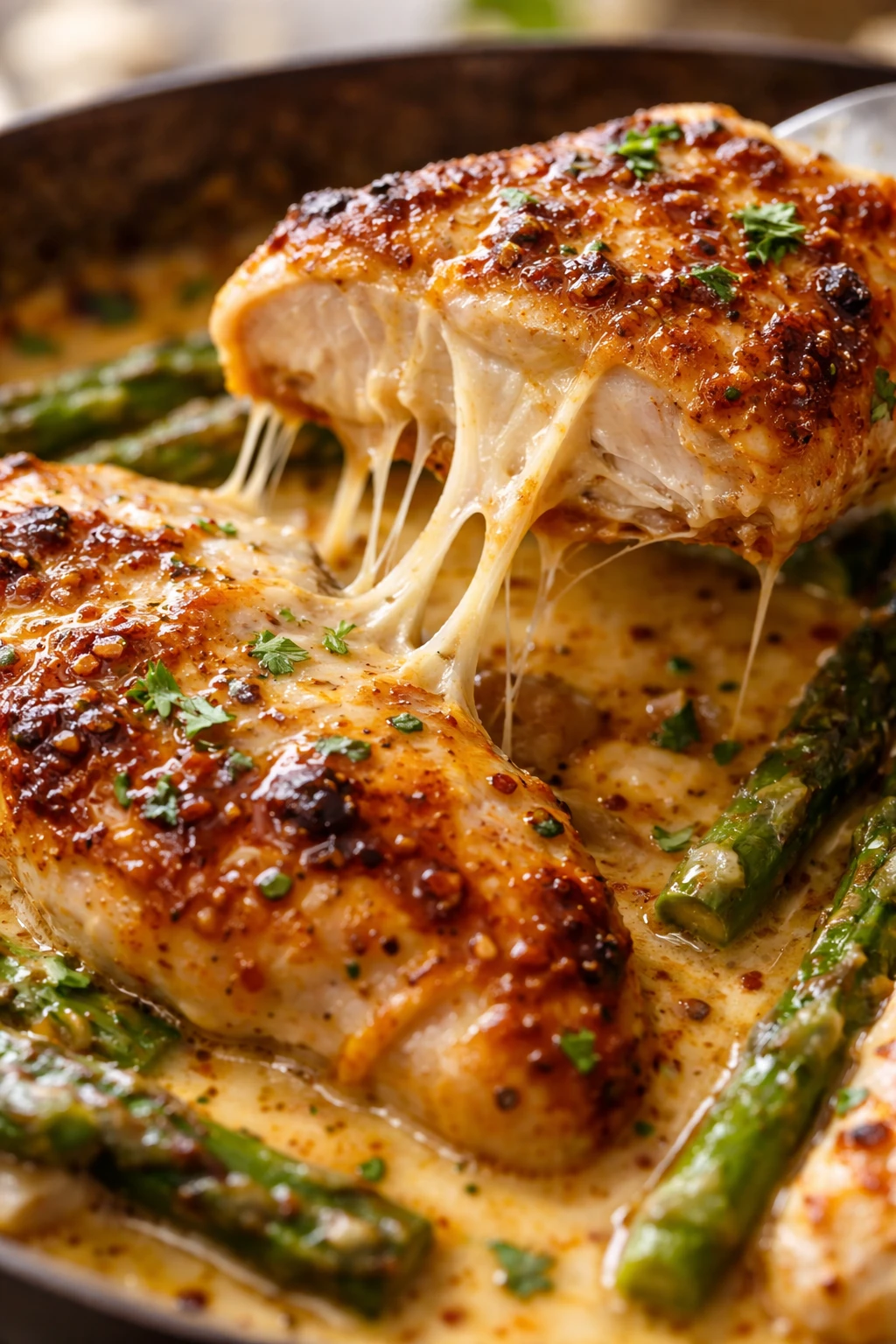
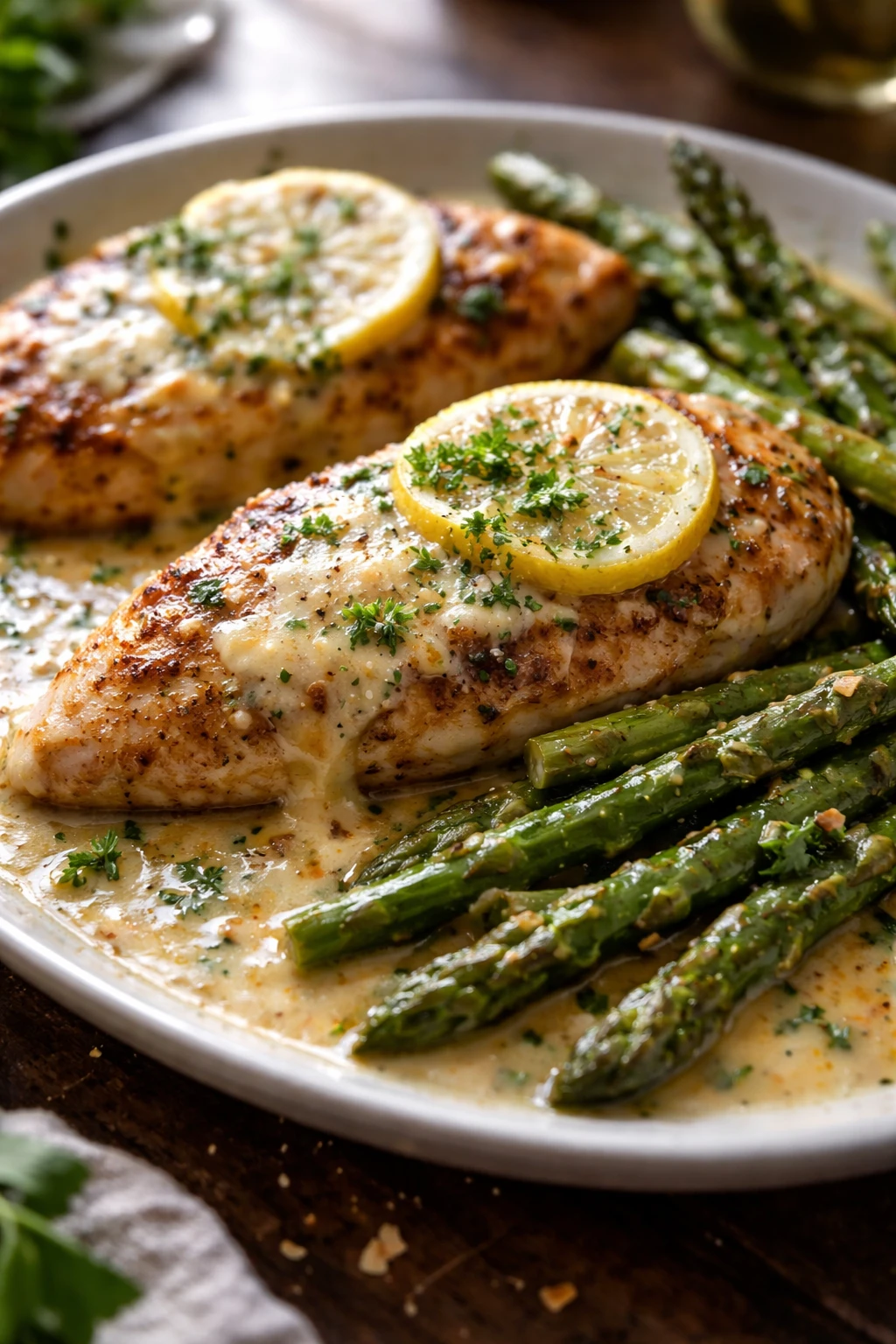
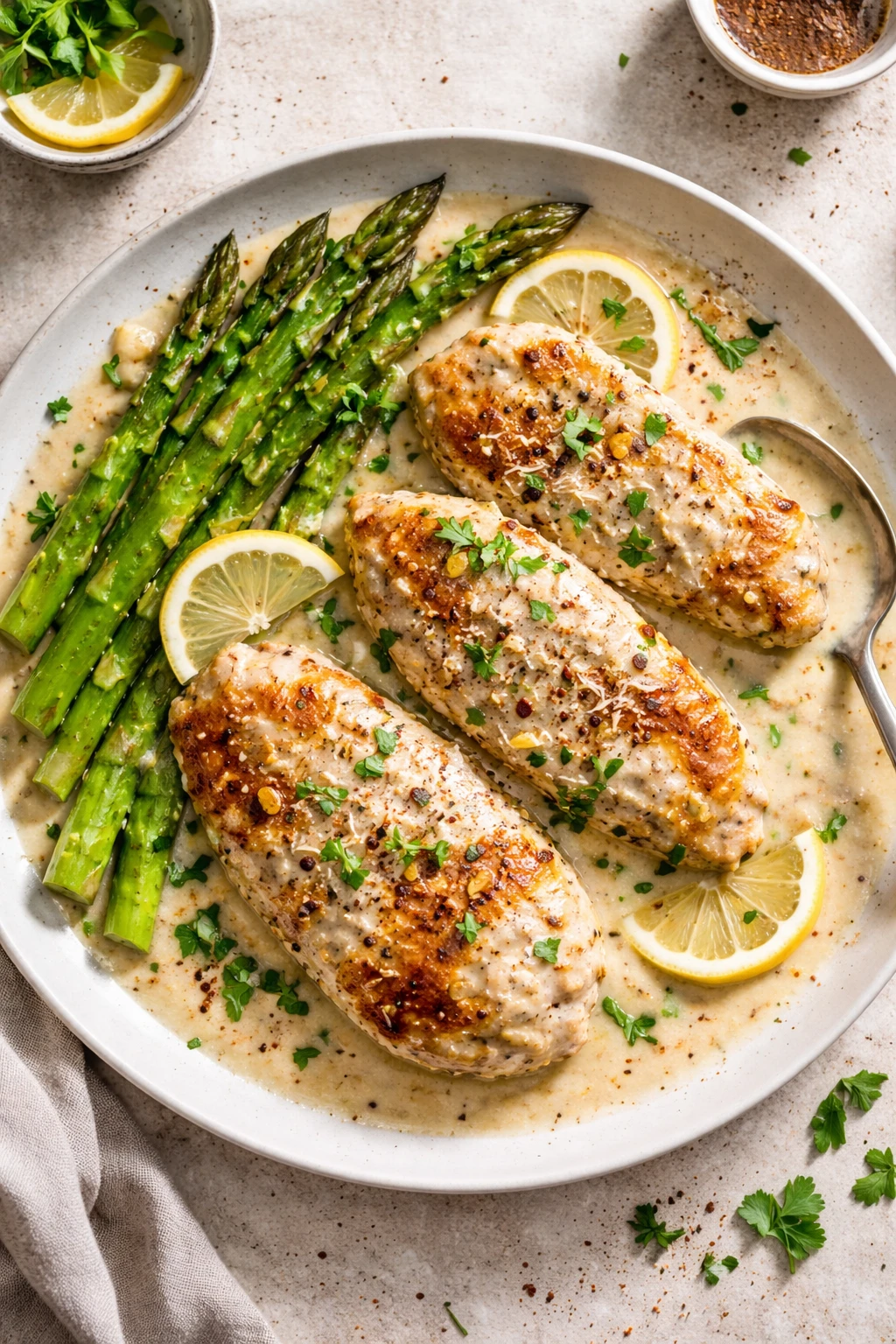
This creamy lemon garlic chicken with fresh asparagus is a bright, comforting dish that’s perfect for any night. The garlic-infused sauce and tender veggies make it feel special without fuss. Ideal for cozy dinners or weekend meals!
Introduction
I first tried a lemon garlic chicken recipe years ago, and it instantly became one of my favorites for a quick weeknight dinner. Over time, I’ve tweaked it to include fresh spring asparagus, which adds a lovely pop of color and a subtle crunch that balances the creamy sauce beautifully. What makes my version stand out is the way I infuse the garlic into the sauce slowly, letting it mellow and deepen in flavor rather than overpower the dish. I also like to zest the lemon before juicing it, which adds an extra layer of brightness that you can really taste. The finished dish feels both fresh and indulgent — creamy, tangy, and comforting all at once. It’s perfect for those evenings when you want something a bit special without spending hours cooking. I’ve had my share of recipes where the sauce turns out watery or bland, but this one hits the mark every time. The chicken stays juicy, the asparagus tender-crisp, and the sauce thickens just right to coat everything in a silky layer of flavor. Plus, the garlic aroma filling the kitchen is just irresistible. I hope you’ll love making this as much as I do!
How To Do It
Step 1
Start by pounding the chicken breasts to an even thickness, about 1/2 inch. This helps them cook evenly and stay juicy. Heat the olive oil in a large skillet over medium-high heat until shimmering. Carefully add the chicken and sear without moving it for about 5 minutes per side until golden brown. This step is crucial because properly searing the chicken locks in moisture and creates a flavorful crust. Avoid overcrowding the pan to ensure even browning; if your skillet is small, cook the chicken in batches.
⏱ Time: 12
✓ Doneness: Chicken should have a deep golden crust and release easily from the pan when ready to flip.
Step 2
Once the chicken is browned, remove it from the skillet and set aside. Lower the heat to medium and add the butter. When melted, add the minced garlic and sauté gently until fragrant, about 1-2 minutes. Be careful not to let the garlic burn, as it will turn bitter. This slow cooking releases the garlic’s natural sweetness and infuses the sauce with warmth. Then, add the chopped asparagus and cook for 3-4 minutes until just tender but still vibrant green. This keeps the veggies crisp and fresh, balancing the richness of the sauce.
⏱ Time: 7
✓ Doneness: Garlic should be lightly golden and aromatic; asparagus should be tender but still bright green.
Step 3
Pour in the chicken broth and scrape up any browned bits from the bottom of the pan with a wooden spoon. These bits add deep flavor to the sauce. Let the broth simmer for 2 minutes to reduce slightly. Then, stir in the heavy cream, lemon juice, and lemon zest. Bring the mixture to a gentle simmer, stirring often. The acid from the lemon brightens the sauce and cuts through the richness of the cream, making it taste fresh and balanced.
⏱ Time: 5
✓ Doneness: Sauce should thicken slightly and become creamy with visible bubbles around the edges.
Step 4
Return the chicken breasts to the skillet, nestling them into the sauce and asparagus. Simmer gently over low heat for another 8-10 minutes, spooning the sauce over the chicken occasionally. This step allows the chicken to finish cooking through while absorbing the lemon garlic flavors. Avoid boiling, which can toughen the chicken and break the sauce. The sauce should thicken enough to coat the back of a spoon by the end.
⏱ Time: 10
✓ Doneness: Chicken is cooked through (internal temp 165°F), sauce coats spoon thickly.
Step 5
Season the dish with salt and freshly ground black pepper to taste. Adjust lemon juice if you want more brightness. Sprinkle chopped fresh parsley over the top for a burst of color and fresh herb aroma. Let the dish rest for a couple of minutes off heat before serving. This rest time lets the flavors meld and the sauce settle to a silky texture. Serve hot with crusty bread or over rice to soak up the luscious sauce.
⏱ Time: 3
✓ Doneness: Dish is evenly seasoned; parsley is fresh and vibrant.
Step 6
If you want to add an extra touch, try stirring in a teaspoon of grated Parmesan cheese right before serving for a subtle nutty flavor that complements the lemon and garlic perfectly. Just be sure to add it off the heat to prevent clumping. This little addition can elevate the sauce with minimal effort.
⏱ Time: 1
✓ Doneness: Parmesan melts smoothly into the sauce without clumping.
Step 7
For the best texture, avoid overcooking the asparagus. If you prefer it softer, add it earlier with the broth. Otherwise, keep it crisp-tender to contrast the creamy sauce and tender chicken. This step is all about balancing textures for a more interesting bite.
⏱ Time: 0
✓ Doneness: Asparagus retains bright color and slight snap when bitten.
Step 8
Use fresh lemon juice and zest rather than bottled juice. The zest contains essential oils that add vibrant citrus notes, and fresh juice tastes brighter and less processed. This simple swap makes a noticeable difference in flavor depth and freshness.
⏱ Time: 0
✓ Doneness: Sauce tastes fresh and lively, not dull or flat.
Step 9
Serve immediately while the sauce is warm and creamy. Pair with simple sides like steamed rice, mashed potatoes, or crusty bread to soak up every last bit. Enjoy the balance of bright lemon, savory garlic, and tender chicken in every bite!
⏱ Time: 0
✓ Doneness: Dish is hot and sauce clings beautifully to chicken and asparagus.
Pro Tips
Pound chicken breasts to an even thickness before cooking.
Even thickness ensures the chicken cooks uniformly, preventing dry edges and undercooked centers. This technique helps the meat stay juicy and tender throughout cooking, especially when searing and simmering.
Don’t rush the garlic sauté step; cook it gently over medium heat.
Gentle cooking mellows garlic’s sharpness and brings out a sweet, aromatic flavor. High heat burns garlic quickly, leading to bitterness that can overpower the sauce, so patience here elevates the entire dish.
Use fresh lemon zest and juice instead of bottled lemon juice.
Zest contains flavorful oils that add brightness and complexity that bottled juice lacks. Fresh juice tastes lively and natural, balancing the creaminess perfectly without artificial or dull flavors.
Cook asparagus until just tender-crisp.
Overcooking asparagus turns it mushy and dulls its fresh flavor. Keeping it crisp provides a nice textural contrast to creamy sauce and tender chicken, making the dish more interesting and enjoyable.
Simmer the sauce gently after adding cream to avoid curdling.
High heat can cause cream to separate. A gentle simmer thickens the sauce while maintaining a smooth texture, ensuring a luscious, silky coating on the chicken and veggies.
Scrape browned bits from the pan when adding broth.
These fond bits contain concentrated flavors from seared chicken. Incorporating them into the sauce deepens its taste, adding richness and complexity without extra ingredients.
Rest the finished dish for a few minutes before serving.
Resting allows flavors to meld and sauce to thicken slightly, resulting in a more harmonious taste and perfect texture when plated.
Common Mistakes to Avoid
Skipping pounding chicken to even thickness
Why it happens Many assume chicken breasts cook evenly as is, but thickness varies widely, leading to uneven cooking.
Fix Use a meat mallet or rolling pin to gently pound chicken to uniform thickness before cooking. This prevents dry edges and undercooked centers.
Burning the garlic while sautéing
Why it happens Garlic cooks quickly and is often added to very hot oil, causing it to burn and taste bitter.
Fix Sauté garlic over medium or medium-low heat, stirring frequently until just fragrant and lightly golden, then proceed with next steps.
Overcooking asparagus until mushy
Why it happens Rushing or cooking asparagus too long softens it excessively, losing texture and vibrant color.
Fix Add asparagus later and cook just until bright green and tender-crisp. Test by piercing with a fork; it should have a slight snap.
Using bottled lemon juice instead of fresh
Why it happens Bottled juice is convenient but lacks fresh flavor and essential oils from zest.
Fix Always zest and juice fresh lemons for best flavor and brightness in the sauce.
Boiling the cream sauce vigorously
Why it happens High heat can cause cream to separate or curdle, ruining texture.
Fix Simmer sauce gently over low heat after adding cream, stirring often to thicken smoothly.
Variations
Add sun-dried tomatoes and fresh basil
Stir in chopped sun-dried tomatoes and fresh basil leaves just before serving for a Mediterranean twist. This adds a sweet-tart depth and herbal brightness that complements the lemon garlic base nicely.
Note: Add sun-dried tomatoes with the asparagus to soften them; add basil off heat to preserve freshness.
Use chicken thighs instead of breasts
Swap chicken breasts for boneless skinless thighs for a juicier, more flavorful result. Thighs hold up well to simmering and add richness to the dish.
Note: Adjust cooking time slightly longer to ensure thighs are cooked through but still tender.
Make it dairy-free with coconut milk
Replace heavy cream with full-fat coconut milk for a dairy-free version with a subtle tropical twist. The sauce remains creamy but with a different flavor profile.
Note: Simmer gently to avoid coconut milk separating; flavor will be less tangy but still rich.
Add a pinch of red pepper flakes
If you like a little heat, sprinkle in red pepper flakes when sautéing garlic. It adds a gentle spicy kick without overwhelming the lemon and garlic flavors.
Note: Adjust amount to taste; add early with garlic for infused heat.
Serve over creamy mashed potatoes
Instead of rice or bread, serve the chicken and sauce over creamy mashed potatoes for extra comfort. The sauce soaks into the potatoes beautifully, making every bite indulgent.
Note: Prepare mashed potatoes ahead and keep warm while cooking chicken.
Nutrition
Per Serving:
Nutritional values are estimates and may vary based on specific ingredients used.
Storage & Tips
Room Temperature
This dish can safely sit at room temperature covered for up to 2 hours. To keep it fresh, cover tightly with foil or a lid to prevent drying out or contamination.
Refrigerator
Store leftovers in an airtight container for up to 3 days. The sauce may thicken or firm up when cold; reheat gently on the stovetop with a splash of broth or water to loosen it.
Freezer
Freeze in a sealed container for up to 2 months. To prevent freezer burn, wrap tightly with plastic wrap before placing in the container. Thaw overnight in the fridge before reheating.
Reheating
Reheat gently on the stovetop over low heat, stirring occasionally. Add a splash of chicken broth or water if the sauce is too thick. Avoid microwaving on high power to prevent curdling or uneven heating.
Make Ahead
You can prepare the sauce and cook the chicken up to 1 day ahead. Store separately if possible and combine just before reheating to preserve texture and freshness.
FAQ
Can I use frozen asparagus for this recipe?
Yes, but thaw and drain it well before cooking to avoid excess water diluting the sauce. Frozen asparagus tends to be softer, so add it earlier in the cooking process to avoid mushiness.
What can I substitute for heavy cream?
You can use half-and-half mixed with a bit of butter or coconut milk for a dairy-free option. Keep in mind these substitutes may yield a thinner sauce or slightly different flavor.
Can I make this recipe in advance?
Absolutely! Cook the chicken and sauce, then cool and store separately. Reheat gently before serving. This keeps textures intact and flavors fresh.
Why did my sauce separate or curdle?
Sauce separation usually happens from overheating cream or cooking it too fast. Always simmer gently and avoid boiling after adding cream to maintain a smooth texture.
What side dishes pair well with this chicken?
Steamed rice, crusty bread, or mashed potatoes are great choices to soak up the sauce. A simple green salad can add freshness to balance the richness.
Can I add other vegetables to this dish?
Yes! Mushrooms, spinach, or peas work well. Add them according to their cooking times to avoid over- or undercooking.
Is this recipe gluten-free?
Yes, as written, it contains no gluten ingredients. Just ensure your chicken broth is gluten-free if you have sensitivities.
How do I prevent the chicken from drying out?
Pounding the chicken evenly and searing it properly seals in juices. Also, simmer gently and avoid overcooking during the sauce phase.
Final Thoughts
I hope you give this creamy lemon garlic chicken with asparagus a try soon—it’s become a favorite in my home, and I’d love to hear how you like it! Don’t forget to share your results.