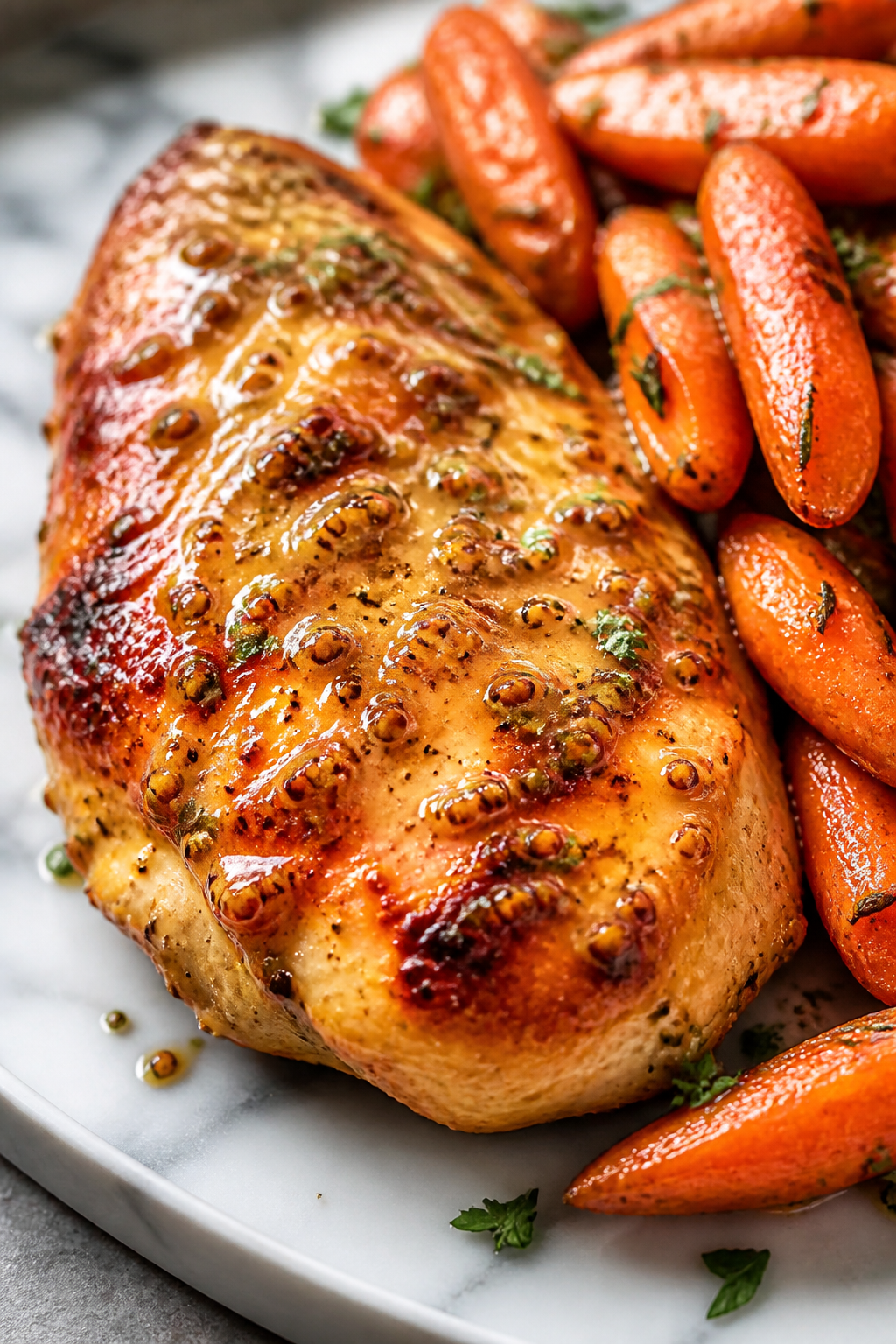
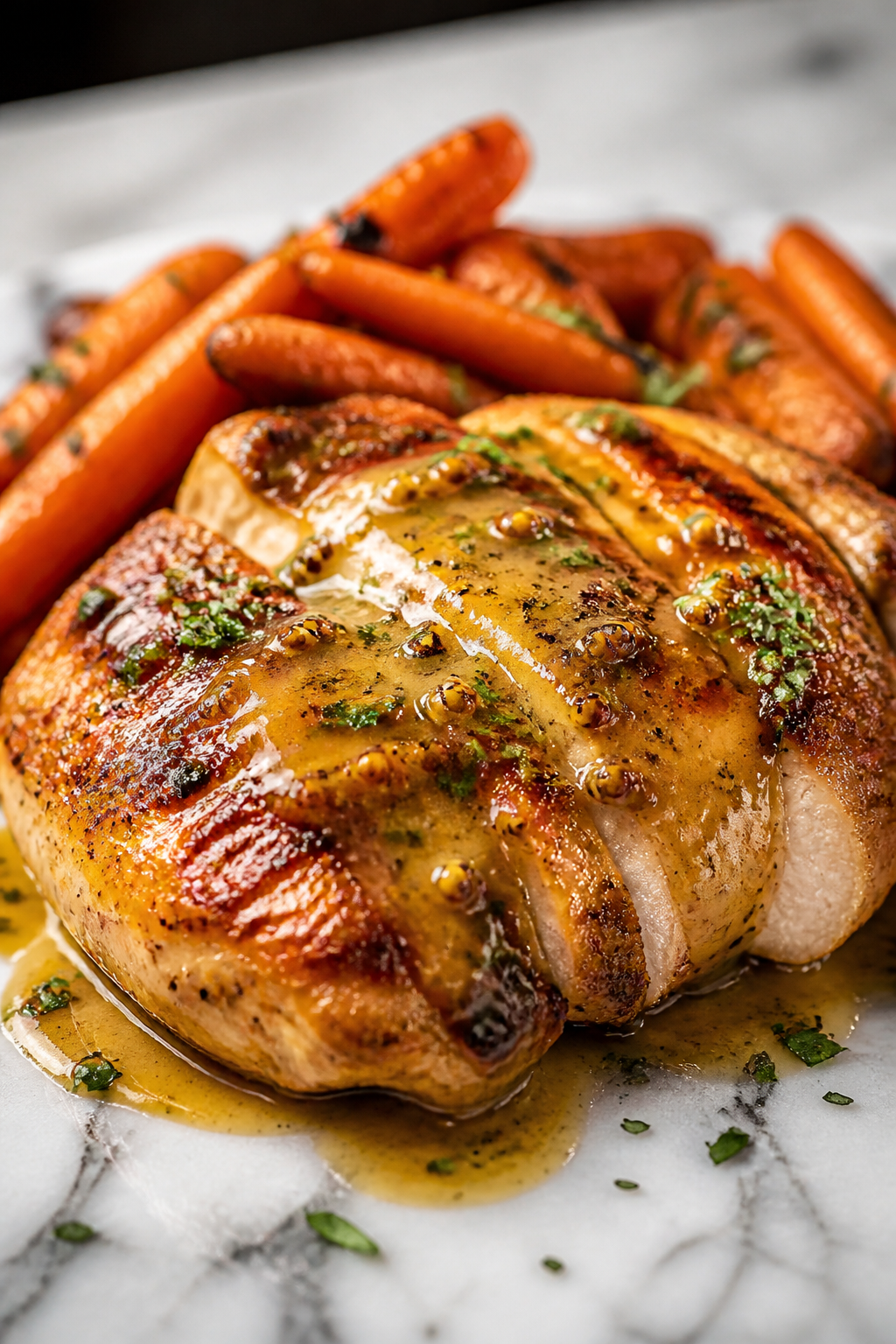
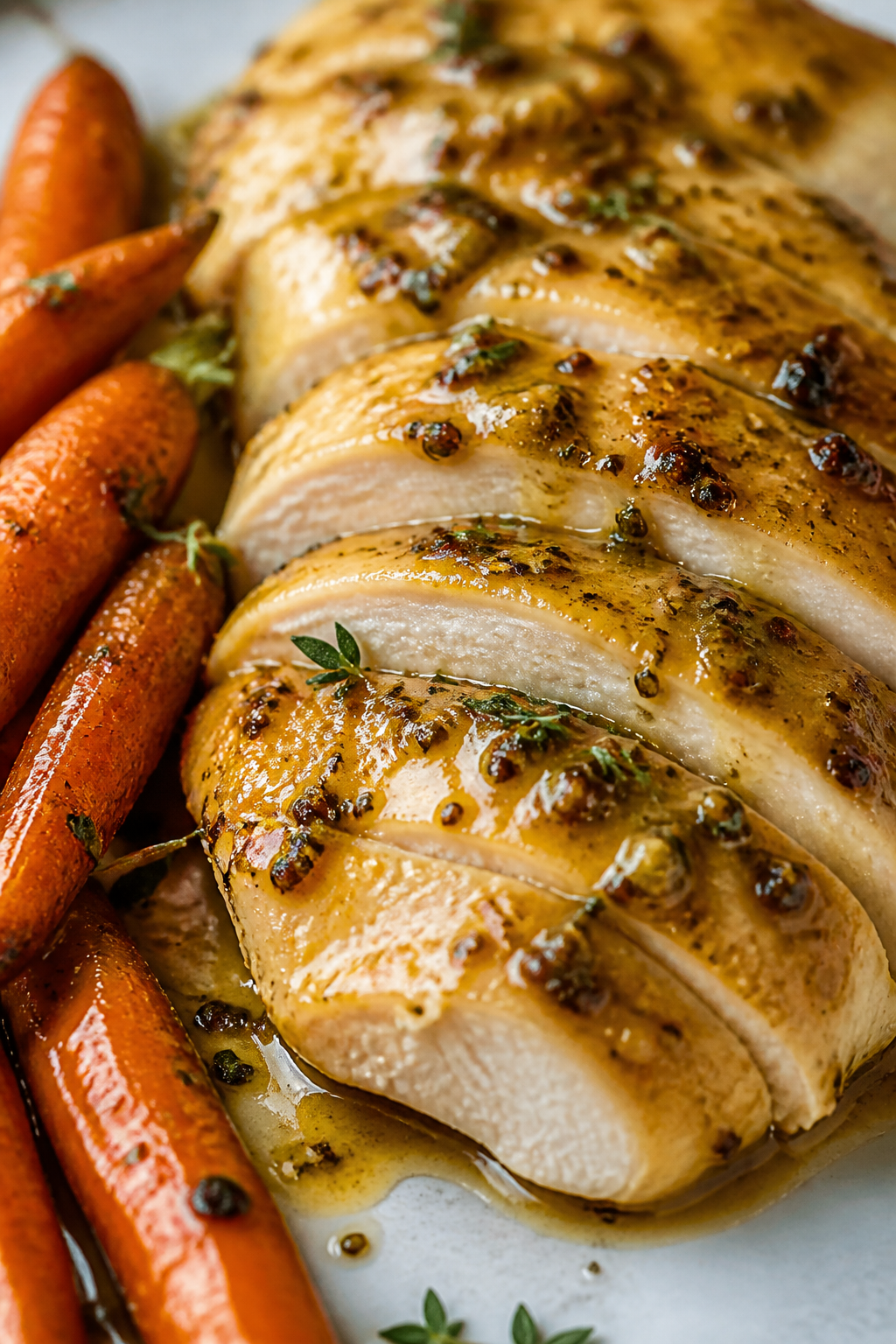
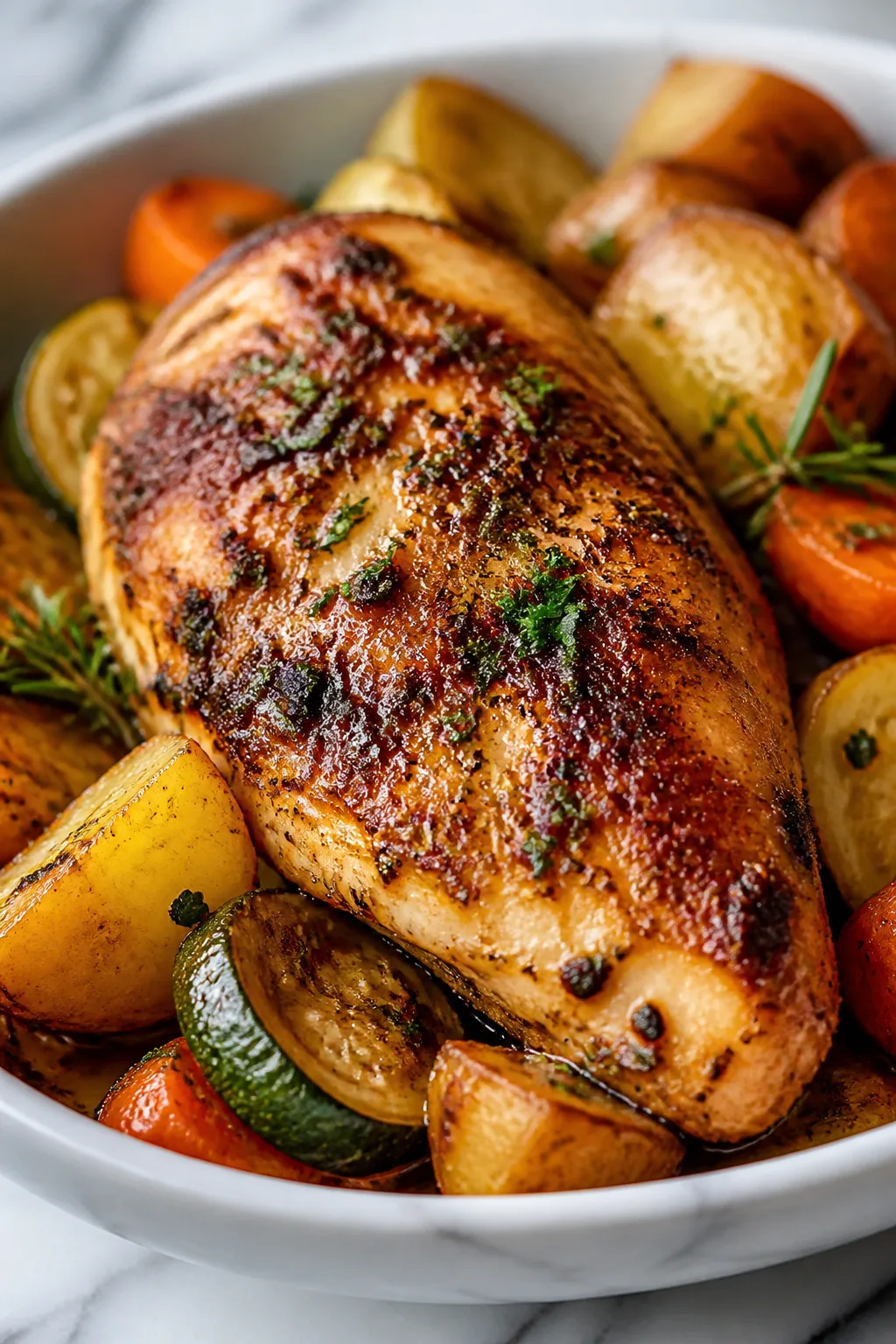
This honey mustard chicken is my go-to quick dinner—tangy, sweet, and perfectly caramelized. The roasted baby carrots soak up the sauce beautifully. Ideal for those busy nights when you want comfort food without the hassle.
Introduction
I first made this honey mustard chicken on a hectic weeknight when I needed something fast but comforting. The tangy-sweet glaze is what sold me—it caramelizes beautifully and adds so much flavor without any complicated steps. I like using a mix of Dijon and whole grain mustard for a nice texture contrast and depth of flavor. Roasting the baby carrots alongside the chicken lets them soak up all the delicious sauce, making the side just as good as the main dish. One trick I learned is to sear the chicken skin-side down first to get a crispy edge before finishing it in the oven. It really elevates the dish beyond just baked chicken. The finished meal is juicy, flavorful, and perfectly balanced between sweet and tangy. It’s a reliable recipe I keep coming back to when I want dinner that feels special but doesn’t require hours in the kitchen. I think you’ll love how simple it is to make yet so satisfying to eat, especially on those busy nights when you want comfort food without any fuss.
How To Do It
Step 1
Preheat your oven to 400°F (200°C). While it’s heating, pat the chicken thighs dry with paper towels—this helps the skin crisp up nicely when cooking. Season both sides with salt and pepper. Dry skin is crucial because moisture prevents browning, so don’t skip this step. Set the chicken aside while you prepare the sauce.
⏱ Time: 10 minutes
✓ Doneness: Chicken skin looks dry and seasoned evenly
Step 2
In a small bowl, whisk together the honey, Dijon mustard, whole grain mustard, minced garlic, and olive oil until smooth. This combination creates a balanced glaze with sweetness from the honey and a bit of tang and texture from the mustards. The garlic adds a savory depth that complements the chicken perfectly.
⏱ Time: 5 minutes
✓ Doneness: Sauce is smooth and glossy with no clumps
Step 3
Heat a large oven-safe skillet over medium-high heat. When hot, add the chicken thighs skin-side down without crowding the pan. Let them cook undisturbed for about 5-7 minutes until the skin turns golden brown and crispy. This step locks in flavor and gives the chicken a wonderful texture contrast.
⏱ Time: 7 minutes
✓ Doneness: Skin is deep golden brown and releases easily from the pan
Step 4
Flip the chicken thighs over and pour the honey mustard sauce evenly over them. Toss the baby carrots around the chicken in the pan to coat them lightly with the sauce. This allows the carrots to roast in the flavorful glaze, absorbing all those lovely sweet and tangy notes.
⏱ Time: 3 minutes
✓ Doneness: Carrots are evenly coated, chicken is glazed and shiny
Step 5
Sprinkle fresh thyme leaves over the chicken and carrots. Thyme adds a subtle earthiness that balances the sweetness of the honey. It’s a simple herb but makes a big difference in the final flavor profile.
⏱ Time: 1 minute
✓ Doneness: Even distribution of thyme leaves on chicken and carrots
Step 6
Transfer the skillet to the preheated oven. Roast everything for about 20 minutes or until the chicken reaches an internal temperature of 165°F (74°C) and the carrots are tender. Roasting at this temperature ensures the chicken stays juicy while the sauce thickens and caramelizes beautifully.
⏱ Time: 20 minutes
✓ Doneness: Chicken is cooked through, sauce is bubbly and slightly caramelized
Step 7
Remove the pan from the oven and let the chicken rest for 5 minutes before serving. Resting allows the juices to redistribute, keeping the meat moist and flavorful. Don’t skip this step or your chicken might end up dry.
⏱ Time: 5 minutes
✓ Doneness: Juices run clear when the chicken is gently pressed
Step 8
Serve the honey mustard chicken with the roasted carrots spooned alongside. You can drizzle any extra pan sauce over the top for extra flavor. This dish pairs well with simple sides like rice or crusty bread to soak up the glaze.
⏱ Time: 2 minutes
✓ Doneness: Dish looks glossy and vibrant with golden chicken and bright carrots
Step 9
Clean up your skillet while the meal rests or after you’ve eaten. Using an oven-safe skillet means fewer dishes and that lovely fond from the pan can be scraped and added to sauces or sides for extra flavor next time.
⏱ Time: Varies
✓ Doneness: Skillet cleaned and ready for next use
Pro Tips
Always pat your chicken skin dry before seasoning.
Dry skin is crucial for achieving a crisp, golden crust. Moisture on the skin creates steam during cooking, preventing browning and resulting in rubbery texture. Patting it dry helps trigger the Maillard reaction, which develops complex flavors and an appealing color.
Sear the chicken skin-side down before roasting.
Searing locks in flavor and creates a crispy skin that roasting alone can’t achieve. This initial high-heat contact caramelizes the skin and renders some fat, improving texture and taste. Skipping this step often leads to pale, floppy skin.
Use an oven-safe skillet to go from stovetop to oven.
Using an oven-safe pan reduces dishes and preserves the fond (browned bits) from searing. This fond can be scraped into sauces or sides for extra flavor. Plus, it ensures even cooking when finishing the chicken in the oven.
Don’t rush letting the chicken rest after cooking.
Resting allows juices to redistribute throughout the meat, preventing them from spilling out when cut. This results in juicier, more tender chicken. Cutting too soon leads to dry meat and loss of flavor.
Coat the carrots in the same sauce as the chicken.
This helps the carrots absorb the tangy-sweet flavors and roast to a tender, caramelized finish. It creates harmony between the side and main dish, making the meal cohesive and delicious.
Use fresh thyme rather than dried.
Fresh thyme releases aromatic oils during roasting that dried herbs can’t replicate. This adds a subtle earthiness and brightness to the dish, balancing the honey’s sweetness.
Check internal temperature with a meat thermometer.
Chicken thighs can look cooked but still be underdone inside, risking food safety. A thermometer ensures perfect doneness at 165°F (74°C) without overcooking, preserving juiciness and texture.
Common Mistakes to Avoid
Skipping drying the chicken skin
Why it happens Many cooks assume seasoning is enough and overlook moisture on the skin. They might be in a hurry or not realize how much water affects crisping.
Fix Always pat the chicken thoroughly with paper towels before seasoning. This removes excess moisture that would otherwise steam the skin during cooking, preventing that desirable crispness.
Cooking chicken straight from the fridge
Why it happens It’s tempting to pop chicken right into the pan, but cold meat doesn’t cook evenly.
Fix Let the chicken sit at room temperature for 15-20 minutes before cooking. This helps it cook more evenly and reduces the risk of dry edges with undercooked centers.
Pouring sauce too early
Why it happens Some add the glaze before searing, which can burn the sugars in honey.
Fix Sear the chicken first to develop crust, then add the sauce before roasting. This prevents burning and allows the glaze to caramelize properly in the oven.
Overcrowding the pan
Why it happens Trying to cook everything at once can cause steaming instead of searing.
Fix Use a pan large enough to keep chicken pieces spaced apart. This ensures heat circulates properly, allowing skin to crisp and sauce to glaze evenly.
Not resting the chicken
Why it happens Impatience or lack of knowledge leads to cutting the chicken immediately after cooking.
Fix Allow the chicken to rest 5 minutes after roasting. This step keeps the meat juicy by letting the juices redistribute instead of leaking out when cut.
Variations
Spicy Honey Mustard Chicken
Add a teaspoon of smoked paprika and a pinch of cayenne pepper to the honey mustard sauce for a smoky, spicy kick. This variation gives the dish a warm heat that pairs perfectly with the sweet glaze and tender carrots.
Note: Spices should be mixed into the sauce before glazing to ensure even flavor distribution. Roasting time remains the same.
Honey Mustard Chicken with Roasted Potatoes
Swap baby carrots for small diced potatoes tossed in the sauce. Potatoes absorb the glaze and roast to crispy, golden perfection, creating a heartier side that’s equally delicious.
Note: Cut potatoes into uniform small pieces to ensure even roasting. May require slightly longer cooking time, check tenderness before removing.
Honey Mustard Chicken with Fresh Herbs
Add rosemary and parsley along with thyme for a more herbaceous flavor profile. This fresh herb mix brightens the dish and adds complexity to the glaze and roasted veggies.
Note: Use fresh herbs and sprinkle them on before roasting. Avoid dried herbs which can become bitter at high heat.
Honey Mustard Chicken with Mustard Greens
Serve the chicken over a bed of sautéed mustard greens instead of roasted carrots for a peppery, nutritious contrast. The greens complement the tangy glaze and add a vibrant color to the plate.
Note: Sauté mustard greens briefly with garlic and olive oil while the chicken roasts. Serve immediately for best texture.
Gluten-Free Honey Mustard Chicken
Ensure all mustard and honey brands are gluten-free and skip any added thickeners. This recipe naturally fits a gluten-free diet without sacrificing flavor or texture.
Note: Check labels carefully, especially for Dijon mustard. No other changes needed.
Nutrition
Per Serving:
Nutritional values are estimates and may vary based on specific ingredients used.
Storage & Tips
Room Temperature
This honey mustard chicken can safely sit at room temperature for up to 2 hours if covered loosely. Beyond that, it’s best to refrigerate to avoid bacterial growth.
Refrigerator
Store leftovers in an airtight container for up to 3 days. The sauce may thicken and carrots soften further. Reheat gently to avoid drying out the chicken, adding a splash of water or broth if needed.
Freezer
Freeze cooked chicken and carrots in a sealed container or freezer bag for up to 3 months. Wrap tightly to prevent freezer burn. Thaw overnight in the fridge before reheating.
Reheating
Reheat gently on the stovetop over low heat or in the oven at 300°F (150°C) until warmed through. Avoid high heat or microwave reheating without covering, as this can dry out the chicken. Add a teaspoon of water or broth to loosen the sauce if needed.
Make Ahead
You can prepare the sauce and peel carrots a day ahead, storing them separately in the fridge. Assemble and cook the chicken fresh for best texture, or cook fully and reheat gently when ready to eat.
FAQ
Can I use chicken breasts instead of thighs?
Yes, but adjust cooking time since breasts cook faster and can dry out more easily. Use bone-in, skin-on breasts if possible to retain moisture and follow the same searing and roasting method, checking internal temperature carefully.
What if I don’t have whole grain mustard?
You can omit the whole grain mustard or substitute with extra Dijon. The dish will be smoother in texture but still flavorful. Whole grain adds a nice bite and visual interest but isn’t essential.
How do I make the sauce less sweet?
This helps keep the glaze tangy without losing the caramelization effect.
Can I make this recipe dairy-free?
Absolutely! This recipe is naturally dairy-free since it relies on honey, mustard, and olive oil for flavor and moisture. Just double-check your mustard ingredients to be safe.
What side dishes pair well with this chicken?
Simple sides like steamed rice, quinoa, or crusty bread work great to soak up the sauce. Roasted or steamed vegetables complement the flavors nicely, especially if you want a lighter meal.
How do I know when the chicken is fully cooked?
The safest way is to use a meat thermometer. The internal temperature should reach 165°F (74°C). The juices should run clear when pierced, and the meat should feel firm but not dry.
Can I prepare the chicken and sauce ahead of time?
This keeps the chicken tender and ensures the glaze caramelizes properly.
What if my sauce burns during cooking?
Honey can burn if exposed to high direct heat early on. To avoid this, sear the chicken first without sauce, then add the glaze before roasting. If sauce starts to burn, reduce oven temperature slightly and cover loosely with foil.
Final Thoughts
Give this honey mustard chicken a try—you’ll love how simple yet flavorful it is. Don’t forget to share your results, I’d love to hear how it turns out for you!