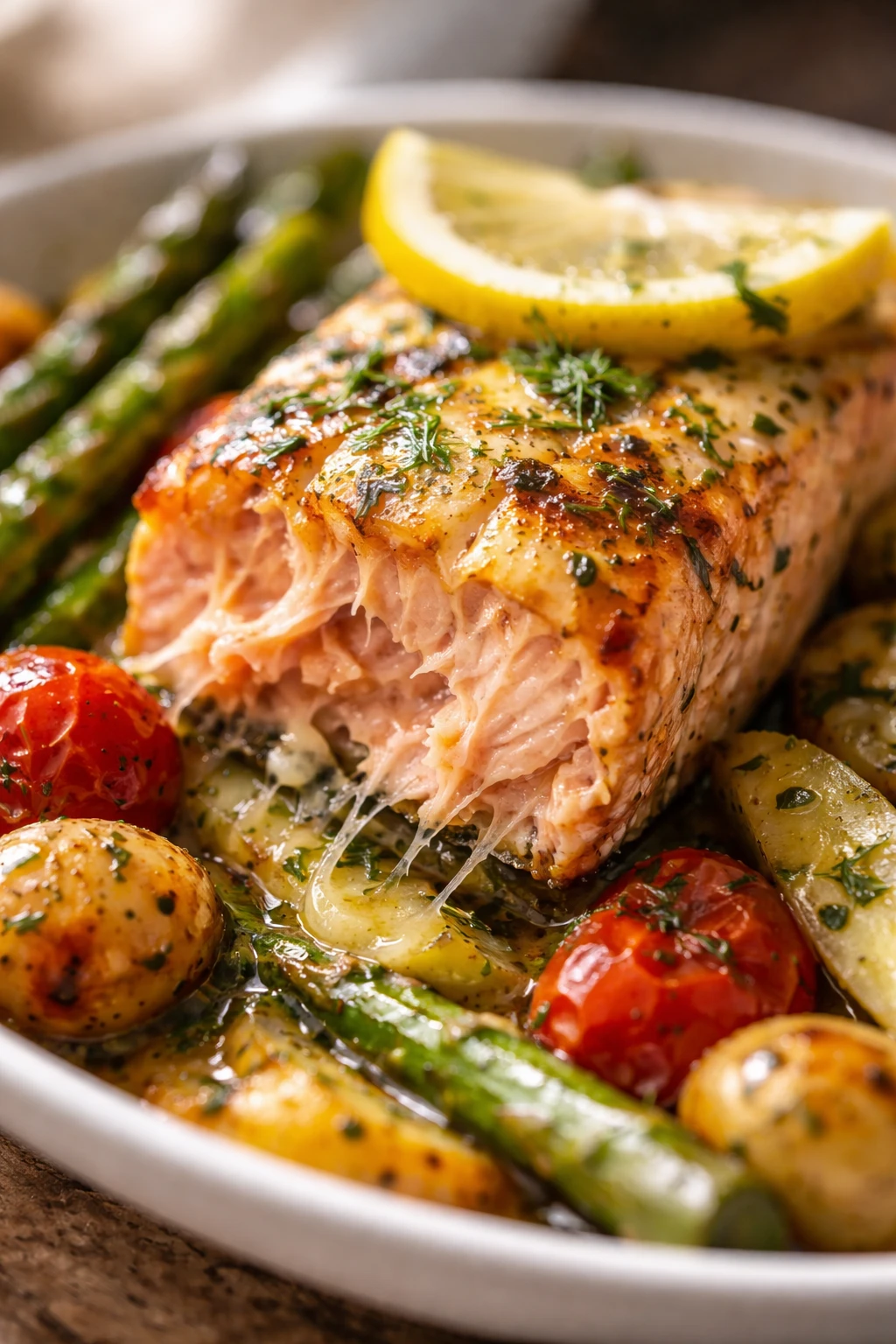
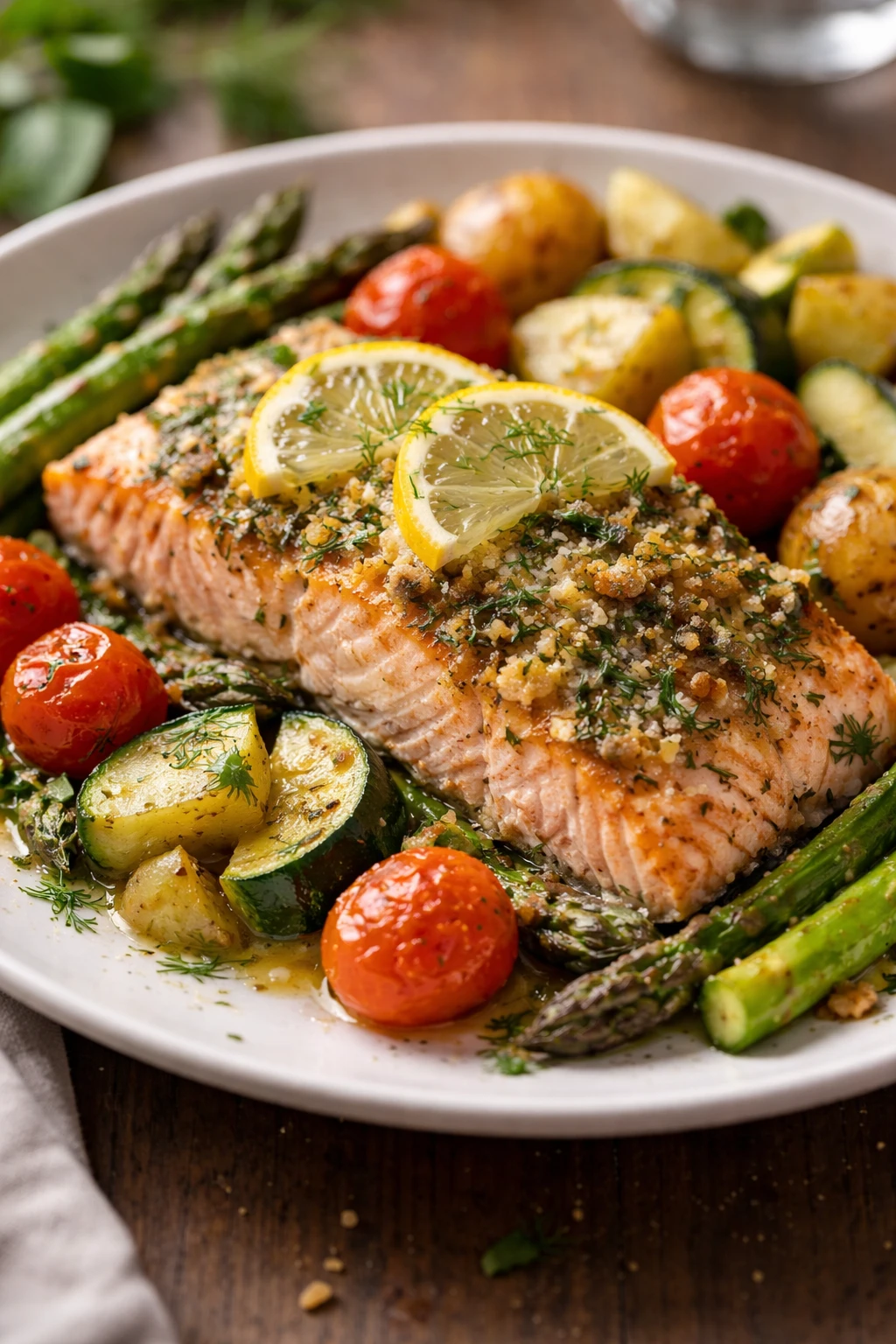
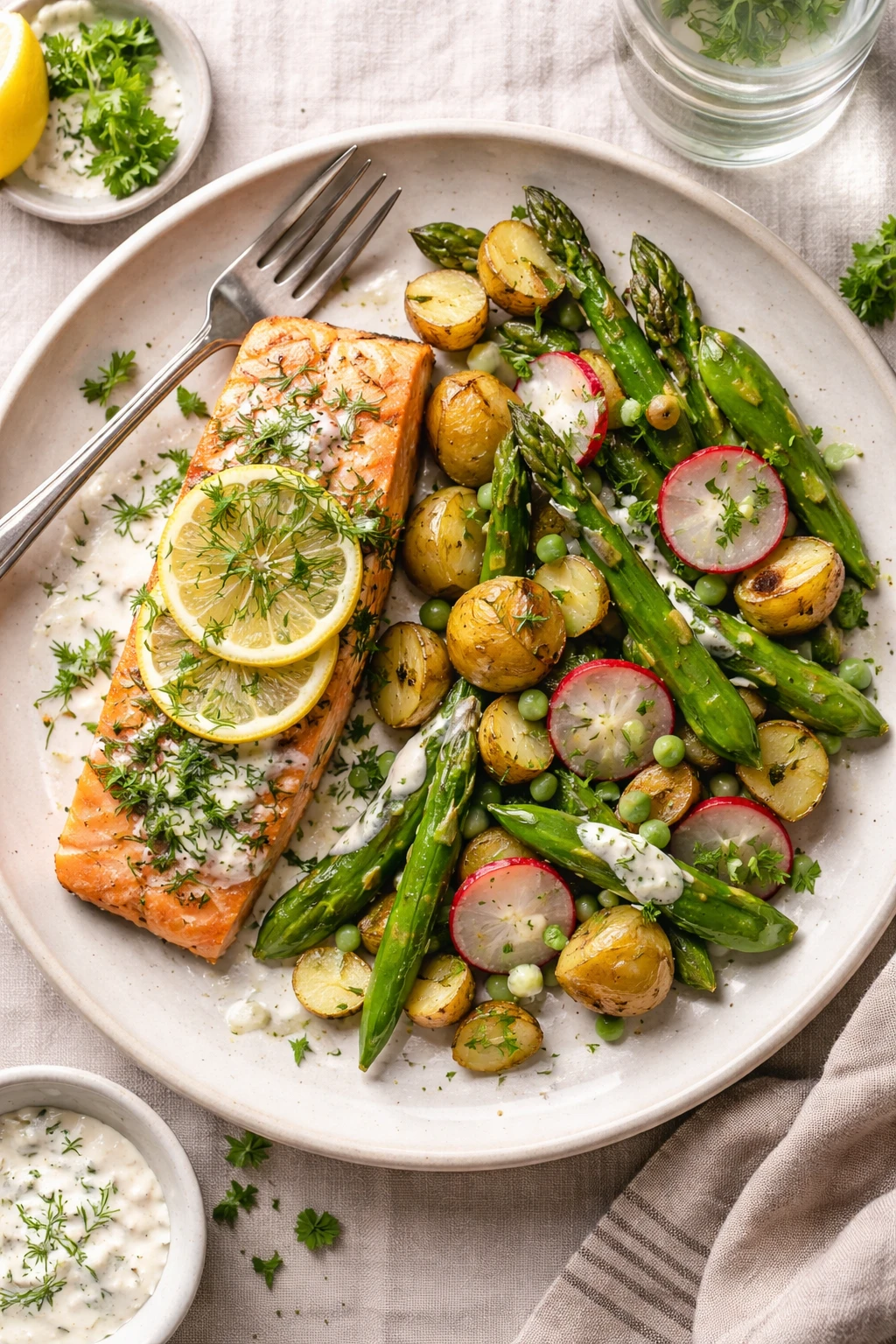
This baked salmon recipe combines the bright flavors of lemon and dill with crisp spring vegetables. Its straightforward preparation and balanced seasoning make it a reliable choice for a healthy weeknight meal. The technique ensures moist, tender fish with vibrant colors and fresh aromas.
Introduction
On busy spring evenings, I often turn to this baked salmon with lemon and dill because it balances freshness with simplicity. The bright citrus aroma mingles with the herbal notes of dill, creating a light yet satisfying dish. Combining the salmon with crisp asparagus and sweet sugar snap peas adds texture and color, making it visually appealing and nourishing. This is a dish I’ve prepared many times when I wanted something wholesome but quick—ready in under 45 minutes from start to finish. The gentle baking method keeps the salmon moist, while the vegetables retain their snap, offering a pleasant contrast on the plate.
How To Do It
Step 1
Preheat your oven to 200°C (400°F). Line a baking sheet with parchment paper or lightly grease it to prevent sticking.
⏱ Time: 5 minutes
✓ Doneness: Oven reaches steady temperature; baking sheet is prepared
Step 2
Pat the salmon fillets dry with paper towels to remove excess moisture. This helps the olive oil and seasonings adhere better and promotes even cooking.
⏱ Time: 2 minutes
✓ Doneness: Salmon surface feels dry to touch without visible moisture
Step 3
Place the salmon fillets skin-side down on the prepared baking sheet. Drizzle each fillet with olive oil and sprinkle with salt, freshly ground black pepper, and chopped dill. Top each fillet with two or three thin lemon slices evenly spaced.
⏱ Time: 5 minutes
✓ Doneness: Fillets are evenly coated, lemon slices cover the surface without overlapping excessively
Step 4
In a mixing bowl, toss the asparagus, sugar snap peas, and sliced red onion with olive oil, salt, and pepper until evenly coated.
⏱ Time: 3 minutes
✓ Doneness: Vegetables glisten lightly with oil and seasoning, no dry spots
Step 5
Arrange the vegetables in a single layer around the salmon on the baking sheet, ensuring they are spread out for even roasting.
⏱ Time: 2 minutes
✓ Doneness: Vegetables are evenly distributed without crowding, allowing hot air circulation
Step 6
Place the baking sheet in the preheated oven and bake for 25-30 minutes. The salmon is done when it flakes easily with a fork and the flesh appears opaque but still moist. The vegetables should be tender yet retain some firmness and bright color.
⏱ Time: 25-30 minutes
✓ Doneness: Salmon flesh separates easily, lemon slices slightly caramelized, vegetables tender with slight browning on edges
Step 7
Remove from the oven. Let the salmon rest for 2-3 minutes before serving to allow juices to redistribute. This helps maintain moisture.
⏱ Time: 2-3 minutes
✓ Doneness: Salmon surface is warm, juices settle without running
Pro Tips
Pat salmon dry before seasoning.
Removing surface moisture helps the olive oil and seasonings stick better and prevents steaming, which can make the fish soggy.
Use skin-on fillets and place skin-side down on the baking sheet.
The skin acts as a natural barrier, protecting the delicate flesh from direct heat and helps keep the fish moist.
Cut vegetables into similar sizes for even cooking.
Uniform pieces ensure that all vegetables cook at the same rate, preventing some from being undercooked while others become mushy.
Do not overcrowd the baking sheet.
Crowding traps steam, which softens vegetables and prevents proper roasting. Spreading ingredients out encourages caramelization and texture contrast.
Rest the salmon briefly after baking.
Allowing the fish to rest lets the juices redistribute evenly, resulting in a moist, tender texture rather than dry or flaky.
Common Mistakes to Avoid
Skipping the drying step before seasoning.
Why it happens Rushing the prep or not realizing moisture affects cooking.
Fix Always pat the salmon dry to ensure better seasoning adhesion and browning.
Baking at too high a temperature causing dry fish.
Why it happens Higher heat cooks the exterior too quickly, drying out the interior.
Fix Maintain 200°C (400°F) and monitor closely; remove salmon as soon as it flakes easily.
Overcrowding the pan with vegetables and salmon.
Why it happens Trying to cook everything at once without enough space.
Fix Use a sufficiently large baking sheet or roast vegetables separately to avoid steaming.
Adding lemon juice instead of slices during baking.
Why it happens Using juice for convenience, but it can cook off or curdle.
Fix Use thin lemon slices to infuse flavor gently without overpowering or altering texture.
Variations
Gluten-Free Option
This recipe is naturally gluten-free. Ensure any added seasonings or broths are certified gluten-free.
Note: No gluten-containing ingredients are included, making it safe for gluten-sensitive diets.
Dairy-Free and Paleo-Friendly
The recipe contains no dairy and uses olive oil, fitting paleo and dairy-free needs.
Note: Avoid adding butter or cream-based sauces to keep it dairy-free.
Add Garlic and Herbs
Incorporate minced garlic and fresh herbs like parsley or thyme for more aromatic layers.
Note: Add garlic to the vegetable toss to prevent burning and release mellow flavor during roasting.
Swap Vegetables Seasonally
Replace asparagus and peas with zucchini, cherry tomatoes, or bell peppers in summer.
Note: Adjust cooking time slightly for softer vegetables to prevent overcooking.
Citrus Variation
Use orange or lime slices instead of lemon for a different citrus note.
Note: Choose thin slices and monitor for caramelization to avoid bitterness.
Nutrition
Per Serving:
approximately 320
Calories
Values are estimates and may vary based on exact salmon size, vegetable quantities, and seasoning used.
Storage & Tips
Room Temperature
Avoid leaving baked salmon at room temperature for more than 2 hours to reduce bacterial growth risk.
Refrigerator
Store leftovers in airtight containers in the refrigerator for up to 2 days. The texture is best when consumed within this timeframe.
Freezer
Freezing is not recommended as it can affect the texture of cooked salmon and vegetables. If necessary, freeze in airtight containers for up to 1 month and thaw overnight in the refrigerator.
Reheating
Reheat gently in a low-temperature oven (around 150°C / 300°F) for 10-15 minutes to avoid drying out. Alternatively, use a microwave at low power in short intervals, covering to retain moisture.
Make Ahead
Prepare and season the salmon and vegetables up to 2 hours before baking, keeping them refrigerated separately. Assemble and bake just before serving for fresh texture and flavor.
FAQ
Can I make baked salmon with lemon and dill ahead of time?
You can prepare and season the salmon and vegetables a few hours ahead and refrigerate separately. Bake just before serving to maintain freshness and texture.
Why is my baked salmon dry after cooking?
This often happens if the oven temperature is too high or the salmon is overcooked. Baking at 200°C (400°F) and checking for flakiness at 25 minutes helps prevent dryness.
Can I substitute fresh dill with dried dill in this recipe?
Yes, but use about half the amount of dried dill since its flavor is more concentrated. Adding dried dill early allows it to rehydrate and release aroma.
How long does baked salmon last in the fridge?
Store in an airtight container and consume within 2 days for best quality and safety.
Can I use frozen salmon fillets for this recipe?
Yes, but thaw completely in the refrigerator before baking to ensure even cooking and proper texture.
Final Thoughts
This baked salmon with lemon and dill is a straightforward dish that brings fresh, seasonal flavors to your table. I welcome your thoughts or questions about the recipe—feel free to share your experiences or adjustments in the comments.