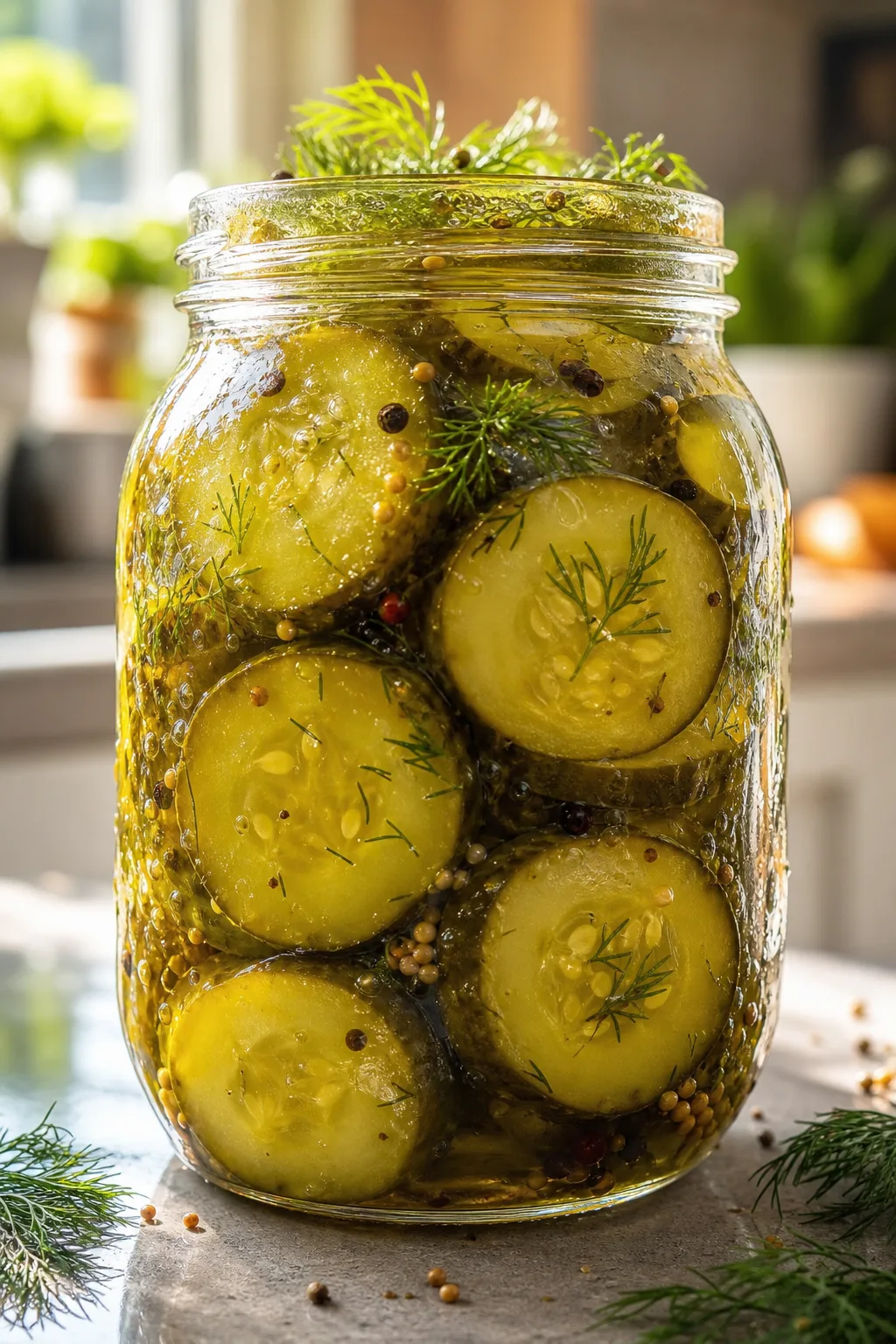
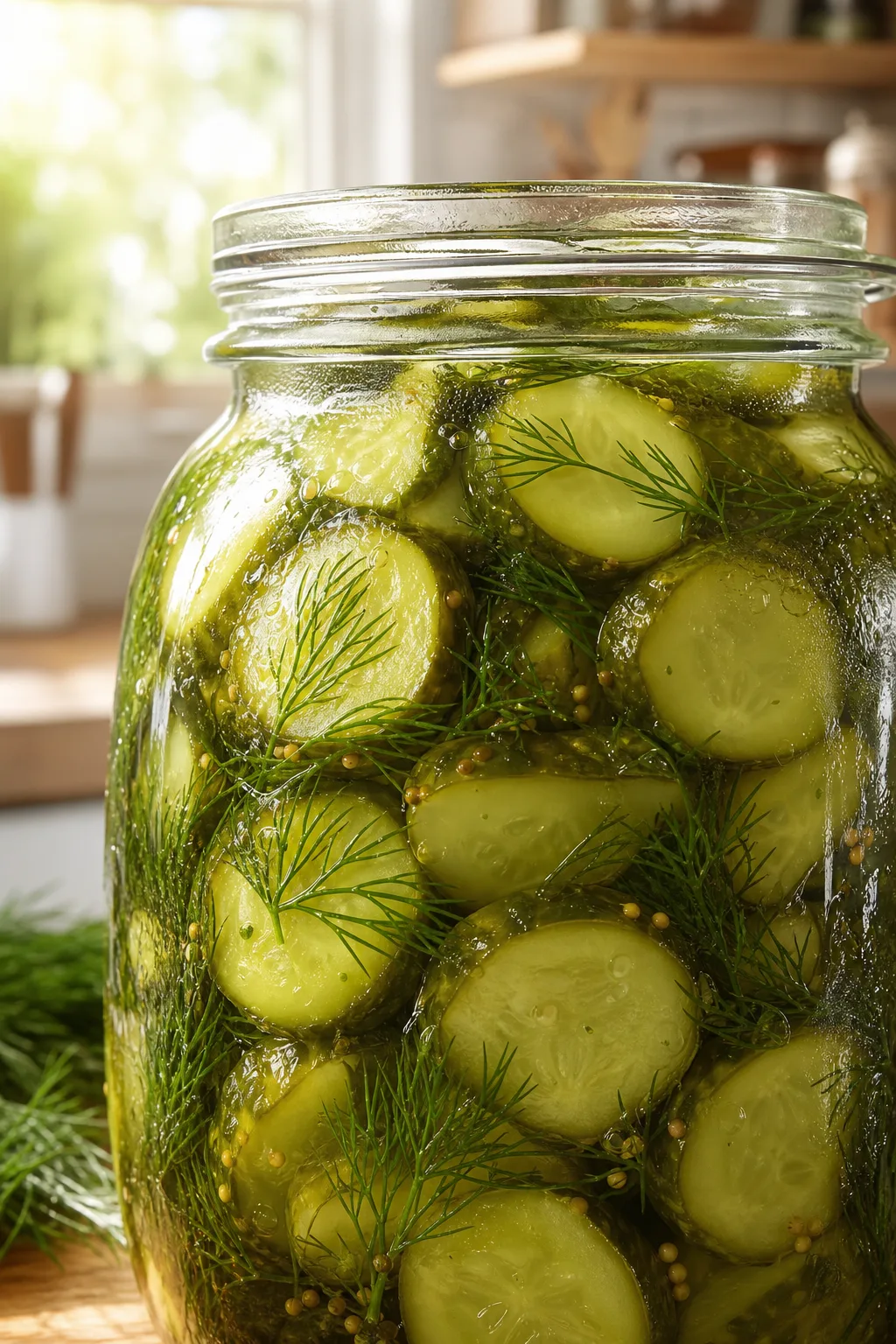
If you love that sharp, tangy crunch in your pickles, this homemade recipe is a total game-changer. Using classic spices and a simple canning method, you get perfectly crisp jars every time. Great for snacking or gifting!
Introduction
I still remember the first time I tried making my own pickles — it was a little messy and I ended up with soggy jars. But after a few tries, I nailed this recipe that gives you that perfect crunch and tang every single time. What I love most is how simple it is: just fresh cucumbers, vinegar, salt, and those classic pickling spices that bring everything to life. The trick I learned from Ball’s canning guide was to use a mix of vinegar and water with the right salt ratio, plus a quick brine boil to get those flavors infused deeply. Also, packing the jars tightly with fresh dill and garlic adds that signature zing. This recipe is my go-to when I want a reliable batch to snack on or gift during the holidays. The finished pickles have a firm crunch and a bright, tangy flavor that’s just irresistible. Honestly, once you make these, you’ll wonder why you ever bought store-bought pickles!
What You'll Need
Approximately 6 pints of pickles, 6 servings
- 6 cups sliced cucumbers, fresh and firm
- 3 cups white vinegar
- 3 cups water
- 1/4 cup kosher salt
- 3 tablespoons sugar
- 4 cloves garlic, peeled
- 2 tablespoons pickling spice
- 2 teaspoons mustard seeds
- 1 teaspoon dill seeds
- Fresh dill sprigs, about 6
- Optional: 1/2 teaspoon red pepper flakes for heat
How To Do It
Step 1
Start by washing your cucumbers thoroughly and slicing them into your preferred shape—spears or coins both work great. It's important to use fresh, firm cucumbers because older ones can become mushy during pickling. Keep the slices uniform so they pickle evenly. Avoid over-handling the cucumbers to maintain their natural crispness.
⏱ Time: 10 minutes
✓ Doneness: Cucumbers are uniformly sliced and look fresh without bruises or discoloration.
Step 2
In a large pot, combine the white vinegar, water, kosher salt, and sugar. Bring this brine to a boil over medium-high heat, stirring occasionally to dissolve the salt and sugar completely. Boiling the brine helps sterilize it and intensifies the flavors that will infuse your pickles. Don’t rush this step, or the salt and sugar won’t blend properly.
⏱ Time: 10 minutes
✓ Doneness: Brine is clear and boiling gently with no grainy salt or sugar visible.
Step 3
While your brine heats up, prepare your canning jars by washing them in hot, soapy water and sterilizing them in boiling water or a dishwasher cycle. This ensures no bacteria will spoil your pickles. Place fresh dill sprigs, garlic cloves, mustard seeds, dill seeds, and pickling spice into the bottom of each jar. This layering is key for flavor distribution.
⏱ Time: 10 minutes
✓ Doneness: Jars are clean, sterilized, and spices are evenly distributed at the bottom.
Step 4
Pack the cucumber slices tightly into each jar on top of the spices and dill. Don’t crush the cucumbers, but make sure there’s minimal air space to avoid sogginess. The tight packing helps the brine surround every slice, promoting even pickling and that satisfying crunch.
⏱ Time: 10 minutes
✓ Doneness: Jars are filled without gaps or crushed cucumbers.
Step 5
Pour the hot brine over the packed cucumbers, leaving about 1/2-inch headspace at the top of each jar. This headspace allows for expansion during processing and prevents overflow. Remove any air bubbles by gently tapping the jars or running a non-metallic utensil around the inside edges.
⏱ Time: 5 minutes
✓ Doneness: Brine covers cucumbers fully with proper headspace and no visible air bubbles.
Step 6
Wipe the rims of the jars with a clean, damp cloth to remove any residue. Then, seal each jar with its sterilized lid and screw band until fingertip tight. This ensures a proper vacuum seal during processing, which is essential to keep your pickles safe and fresh.
⏱ Time: 5 minutes
✓ Doneness: Jars are sealed but not overly tightened.
Step 7
Process your jars in a boiling water bath for 10 minutes. Make sure the water covers the jars by at least one inch. This step sterilizes the jars and pickles, sealing them for long-term storage. Skipping or shortening this can risk spoilage.
⏱ Time: 10 minutes
✓ Doneness: Water is boiling and jars are submerged fully for entire time.
Step 8
Carefully remove the jars using jar lifters and place them on a towel to cool undisturbed for 12-24 hours. You’ll hear the satisfying 'pop' of the lids sealing as they cool. This cooling allows the vacuum seal to form properly, keeping your pickles fresh for months.
⏱ Time: 12-24 hours
✓ Doneness: Lids are concave and don’t flex when pressed.
Step 9
Once cooled, check seals by pressing the center of each lid. Store sealed jars in a cool, dark place. If any lid didn’t seal, refrigerate and consume within a few weeks. For best flavor, wait at least a week before opening to let the pickles fully develop their tang and crunch.
⏱ Time: Varies
✓ Doneness: All jars have a firm seal and are stored properly.
Pro Tips
Always use fresh, firm cucumbers straight from the fridge for the best crunch.
Fresh cucumbers have high water content and firm cell walls that resist softening during pickling. Older or warmer cucumbers tend to become mushy because their cells break down more easily under acidic conditions.
Don’t skip boiling the brine — it’s essential for dissolving salt and sugar completely.
Boiling ensures the salt and sugar are fully dissolved, which creates a uniform brine that flavors the cucumbers evenly. It also sterilizes the liquid, reducing the risk of spoilage or off-flavors.
Pack jars tightly but gently to avoid crushing cucumbers and trapping air pockets.
Tightly packed cucumbers ensure the brine surrounds each slice, promoting even pickling. Crushing releases excess moisture and breaks down texture, leading to soggy pickles.
Use a boiling water bath for processing to create a safe, long-lasting seal.
The boiling water bath kills harmful bacteria and molds on the jar surface and lid, while the heat causes the contents to contract, forming a vacuum seal that prevents contamination.
Let pickles sit for at least a week before eating to develop full flavor.
The resting time allows the brine to penetrate the cucumbers thoroughly and the spices to infuse, resulting in balanced tangy and aromatic pickles.
Add garlic and fresh dill for that authentic, classic pickle flavor.
Garlic provides a pungent note that complements the acidity, while fresh dill contributes brightness and herbaceous depth that dried herbs can’t replicate.
Check seals after cooling and refrigerate any jars that didn’t seal properly.
Proper sealing prevents spoilage. If a jar isn’t sealed, refrigerate it and consume quickly to avoid food safety risks.
Common Mistakes to Avoid
Using cucumbers that are too large or overripe
Why it happens Many people use whatever cucumbers they have on hand without considering size or freshness, assuming all cucumbers pickle the same way.
Fix Choose smaller, firm pickling cucumbers and use them promptly. This keeps texture crisp and avoids mushy results.
Skipping the boiling water bath process
Why it happens Sometimes people want to shortcut the canning process, thinking refrigeration alone is enough.
Fix Always process jars in a boiling water bath to ensure safety and long shelf life. This step is crucial to prevent spoilage and botulism.
Not dissolving salt and sugar fully in the brine
Why it happens Rushing the brine preparation or using cold liquids can cause undissolved granules.
Fix Bring brine to a boil and stir until completely dissolved for uniform flavor and preservation.
Overpacking or crushing cucumbers in jars
Why it happens Trying to fit too many slices can lead to crushing and uneven pickling.
Fix Pack jars snugly but gently to maintain cucumber integrity and ensure even brine coverage.
Using table salt with additives instead of kosher salt
Why it happens Some cook with regular salt without realizing additives can affect flavor and color.
Fix Use pure kosher salt for best results, or reduce table salt quantity and watch for changes.
Variations
Spicy Pickles with Red Pepper Flakes
Add 1/2 teaspoon of red pepper flakes to the jars for a spicy kick. The heat pairs wonderfully with the tangy brine and adds extra zing to your snack time.
Note: The pepper flakes infuse during pickling, so pack jars and process as usual; flavor intensity increases over time.
Sweet Bread and Butter Pickles
Increase sugar to 1/2 cup and add thinly sliced onions for a sweeter, milder pickle. This variation is great for sandwiches and burgers.
Note: Sugar concentration changes the brine’s sweetness and slightly softens the cucumbers; process same as original.
Garlic and Herb Pickles
Add extra garlic cloves and a mix of fresh herbs like thyme and rosemary for a complex, savory flavor profile that’s perfect for charcuterie boards.
Note: Fresh herbs should be added with spices before packing; flavor deepens with longer storage.
Lemon Dill Pickles
Add slices of fresh lemon to each jar along with dill for a bright, citrusy twist that lifts the classic pickle flavor beautifully.
Note: Lemon acidity complements vinegar; pack slices carefully to avoid bitterness from pith.
Quick Refrigerator Pickles
Skip the boiling water bath and refrigerate jars for up to 2 weeks. These pickles are crisp and tangy but meant for short-term use.
Note: No canning required; keep refrigerated and consume quickly to avoid spoilage.
Nutrition
Per Serving:
Nutritional values are estimates and may vary based on specific ingredients used.
Storage & Tips
Room Temperature
After processing and sealing, store pickles in a cool, dark place for up to one year. Ensure lids remain sealed and jars are undisturbed to maintain quality.
Refrigerator
Once opened, refrigerate pickles in their jar or a sealed container for up to 1 month. Flavors deepen over time but texture may soften slightly.
Freezer
Pickles don’t freeze well as freezing breaks down their texture, resulting in mushiness. It’s best to avoid freezing.
Reheating
Pickles are served cold or at room temperature. No reheating needed as heat will ruin their crispness.
Make Ahead
You can prepare the brine and pack jars a day ahead, then process and seal the next day. This helps save time and ensures flavors meld well before storing.
FAQ
Can I use regular cucumbers instead of pickling cucumbers?
You can, but regular slicing cucumbers have thinner skins and more seeds, which often results in softer, less crunchy pickles. For the best texture, pickling cucumbers or Kirbys are preferred.
What if my jars don’t seal properly after processing?
If a jar doesn’t seal, refrigerate it and consume within a few weeks. Make sure to wipe rims clean before sealing and screw bands are fingertip tight—not too loose or tight.
Can I add other spices or herbs to this pickle recipe?
Absolutely! Feel free to experiment with garlic, peppercorns, bay leaves, or chili flakes. Just add them to the jars before pouring in the brine to infuse flavor evenly.
How long should I wait before eating my homemade pickles?
For the best flavor and crunch, wait at least one week after canning before opening your pickles. This allows the cucumbers to absorb the brine and spices fully.
Is it necessary to boil the jars before filling?
Yes, sterilizing jars by boiling or using a hot dishwasher cycle prevents contamination and spoilage, ensuring your pickles stay safe and fresh.
Can I reduce the salt in this recipe?
Salt is essential not only for flavor but also for preservation and texture. Reducing it too much can lead to soft pickles and unsafe preservation.
Why did my pickles turn out soft instead of crunchy?
Soft pickles usually result from using overripe cucumbers, insufficient salt, or skipping the boiling water bath. Using fresh cucumbers and following the recipe closely helps maintain crunch.
How long do homemade pickles last after opening?
Once opened, keep pickles refrigerated and consume within 3-4 weeks for best quality and safety. Always use clean utensils to avoid contamination.
Final Thoughts
Give this crunchy pickle recipe a try—you’ll love how simple and rewarding homemade pickling can be. Don’t forget to share your pickle pics and stories!