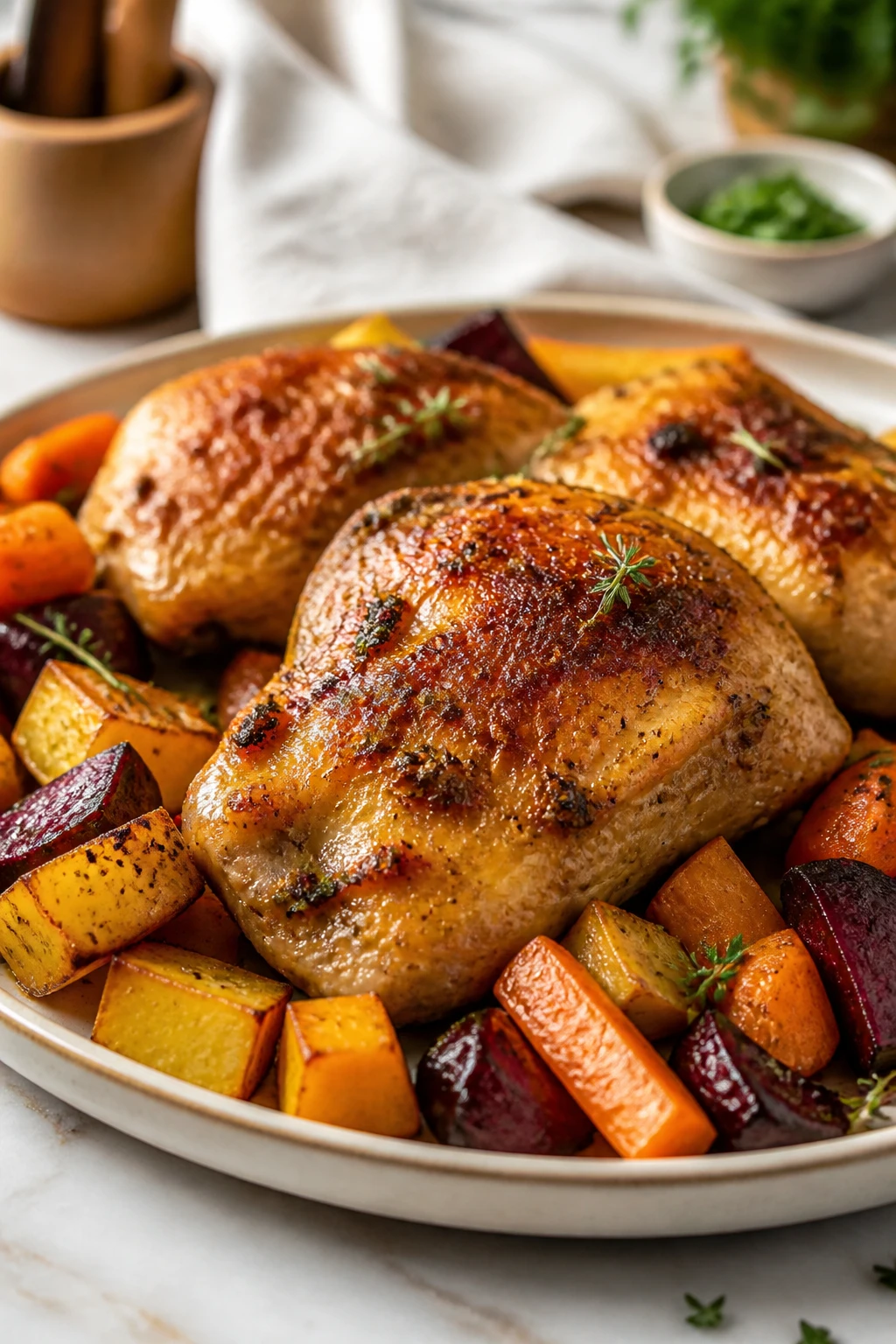
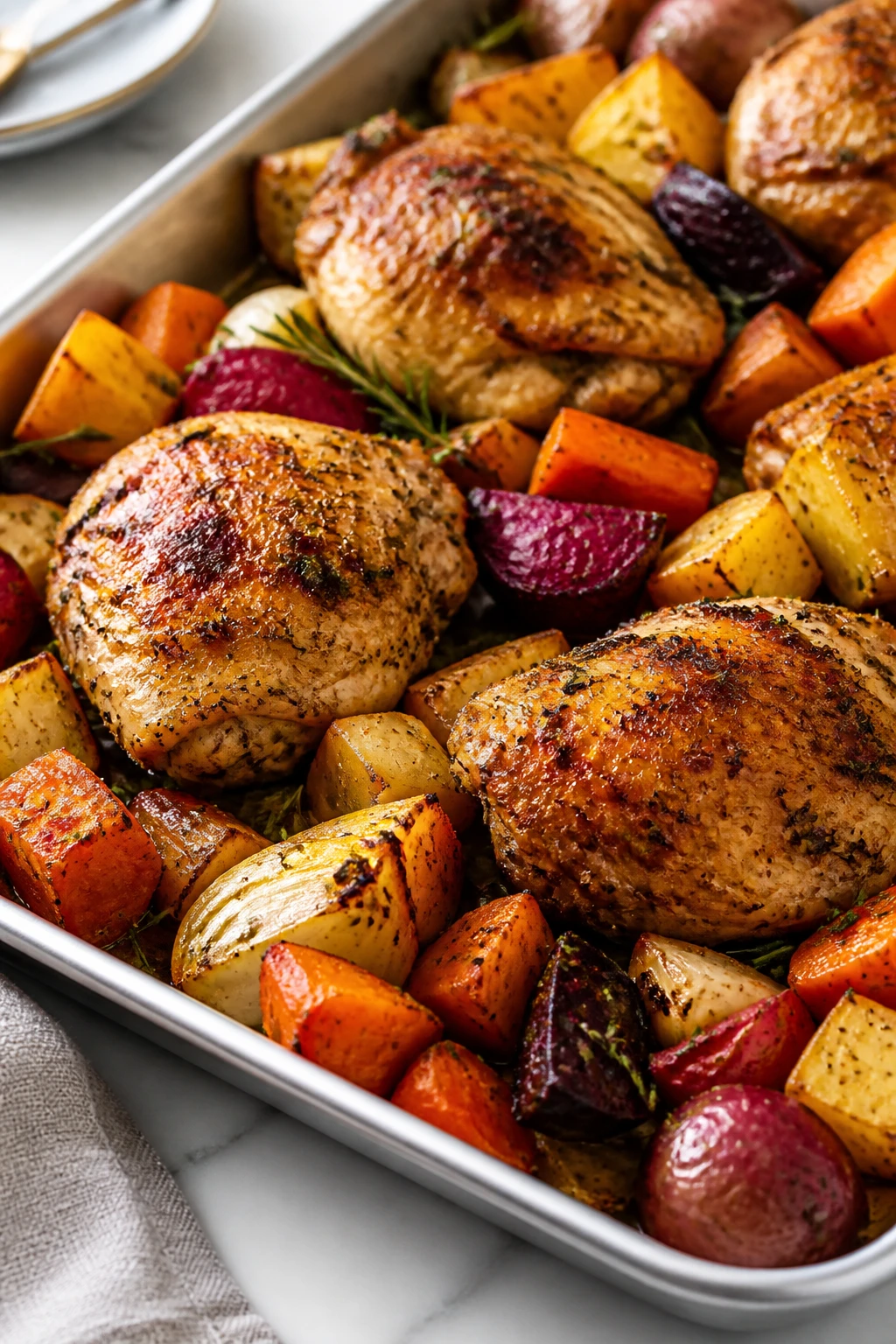
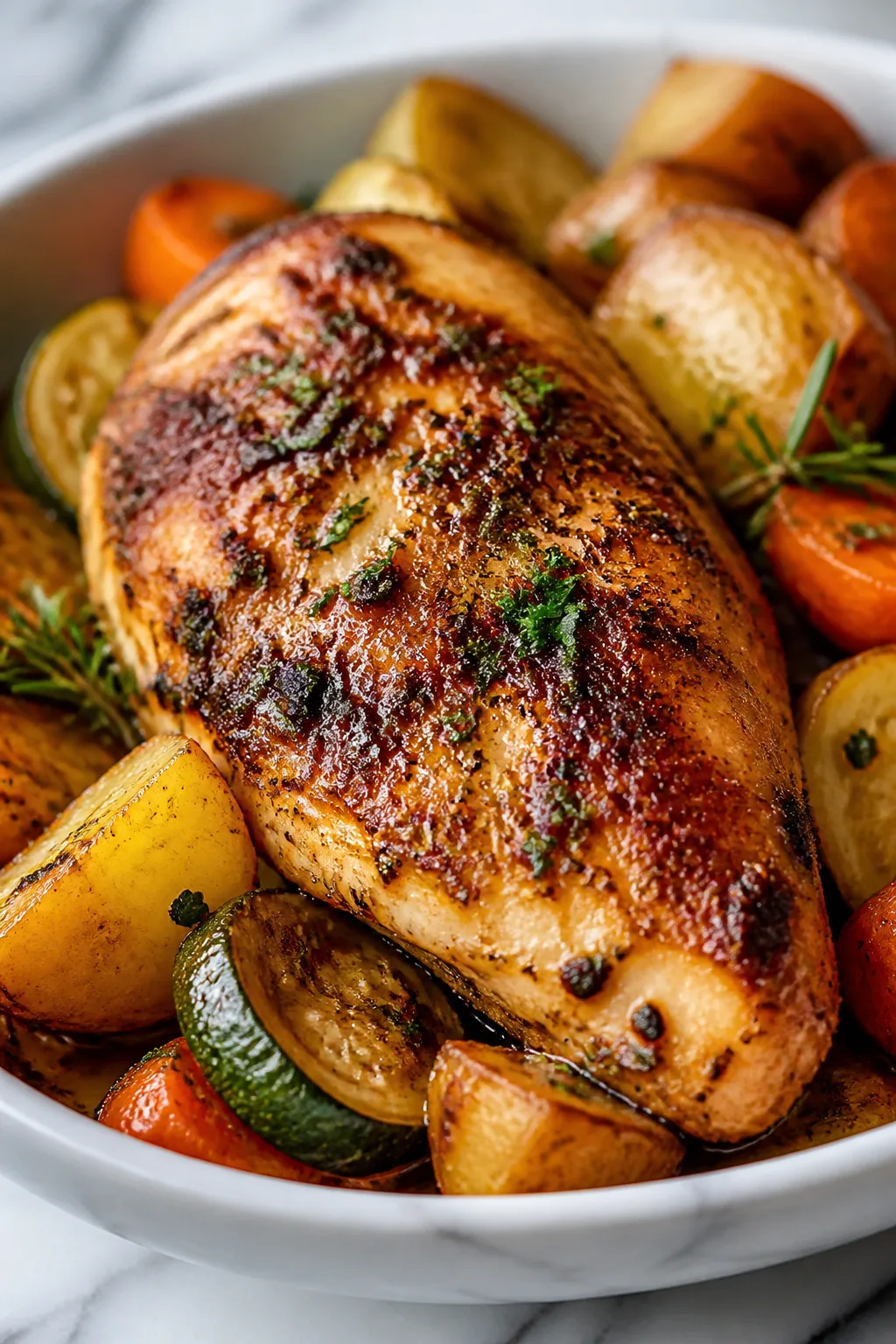
This one-pan chicken dinner is all about ease and flavor. Roasting chicken and root veggies together lets them mingle, making every bite comforting and hearty. Perfect for a fuss-free weeknight meal that feels a bit special.
Introduction
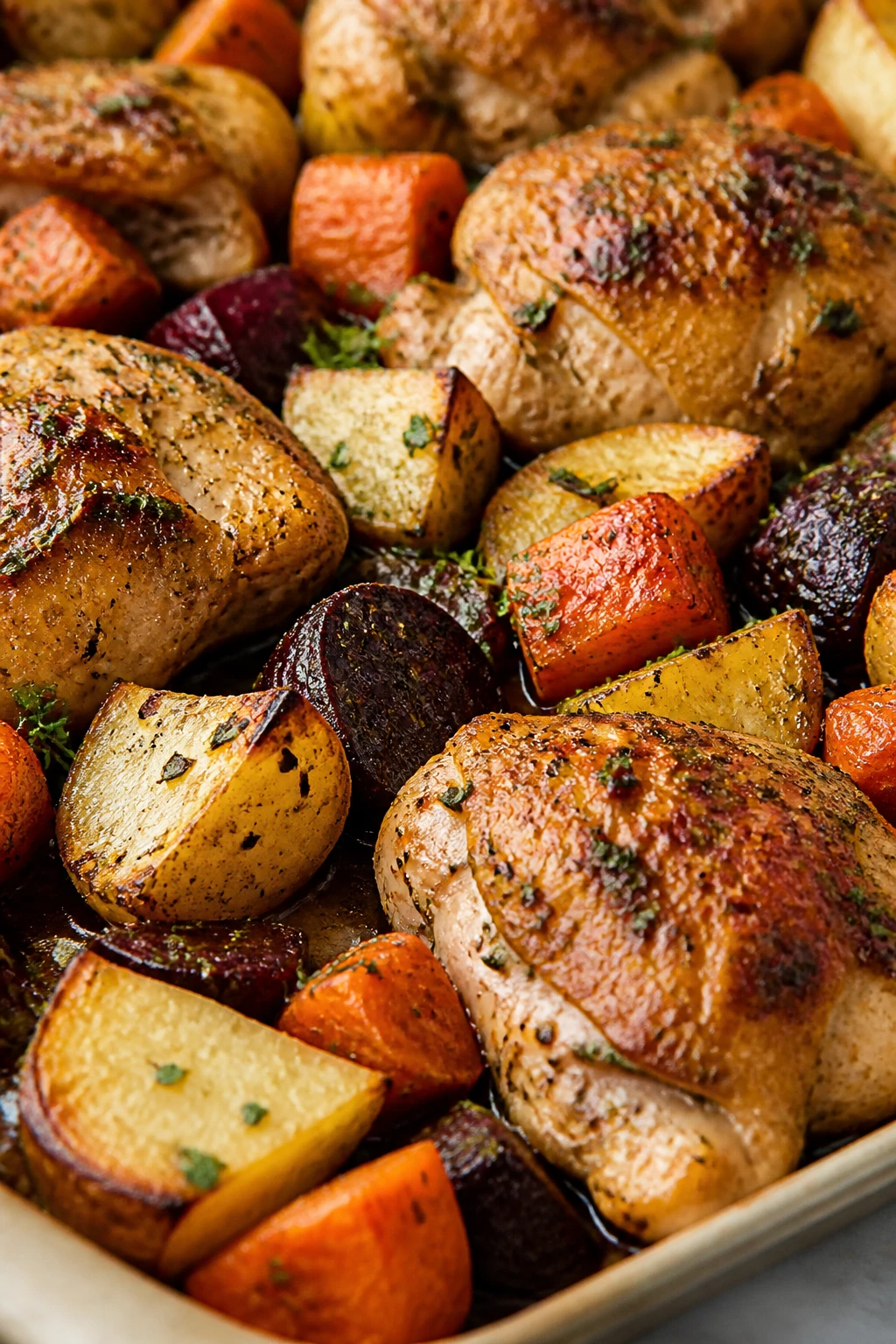
I first made this sheet pan chicken dinner on a hectic weeknight when I needed something hearty but without standing over the stove. It quickly became a favorite because it’s so straightforward yet comforting. Roasting the chicken with root vegetables means everything absorbs those cozy, savory flavors — it’s a simple trick that makes a big difference. I’ve tweaked the timing and seasoning over the years to get the skin perfectly crispy and the veggies tender but not mushy. One secret? Don’t overcrowd the pan to ensure even roasting. The finished dish is rustic and inviting, with golden chicken skin and caramelized veggies that taste like you spent hours in the kitchen. It’s the kind of meal my family asks for again and again, especially when the weather turns cooler. Plus, cleanup is a breeze — just one pan! I think you’ll find this recipe hits that sweet spot between easy and special, perfect for those nights when you want comfort food without the fuss.
How To Do It
Step 1
Preheat your oven to 425°F (220°C). This high temperature is key for getting that crispy skin on the chicken and nicely roasted veggies. While the oven heats, pat the chicken thighs dry with paper towels — removing moisture helps the skin crisp up during roasting. Season the chicken generously with salt, pepper, garlic powder, and dried thyme. Don’t skip drying the skin; it makes a huge difference in texture.
⏱ Time: 10 minutes
✓ Doneness: Chicken skin should feel dry to the touch before roasting
Step 2
Toss the carrots, parsnips, and red onion wedges with 2 tablespoons of olive oil, a pinch of salt, and a little black pepper in a large bowl. Make sure each piece is coated evenly; this helps the veggies caramelize and develop sweetness in the oven. Spread them out in a single layer on a rimmed baking sheet, leaving space for the chicken. Crowding the pan traps moisture and leads to steaming instead of roasting.
⏱ Time: 5 minutes
✓ Doneness: Veggies look evenly coated and spread out on the pan without overlapping
Step 3
Nestle the seasoned chicken thighs skin-side up among the vegetables on the baking sheet. Drizzle the remaining 1 tablespoon of olive oil over the chicken to help it crisp up even more. Placing the chicken skin-side up ensures the fat renders properly, giving you that irresistible golden crust. Be careful not to let the chicken pieces touch too closely, so heat circulates evenly.
⏱ Time: 5 minutes
✓ Doneness: Chicken pieces are spaced out and skin is exposed on top
Step 4
Place the baking sheet in the preheated oven and roast for about 30-35 minutes. Halfway through cooking, use tongs to flip the vegetables gently for even browning, but leave the chicken skin-side up to keep it crispy. If you skip flipping the veggies, they might brown unevenly or stick to the pan. Keep an eye on the chicken to avoid drying it out.
⏱ Time: 30-35 minutes
✓ Doneness: Chicken skin is golden and crisp; veggies are tender and caramelized
Step 5
Check the chicken’s internal temperature with a meat thermometer; it should read 165°F (74°C) when done. This is the safest way to ensure it’s fully cooked but still juicy. If you don’t have a thermometer, pierce the thickest part of the thigh — juices should run clear, not pink. Overcooking will dry out the meat, so keep tabs during the last 5 minutes.
⏱ Time: 2 minutes
✓ Doneness: Thermometer reads 165°F; juices run clear
Step 6
Once cooked, remove the pan from the oven and let the chicken rest for 5 minutes before serving. Resting allows the juices to redistribute within the meat, making it more tender and flavorful. If you cut into it immediately, the juices will run out and leave the chicken dry.
⏱ Time: 5 minutes
✓ Doneness: Chicken feels slightly firm but juicy when pressed gently
Step 7
Taste and adjust seasoning on the roasted vegetables if needed. Sometimes a sprinkle of flaky sea salt or a grind of fresh pepper right before serving brightens the flavors. This little finishing touch takes the dish from good to great.
⏱ Time: 1 minute
✓ Doneness: Flavors are balanced and enhanced with finishing salt and pepper
Step 8
Optional: sprinkle chopped fresh parsley over the chicken and vegetables for a pop of color and freshness. It adds a nice herbal note that complements the earthy root veggies. Plus, it makes the dish look even more inviting.
⏱ Time: 1 minute
✓ Doneness: Fresh green parsley is evenly sprinkled and vibrant
Step 9
Serve the sheet pan chicken and roasted root vegetables warm, straight from the pan or plated. Pair it with a simple green salad or crusty bread if you want to round out the meal. This dish shines with its rustic simplicity and hearty flavors, perfect for cozy dinners any night of the week.
⏱ Time: Immediate
✓ Doneness: Dish is warm and ready to enjoy
Pro Tips
Always pat chicken skin dry before seasoning.
Removing surface moisture ensures the skin crisps up during roasting. Moisture creates steam that prevents browning and results in soggy skin. This simple step transforms your chicken from just cooked to irresistibly crispy.
Don’t overcrowd the baking sheet.
Crowding traps steam and prevents proper roasting. Spreading veggies and chicken out allows hot air to circulate, promoting caramelization and even cooking. If your pan is too small, use two pans instead.
Flip vegetables halfway through roasting.
Turning veggies ensures all sides brown evenly and prevents sticking. Uneven roasting can cause some pieces to be burnt while others remain undercooked. This step helps achieve consistent texture and flavor.
Use a meat thermometer to check doneness.
Chicken thighs are safe to eat at 165°F internal temperature. Relying on timing alone can lead to under or overcooked meat. A thermometer ensures juicy, perfectly cooked chicken every time.
Let the chicken rest after roasting.
Resting redistributes juices within the meat, making it tender and moist. Cutting immediately causes juices to escape, drying out the chicken. Five minutes is usually enough for thighs.
Use fresh herbs for garnish.
Adding parsley or thyme at the end brightens the dish with fresh aroma and color. It adds a layer of flavor that balances the rich roasted elements.
Choose similar-sized vegetable pieces.
Uniform sizes ensure even cooking so nothing is over or underdone. Smaller pieces cook faster and can burn if mixed with larger ones.
Common Mistakes to Avoid
Skipping drying the chicken skin
Why it happens Many cooks overlook this step, assuming seasoning is enough. Moist chicken skin prevents crisping because it steams rather than roasts.
Fix Pat the skin dry thoroughly with paper towels before seasoning. This removes excess moisture and allows the skin to brown and crisp properly in the oven.
Overcrowding the pan
Why it happens Trying to cook everything on one pan to save time or dishes leads to crowded ingredients that steam instead of roast.
Fix Use a large enough baking sheet so ingredients have space. If needed, roast veggies and chicken separately or use two pans to ensure proper heat circulation.
Not flipping the vegetables
Why it happens Forgetting this step can happen when multitasking, but it causes uneven browning and sticking.
Fix Set a timer to remind yourself to flip the veggies halfway through roasting. Use tongs to turn them gently for even caramelization.
Cutting chicken immediately after roasting
Why it happens Impatience often leads to slicing too soon, causing juices to run out.
Fix Allow the chicken to rest for 5 minutes after removing from the oven. This helps retain moisture and results in juicier meat.
Using vegetables of uneven sizes
Why it happens Not paying attention to size causes some pieces to overcook while others remain underdone.
Fix Cut veggies into similar-sized chunks to ensure they roast evenly and finish at the same time.
Variations
Spicy Sheet Pan Chicken
Add 1 teaspoon smoked paprika and ½ teaspoon cayenne pepper to the chicken seasoning for a smoky, spicy kick. Toss veggies with a pinch of chili flakes. This variation adds warmth and depth without complicating the prep.
Note: Spices can burn at high heat, so mix them into the olive oil before coating the chicken and veggies to prevent bitterness.
Mediterranean Style
Swap thyme for oregano and add halved cherry tomatoes and Kalamata olives to the pan. Finish with a squeeze of lemon juice and crumbled feta after roasting. This gives the dish a bright, fresh Mediterranean flair.
Note: Add delicate ingredients like tomatoes and olives halfway through roasting to avoid overcooking.
Sheet Pan Chicken with Sweet Potatoes
Replace parsnips with cubed sweet potatoes for a sweeter, softer vegetable side. Sweet potatoes roast faster, so add them after 10 minutes of cooking the other veggies.
Note: Sweet potatoes can become mushy if cooked too long; stagger their addition to maintain texture.
Herb Butter Basted Chicken
Brush the chicken with melted herb butter (butter mixed with rosemary and garlic) before roasting. This enriches the flavor and helps create extra crispy skin with a fragrant aroma.
Note: Add the herb butter midway through roasting to prevent butter from burning.
Sheet Pan Chicken with Brussels Sprouts
Add halved Brussels sprouts tossed in olive oil and balsamic vinegar to the vegetable mix. Their slight bitterness contrasts nicely with the sweet root veggies and savory chicken.
Note: Brussels sprouts take about the same time to roast as carrots and parsnips, so add them all together.
Nutrition
Per Serving:
Nutritional values are estimates and may vary based on specific ingredients used.
Storage & Tips
Room Temperature
This sheet pan chicken dinner can safely sit at room temperature for up to 2 hours if covered loosely. Beyond that, bacteria growth increases, so refrigerate promptly. Cover with foil or a clean towel to keep it protected.
Refrigerator
Store leftovers in an airtight container in the fridge for up to 3 days. The chicken skin may soften when chilled, so reheat gently to restore some crispness. Veggies reheat well but can get softer.
Freezer
Freeze cooked chicken and vegetables in a freezer-safe container for up to 2 months. Wrap tightly to prevent freezer burn. Thaw overnight in the fridge before reheating to preserve texture and flavor.
Reheating
Reheat in a 350°F oven for 15-20 minutes to warm through and crisp the chicken skin slightly. Alternatively, microwave covered but add a splash of water to the veggies to prevent drying. Avoid overheating to keep the chicken juicy.
Make Ahead
You can prep the vegetables and season the chicken 1 day ahead, storing them separately in the fridge. Assemble and roast everything just before dinner for optimal freshness and crispness.
FAQ
Can I use boneless chicken breasts instead of thighs?
You can, but boneless breasts cook faster and tend to dry out more easily. Adjust the cooking time to about 20-25 minutes and watch closely. Also, the skin helps keep thighs juicy and crispy, so breasts won’t have quite the same texture or flavor.
What if I don’t have parsnips?
No worries! You can substitute sweet potatoes or even turnips for a similar sweet, earthy flavor. Just keep in mind that cooking times might vary slightly depending on the vegetable’s density and moisture content.
How do I get extra crispy chicken skin?
Patting the skin dry, roasting at a high temperature, and not overcrowding the pan are key. Also, brushing the skin with a bit of oil or melted butter before roasting helps. Resist the urge to flip the chicken skin-side down during cooking.
Can I add other vegetables?
Absolutely! Vegetables like Brussels sprouts, bell peppers, or zucchini work well. Just consider their cooking times — add softer veggies later to avoid overcooking, or cut firmer ones smaller to roast evenly.
Is it okay to marinate the chicken beforehand?
You can marinate the chicken for extra flavor, but make sure to pat it dry before roasting to keep the skin crispy. Wet marinades can prevent browning and cause the skin to steam instead.
How do I know when the chicken is fully cooked?
The best way is using a meat thermometer; the internal temperature should reach 165°F (74°C). If you don’t have one, pierce the thickest part — juices should run clear, not pink.
Can I make this recipe gluten-free?
Yes! This recipe is naturally gluten-free as long as you use gluten-free seasonings. Just double-check any spice blends or pre-mixed seasonings for hidden gluten.
What’s the best way to reheat leftovers?
Reheat in the oven at 350°F for 15-20 minutes to maintain texture and crispness. Microwaving is faster but can make the chicken skin soggy and veggies mushy. Adding a splash of water when microwaving veggies helps prevent drying.
Final Thoughts
Give this sheet pan chicken with roasted root veggies a try — it’s my favorite way to get a cozy, fuss-free meal on the table. Let me know how it turns out for you!