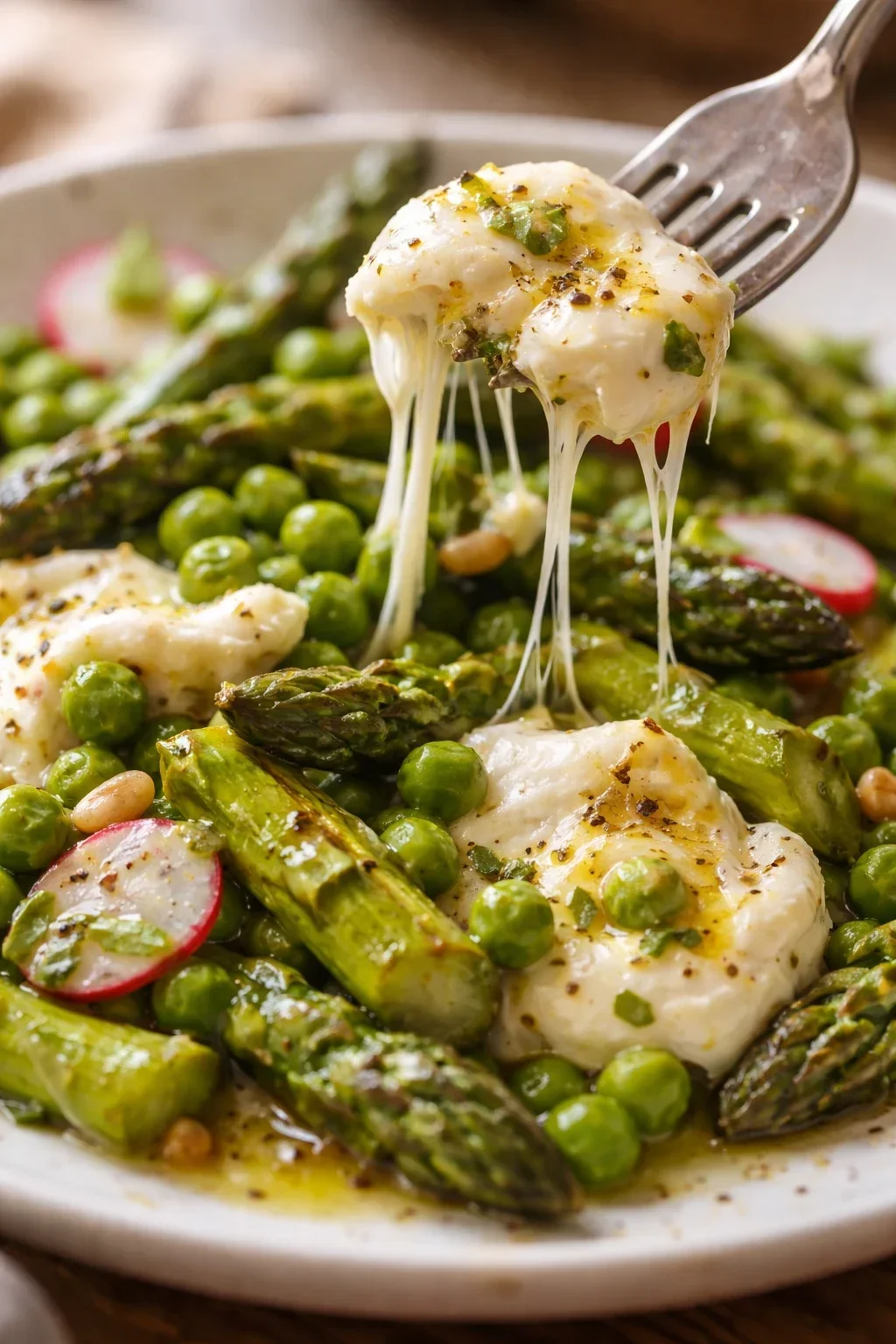
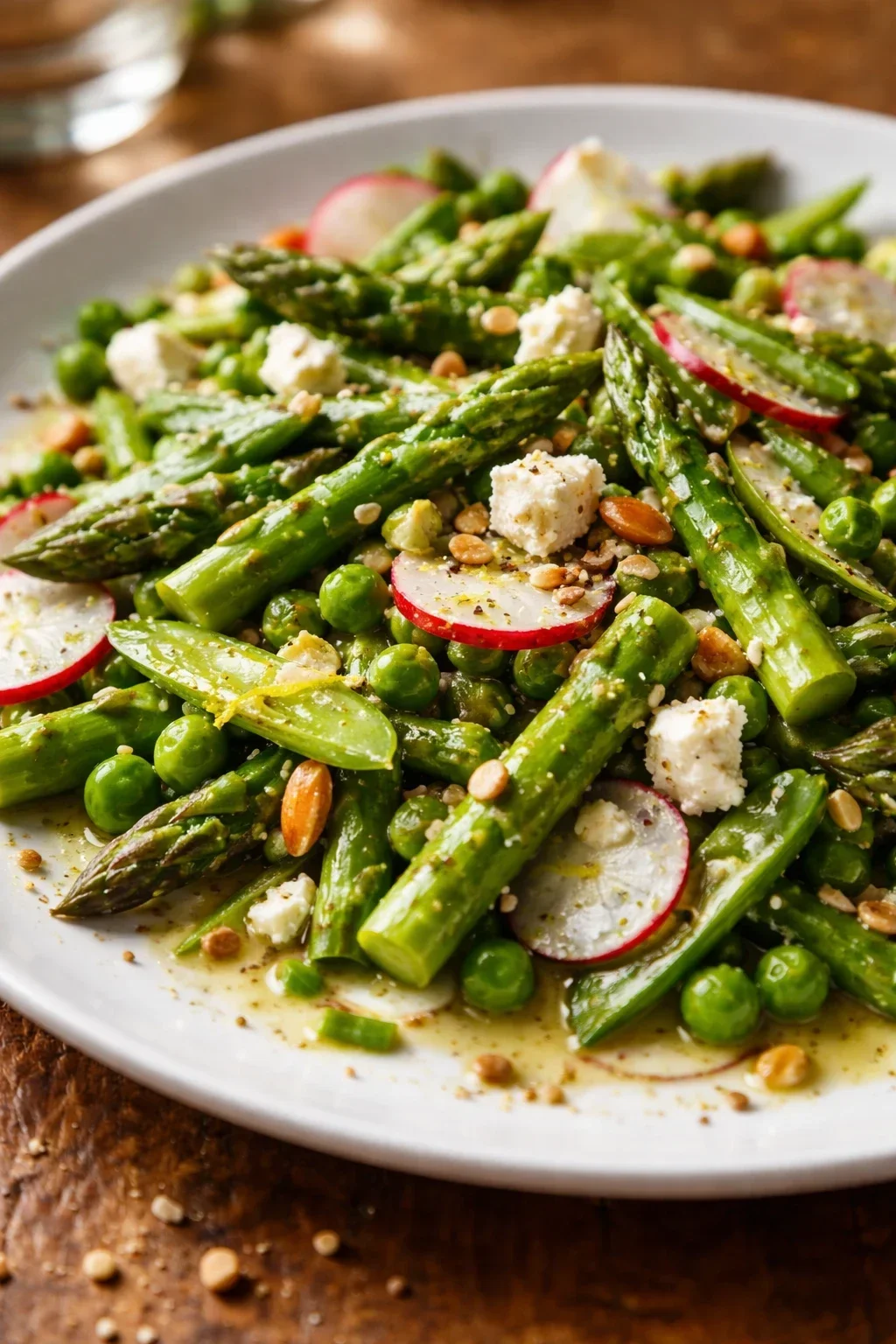
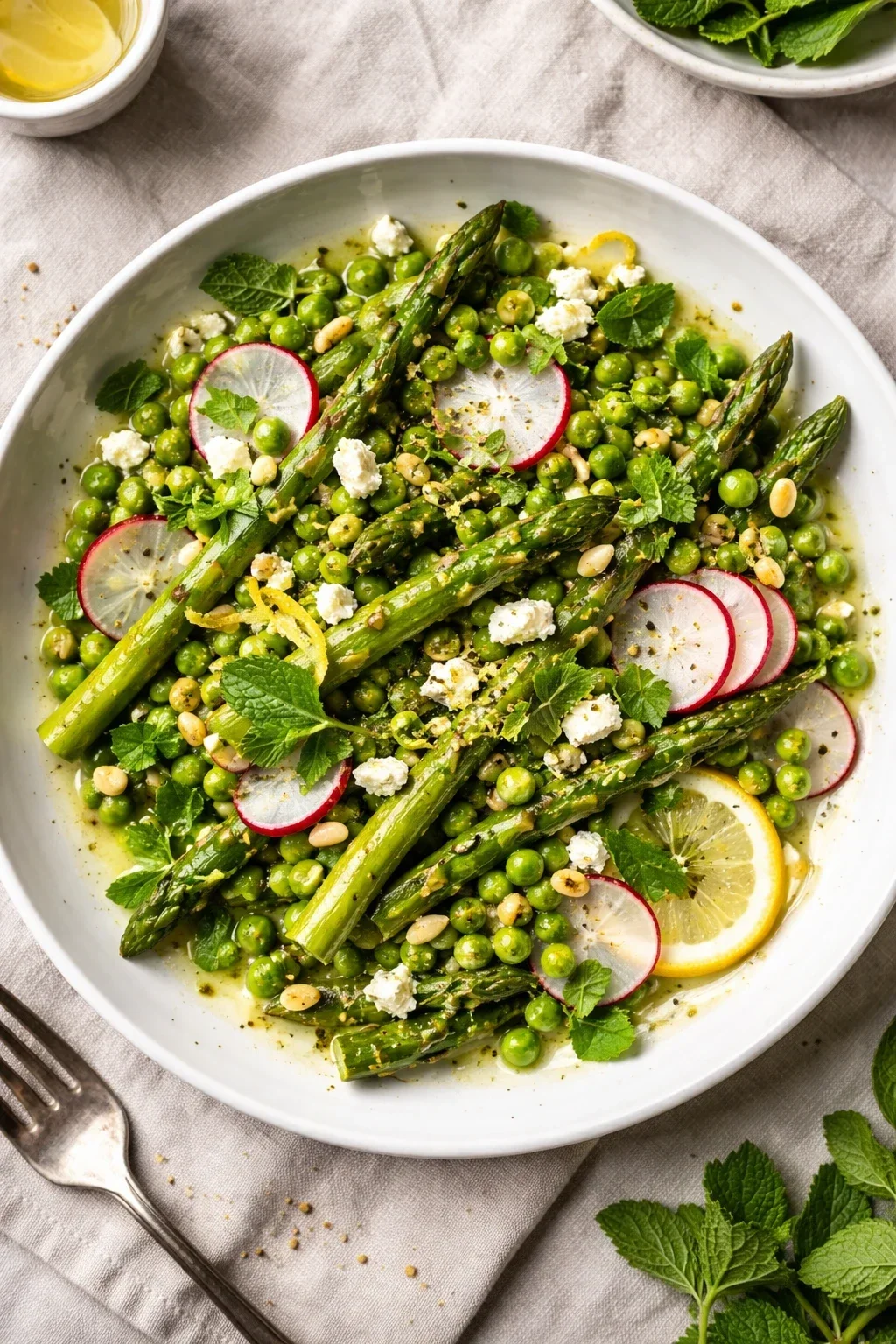
This asparagus and pea salad captures the bright freshness of spring vegetables with a crisp texture and a lively lemon vinaigrette. The combination of slightly tender asparagus, sweet peas, and zesty citrus creates a well-balanced dish that works well as a light lunch or a side for warmer weather meals.
Introduction
I often turn to this asparagus and pea salad in early spring when fresh vegetables start to appear at farmers' markets. The crisp snap of the asparagus combined with the sweetness of peas reminds me of those first warm days when light, refreshing dishes feel especially welcome. What sets this salad apart is its simple lemon vinaigrette that brightens the natural flavors without overpowering them. Whether served as a light lunch or alongside a grilled main, this salad brings a clean, fresh contrast to richer dishes. Its straightforward preparation and vibrant colors make it a staple in my seasonal cooking rotation.
What You'll Need
Serves 4 as a side dish or light lunch
- 300g (10.5 oz) fresh asparagus, trimmed and cut into 2-inch (5 cm) pieces
- 150g (5 oz) fresh or frozen peas, thawed if frozen
- 1 small red onion (about 70g), thinly sliced
- 30g (1/4 cup) fresh parsley, roughly chopped
- Zest and juice of 1 lemon (about 2 tablespoons juice)
- 3 tablespoons (45 ml) extra virgin olive oil
- 1 teaspoon (5 ml) Dijon mustard
- 1 teaspoon (5 ml) honey or maple syrup (optional)
- Salt and freshly ground black pepper, to taste
How To Do It
Step 1
Bring a medium pot of salted water to a boil. Add the asparagus pieces and blanch for 2-3 minutes until they turn bright green and are just tender but still crisp.
⏱ Time: 2-3 minutes
✓ Doneness: Asparagus is vivid green and yields slightly when pierced with a fork but remains firm
Step 2
Add the peas to the boiling water during the last 30 seconds of the asparagus blanching. Remove both vegetables with a slotted spoon and immediately transfer them to a bowl of ice water to stop cooking and preserve color.
⏱ Time: 30 seconds plus cooling time
✓ Doneness: Peas are bright green and tender without being mushy; asparagus stays crisp after cooling
Step 3
Drain the vegetables thoroughly after cooling, then place them in a large mixing bowl. Add the thinly sliced red onion and chopped parsley.
⏱ Time: 2-3 minutes
✓ Doneness: Vegetables are dry to the touch to avoid diluting the dressing
Step 4
In a small bowl, whisk together lemon juice, lemon zest, Dijon mustard, and honey or maple syrup if using. Gradually whisk in the olive oil until the dressing is smooth and emulsified.
⏱ Time: 2-3 minutes
✓ Doneness: Dressing appears glossy and homogenous without separation
Step 5
Pour the dressing over the vegetables and toss gently to coat everything evenly. Season with salt and freshly ground black pepper to taste.
⏱ Time: 1-2 minutes
✓ Doneness: All ingredients are evenly coated with dressing; salad glistens with a light sheen
Step 6
Let the salad rest at room temperature for 10 minutes before serving to allow flavors to meld and the acidity to soften slightly.
⏱ Time: 10 minutes
✓ Doneness: Salad aroma brightens; vegetables retain texture and fresh appearance
Pro Tips
Do not overcook the asparagus.
Overcooked asparagus becomes mushy and loses its bright color, diminishing the salad's fresh texture and visual appeal.
Shock the vegetables in ice water immediately after blanching.
This stops the cooking process instantly, preserving the vibrant color and crispness essential to the salad's character.
Use freshly grated lemon zest instead of pre-packaged.
Fresh zest releases essential oils that brighten the dressing’s aroma and flavor, which bottled zest cannot replicate.
Whisk the vinaigrette thoroughly to emulsify.
A well-emulsified dressing clings better to the vegetables, ensuring every bite is flavorful and evenly dressed.
Adjust the sweetness in the dressing based on lemon acidity.
Lemons vary in tartness; balancing with a touch of honey or maple syrup prevents the vinaigrette from tasting overly sharp or sour.
Slice the red onion very thinly.
Thinner slices integrate more smoothly with the salad, providing a mild onion flavor without overpowering the other ingredients.
Common Mistakes to Avoid
Skipping the ice water bath after blanching.
Why it happens People often rush to finish and neglect this step, leading to overcooked, dull-colored vegetables.
Fix Prepare a bowl of ice water before blanching and transfer vegetables immediately to preserve color and texture.
Using bottled lemon juice instead of fresh.
Why it happens Bottled juice is convenient but lacks fresh citrus oils and brightness.
Fix Always use freshly squeezed lemon juice and zest for maximum flavor impact.
Overdressing the salad.
Why it happens Adding too much vinaigrette can make the salad soggy and mask the fresh vegetable flavors.
Fix Add dressing gradually and toss gently; the salad should have a light coating, not be swimming in dressing.
Not drying vegetables well after blanching.
Why it happens Excess water dilutes the dressing and makes the salad watery.
Fix Drain thoroughly and gently pat dry with a kitchen towel before tossing with dressing.
Variations
Vegan Variation
Use maple syrup instead of honey for the dressing to keep it fully plant-based. Add toasted sunflower seeds for extra texture and protein.
Note: Maple syrup provides natural sweetness without altering the vinaigrette's acidity. Seeds add crunch and nutritional value without affecting dressing stability.
Mediterranean Twist
Add crumbled feta cheese, chopped kalamata olives, and a sprinkle of fresh oregano to the salad for a richer, savory flavor profile.
Note: Feta adds saltiness and creaminess, complementing the citrus dressing. Oregano enhances herbal notes while olives contribute a briny contrast.
Spring Herb Salad
Incorporate fresh mint, dill, and chives along with parsley to deepen the herbaceous character of the salad.
Note: These herbs introduce layers of fresh, bright flavors that harmonize with lemon and vegetables, enhancing the springtime appeal.
Add Toasted Nuts
Include toasted almonds or pine nuts for a nutty flavor and crunchy texture that contrasts with the tender vegetables.
Note: Toasting nuts enhances their aroma and adds complexity. Add nuts just before serving to maintain their crunch.
Grain Bowl Addition
Serve the salad over cooked quinoa or farro for a more substantial meal. Drizzle extra vinaigrette over the grains to tie flavors together.
Note: Grains provide a chewy base and additional nutrients, turning this salad into a balanced lunch option without altering the core vegetable preparation.
Nutrition
Per Serving:
approximately 150
Calories
Values are estimates and may vary depending on ingredient brands and portion sizes.
Storage & Tips
Room Temperature
Store the salad at room temperature only for up to 1 hour to maintain freshness.
Refrigerator
Keep the salad covered in an airtight container for up to 2 days. Note that vegetables may soften slightly over time.
Freezer
Not recommended to freeze this salad as the texture and freshness will degrade.
Reheating
This salad is best served cold or at room temperature and is not intended for reheating.
Make Ahead
Prepare and blanch the vegetables a few hours ahead, store separately from the dressing, then toss together just before serving to preserve texture.
FAQ
Can I make this asparagus and pea salad ahead of time?
Yes, you can blanch the vegetables and prepare the dressing in advance, but toss them together just before serving to maintain crisp texture.
Why is my asparagus soft and dull after making the salad?
This usually happens if asparagus is overcooked or not shocked in ice water after blanching. Blanch briefly and cool immediately in ice water to keep it bright and firm.
Can I use frozen peas instead of fresh?
Frozen peas work well if thawed gently and not cooked further. They retain sweetness and texture but avoid boiling them again to prevent mushiness.
How long does the salad last in the fridge?
Stored in an airtight container, the salad keeps well for up to 2 days, though vegetables may soften slightly over time.
Can I substitute lemon with another citrus fruit?
Lime juice can be used as a substitute, but it will slightly change the flavor profile. Avoid using orange juice as it is sweeter and less acidic.
Final Thoughts
This asparagus and pea salad celebrates the simplicity and freshness of spring produce. Its straightforward preparation and balanced flavors make it a versatile addition to many meals. I welcome your thoughts and any variations you've tried in the comments below.