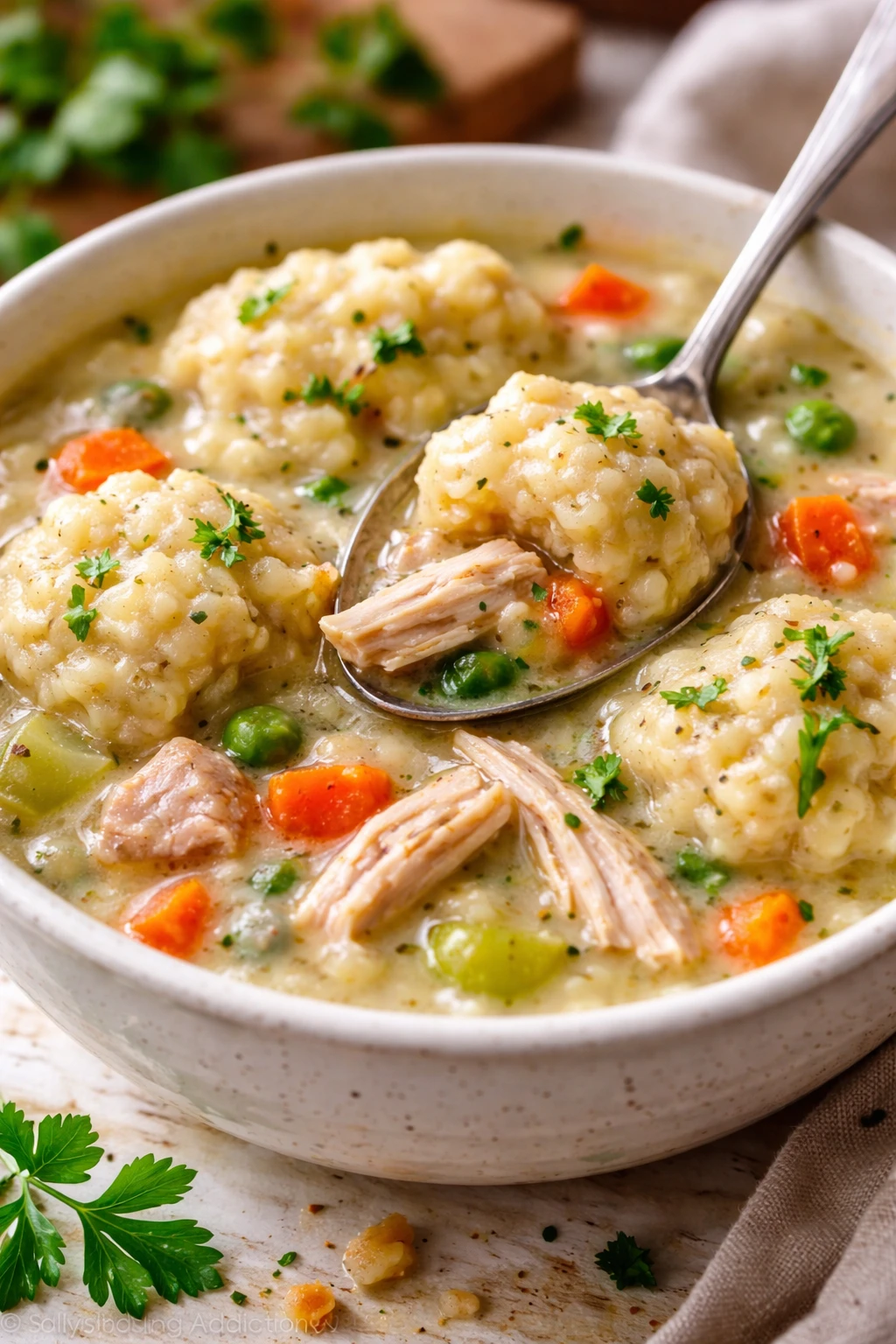
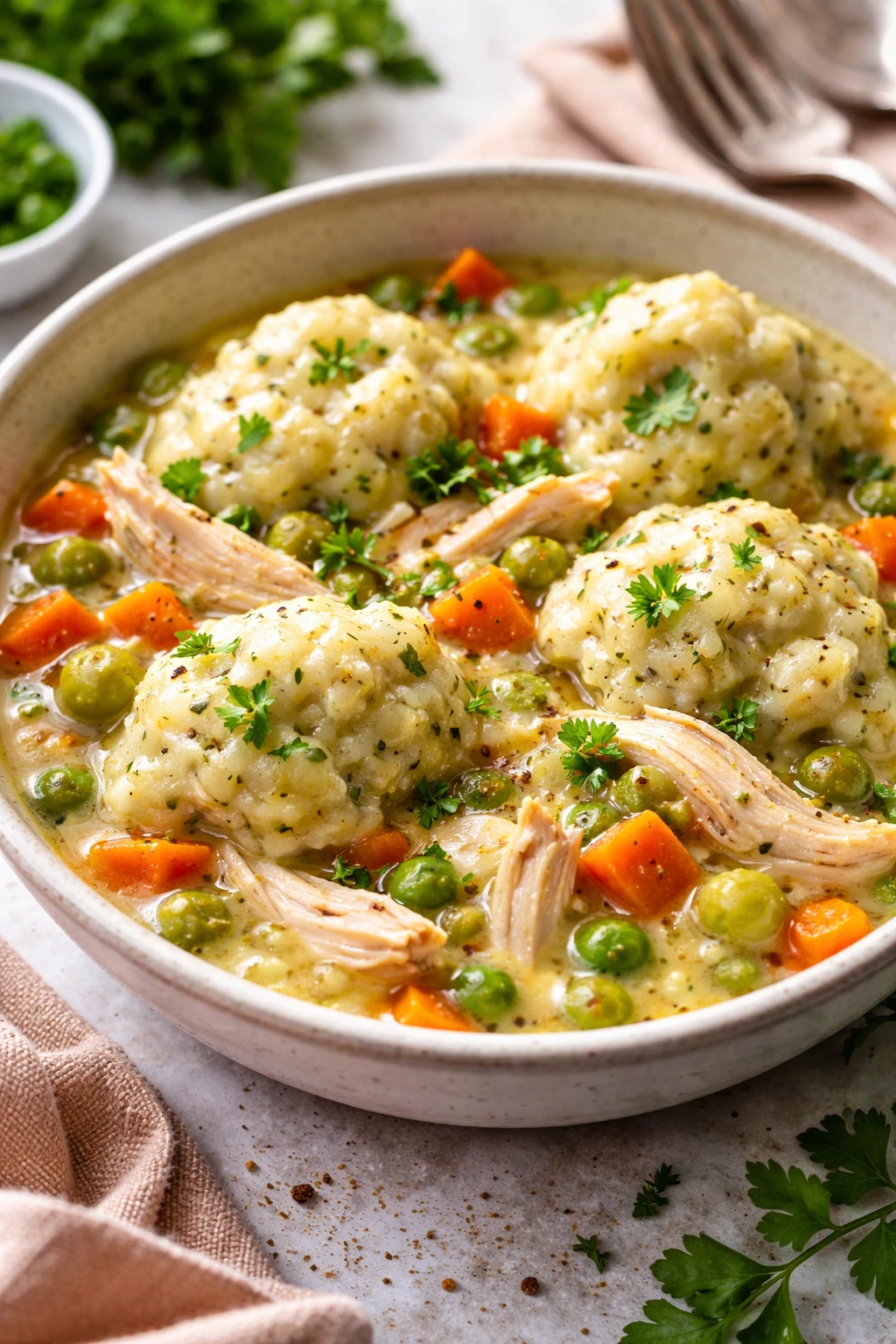
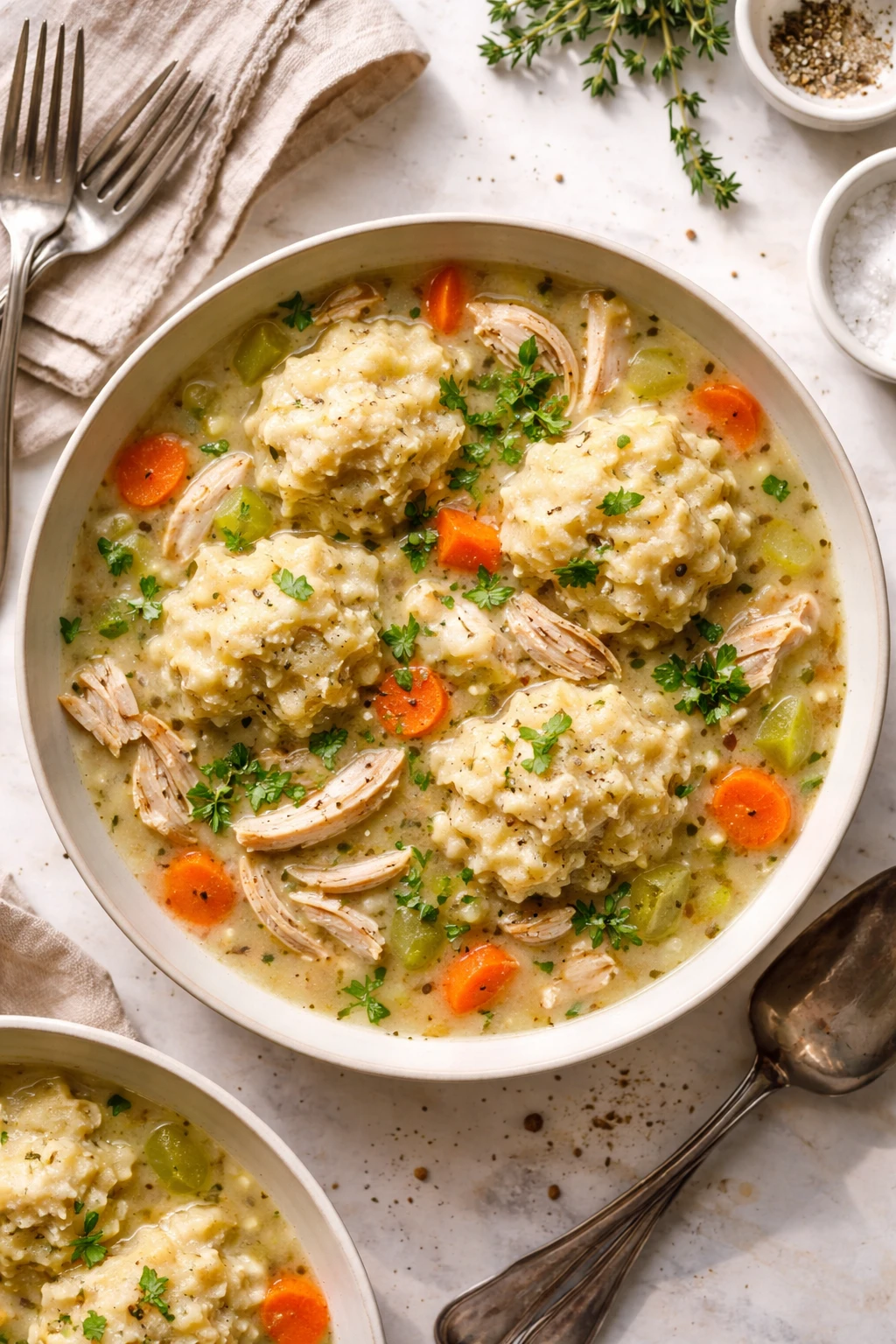
This chicken and dumplings is my go-to comfort food. The broth simmers with tender chicken, and the fluffy dumplings are made from scratch. Perfect for chilly evenings when you want a warm, homemade hug in a bowl.
Introduction
I first made chicken and dumplings when I was craving something warm and comforting on a chilly evening. The classic version my grandma used to make was always a family favorite, but I wanted to put my own spin on it. Instead of canned soup or pre-made biscuits, I make the dumplings from scratch with a simple mix of flour, milk, and egg. The trick I learned over time is to not overmix the dough — keeping it light and fluffy is key. Also, simmering the chicken gently in homemade broth with fresh veggies really brings out the flavor and makes the whole dish feel cozy and satisfying. This recipe has become my go-to for cold nights when I want something hearty but not complicated. The finished dish is a bowl of tender chicken, rich broth, and pillowy dumplings that make you feel instantly at home. I love that it’s straightforward to make but tastes like you spent hours in the kitchen. Plus, it’s a great way to use leftover chicken or roast a whole bird just for this. If you’re looking for a comforting, homemade meal that hugs you from the inside out, this chicken and dumplings recipe is for you.
What You'll Need
Approximately 6 cups, 4 servings
- 2 cups cooked shredded chicken, warm
- 4 cups chicken broth, low sodium
- 1 cup all-purpose flour, plus extra for dusting
- 1/2 cup whole milk, cold
- 1 large egg
- 2 tablespoons unsalted butter
- 1 teaspoon salt
- 1/2 teaspoon black pepper
- 1/2 teaspoon baking powder
- 2 tablespoons fresh parsley, chopped
- 1 small onion, finely diced
- 2 cloves garlic, minced
- 2 medium carrots, peeled and sliced
- 2 celery stalks, sliced
How To Do It
Step 1
Start by preparing your broth base. In a large pot, melt the butter over medium heat and add the diced onion, carrots, and celery. Cook gently for about 7 to 10 minutes, stirring occasionally until the vegetables are soft and fragrant. This step is crucial because it builds the flavor foundation for the broth. Avoid rushing or letting the veggies brown too much, which can add unwanted bitterness. You want a gentle sweat to coax out the natural sweetness and depth.
⏱ Time: 10 minutes
✓ Doneness: Vegetables should be tender and translucent without browning
Step 2
Add the minced garlic and cook for 1 minute more, just until fragrant. Then pour in the chicken broth and bring it to a gentle simmer. Let it simmer uncovered for about 10 minutes to allow the flavors to meld and the broth to concentrate slightly. Skipping this simmering stage results in a less flavorful broth, so be patient here. Keep the heat low enough to prevent a rolling boil, which can toughen the chicken later.
⏱ Time: 10 minutes
✓ Doneness: Broth should be aromatic and slightly reduced
Step 3
While the broth simmers, prepare your dumpling dough. In a medium bowl, whisk together the flour, baking powder, salt, and pepper. In a separate bowl, beat the cold milk and egg together, then pour into the dry ingredients. Stir gently with a fork until just combined. The key here is to avoid overmixing; overworking the dough will develop gluten and make dumplings tough instead of tender. The dough should be slightly sticky but hold together.
⏱ Time: 5 minutes
✓ Doneness: Dough forms a cohesive ball but is still soft and sticky
Step 4
Add the cooked shredded chicken to the simmering broth and stir to combine. Keep the heat on low to maintain a gentle simmer. Adding the chicken now allows it to warm through without drying out or becoming stringy, which happens if cooked too long or at high heat. Stir occasionally to prevent sticking, but don’t stir too vigorously or the dumplings won’t hold their shape later.
⏱ Time: 5 minutes
✓ Doneness: Chicken is heated through and broth is gently simmering
Step 5
Drop spoonfuls of the dumpling dough onto the simmering broth, spacing them evenly. Cover the pot tightly with a lid and let the dumplings cook undisturbed for about 15 minutes. It’s important not to lift the lid during this time because the steam cooks the dumplings evenly and keeps them fluffy. Opening the lid lets steam escape and can cause uneven cooking or soggy dumplings.
⏱ Time: 15 minutes
✓ Doneness: Dumplings should be puffed up, firm to the touch but tender inside
Step 6
After the dumplings have cooked, check one by gently cutting it in half. It should be cooked through with no raw dough inside. If not, cover and cook for a few more minutes. Taste the broth and adjust seasoning with salt and pepper as needed. The balance here is key — you want the broth flavorful but not overly salty, as the dumplings absorb some saltiness.
⏱ Time: 2 minutes
✓ Doneness: Dumplings fully cooked, broth seasoned to taste
Step 7
Stir in the chopped fresh parsley for a bright, fresh finish. This adds a pop of color and a subtle herbal note that balances the richness of the broth and dumplings. Fresh herbs really elevate the dish and make it feel homemade and vibrant.
⏱ Time: 1 minute
✓ Doneness: Parsley is wilted but still vibrant green
Step 8
Turn off the heat and let the pot sit covered for a few minutes before serving. This resting time allows the flavors to meld further and the dumplings to settle, giving you the perfect texture and taste. Serving immediately is fine, but a brief rest makes a noticeable difference.
⏱ Time: 5 minutes
✓ Doneness: Broth slightly thickened and dumplings settled
Step 9
Serve the chicken and dumplings hot in bowls, making sure each serving gets plenty of broth, veggies, chicken, and fluffy dumplings. This dish pairs wonderfully with a simple green salad or steamed greens for a complete meal. Enjoy the comforting warmth and rich flavors—perfect for any cozy night.
⏱ Time: No cook time
✓ Doneness: Dish presented piping hot with balanced portions
Pro Tips
Don’t overmix your dumpling dough.
Overmixing develops gluten in the flour, making the dumplings tough and dense instead of light and fluffy. Mixing just until combined keeps the texture tender and soft, which is exactly what you want in a comforting dumpling.
Use cold milk when mixing dumplings.
Cold milk slows the activation of baking powder, allowing the dumplings to rise gradually during cooking. This results in a better texture and prevents them from becoming rubbery or tough.
Simmer broth gently, don’t boil.
A gentle simmer extracts flavors without toughening the chicken. Boiling causes the proteins to seize up, making the chicken dry and stringy. Keeping the heat low ensures tender meat and a clear, flavorful broth.
Cover the pot tightly when cooking dumplings.
Trapping steam cooks the dumplings evenly and helps them puff up. Lifting the lid releases steam and can cause uneven cooking or soggy dumplings, so resist peeking until the cooking time is up.
Use fresh herbs added at the end.
Adding parsley or other fresh herbs at the end preserves their bright color and fresh flavor, which balances the richness of the broth and adds a final layer of complexity.
Shred chicken finely for even distribution.
Small, shredded pieces of chicken disperse more evenly through the broth and dumplings, giving every bite a good balance of flavors and textures.
Taste and adjust seasoning at the end.
Broth reduces and flavors concentrate as it cooks, so seasoning at the end prevents over-salting and allows you to fine-tune the balance for the perfect savory taste.
Common Mistakes to Avoid
Overcooked, stringy chicken
Why it happens Many cooks add raw chicken to boiling broth and cook it too long, which dries out the meat and makes it tough.
Fix Use cooked chicken shredded into bite-sized pieces and add it during the last few minutes of simmering. Keep the heat low to gently warm the chicken without drying it out.
Dense, heavy dumplings
Why it happens Overmixing the dough or using old baking powder prevents dumplings from rising properly.
Fix Mix dumpling dough just until combined and use fresh baking powder. Handle the dough gently to maintain lightness.
Broth too salty
Why it happens Using pre-salted broth or adding too much salt early in cooking concentrates as the broth reduces.
Fix Choose low sodium broth and season gradually at the end after reduction, tasting as you go.
Dumplings unevenly cooked or soggy
Why it happens Peeking or stirring dumplings while cooking lets steam escape or breaks them apart.
Fix Cover pot tightly and avoid stirring or lifting the lid until dumplings are fully cooked.
Vegetables browned or burnt in the base
Why it happens Cooking veggies at too high heat can cause burning, leading to bitter flavors.
Fix Cook veggies gently over medium or medium-low heat until soft and translucent without browning.
Variations
Herbed Dumplings
Add chopped fresh thyme or rosemary to the dumpling dough for an herby twist. This adds a fragrant layer that pairs beautifully with the chicken broth. The herbs infuse the dumplings during cooking, making each bite more aromatic and flavorful.
Note: Be sure to finely chop herbs and fold gently into the dough to avoid overmixing which can toughen dumplings.
Vegetable-Loaded Chicken and Dumplings
Include diced potatoes, peas, or corn in the broth for extra heartiness and color. This variation adds texture and nutrients, making the dish more filling and vibrant without changing the core technique.
Note: Add root vegetables early to ensure they cook through; add quicker-cooking veggies like peas near the end to keep them tender-crisp.
Spicy Chicken and Dumplings
Incorporate a pinch of cayenne pepper or diced jalapeños into the broth for a subtle spicy kick. This variation warms you up with a little heat while keeping the classic comforting flavors intact.
Note: Adjust spice level carefully and add jalapeños early to infuse flavor without overpowering the dish.
Gluten-Free Dumplings
Use a gluten-free flour blend to make the dumplings suitable for gluten-sensitive eaters. The texture will be slightly different but still tender and satisfying if you handle the dough gently and add a bit of xanthan gum for structure.
Note: Gluten-free doughs are more delicate; avoid overmixing and cook dumplings slightly longer for best results.
Slow Cooker Chicken and Dumplings
Prepare the broth and veggies in a slow cooker and add dumplings in the last hour. This hands-off method is perfect for busy days and results in tender chicken and flavorful broth with minimal effort.
Note: Add dumplings late to prevent them from getting mushy, and keep lid closed during cooking to retain steam.
Nutrition
Per Serving:
Nutritional values are estimates and may vary based on specific ingredients used.
Storage & Tips
Room Temperature
Chicken and dumplings can safely sit out covered for up to 2 hours. Beyond that, bacteria growth increases, so refrigerate promptly. Cover with a lid or foil to prevent drying out and contamination.
Refrigerator
Store leftovers in an airtight container for up to 3 days. The dumplings may absorb some broth and soften when cold, so reheat gently to restore texture. Avoid overheating which can make dumplings mushy.
Freezer
Freeze in airtight containers for up to 2 months. Wrap tightly to prevent freezer burn. Thaw overnight in the fridge before reheating to preserve texture and flavor. Reheat slowly to avoid overcooking dumplings.
Reheating
Reheat on stovetop over low heat, adding a splash of broth or water to loosen the sauce if needed. Microwave works too but do it in short bursts to avoid toughening chicken or drying dumplings. Avoid boiling during reheating.
Make Ahead
Prepare the broth and shredded chicken 1-2 days ahead and store separately. Make dumpling dough fresh on the day to keep them fluffy. This saves time and ensures the best texture and flavor.
FAQ
Can I use raw chicken instead of cooked chicken?
You can, but it requires longer cooking time and careful monitoring to avoid overcooking. Adding raw chicken pieces early means simmering the broth longer, which can reduce flavor and risk drying out the meat. Using cooked shredded chicken keeps the meat tender and makes the cooking process faster and more reliable.
What if my dumplings don’t puff up?
This usually happens if the baking powder is old or the dough is overmixed. Always use fresh baking powder and mix the dough just until combined. Also, make sure the broth is simmering gently and the pot is covered tightly to trap steam, which helps dumplings rise.
Can I freeze the whole dish after cooking?
Freezing cooked chicken and dumplings is possible but the texture of the dumplings may change and become a bit softer after thawing. For best results, freeze broth and chicken separately from dumplings and add fresh dumplings when reheating.
Is there a substitute for milk in the dumplings?
You can use buttermilk or a non-dairy milk like almond or oat milk, but this may slightly alter the flavor and texture. Buttermilk adds tang and tenderness, while non-dairy milks can make dumplings lighter but may lack richness.
How can I make this recipe dairy-free?
Replace butter with olive oil or dairy-free margarine and use a non-dairy milk alternative for the dumplings. This keeps the recipe accessible for dairy-free diets while maintaining good flavor and texture.
Why does my broth sometimes turn cloudy?
Broth can become cloudy if boiled vigorously or if impurities aren’t skimmed off during cooking. Simmer gently and skim foam or scum that rises to the surface for a clearer, cleaner broth.
Can I add other herbs besides parsley?
Absolutely! Thyme, rosemary, or a bay leaf added during simmering can deepen flavor. Just be sure to remove tough herbs like bay leaves before serving to avoid unpleasant textures.
What’s the best way to shred chicken?
Using two forks to pull the chicken apart is the easiest method, giving you bite-sized pieces that blend well into the broth. Alternatively, use a stand mixer on low speed for quick shredding if you’re making a larger batch.
Final Thoughts
I hope you enjoy making and savoring this cozy chicken and dumplings recipe as much as I do. Don’t forget to share your results—I’d love to hear how it turns out!