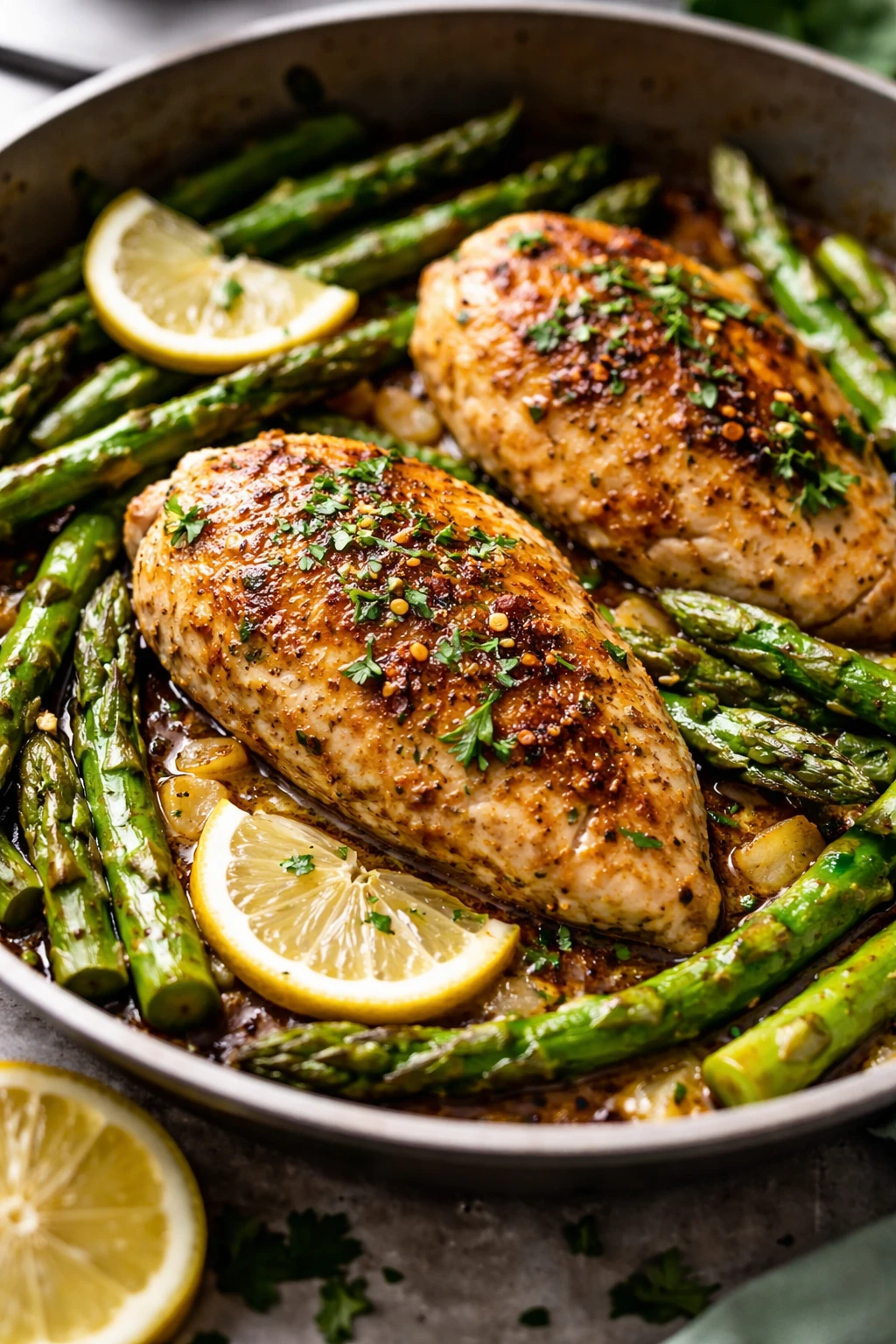
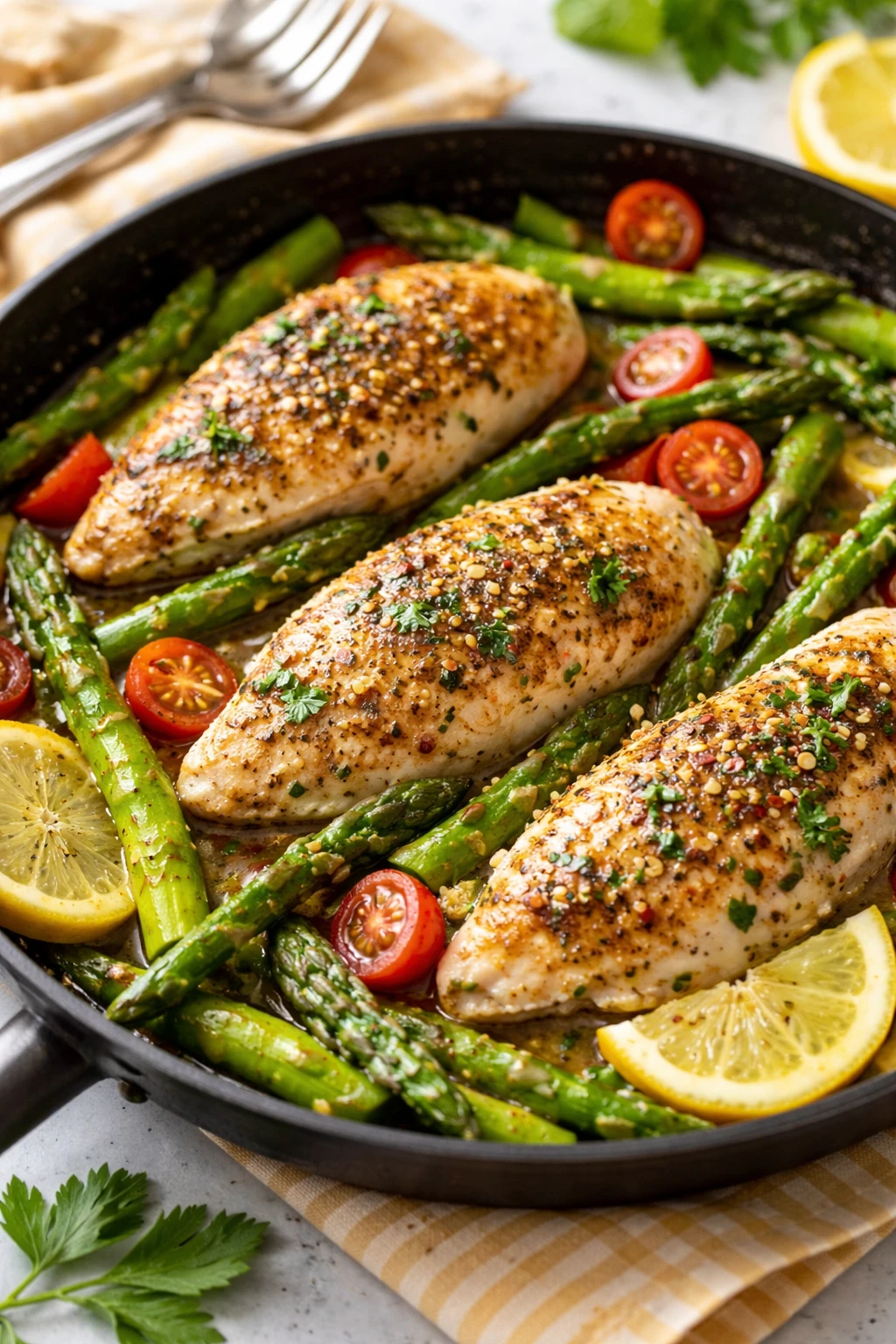
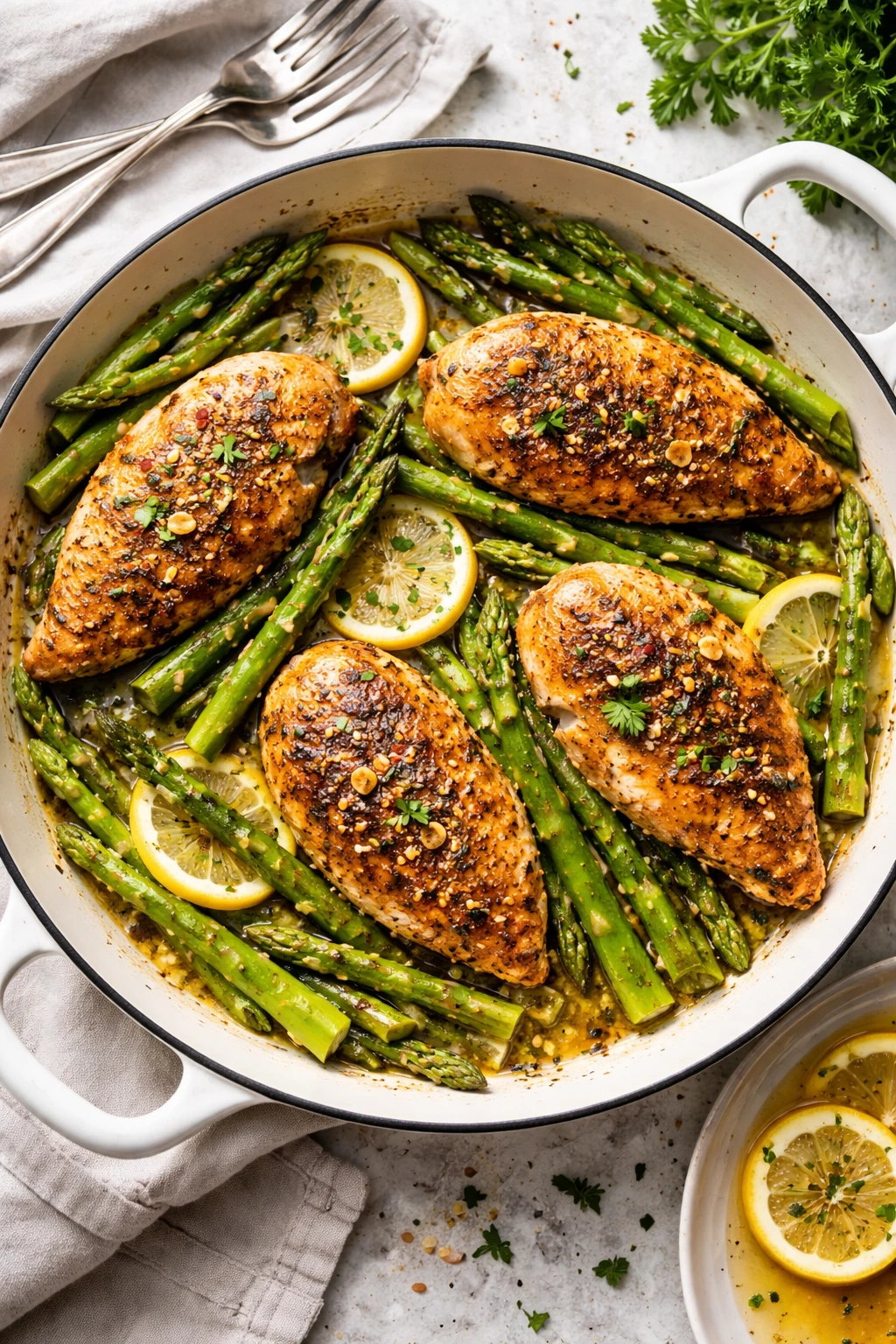
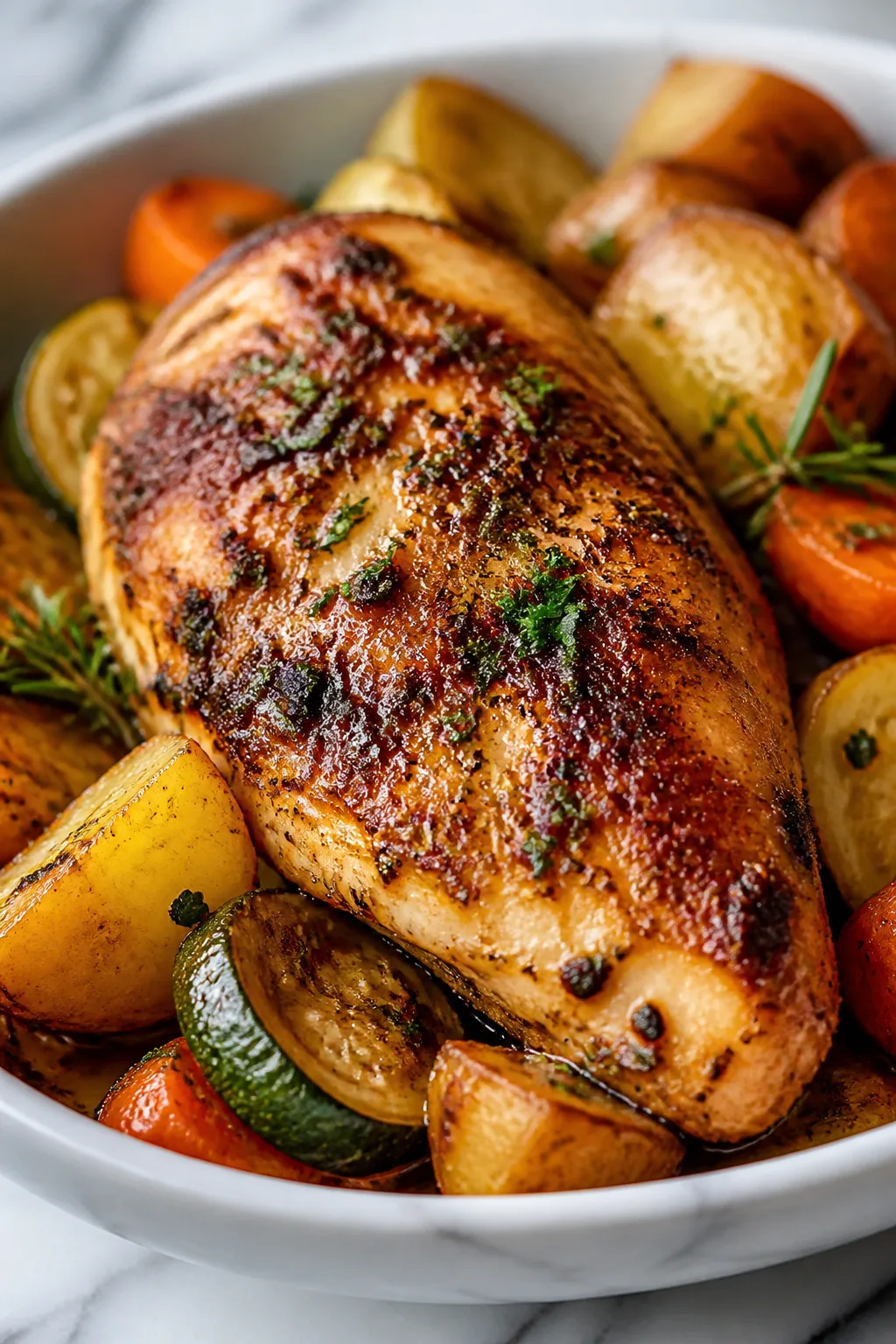
This easy one pan meal pairs tender chicken breasts with fresh asparagus, roasted to perfection with garlic and herbs. It’s a quick, wholesome dinner that feels homemade but takes almost no time. Perfect for busy weeknights when you want something fresh and simple.
Introduction
I first made this one pan chicken and asparagus dish on a hectic weeknight when I needed dinner on the table fast but still wanted something fresh and tasty. I was surprised how well the chicken stayed juicy while roasting alongside the asparagus, which absorbed all those garlicky herb flavors. What sets this recipe apart is the simple seasoning and the way the lemon slices add just the right brightness without overpowering the dish. The trick I learned is to space the chicken and asparagus properly on the pan so everything cooks evenly and the asparagus doesn’t get soggy. I love how it’s a complete meal in one pan with minimal cleanup, perfect for busy nights. When it’s done, the chicken is tender, the asparagus is crisp-tender, and the garlic-herb aroma fills the kitchen. It’s a straightforward, approachable recipe that’s become a family favorite, especially when I want a wholesome meal without fuss.
How To Do It
Step 1
Preheat your oven to 425°F (220°C). This high heat helps the chicken develop a golden crust while roasting and ensures the asparagus cooks quickly without becoming mushy. Line a large rimmed baking sheet with parchment paper or lightly grease it to prevent sticking. Make sure your chicken breasts are patted dry with paper towels before seasoning — this helps the oil and herbs stick better and promotes browning. Patience here is key; wet chicken won’t brown well and can steam instead.
⏱ Time: 10
✓ Doneness: Oven fully preheated and chicken breasts are dry to touch
Step 2
Place the chicken breasts in the center of the baking sheet. Drizzle 2 tablespoons of olive oil over the chicken and rub it in evenly. Sprinkle the minced garlic, thyme, rosemary, salt, and pepper on top. The oil helps distribute the herbs and garlic evenly and promotes even cooking. Don’t rush this step — coating the chicken thoroughly with seasoning ensures every bite is flavorful. If you skip this, your chicken will taste bland and the herbs won’t infuse as well.
⏱ Time: 5
✓ Doneness: Chicken breasts are evenly coated with oil and herbs, no dry spots
Step 3
Arrange the trimmed asparagus spears around the chicken in a single layer, leaving space between each piece so they roast rather than steam. Drizzle the remaining tablespoon of olive oil over the asparagus, then season lightly with salt and pepper. The oil allows the asparagus to crisp up and caramelize slightly, which adds a lovely depth of flavor. Avoid overcrowding — if the pan is too crowded, the asparagus will release moisture and become soggy.
⏱ Time: 5
✓ Doneness: Asparagus is evenly coated with oil and spaced apart on the pan
Step 4
Lay the thin lemon slices on top of the chicken and asparagus. The lemon adds a bright citrus aroma and subtle tang as it roasts, balancing the richness of the chicken and oil. If you want a little heat, sprinkle some red pepper flakes over the chicken now. This step is optional but adds a nice complexity. Don’t skip the lemon if you want that fresh finish — it really lifts the whole dish.
⏱ Time: 2
✓ Doneness: Lemon slices cover chicken and asparagus evenly
Step 5
Place the baking sheet in the preheated oven. Roast for about 20 minutes, then flip the chicken breasts over and stir the asparagus gently to ensure even cooking. Flipping the chicken halfway helps it brown evenly on both sides and keeps it juicy. Stirring the asparagus prevents any spears from burning on one side. Resist the urge to open the oven too often, as this drops the temperature and can affect cooking time.
⏱ Time: 20
✓ Doneness: Chicken starts to brown on the bottom and asparagus looks tender
Step 6
Return the pan to the oven and roast for another 8 to 10 minutes, or until the chicken reaches an internal temperature of 165°F (74°C) and the asparagus is crisp-tender. Use a meat thermometer for accuracy — undercooked chicken is unsafe, and overcooked chicken can dry out quickly. The asparagus should still have a slight snap when pierced with a fork.
⏱ Time: 10
✓ Doneness: Chicken thermometer reads 165°F and asparagus is bright green and tender
Step 7
Remove the pan from the oven and let the chicken rest for 5 minutes before slicing. Resting allows the juices to redistribute inside the meat, resulting in a more tender and juicy bite. If you cut the chicken immediately, the juices will spill out, leaving it dry. Cover loosely with foil while resting to keep warm.
⏱ Time: 5
✓ Doneness: Chicken feels slightly firm but not hard when pressed
Step 8
Transfer the chicken breasts and asparagus to plates, spooning any pan juices over the top for extra flavor. Taste and adjust seasoning with a pinch of salt or a squeeze of fresh lemon juice if desired. This finishing touch brightens the dish and balances the savory notes.
⏱ Time: 3
✓ Doneness: Dish looks vibrant with glossy pan juices
Step 9
Serve immediately with your favorite side or a simple salad. This meal pairs well with crusty bread or steamed rice to soak up the garlic herb juices. Enjoy the contrast of tender chicken and crisp asparagus — it’s a satisfying, wholesome dinner with minimal effort!
⏱ Time: 2
✓ Doneness: Dinner plated and ready to enjoy warm
Pro Tips
Pat the chicken breasts dry before seasoning.
Removing moisture from the chicken surface helps the oil and herbs stick better and encourages a golden crust. Wet chicken tends to steam rather than roast, leading to less flavor and a soggy texture.
Space the asparagus and chicken evenly on the pan.
Crowding traps steam, which prevents caramelization and results in limp vegetables. Proper spacing allows hot air circulation, ensuring everything roasts evenly and crisps up.
Use a meat thermometer to check chicken doneness.
Chicken breasts can dry out quickly if overcooked. A thermometer ensures the internal temperature reaches the safe 165°F without guessing, preserving juiciness and tenderness.
Flip the chicken halfway through roasting.
Turning the chicken promotes even browning on both sides and helps retain moisture. It also prevents one side from overcooking or burning.
Let the chicken rest before slicing.
Resting allows juices to redistribute within the meat fibers, resulting in tender, juicy chicken. Cutting immediately causes juices to escape, drying out the meat.
Use thin lemon slices for roasting.
Thin slices release flavor and oils quickly without overpowering the dish. Thick slices might remain tough and impart bitterness if over-roasted.
Adjust seasoning after roasting if needed.
Roasting can mellow herbs and salt. Tasting before serving lets you add a finishing touch of salt or lemon juice to brighten flavors.
Common Mistakes to Avoid
Overcrowding the pan
Why it happens Often cooks try to fit everything on one pan for convenience but forget that too much food traps moisture.
Fix Use a larger baking sheet or roast in batches to keep ingredients spaced apart. This prevents steaming and promotes even roasting and browning.
Not drying chicken before seasoning
Why it happens Skipping this step saves time but leads to less flavorful, soggy chicken skin.
Fix Pat chicken dry thoroughly with paper towels before applying oil and herbs to ensure proper browning and flavor absorption.
Skipping the resting step
Why it happens Impatience can lead to slicing chicken right out of the oven.
Fix Allow chicken to rest 5 minutes loosely covered to keep juices inside, resulting in moist meat.
Using thick asparagus without trimming ends
Why it happens Sometimes cooks overlook trimming, leading to woody, tough bites.
Fix Snap or cut off the bottom 1-2 inches of asparagus before cooking to avoid unpleasant texture.
Not flipping the chicken halfway
Why it happens Forgetting or rushing causes uneven cooking and browning.
Fix Set a timer to flip chicken halfway through to ensure both sides brown evenly and stay juicy.
Variations
Add Mushrooms and Cherry Tomatoes
Include halved cherry tomatoes and sliced mushrooms around the chicken and asparagus for extra color and umami. The tomatoes roast down to a sweet sauce, and mushrooms add earthiness, creating a more complex flavor profile.
Note: Add mushrooms and tomatoes in step 3, ensuring they’re spaced evenly to roast without steaming.
Spicy Cajun One Pan Chicken
Swap the herbs for Cajun seasoning and add a pinch of cayenne pepper for a spicy kick. This variation is bold and perfect if you want a little heat without extra effort.
Note: Use the same roasting times; seasoning swap doesn’t affect cooking.
Lemon Herb Butter Sauce Finish
After roasting, melt butter with lemon juice and fresh parsley, then drizzle over the chicken and asparagus. This adds richness and a fresh herbal note that elevates the dish for special occasions.
Note: Make the sauce while chicken rests; spoon over just before serving.
Use Bone-in Chicken Thighs
Swap breasts for bone-in, skin-on thighs for more flavor and juiciness. Thighs take a bit longer to cook but reward you with richer taste and crisp skin.
Note: Increase cooking time by 10-15 minutes and check internal temp for doneness.
Roasted Garlic and Parmesan Asparagus
Before roasting, toss asparagus with minced roasted garlic and sprinkle grated Parmesan on top halfway through cooking for a cheesy, savory twist.
Note: Add Parmesan during the last 5 minutes of roasting to prevent burning.
Nutrition
Per Serving:
Nutritional values are estimates and may vary based on specific ingredients used.
Storage & Tips
Room Temperature
This dish can safely sit at room temperature for up to 2 hours if covered loosely to avoid contamination. Leaving it out longer risks bacterial growth, so refrigerate leftovers promptly.
Refrigerator
Store leftovers in an airtight container for up to 3 days. The chicken may firm up when cold; reheat gently to maintain moisture. Asparagus can become softer but still tastes good warm or cold.
Freezer
Freeze cooked chicken and asparagus in a sealed freezer-safe container for up to 2 months. Wrap tightly to prevent freezer burn. Thaw overnight in the fridge before reheating to preserve texture.
Reheating
Reheat gently in a low oven (about 300°F) or covered in the microwave with a splash of water or broth to keep chicken moist. Avoid high heat which can dry out the meat and overcook asparagus.
Make Ahead
You can trim and season the chicken and asparagus up to 1 day ahead, storing them separately in the fridge. Assemble on the pan and roast fresh the day of serving for best texture and flavor.
FAQ
Can I use frozen chicken breasts for this recipe?
It’s best to use fresh or fully thawed chicken breasts. Frozen chicken releases extra moisture which can cause steaming instead of roasting, resulting in less browning and a soggy texture. If using frozen, thaw completely and pat dry before cooking.
What if I don’t have dried herbs? Can I use fresh?
Fresh herbs can be used but add them in the last 5 minutes of roasting or after cooking to preserve their flavor. Dried herbs withstand the longer roasting time better and infuse the chicken and asparagus more deeply.
How do I know when the chicken is cooked through?
The safest way is to use a meat thermometer inserted into the thickest part of the breast. It should read 165°F (74°C). The juices should run clear, and the meat should feel firm but not hard.
Can I add other vegetables to this dish?
Yes! Vegetables like cherry tomatoes, mushrooms, or bell peppers work great. Add them in step 3 and make sure they’re cut into similar sizes for even cooking. Just keep an eye on cooking times as some veggies roast faster.
What if my asparagus is too thick or thin?
Thicker asparagus takes a bit longer to roast and stays tender inside, while thin stalks cook quickly and can become limp. Adjust cooking time accordingly and consider slicing thicker stalks in half lengthwise.
Is it okay to skip the lemon slices?
You can skip them, but the lemon adds a bright, fresh flavor that balances the richness. If you don’t have fresh lemon, a squeeze of lemon juice after cooking also works well.
Can I make this recipe gluten-free?
Absolutely! This recipe is naturally gluten-free as it uses simple whole ingredients. Just double-check any packaged seasonings to ensure they don’t contain gluten additives.
How should I store leftovers to keep asparagus from getting mushy?
Store asparagus separately from chicken if possible, wrapped in paper towels inside an airtight container. Reheat gently to avoid overcooking. Eating asparagus cold in salads is also a tasty option.
Final Thoughts
I hope you enjoy making this one pan chicken and asparagus as much as I do! It’s a simple, flavorful meal that’s perfect for busy nights. Let me know how it turns out!