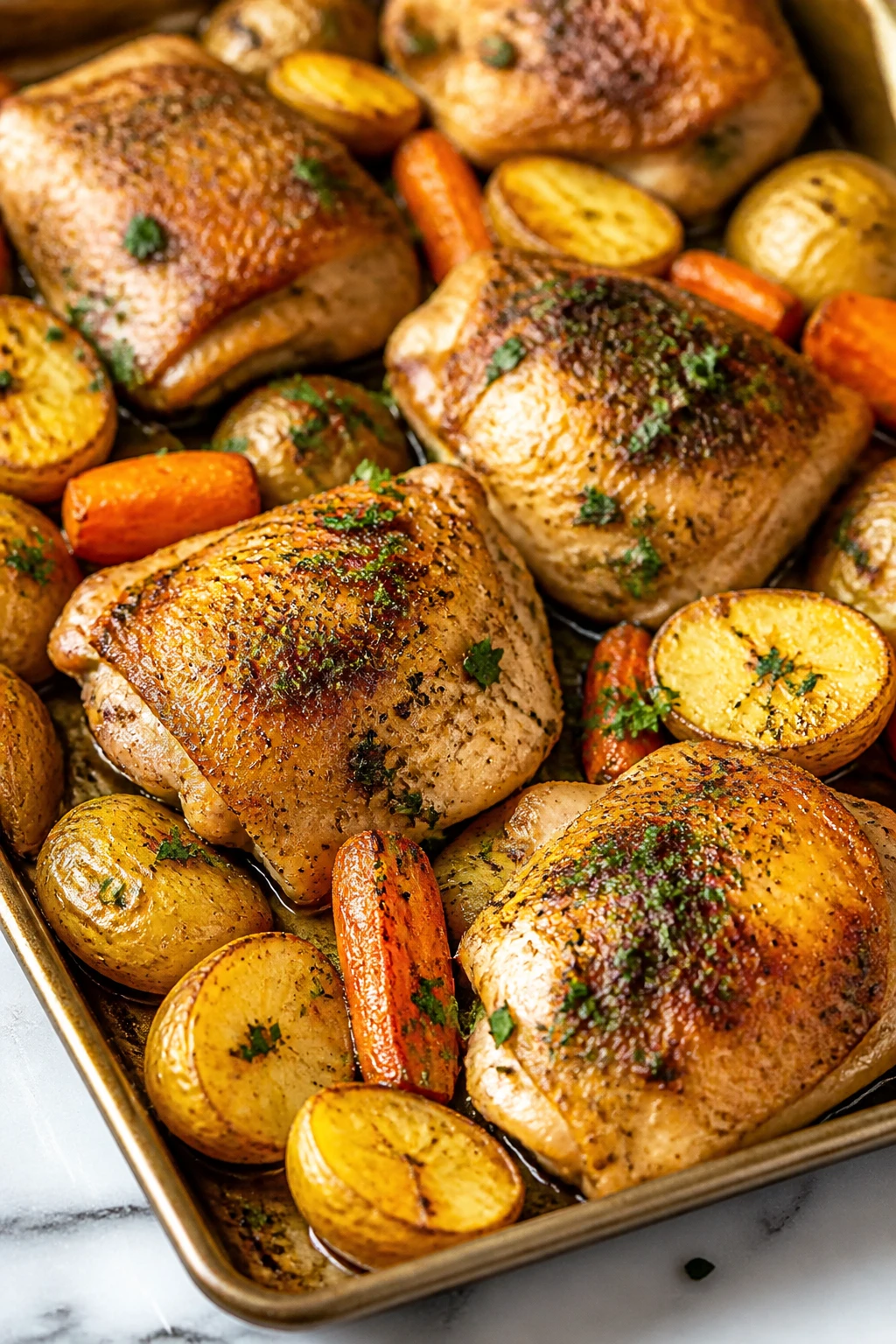
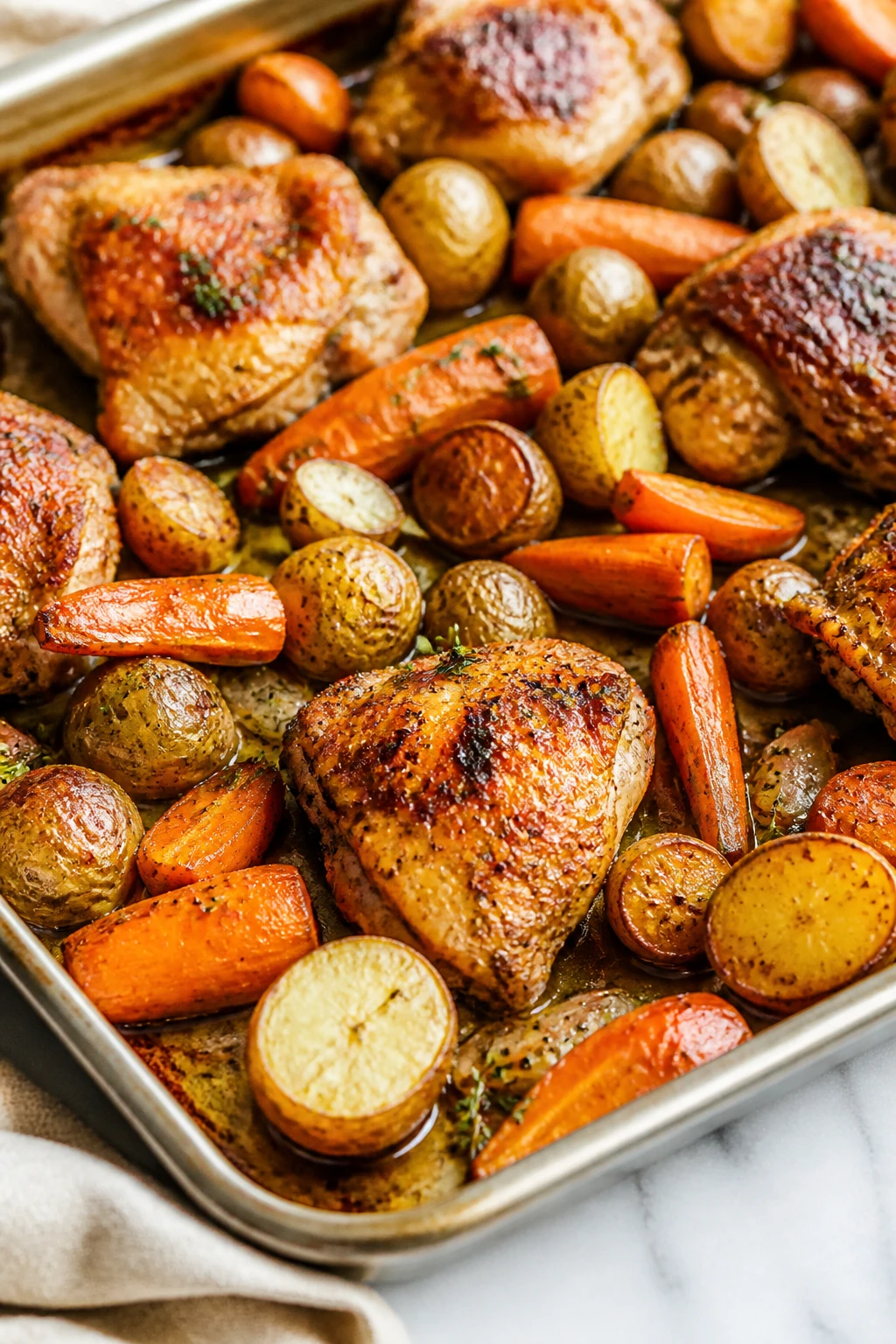
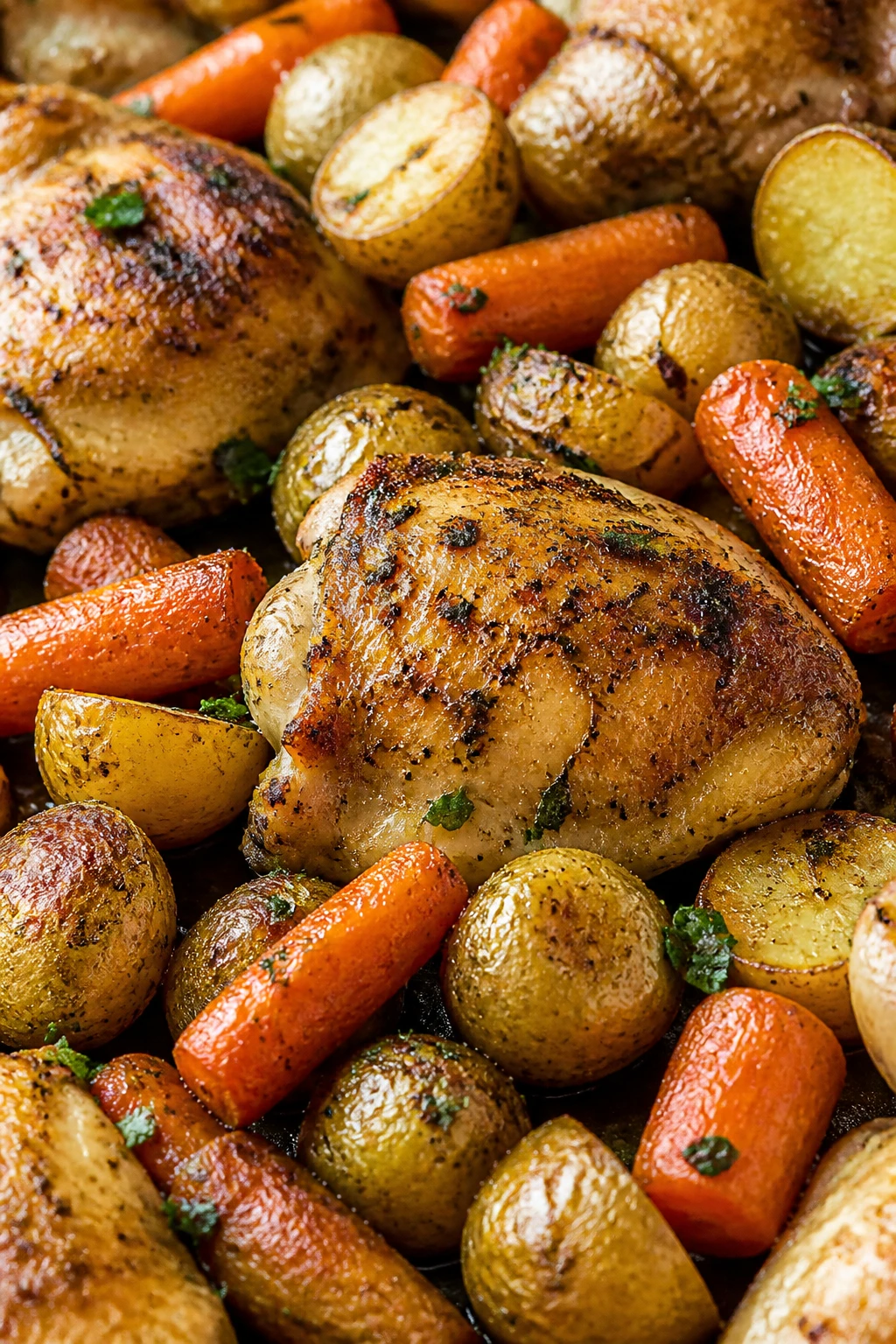
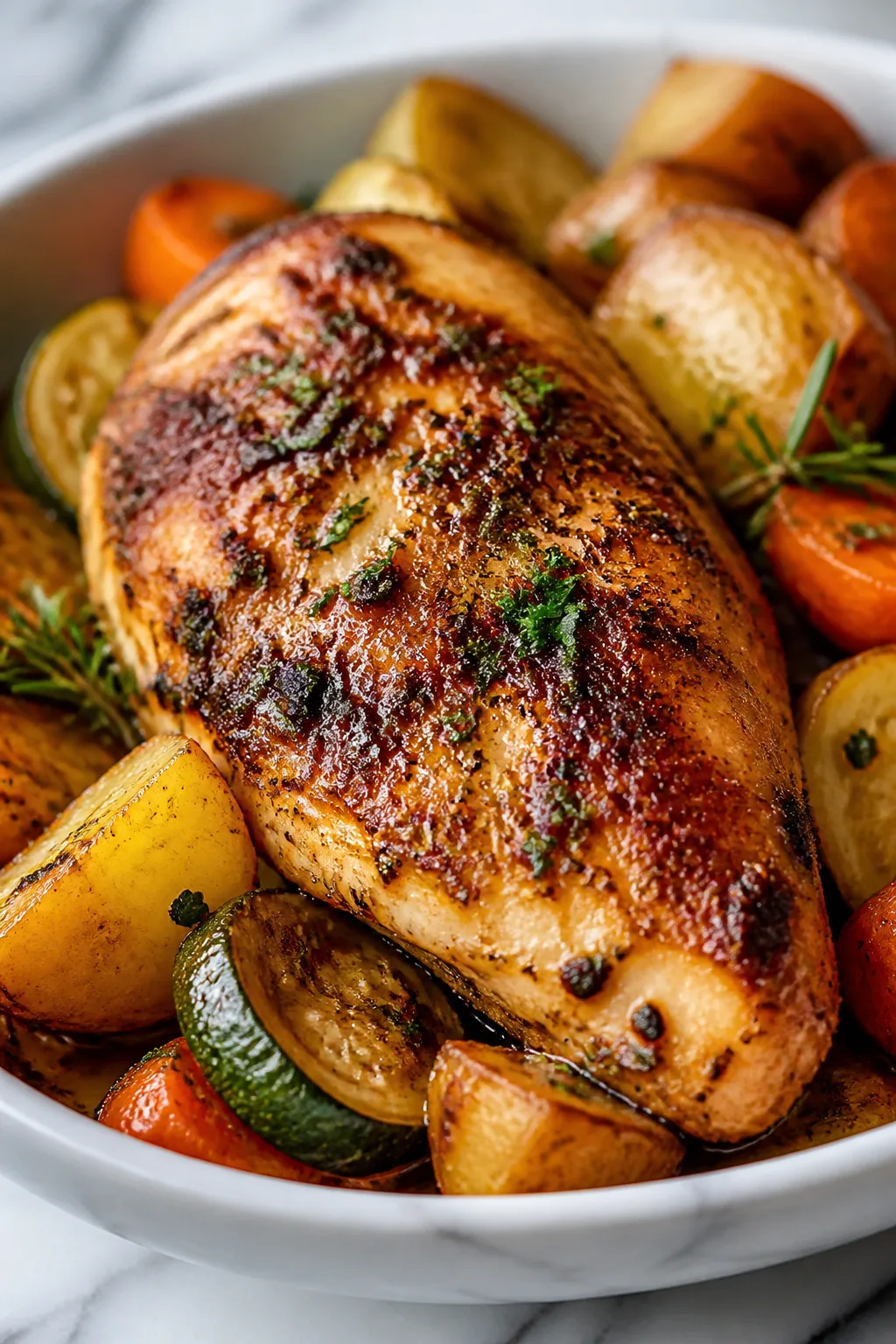
This one-pan chicken dinner is a total lifesaver when you need something comforting but quick. The chicken stays juicy while roasting with baby potatoes and sweet carrots, all kissed by fresh herbs. Perfect for a simple family meal any night of the week!
Introduction
I first discovered this one-pan herb roasted chicken recipe on a hectic weeknight when I needed dinner on the table fast but still comforting. I was tired of juggling pans and dishes, so having everything roast together sounded perfect. What makes this version special is using bone-in, skin-on chicken thighs for juicy meat and crispy skin, plus adding fresh thyme and rosemary to give it that cozy, fragrant touch. The potatoes and carrots roast alongside, soaking up all the chicken juices, which means zero wasted flavor. I also like to add lemon slices on top near the end for a bright pop that cuts through the richness. Honestly, the trick I learned was not to overcrowd the pan—giving everything room means the veggies get crisp edges and the chicken skin gets beautifully golden. The finished dish looks rustic and inviting, with golden chicken, caramelized carrots, and tender potatoes. It’s the kind of meal that feels like a warm hug after a long day and makes me want to cook it again and again.
How To Do It
Step 1
Preheat your oven to 425°F (220°C). Pat the chicken thighs dry with paper towels—this is key for getting that crispy skin everyone loves. If the skin is damp, it will steam instead of roast, so don’t skip this step. Season the chicken generously with salt and pepper on both sides. Dry skin also helps the olive oil and herbs stick better, which boosts flavor during roasting.
⏱ Time: 10 minutes
✓ Doneness: Chicken skin looks dry before roasting, with no visible moisture
Step 2
In a large mixing bowl, toss the halved baby potatoes and carrot chunks with 2 tablespoons of olive oil, minced garlic, dried rosemary, fresh thyme leaves, and a pinch of salt and pepper. The oil evenly coats the veggies, helping them roast to a golden brown while the herbs infuse subtle earthy notes. Toss thoroughly to ensure every piece is coated, which prevents uneven cooking and flavor.
⏱ Time: 5 minutes
✓ Doneness: Veggies are evenly coated and fragrant with herbs and garlic
Step 3
Arrange the seasoned potatoes and carrots in a single layer on a large rimmed baking sheet or roasting pan. Make sure they have enough space; overcrowding will cause steaming instead of roasting, which leads to soggy veggies. Leave some room in the center or to one side for the chicken thighs.
⏱ Time: 5 minutes
✓ Doneness: Veggies spread out in an even layer without overlapping much
Step 4
Nestle the chicken thighs skin-side up among the vegetables, spacing them evenly. Drizzle the remaining 1 tablespoon of olive oil over the chicken skin and sprinkle a little extra salt and pepper on top. This final oil drizzle helps the skin crisp up beautifully and adds a shiny finish once roasted.
⏱ Time: 3 minutes
✓ Doneness: Chicken thighs arranged with skin exposed and lightly oiled
Step 5
Place the roasting pan in the preheated oven and roast for 35-40 minutes. Halfway through cooking, use tongs to gently turn the potatoes and carrots for even browning. The chicken should not be flipped—keeping skin-side up ensures it crisps while the meat stays juicy. Roasting at 425°F develops a lovely golden color thanks to the Maillard reaction, which brings out rich, caramelized flavors.
⏱ Time: 35-40 minutes
✓ Doneness: Chicken skin is deep golden brown and veggies are tender with crisp edges
Step 6
About 5 minutes before the end of roasting, arrange lemon slices on top of the chicken and vegetables. Return to the oven to finish cooking. The lemon slices will soften and release bright citrus oils, balancing the savory richness and adding a fresh aroma that lifts the whole dish.
⏱ Time: 5 minutes
✓ Doneness: Lemon slices look slightly caramelized and fragrant
Step 7
Remove the pan from the oven and let the chicken rest for 5 minutes before serving. Resting allows juices to redistribute inside the meat, making each bite juicy and tender rather than dry. This small wait makes a big difference in texture.
⏱ Time: 5 minutes
✓ Doneness: Chicken juices settle, skin remains crisp, and aroma is inviting
Step 8
Taste the potatoes and carrots and adjust seasoning with salt and pepper if needed. Sometimes roasting mellows flavors slightly, so a quick seasoning boost at the end brings everything into perfect balance. Serve family-style straight from the pan for a rustic feel.
⏱ Time: 2 minutes
✓ Doneness: Flavors well balanced and veggies tender but not mushy
Step 9
Optional: Garnish with freshly chopped parsley or additional fresh thyme for a pop of color and herbaceous freshness. This final touch brightens the dish visually and complements the roasted flavors beautifully.
⏱ Time: 1 minute
✓ Doneness: Fresh herbs sprinkled evenly, adding vibrant green color
Pro Tips
Pat the chicken skin very dry before seasoning.
Moisture on the skin creates steam during roasting, which prevents crisping. By thoroughly drying, you ensure the skin roasts to a golden, crunchy finish that adds texture and locks in juices.
Don’t overcrowd the pan with vegetables or chicken.
Crowding traps steam and causes ingredients to stew rather than roast. Leaving space allows hot air circulation, producing caramelized edges and crisp textures that make the dish more appealing.
Flip the vegetables halfway through roasting but leave chicken skin-side up.
Turning the veggies promotes even browning on all sides, enhancing flavor and texture. The chicken skin must stay facing up to stay crisp and to prevent sticking to the pan.
Use a rimmed baking sheet or roasting pan for easy cleanup.
A rimmed pan keeps juices contained and prevents spills in the oven. It also helps spread heat evenly and allows you to toss veggies without making a mess.
Add lemon slices near the end of roasting.
Lemon oils are volatile and can become bitter if cooked too long. Adding them late preserves their brightness and adds fresh citrus aroma to balance the rich chicken flavors.
Let the chicken rest for 5 minutes before serving.
Resting lets juices redistribute inside the meat, so it remains moist and tender rather than leaking out when cut. This simple step greatly improves texture and mouthfeel.
Use fresh herbs rather than dried when possible.
Fresh herbs release essential oils during roasting that create vibrant aromas and subtle complexity. Dried herbs tend to be more concentrated but less fragrant, which changes the flavor profile.
Common Mistakes to Avoid
Skipping drying the chicken skin before roasting.
Why it happens People often overlook this step thinking it’s unnecessary, or they’re in a hurry.
Fix Take the extra few minutes to pat the chicken thoroughly dry with paper towels. This step is crucial for achieving crispy skin. If you skip it, the skin will stay soggy and less flavorful.
Overcrowding the roasting pan.
Why it happens Trying to fit all ingredients into one pan to save time and dishes.
Fix Arrange chicken and vegetables in a single layer with space between pieces. If needed, roast in two batches or use a larger pan. This prevents steaming and promotes caramelization.
Not flipping the vegetables halfway through cooking.
Why it happens Forgetting or thinking it’s unnecessary.
Fix Use tongs to gently turn potatoes and carrots about halfway through roasting. This ensures even browning and crispy edges, improving flavor and texture.
Adding lemon too early in the roasting process.
Why it happens Assuming lemon should roast the entire time for flavor.
Fix Add lemon slices only in the last 5 minutes of cooking to avoid bitterness and preserve fresh citrus aroma.
Cutting carrots too large or unevenly.
Why it happens Not paying attention to uniformity or rushing prep.
Fix Cut carrots into chunks similar in size to potato halves for even cooking. Uneven pieces lead to some being undercooked or mushy.
Variations
Spicy Herb Roasted Chicken
Add 1 teaspoon smoked paprika and a pinch of cayenne pepper to the seasoning mix for a smoky, spicy twist. This variation adds warmth and depth without overpowering the fresh herbs. It’s great if you like a little heat with your roast chicken.
Note: Adjust spice levels to taste and monitor roasting closely to prevent burning the paprika.
Garlic Butter One-Pan Chicken
After roasting, melt 3 tablespoons of butter with minced garlic and fresh parsley. Drizzle this garlic butter over the chicken and veggies for a rich, indulgent finish that enhances the natural flavors and adds a luscious shine.
Note: Add the garlic butter just before serving to keep the garlic flavor fresh and vibrant.
Mediterranean Style Roasted Chicken
Swap rosemary and thyme for oregano and basil, add halved cherry tomatoes and kalamata olives to the pan. This brings Mediterranean flair with tangy, briny notes that complement the roasted chicken beautifully.
Note: Add tomatoes and olives midway through roasting to prevent overcooking and preserve texture.
Sheet Pan Chicken with Root Vegetables
Use a mix of parsnips, sweet potatoes, and turnips instead of carrots and potatoes for a hearty, earthy flavor profile. This variation adds sweetness and complexity to the dish, perfect for fall and winter meals.
Note: Cut root veggies into uniform pieces to ensure even roasting times.
Lemon-Herb Chicken with Brussels Sprouts
Add halved Brussels sprouts tossed with olive oil and herbs to the pan. The sprouts roast alongside the chicken, developing crispy edges and a slightly nutty flavor that pairs wonderfully with the lemon and thyme.
Note: Place Brussels sprouts cut-side down on the pan for maximum caramelization.
Nutrition
Per Serving:
Nutritional values are estimates and may vary based on specific ingredients used.
Storage & Tips
Room Temperature
This dish can safely sit at room temperature, covered loosely, for up to 2 hours. Beyond that, bacteria growth increases, so refrigerate promptly. Covering prevents drying out and contamination.
Refrigerator
Store leftovers in an airtight container for up to 4 days. Flavors meld nicely after a day, but the chicken skin may lose crispness. Reheat gently to avoid drying out the meat, adding a splash of broth if needed.
Freezer
Freeze cooked chicken and vegetables in a freezer-safe container or heavy-duty zip-top bag for up to 3 months. Wrap tightly to prevent freezer burn. Thaw overnight in the fridge before reheating to preserve texture.
Reheating
Reheat in a 350°F oven for 15-20 minutes until warmed through to help restore some crispness to the skin. Avoid microwaving as it can make the chicken rubbery and the veggies soggy. If needed, add a little olive oil or broth to keep moist.
Make Ahead
You can season and prep the chicken and vegetables 1 day ahead, storing them in the fridge covered separately. Assemble and roast on the day of serving for best texture and flavor.
FAQ
Can I use boneless chicken breasts instead of thighs?
You can substitute boneless chicken breasts, but they cook faster and tend to dry out more easily. Reduce roasting time and watch closely to prevent overcooking. Also, breasts won’t have crispy skin, so consider adding a breadcrumb topping or finishing under the broiler.
What if I don’t have fresh herbs?
Dried herbs can be used in a pinch—use about one-third the amount of fresh herbs called for, as dried herbs are more concentrated. Add them earlier in the roasting process to allow their flavors to develop fully.
How do I know when the chicken is fully cooked?
The safest way is to use a meat thermometer; chicken thighs should reach an internal temperature of 165°F (74°C). The juices should run clear when pierced with a fork, and the skin should be golden and crisp.
Can I add other vegetables?
Absolutely! Root veggies like parsnips, sweet potatoes, or Brussels sprouts work well. Just cut them into similar-sized pieces so everything cooks evenly. Add delicate veggies like tomatoes later in the cooking time to avoid mushiness.
Why is it important to let the chicken rest?
Resting allows the juices to redistribute inside the meat, making it more moist and tender. Cutting immediately after cooking causes juices to leak out, resulting in drier chicken.
Can I prepare this recipe gluten-free?
Yes, this naturally gluten-free recipe doesn’t contain any wheat ingredients. Just double-check any seasoning blends to ensure they don’t have hidden gluten.
How do I prevent the potatoes from being undercooked?
Choose small baby potatoes and cut them evenly to match the carrots. Tossing them in olive oil and roasting at 425°F ensures they cook through with crispy edges. If using larger potatoes, cut them smaller or parboil briefly before roasting.
What’s the best pan to use?
A large rimmed baking sheet or roasting pan with low sides works best to allow air circulation and easy turning of vegetables. Avoid deep pans or casseroles that trap steam and prevent crisping.
Final Thoughts
I hope you enjoy making this cozy one-pan herb roasted chicken as much as I do. It’s a simple, satisfying meal that feels special without the fuss. Let me know how it turns out!