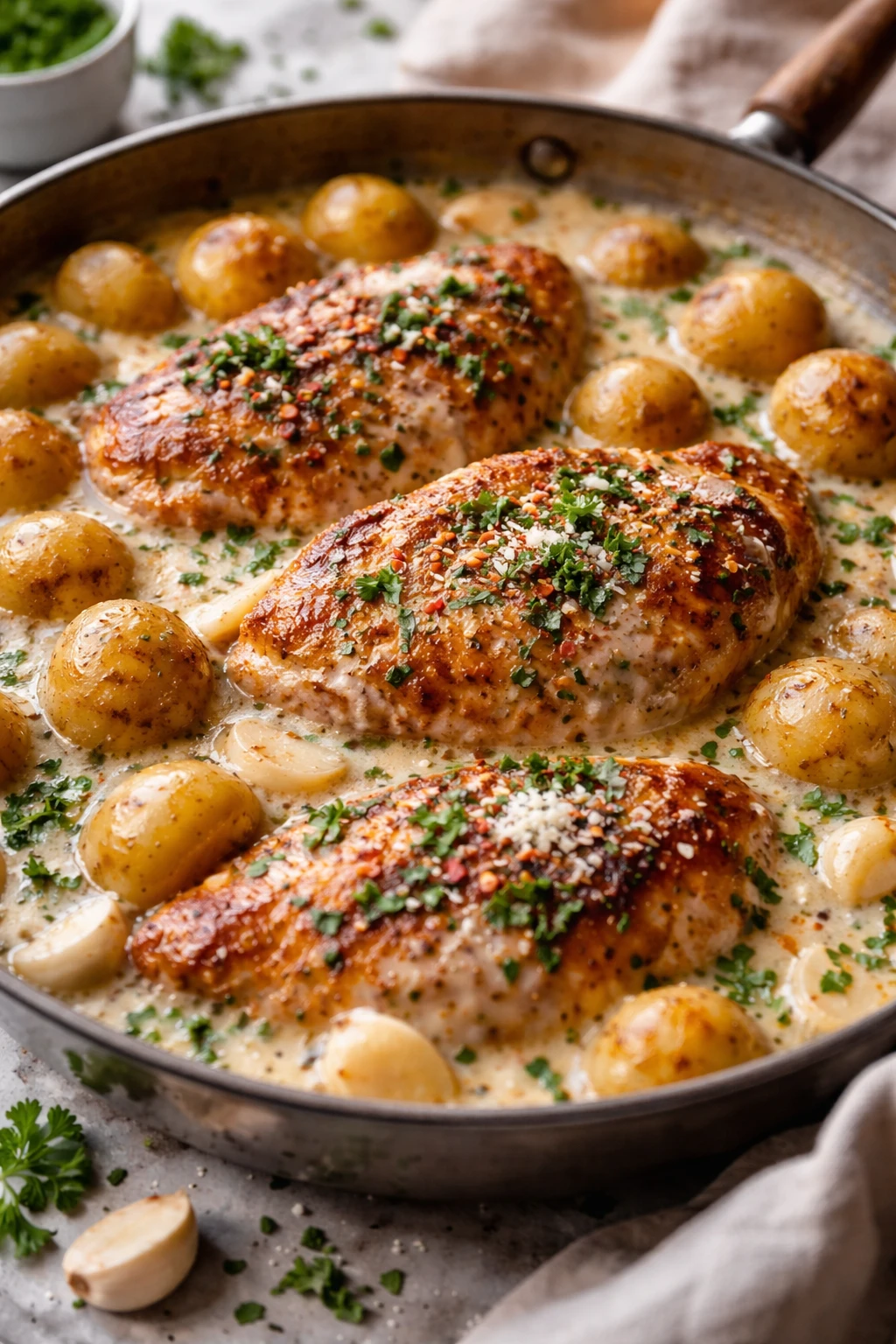
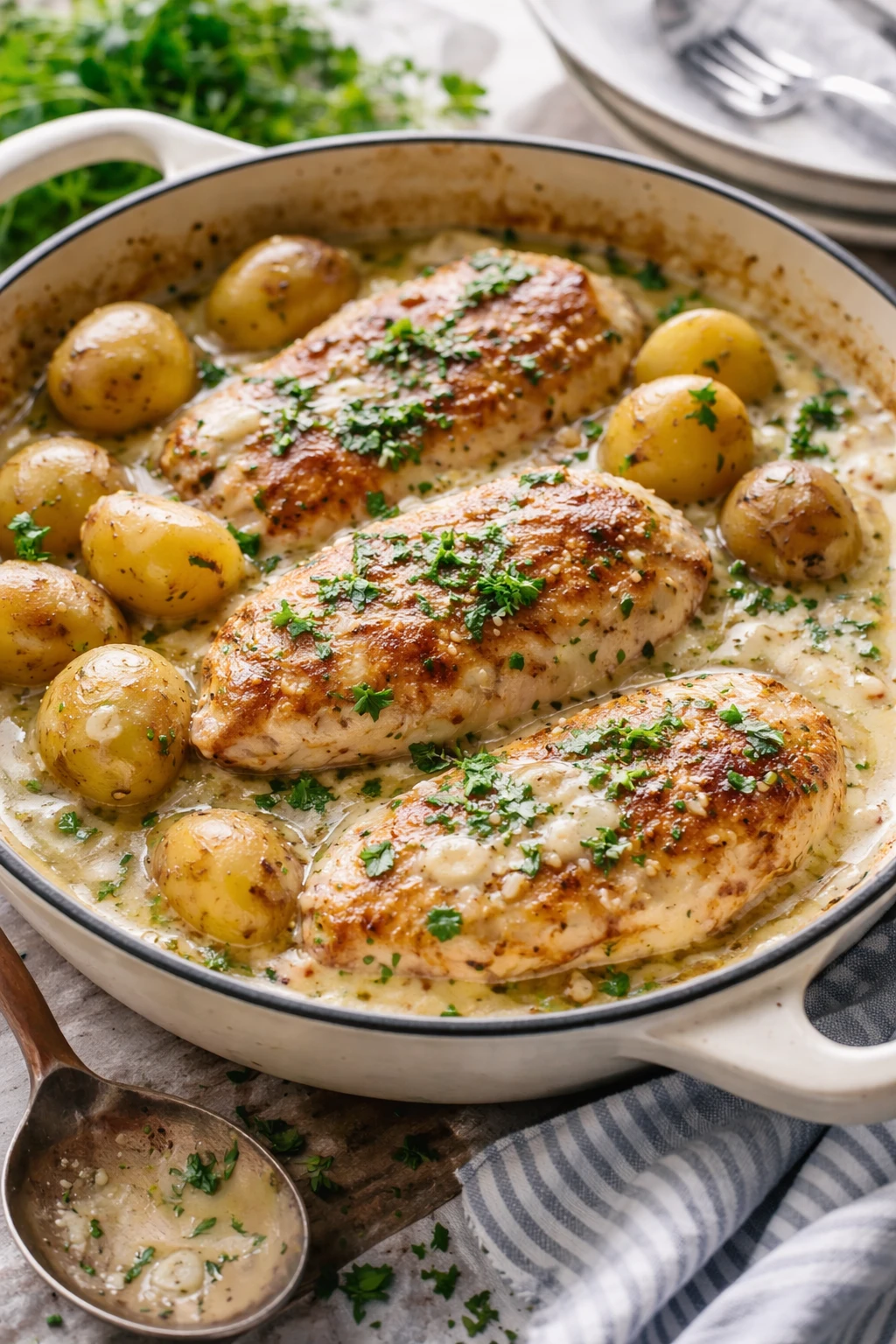
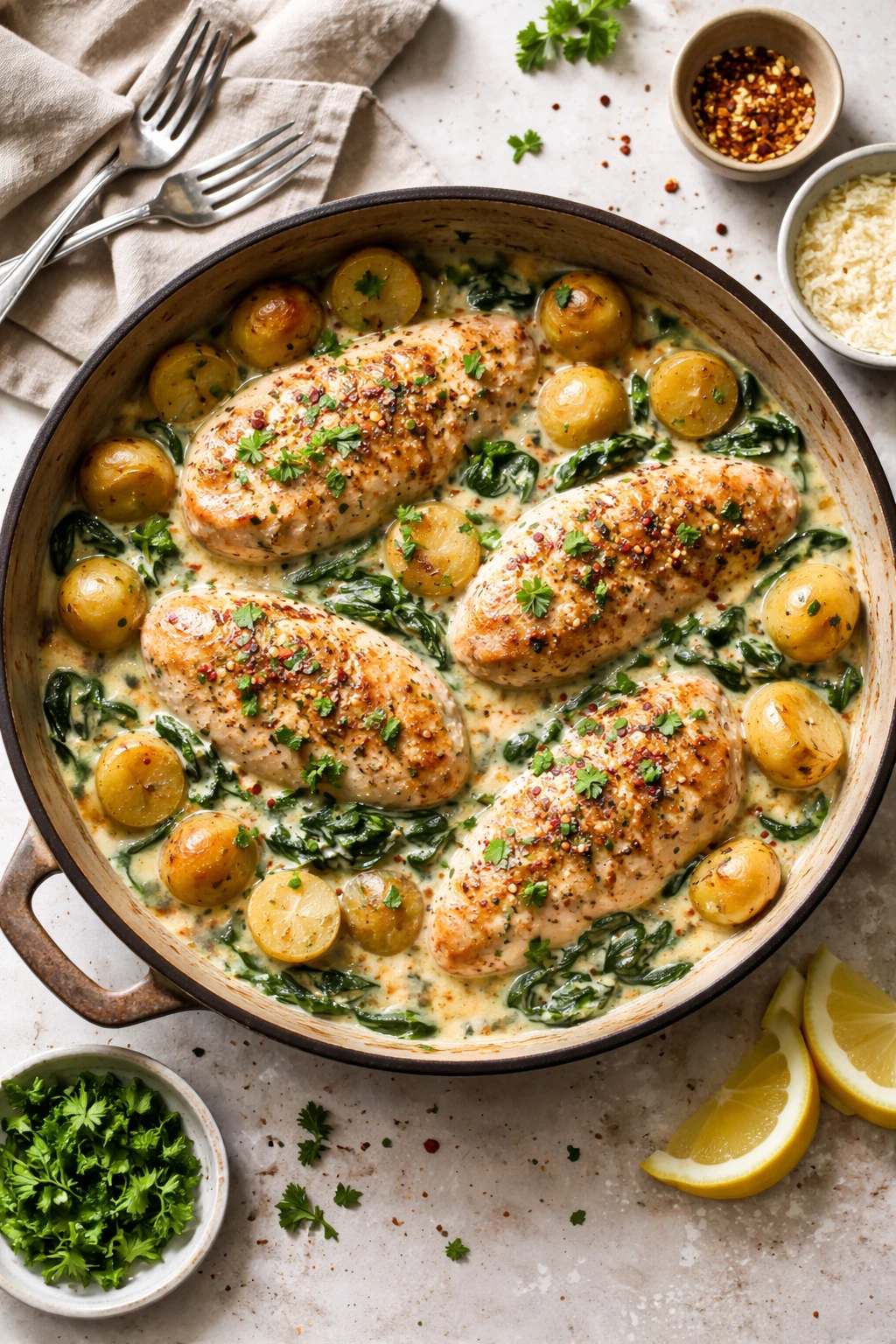
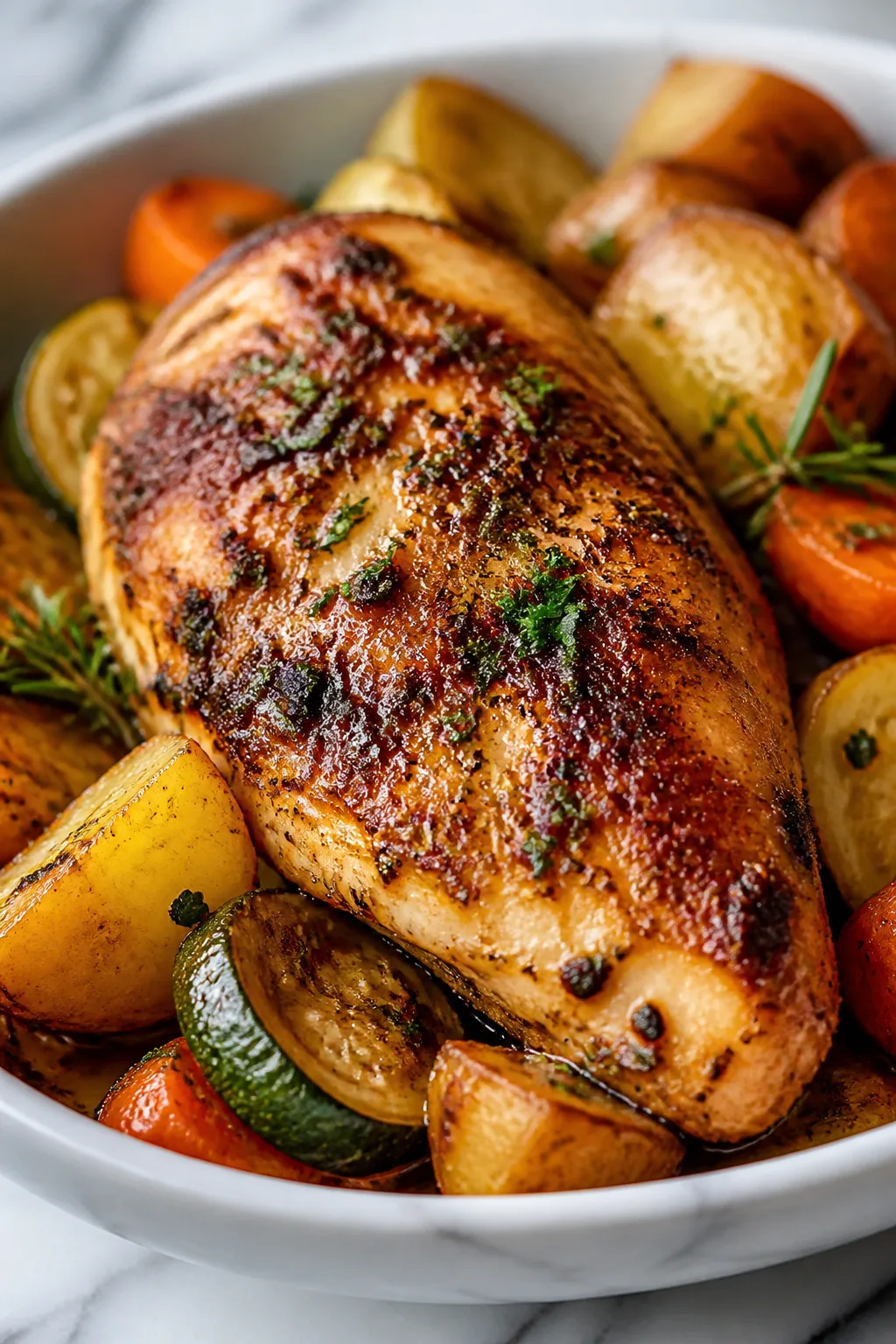
This one-pot creamy garlic chicken dish is pure comfort in a bowl. Tender chicken and baby potatoes simmered in a rich garlic cream sauce make it easy and perfect for busy weeknights or a cozy weekend dinner.
Introduction
I first made this creamy garlic chicken dinner on a chilly weeknight when I wanted something comforting but quick. The idea of cooking everything in one pot was a game changer—less mess, more flavor. What makes this recipe special is how the garlic-infused cream sauce melds with the tender chicken and baby potatoes, creating a rich, satisfying meal. I remember my first attempt was a bit too watery because I didn’t let the sauce reduce properly, but once I learned to simmer it gently until thick and velvety, it completely transformed the dish. The secret is cooking the potatoes with the chicken so they soak up all those garlicky flavors. The finished dish has this golden, creamy sauce that clings to every bite, with juicy chicken and soft potatoes. It’s the kind of dinner that warms you up and feels like a hug on a plate—perfect for busy evenings or when you just want to treat yourself without fuss.
How To Do It
Step 1
Heat the olive oil in a large skillet or deep pan over medium-high heat. Season the chicken thighs with salt, pepper, and dried thyme. Once the oil is shimmering, add the chicken skin-side down if using skin-on, or just side down if skinless. Sear the chicken without moving it for about 5-6 minutes until it develops a golden brown crust. This step locks in juices and adds flavor through the Maillard reaction, which creates those delicious browned bits. Avoid overcrowding the pan to ensure even browning. Once browned, flip and cook the other side for 3 minutes. Remove the chicken and set aside.
⏱ Time: 8
✓ Doneness: Chicken should be golden brown on both sides with a firm texture but not fully cooked through.
Step 2
In the same pan, reduce heat to medium and add the minced garlic. Stir constantly for about 1 minute until fragrant but not browned, which can cause bitterness. Garlic releases its oils and flavor at this stage, which will infuse the sauce. Immediately add the halved baby potatoes and toss to coat in the garlicky oil. This step ensures the potatoes start absorbing the flavor early and begin to soften as the sauce cooks.
⏱ Time: 3
✓ Doneness: Garlic should be fragrant and slightly softened, potatoes lightly coated and starting to sizzle.
Step 3
Pour in the chicken broth, scraping the bottom of the pan with a wooden spoon to loosen any browned bits (fond). These bits add depth and richness to the sauce. Bring the broth and potatoes to a boil, then reduce to a gentle simmer. Cover the pan and cook for about 15 minutes, or until the potatoes are tender when pierced with a fork. This slow simmer lets the potatoes cook through evenly and lets the flavors meld.
⏱ Time: 15
✓ Doneness: Potatoes should be fork-tender but not falling apart, broth slightly reduced.
Step 4
Return the seared chicken thighs to the pan, nestling them among the potatoes. Pour the heavy cream over everything, then sprinkle the grated Parmesan cheese evenly. Stir gently to combine the cream and cheese with the broth, creating a thick, luscious sauce. The cream adds richness, while the Parmesan contributes umami and helps thicken the sauce through its proteins and fats.
⏱ Time: 2
✓ Doneness: Sauce should look creamy and slightly thickened as the cheese melts.
Step 5
Simmer uncovered over low heat for another 10 minutes. Stir occasionally to prevent sticking but be gentle to keep the chicken intact. This final simmer thickens the sauce further and finishes cooking the chicken through. If the sauce gets too thick, add a splash of broth or cream to loosen it. Watch for a velvety texture that coats the back of a spoon.
⏱ Time: 10
✓ Doneness: Chicken is cooked through (internal temp 165°F), sauce coats ingredients smoothly.
Step 6
Taste and adjust seasoning with salt and pepper as needed. The Parmesan and broth provide saltiness, but a little extra may be necessary to balance flavors. Fresh herbs like chopped parsley add brightness, so sprinkle generously on top just before serving.
⏱ Time: 2
✓ Doneness: Balanced flavor with no overpowering saltiness or blandness.
Step 7
Serve the creamy garlic chicken and potatoes straight from the pan, spooning the sauce over each plate. This dish pairs beautifully with a simple green salad or steamed vegetables to cut through the richness. The key here is enjoying the velvety sauce and tender chicken in each bite.
⏱ Time: 1
✓ Doneness: Dish is hot, sauce glossy, and chicken tender.
Step 8
For a little extra texture, you can finish the dish under the broiler for 2-3 minutes to brown the top slightly. Watch closely to avoid burning. This step adds a lovely golden crust on the chicken and a subtle caramelized note to the sauce.
⏱ Time: 3
✓ Doneness: Light golden crust forms on chicken and sauce bubbles gently.
Step 9
Let the dish rest for about 5 minutes before serving. This brief rest allows the sauce to thicken a bit more and the flavors to meld fully. It also makes the chicken juicier as the juices redistribute. Serve warm and enjoy the comforting creamy garlic goodness!
⏱ Time: 5
✓ Doneness: Sauce slightly thickened, chicken juicy, and flavors well combined.
Pro Tips
Pat chicken dry before seasoning and searing.
Removing surface moisture allows the chicken to brown properly instead of steaming. This creates a flavorful crust and prevents sogginess. If the chicken is wet, it will release water into the pan, making it harder to achieve that golden color.
Don’t rush simmering potatoes; low and slow is key.
Simmering gently ensures potatoes cook evenly without breaking apart. High heat can cause the starches to release too quickly, leading to a cloudy sauce and mushy potatoes. Patience here makes a big difference in texture and clarity.
Use a wooden spoon to scrape up browned bits after searing.
Those browned bits, or fond, are packed with flavor. Scraping them into the broth enriches the sauce and adds complexity. Ignoring this step means missing out on the depth that makes the dish special.
Add Parmesan cheese gradually and stir constantly.
Slowly incorporating cheese helps it melt evenly and prevents clumping. Cheese that’s added all at once can form lumps or separate, affecting the sauce’s creamy texture.
Let the dish rest before serving.
Resting allows the sauce to thicken slightly and the flavors to meld. It also redistributes the juices in the chicken, making it juicier and more flavorful. Serving immediately can result in a thinner sauce and less tender meat.
Use fresh herbs as a finishing touch.
Adding parsley or thyme at the end brightens the dish and balances the richness. Cooking herbs too long can dull their flavor and aroma, so sprinkle them just before serving for freshness.
Don’t cover the pan during the final simmer.
Leaving the pan uncovered lets moisture evaporate, concentrating the sauce and thickening it naturally. Covering traps steam and can dilute the flavors, resulting in a watery sauce.
Common Mistakes to Avoid
Skipping the sear on the chicken.
Why it happens Many cooks want to save time and skip searing, thinking it’s unnecessary since the chicken will cook later in the sauce.
Fix Always sear the chicken first to develop flavor and texture. It creates a caramelized crust that adds depth and helps keep the meat juicy. Take your time to get a golden brown color before moving on.
Adding cream too early or boiling it.
Why it happens Some add cream too soon or cook it at too high heat, causing it to split or curdle.
Fix Add cream after the broth has reduced and the potatoes are tender, then simmer gently over low heat. Avoid boiling the cream to keep the sauce smooth and silky.
Overcooking potatoes until mushy.
Why it happens Rushing the cooking or using high heat causes potatoes to break down and lose shape.
Fix Simmer potatoes gently until just tender. Use baby potatoes or evenly sized pieces to ensure consistent cooking. Test with a fork frequently to avoid overcooking.
Using pre-grated Parmesan cheese.
Why it happens Pre-grated cheese often contains additives that prevent smooth melting.
Fix Grate fresh Parmesan yourself for better flavor and a creamier sauce texture. It melts more evenly and adds authentic taste.
Not seasoning the sauce properly.
Why it happens Some rely on broth and cheese saltiness alone, resulting in bland dishes.
Fix Taste and adjust salt and pepper at the end. Proper seasoning is crucial to balance richness and highlight flavors.
Variations
Add Mushrooms and Spinach
For an earthy twist, add sliced mushrooms and fresh spinach during the last 5 minutes of simmering. Mushrooms add umami depth while spinach brings color and a mild bite. This variation makes the dish more vegetable-forward and nutritious.
Note: Add mushrooms early enough to soften but add spinach near the end to avoid overcooking and preserve its vibrant green color.
Swap Chicken Thighs for Breasts
Use boneless skinless chicken breasts for a leaner option. Since breasts cook faster and can dry out, slice them into thicker pieces and reduce simmer time to avoid toughness. The sauce remains creamy and delicious.
Note: Watch internal temperature carefully; breasts should reach 165°F but not overcook. Reduce simmering after adding cream.
Make It Spicy with Red Pepper Flakes
Add a pinch or two of red pepper flakes when cooking the garlic to inject a subtle heat. This variation adds warmth and complexity without overpowering the creamy sauce. Great if you like a little kick.
Note: Be cautious with quantity; start small and adjust to taste to keep balance with creamy elements.
Use Greek Yogurt Instead of Cream
For a lighter, tangier sauce, substitute half the heavy cream with Greek yogurt. Stir in yogurt off heat to prevent curdling. This gives a fresh flavor while keeping the sauce creamy.
Note: Add yogurt at the end and avoid boiling to maintain smooth texture.
Add Fresh Lemon Zest and Juice
Brighten the dish by adding lemon zest and a squeeze of fresh lemon juice just before serving. The citrus cuts through the richness and adds a refreshing note that complements garlic beautifully.
Note: Add lemon at the end to preserve its bright, fresh flavor without cooking it away.
Nutrition
Per Serving:
Nutritional values are estimates and may vary based on specific ingredients used.
Storage & Tips
Room Temperature
This dish can safely sit at room temperature for up to 2 hours if covered loosely. To keep the sauce creamy and the chicken moist, cover with foil or plastic wrap during this time to prevent drying.
Refrigerator
Store leftovers in an airtight container for up to 3 days. The sauce may thicken when cold; gently reheat on the stovetop with a splash of broth or cream to loosen it. Avoid microwaving without stirring as it can cause uneven heating.
Freezer
Freeze in a sealed container for up to 2 months. Wrap tightly to prevent freezer burn. Thaw overnight in the fridge before reheating. Reheat gently to preserve sauce texture and avoid drying out the chicken.
Reheating
Reheat on the stovetop over low heat, stirring occasionally. Add a splash of chicken broth or cream if the sauce is too thick. Avoid high heat or microwave reheating without stirring to prevent curdling or drying out.
Make Ahead
You can prep and sear the chicken and par-cook the potatoes a day ahead. Store separately in the fridge and combine with cream and broth on the day of serving. This cuts down active cooking time and keeps textures fresh.
FAQ
Can I use chicken breasts instead of thighs?
Yes, you can swap thighs for boneless skinless breasts for a leaner dish. Just be careful not to overcook the breasts as they dry out faster. Slice into thicker pieces and reduce simmering time once you add the cream to keep them juicy.
What can I substitute for heavy cream?
You can use half-and-half or a mix of milk and cream cheese for a lighter sauce, but it won’t be as rich or thick. Greek yogurt is another option, added off heat at the end to avoid curdling. Coconut milk works for dairy-free versions but changes the flavor profile.
How do I prevent the sauce from breaking?
Avoid boiling after adding cream and cheese. Keep the heat low and stir gently. Adding cheese slowly and stirring helps it melt evenly. If the sauce looks oily or curdled, it was overheated or the cheese was added too quickly.
Can I make this dish gluten-free?
Absolutely! This recipe is naturally gluten-free as it doesn’t use any flour or gluten-containing ingredients. Just double-check your broth and Parmesan cheese labels to ensure they don’t contain hidden gluten additives.
What’s the best way to reheat leftovers?
Stovetop reheating over low heat is best for maintaining sauce texture and chicken juiciness. Add a splash of broth or cream to loosen the sauce as it warms. Avoid microwaving without stirring to prevent uneven heating and curdling.
Can I add vegetables to this dish?
Yes! Mushrooms, spinach, or green beans work well. Add mushrooms early to soften and spinach near the end to keep it fresh. Adjust cooking times slightly to accommodate added vegetables' textures.
How do I know when the potatoes are done?
Pierce a potato with a fork; it should slide in easily but the potato shouldn’t be falling apart. Even cooking ensures they absorb flavor and maintain texture without turning mushy.
What if I don’t have Parmesan cheese?
You can substitute Pecorino Romano or Asiago cheese for a similar salty, nutty flavor. Avoid pre-shredded cheeses with anti-caking agents to ensure smooth melting. If no hard cheese is available, omit it but expect a less thick sauce.
Final Thoughts
I hope you love this creamy garlic chicken as much as I do—give it a try and let me know how it turns out! It’s a cozy crowd-pleaser that’s simple and satisfying every time.