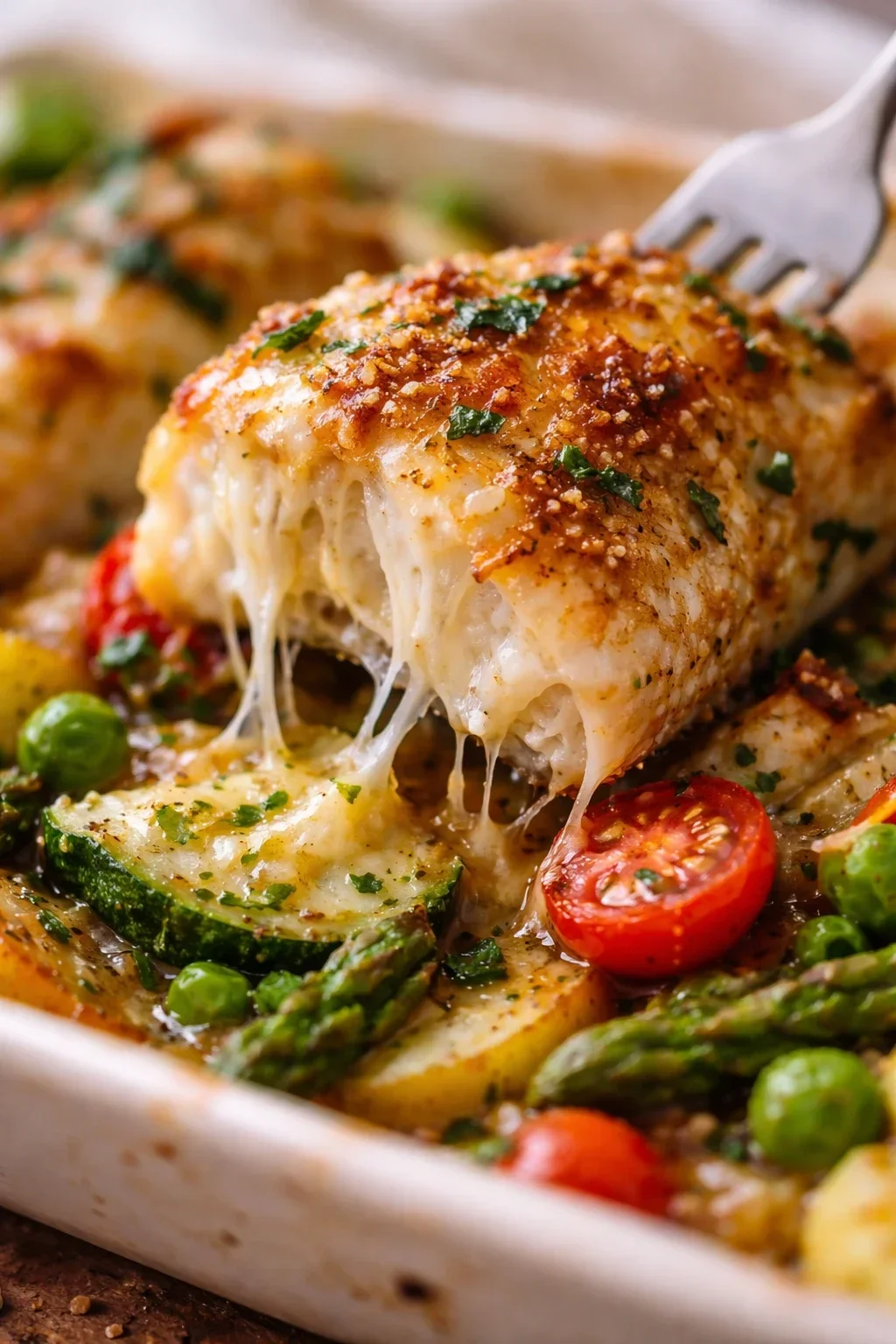
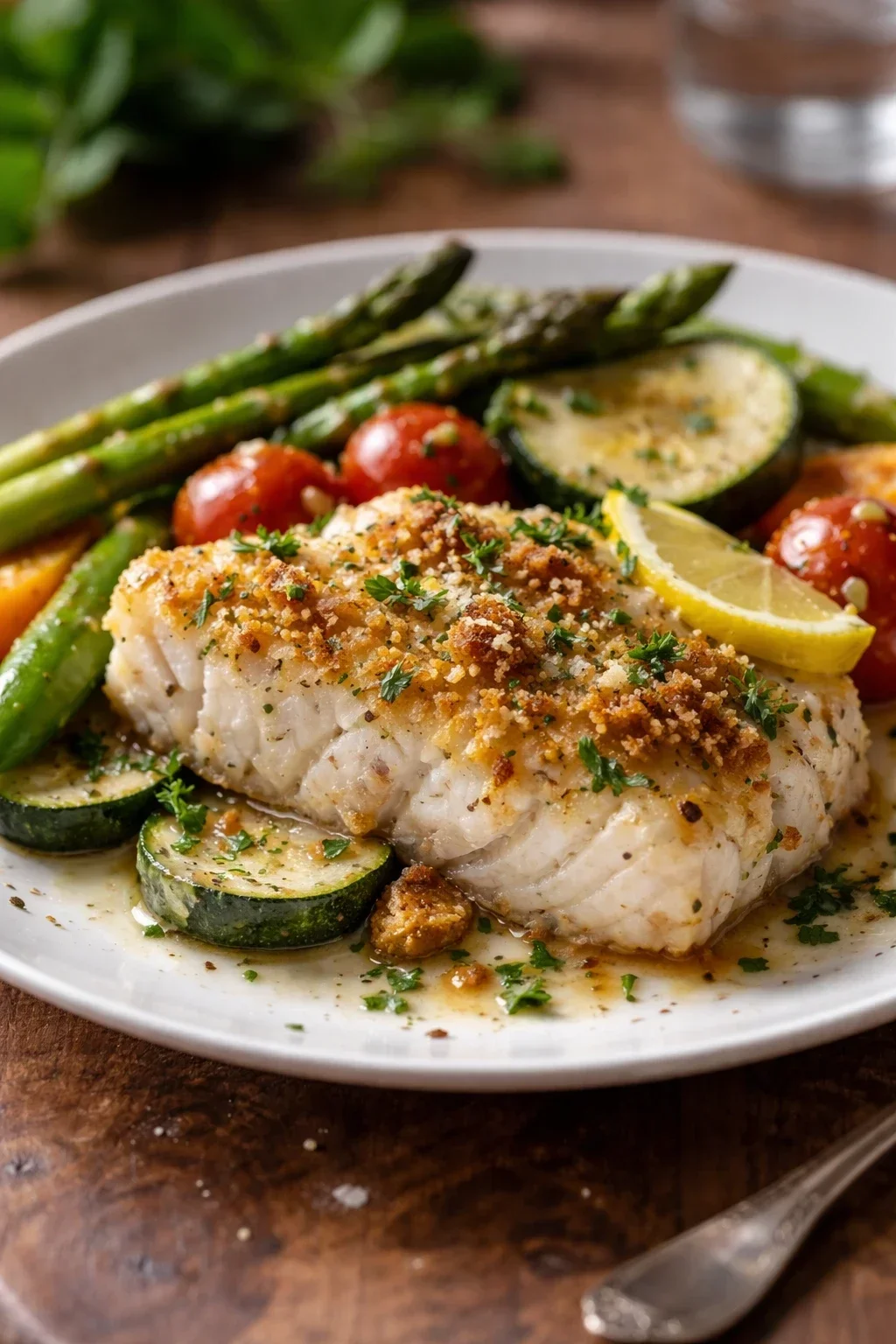
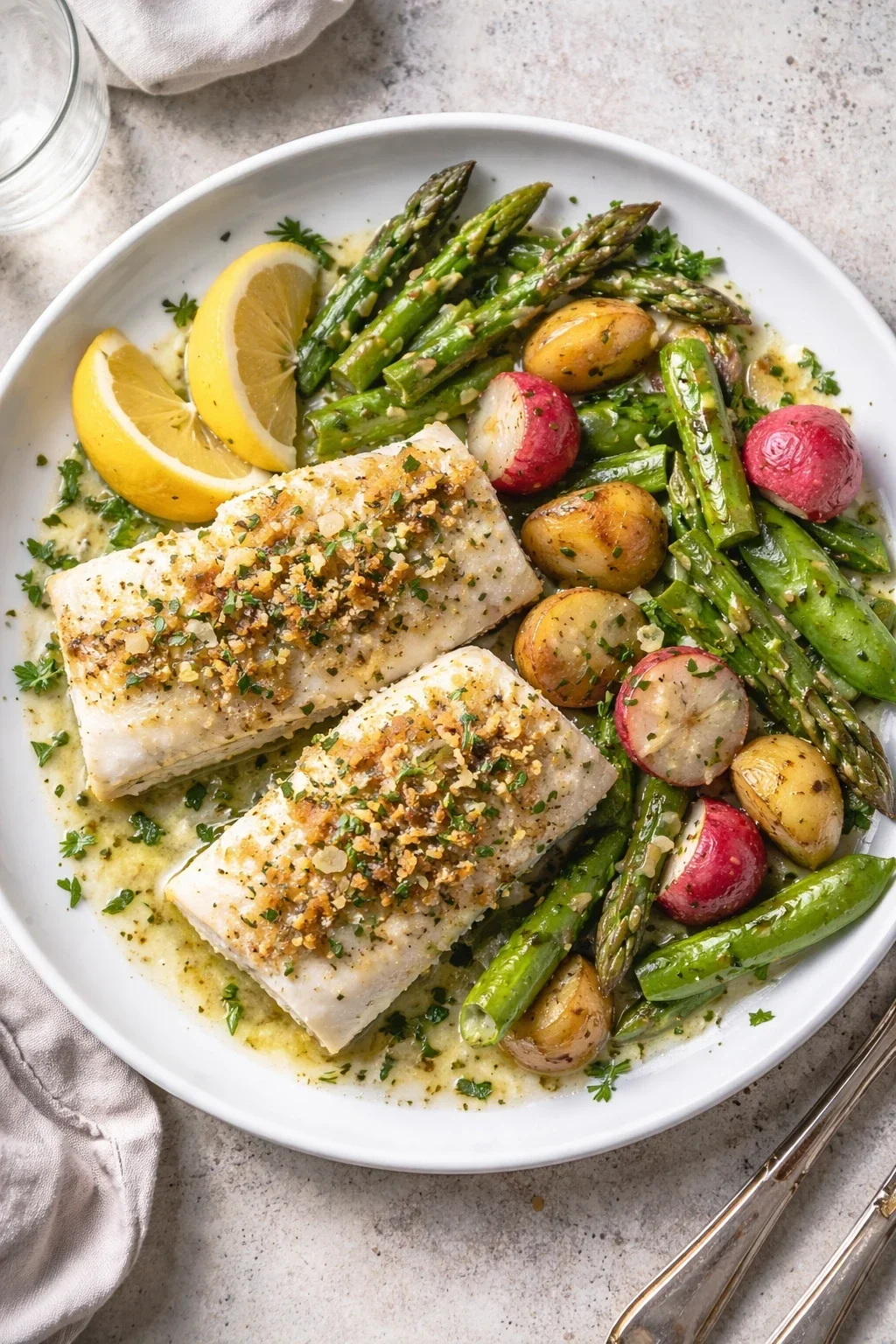
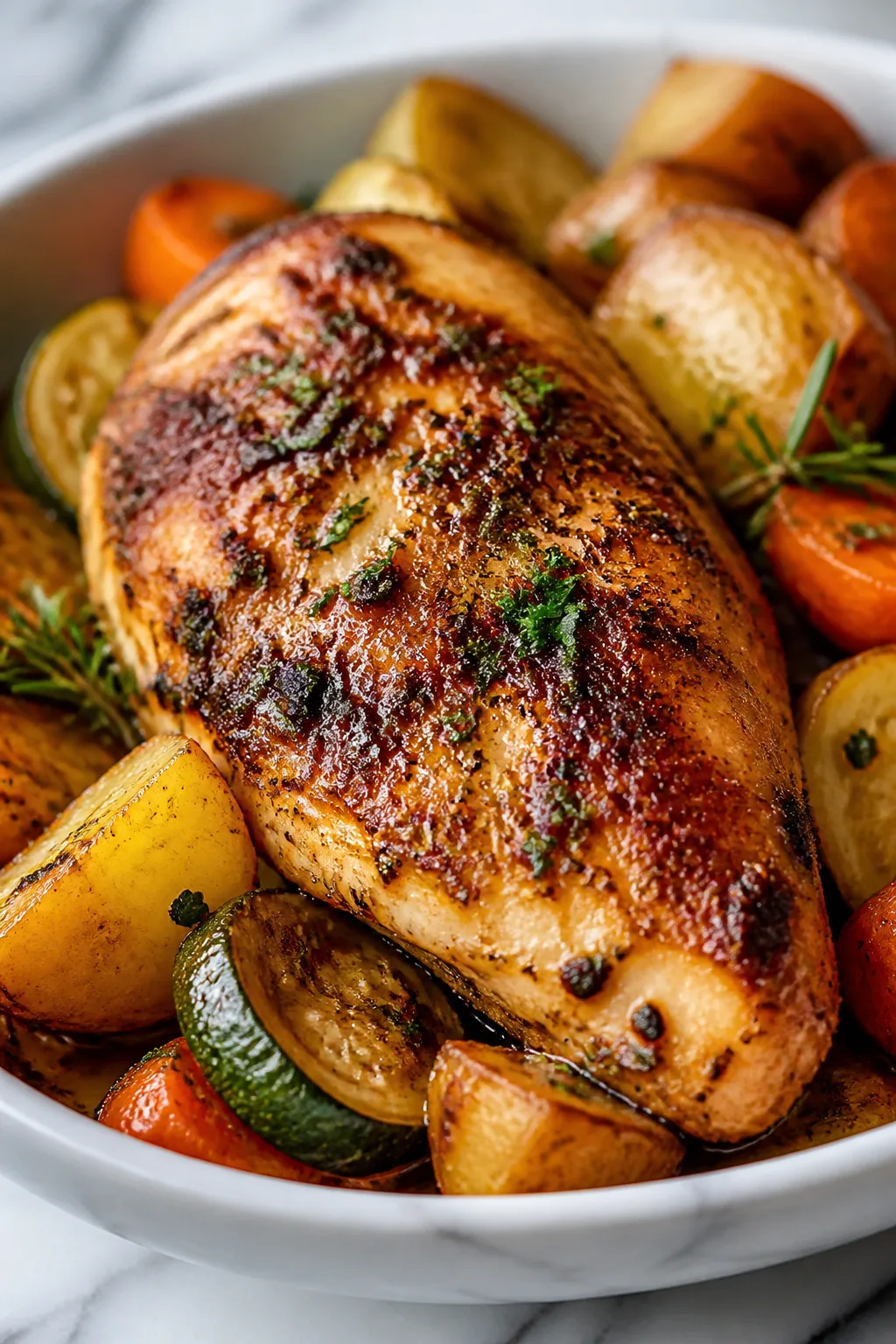
This baked cod recipe emphasizes gentle cooking techniques that protect the fish's delicate texture while highlighting fresh spring vegetables. It balances moisture retention and natural flavors, resulting in a light yet satisfying dish that's well-suited for seasonal meals or simple weeknight dinners.
Introduction
I often turn to this baked cod recipe during early spring when fresh vegetables start to appear at the market. The method focuses on a gentle baking process that keeps the cod moist and flaky, avoiding the dryness that can come from overcooking. What sets this version apart is the combination of tender, subtly anise-flavored fennel with crisp asparagus and sweet sugar snap peas, which together brighten the plate with fresh green colors and varied textures. This dish works well for family dinners or light weekend meals when you want something nourishing but uncomplicated. The aroma of lemon and garlic roasting alongside the fish fills the kitchen with a fresh, inviting scent that signals a simple yet thoughtful dish is near. Below, I’ll walk through the steps that ensure the cod comes out tender and the vegetables retain their snap.
How To Do It
Step 1
Preheat your oven to 180°C (350°F). Line a baking tray with parchment paper or lightly grease it with 1 tablespoon (15ml) of olive oil to prevent sticking.
⏱ Time: 5 minutes
✓ Doneness: Oven reaches steady 180°C (350°F) temperature; baking tray prepared with thin oil coating
Step 2
Arrange the cod fillets on the prepared tray, spacing them evenly. Drizzle each fillet with a small amount of olive oil (about 1/2 tablespoon or 7ml each), then season lightly with salt and freshly ground black pepper.
⏱ Time: 3 minutes
✓ Doneness: Fillets look lightly glossy from oil, evenly coated with visible but moderate seasoning
Step 3
Place thin lemon slices over each fillet, covering the surface moderately but not overlapping excessively. The lemon will slowly release moisture and flavor during baking.
⏱ Time: 2 minutes
✓ Doneness: Fillets topped with evenly distributed lemon slices, edges slightly curling but intact
Step 4
In a mixing bowl, toss asparagus pieces, sugar snap peas, and sliced fennel with the remaining 1 tablespoon (15ml) olive oil, minced garlic, and a pinch of salt and pepper. Spread the vegetables around the cod on the baking tray in a single layer for even roasting.
⏱ Time: 5 minutes
✓ Doneness: Vegetables look coated with oil and seasoning, spread evenly without crowding
Step 5
Place the tray in the preheated oven and bake for 18-20 minutes. Around the 10-minute mark, check for doneness by observing the cod’s edges starting to turn opaque and the flesh flaking gently when pressed with a fork. The vegetables should be tender but still crisp and vibrant in color.
⏱ Time: 18-20 minutes
✓ Doneness: Cod appears opaque and flakes easily with gentle pressure; vegetables slightly softened but retain bright colors and slight firmness
Step 6
Remove from the oven and let rest for 2-3 minutes before serving. This resting period allows residual heat to finish cooking the fish gently and helps the juices redistribute.
⏱ Time: 2-3 minutes
✓ Doneness: Fish remains moist and tender, lemon slices slightly softened and aromatic; vegetables maintain texture
Pro Tips
Pat the cod fillets dry before seasoning and oiling.
Removing surface moisture helps the olive oil adhere better and promotes even cooking, preventing steaming that can cause a mushy texture.
Avoid overcrowding the baking tray.
Leaving space between fillets and vegetables allows hot air to circulate, ensuring even roasting and preventing soggy spots.
Use thin lemon slices rather than zest or juice alone.
Slices slowly release oils and moisture during baking, providing a gentle citrus flavor that infuses the fish without overpowering it.
Check the fish at the 10-minute mark to avoid overbaking.
Cod cooks quickly, and overcooking causes it to dry out and become tough. Early checking helps catch the ideal flaky doneness.
Choose vegetables with similar roasting times.
Asparagus, sugar snap peas, and fennel all roast well within the 18-20 minute baking window, ensuring balanced textures without some elements over- or undercooked.
Common Mistakes to Avoid
Baking cod at too high a temperature.
Why it happens High heat may seem faster but causes the fish to dry out and become stringy.
Fix Bake at a moderate 180°C (350°F) to gently cook the fish through while preserving moisture.
Not drying the fish before seasoning.
Why it happens Wet surfaces prevent proper oil adhesion and cause uneven cooking or steaming.
Fix Pat the fillets dry thoroughly with paper towels before adding oil and seasoning.
Crowding the pan with fillets and vegetables.
Why it happens Overcrowding traps moisture and blocks hot air circulation, leading to soggy vegetables and uneven fish cooking.
Fix Use a large baking tray with space between items or roast in batches if necessary.
Skipping the resting period after baking.
Why it happens Serving immediately can cause juices to spill out, making the fish seem dry.
Fix Let the fish rest for a few minutes to allow juices to redistribute for a tender result.
Variations
Dairy-Free Creamy Sauce
Serve the baked cod with a simple sauce made by blending soaked cashews with lemon juice, garlic, and herbs for creaminess without dairy.
Note: Soaking cashews softens them for blending and creates a smooth texture that complements the mild fish without overpowering delicate flavors.
Mediterranean Herb Mix
Add fresh oregano, thyme, and rosemary to the vegetable mix along with a few kalamata olives for a Mediterranean twist.
Note: Herbs add aromatic complexity while olives contribute subtle saltiness and texture variety, enhancing the overall flavor profile.
Spicy Citrus Glaze
Brush cod fillets with a mixture of olive oil, lemon zest, smoked paprika, and a pinch of cayenne before baking to introduce mild heat and smoky notes.
Note: The glaze caramelizes gently in the oven, creating a slightly textured, flavorful crust that contrasts with the soft interior.
Steamed Instead of Baked
Steam the cod fillets with lemon slices and serve alongside lightly steamed spring vegetables for a very gentle, moist cooking method.
Note: Steaming preserves maximum moisture and nutrient content but omits the light roasting flavors developed by baking.
Gluten-Free Breadcrumb Topping
Sprinkle gluten-free breadcrumbs mixed with herbs and a little olive oil over the cod before baking for a light, crunchy topping.
Note: The topping adds texture contrast while keeping the dish gluten-free; ensure breadcrumbs are finely ground to avoid heaviness.
Nutrition
Per Serving:
approximately 280
Calories
Values are estimates and may vary depending on exact portion sizes and ingredient brands. Nutritional content assumes skinless cod and standard olive oil.
Storage & Tips
Room Temperature
Do not leave cooked cod and vegetables at room temperature for more than 2 hours to prevent spoilage.
Refrigerator
Store leftovers in airtight containers and consume within 2 days for best texture and safety. The fish may become firmer and vegetables soften over time.
Freezer
Freezing is not recommended for baked cod with vegetables as the texture of fish and fresh vegetables degrades significantly after thawing.
Reheating
Reheat gently in a low oven (around 150°C / 300°F) for 10-12 minutes or in a microwave at medium power, covered, to avoid drying out. Avoid overcooking during reheating.
Make Ahead
Prepare and season cod and vegetables ahead of time, store covered in the refrigerator, then bake fresh when ready to serve to maintain optimal texture and flavor.
FAQ
Can I make baked cod with spring vegetables ahead of time?
You can prepare and season the ingredients ahead, but it's best to bake just before serving to keep the fish tender and vegetables crisp.
Why is my baked cod dry after cooking?
This usually happens if the fish is overcooked or baked at too high a temperature. Baking gently at 180°C (350°F) and checking early helps prevent dryness.
Can I substitute cod with other fish?
Yes, similar white fish like haddock, pollock, or halibut work well; adjust cooking time slightly depending on thickness and firmness.
How long does baked cod last in the fridge?
Store cooked cod and vegetables in airtight containers and consume within 2 days for best quality and safety.
Can I use frozen vegetables instead of fresh spring vegetables?
Fresh vegetables are preferable for texture and flavor, but frozen can be used if thawed and patted dry. Adjust cooking time as frozen veggies release more moisture.
How do I know when the cod is fully cooked?
The cod should appear opaque and flake easily when gently pressed with a fork. The flesh should still look moist and tender, not rubbery.
Final Thoughts
Baking cod with fresh spring vegetables is a simple way to enjoy a light, flavorful meal that highlights seasonal produce and delicate fish. I encourage you to try this approach and share your experience or any questions you have in the comments. Cooking thoughtfully with attention to texture and timing makes all the difference.