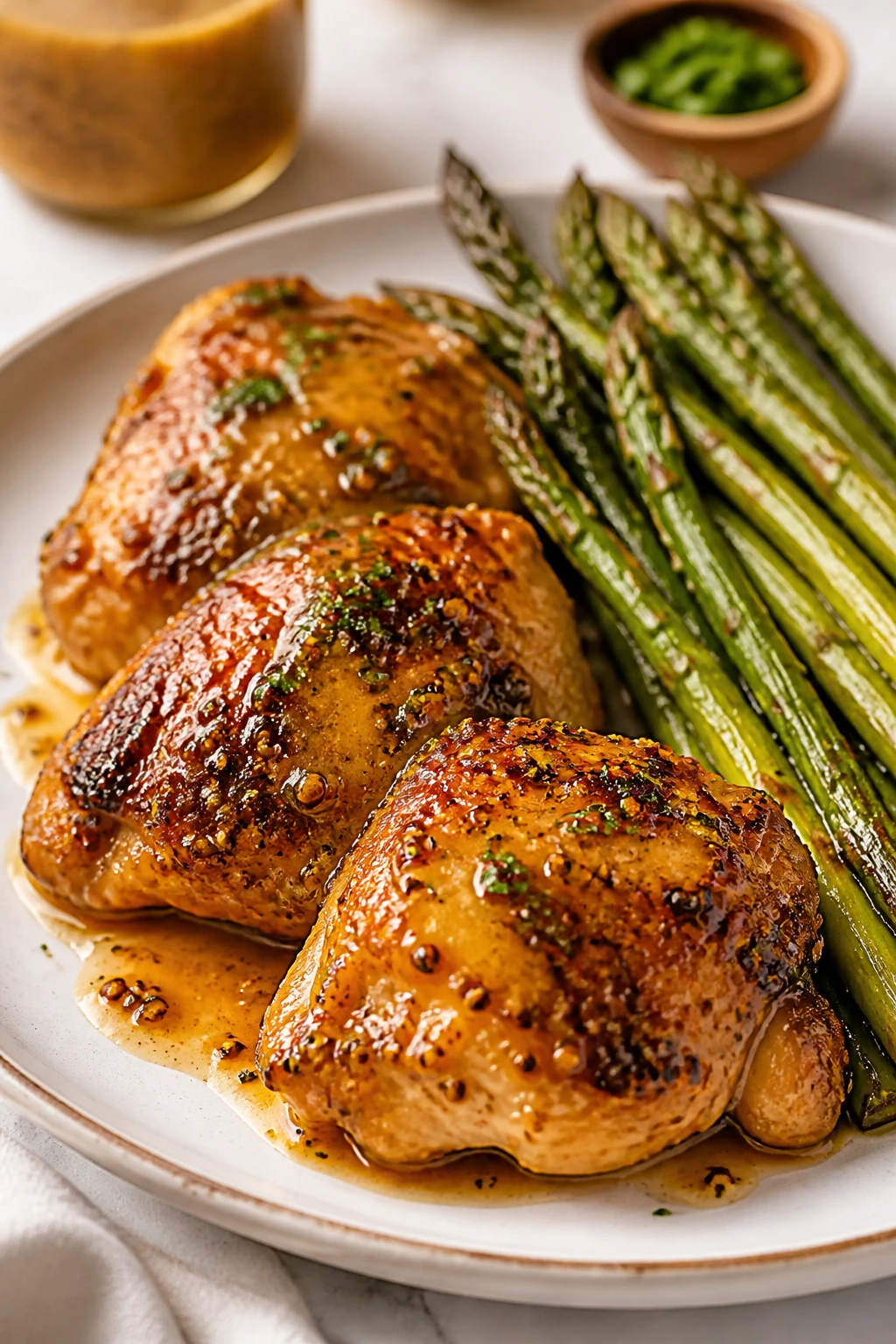
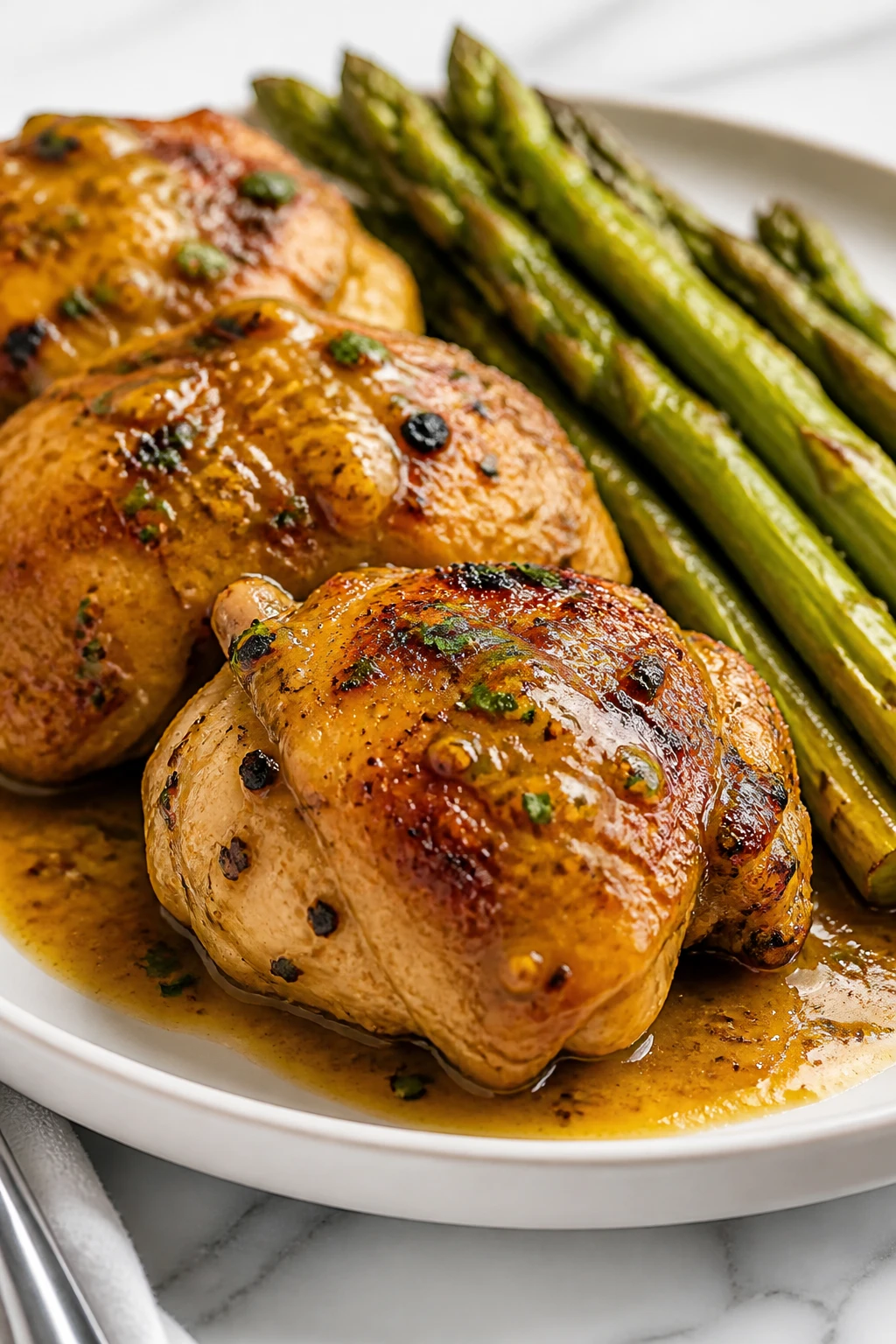
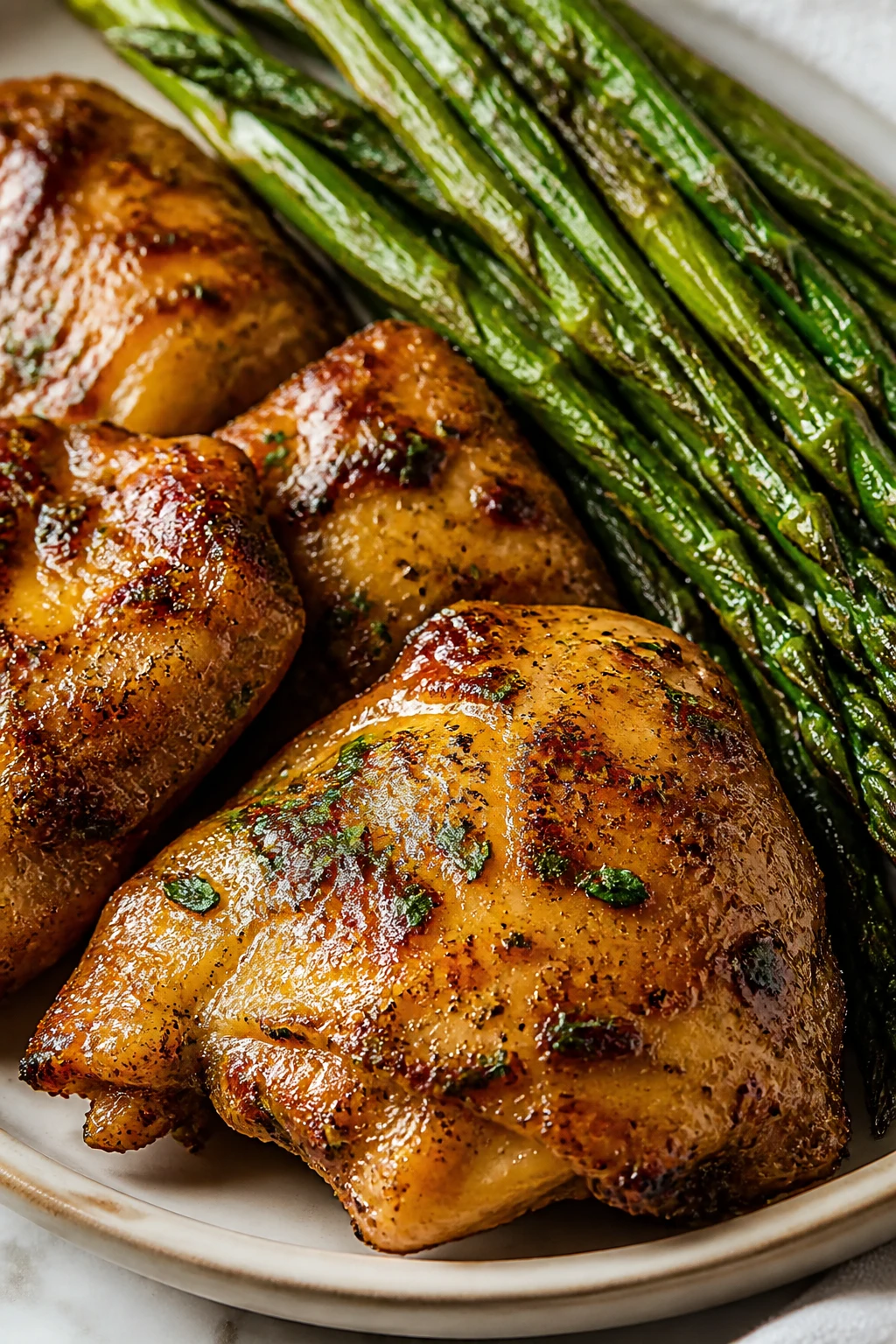
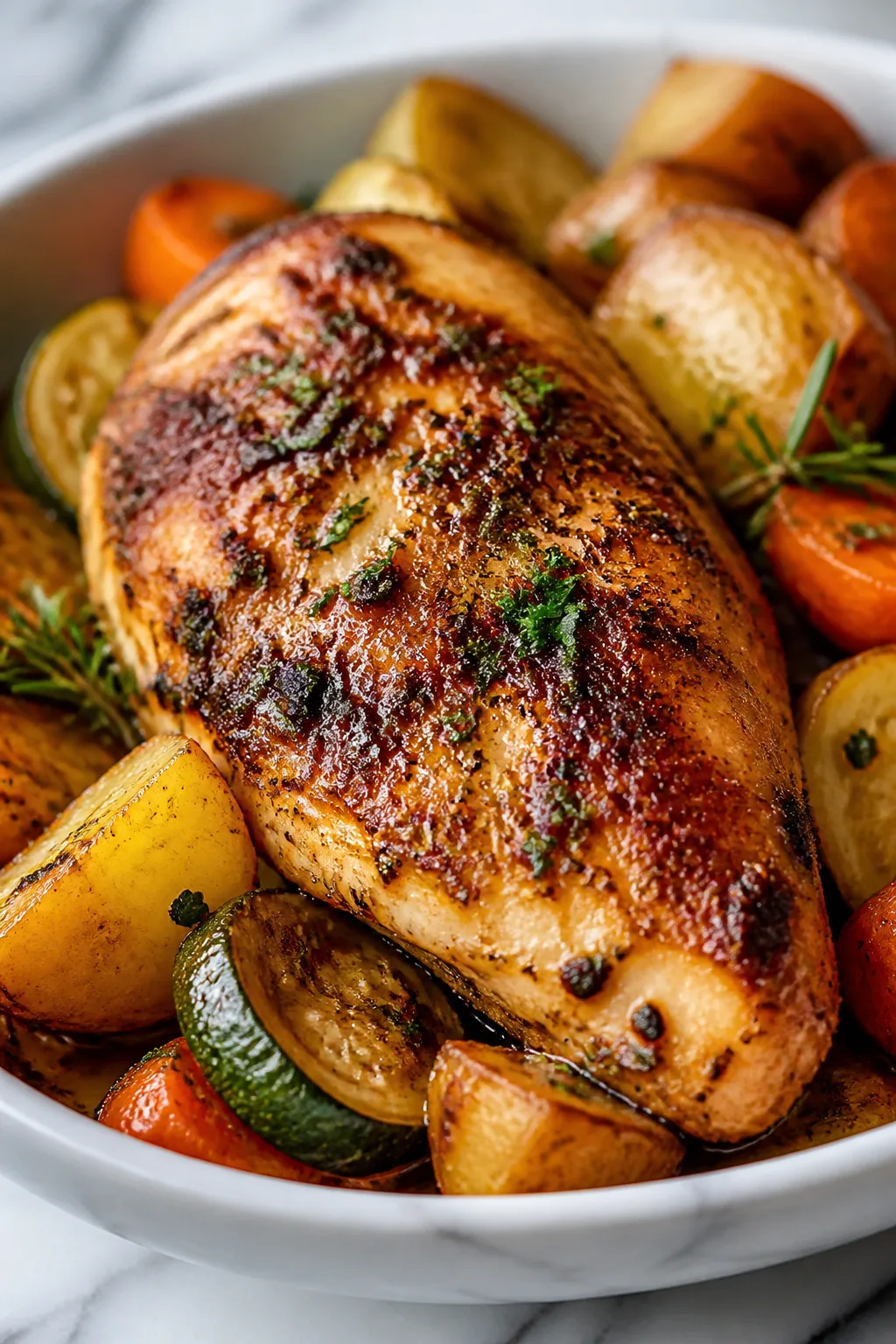
This honey mustard chicken thigh recipe is my go-to for busy nights. The sweet and tangy glaze makes the chicken juicy and flavorful, while the roasted asparagus adds a fresh, crisp side. Ready in under 45 minutes!
Introduction
I first stumbled upon this honey mustard chicken thigh recipe during a hectic week when I needed a dinner that was both quick and satisfying. What I love about this dish is how the honey and mustard blend creates a tangy-sweet glaze that keeps the chicken incredibly juicy. Unlike some recipes that dry out the thighs, this one uses skin-on chicken and a light oil sear to lock in moisture. Roasting the asparagus alongside the chicken is a game changer — it picks up the chicken’s delicious drippings and crisps up perfectly. I remember the first time I tried it, I rushed the glaze step and ended up with a bland sauce, so now I make sure to mix the honey and mustard well before coating the chicken. The end result is a beautiful golden crust with a sticky, flavorful finish. This recipe feels fancy but is totally doable any weeknight. It’s the kind of meal that makes you want to linger at the table and savor every bite. I hope you enjoy making it as much as my family and I do!
How To Do It
Step 1
Preheat your oven to 425°F (220°C). While it heats, pat the chicken thighs dry with paper towels — this step is crucial for getting that crispy skin. Moisture on the skin prevents browning and can make the chicken soggy, so don’t skip it. Season both sides generously with salt and pepper. Set aside while you prepare the honey mustard glaze.
⏱ Time: 10 minutes
✓ Doneness: Dry, well-seasoned chicken skin ready for searing
Step 2
In a small bowl, whisk together Dijon mustard, honey, olive oil (use half here), apple cider vinegar, and minced garlic until smooth and well combined. This mixture balances sweetness and acidity, which helps tenderize the chicken and adds depth to the glaze. It’s important to mix these thoroughly so the flavors meld properly.
⏱ Time: 5 minutes
✓ Doneness: Smooth, glossy glaze with no separation
Step 3
Heat a large oven-safe skillet over medium-high heat and add the remaining olive oil. Once hot, place the chicken thighs skin-side down in the pan. Sear without moving them for about 6-7 minutes until the skin is golden brown and crisp. This initial sear locks in the juices and creates that irresistible crispy texture. Avoid flipping too soon or the skin might stick and tear.
⏱ Time: 7 minutes
✓ Doneness: Deep golden-brown, crispy chicken skin
Step 4
Flip the chicken thighs over and brush the honey mustard glaze generously on the skin side and the cooked side. This step ensures the glaze caramelizes under the oven heat, giving you that sticky, flavorful finish. Don’t skimp on the glaze — it’s the star of the show here!
⏱ Time: 5 minutes
✓ Doneness: Chicken coated evenly with thick, shiny glaze
Step 5
Add the trimmed asparagus to the skillet, arranging them around the chicken. Toss the asparagus lightly with a bit of olive oil, salt, and pepper. Roasting them in the same pan lets the asparagus soak up the chicken’s flavorful juices, which makes for a delicious side. Spread them out evenly so they roast rather than steam.
⏱ Time: 3 minutes
✓ Doneness: Asparagus evenly coated and arranged in a single layer
Step 6
Transfer the skillet to the preheated oven and roast for about 20 minutes, or until the chicken reaches an internal temperature of 165°F (74°C) and the asparagus is tender but still crisp. Roasting at high heat caramelizes the glaze and crisps the asparagus tips. Use a meat thermometer to avoid overcooking the chicken, which can dry it out.
⏱ Time: 20 minutes
✓ Doneness: Chicken juices run clear and asparagus is bright green and tender
Step 7
Remove the skillet from the oven and let the chicken rest for 5 minutes. Resting allows the juices to redistribute throughout the meat, ensuring every bite is juicy and flavorful. If you cut into it immediately, the juices will run out and leave the chicken dry.
⏱ Time: 5 minutes
✓ Doneness: Chicken juices settle, meat feels firm but tender
Step 8
Serve the chicken thighs with the roasted asparagus immediately. Spoon any extra pan glaze over the top for added flavor. This simple plating makes a beautiful, homey presentation that’s perfect for casual dinners or even a small gathering.
⏱ Time: 2 minutes
✓ Doneness: Dish plated attractively, sauce glistening over chicken
Step 9
Optional: Garnish with freshly chopped parsley or a squeeze of lemon juice to brighten the flavors before serving. This little touch adds freshness and a pop of color that makes the dish feel special without extra effort.
⏱ Time: 1 minute
✓ Doneness: Fresh herbs or lemon zest visibly enhance the dish
Pro Tips
Pat the chicken dry thoroughly before seasoning and searing.
Moisture on the skin prevents proper browning and crisping. By drying the skin, you encourage the Maillard reaction, which creates that beautiful golden crust and rich flavor.
Use a meat thermometer to check doneness.
Chicken thighs can look cooked but still be underdone inside. A thermometer ensures the internal temperature reaches 165°F, guaranteeing safety without overcooking and drying out the meat.
Don’t overcrowd the pan with asparagus.
Crowding traps steam and prevents roasting, leading to soggy asparagus. Spread them out in a single layer for caramelization and crisp edges.
Rest the chicken after roasting.
Resting lets the juices redistribute inside the meat. Cutting into the chicken immediately after cooking causes juices to spill out, resulting in drier meat.
Brush the glaze on after searing, before roasting.
Applying glaze before roasting allows the sugars in honey to caramelize under oven heat, creating that sticky, flavorful coating without burning.
Trim woody ends off asparagus before cooking.
Woody ends don’t soften well and can taste bitter. Trimming ensures tender stalks and a pleasant texture.
Use an oven-safe skillet for seamless transfer from stovetop to oven.
This saves time and prevents losing heat or flavor by transferring chicken to another dish. It also helps the chicken cook evenly.
Common Mistakes to Avoid
Skipping the drying step before searing
Why it happens Many cooks rush to season and cook the chicken without drying, assuming it’s unnecessary.
Fix Always pat chicken thighs dry with paper towels before seasoning. This helps the skin crisp properly and prevents steaming instead of searing.
Overcrowding the pan with asparagus
Why it happens Trying to cook everything at once to save time leads to crowded pans.
Fix Arrange asparagus in a single layer with space between stalks to roast properly. If needed, cook in batches or use a larger pan.
Not resting the chicken after cooking
Why it happens Eagerness to serve can cause skipping resting.
Fix Let the chicken rest for 5 minutes after roasting so juices redistribute, keeping meat moist and tender.
Applying glaze before searing
Why it happens Some think glazing first saves a step.
Fix Sear chicken skin first to get crisp, then brush glaze before roasting. Glazing too early can cause burning during searing.
Using thin or woody asparagus
Why it happens Using whatever asparagus is on hand without checking quality.
Fix Choose firm, thick asparagus with tight tips and trim woody ends for best texture and taste.
Variations
Spicy Honey Mustard Chicken
Add 1 teaspoon of cayenne pepper or a dash of hot sauce to the honey mustard glaze for a spicy kick. This variation brings warmth and depth, perfect if you like a little heat with your sweet and tangy flavors.
Note: Adjust the amount of spice to taste; be careful not to overpower the honey’s sweetness. The cooking method remains the same.
Lemon Herb Honey Mustard Chicken
Mix in the zest and juice of one lemon and a tablespoon of chopped fresh thyme or rosemary into the glaze. This adds a fresh, herbal brightness that complements the richness of the chicken and asparagus.
Note: Adding lemon juice increases acidity, so balance it with a bit more honey if needed to maintain sweetness.
Gluten-Free Honey Mustard Chicken
Use gluten-free Dijon mustard and verify that all ingredients are gluten-free. This simple swap keeps the recipe safe for gluten-sensitive eaters without changing flavor or technique.
Note: No changes to cooking times or methods are necessary.
Honey Mustard Chicken with Roasted Potatoes
Swap asparagus for baby potatoes tossed in olive oil, salt, and pepper. Roast alongside chicken for a heartier, carb-filled meal that’s just as simple and delicious.
Note: Potatoes may require slightly longer roasting time; parboil to speed cooking if needed.
Honey Mustard Chicken Salad
Slice the cooked chicken and serve over mixed greens with roasted asparagus, cherry tomatoes, and a drizzle of extra honey mustard glaze for a light, fresh meal option.
Note: Cool the chicken before slicing to keep it firm and neat for plating.
Nutrition
Per Serving:
Nutritional values are estimates and may vary based on specific ingredients used.
Storage & Tips
Room Temperature
This dish can safely sit at room temperature for up to 2 hours if covered loosely with foil or a clean kitchen towel. Avoid leaving it out longer to prevent bacterial growth.
Refrigerator
Store leftovers in an airtight container for up to 3 days. The chicken may firm up and the asparagus soften when cold. Reheat gently to avoid drying out the meat.
Freezer
Freeze cooked chicken thighs and asparagus separately in airtight containers or freezer bags for up to 2 months. Wrap tightly to prevent freezer burn. Thaw overnight in the fridge before reheating.
Reheating
Reheat on the stovetop over low heat or in a 350°F oven until warmed through, about 10-15 minutes. Add a splash of water or broth to keep meat moist. Avoid microwaving on high to prevent rubbery texture.
Make Ahead
Prepare the honey mustard glaze and trim asparagus 1 day ahead. You can also season the chicken and keep it refrigerated, then sear and roast everything the day you plan to serve for maximum freshness.
FAQ
Can I use boneless chicken thighs instead of bone-in?
Yes, boneless thighs work but cook faster and can dry out more easily. Reduce roasting time by about 5-7 minutes and watch closely. The bone adds flavor and moisture, so the texture will be slightly different.
What if I don’t have an oven-safe skillet?
You can sear the chicken in a regular pan, then transfer it to a baking dish for roasting. Just be careful with hot pans and use oven mitts. The flavor will be similar, but you’ll lose some of the pan drippings that enhance the asparagus.
How do I prevent the honey mustard glaze from burning?
Brush the glaze on after searing and roast at a high temperature for a relatively short time (20 minutes). Honey sugars can burn if exposed to direct high heat too long, so avoid applying glaze before searing or cooking at too high temperature.
Can I use frozen asparagus?
I don’t recommend frozen asparagus for roasting because it tends to become mushy. If you must, thaw and pat dry thoroughly, then roast at a lower temperature and monitor carefully to avoid sogginess.
Is there a substitute for Dijon mustard?
You can use yellow mustard in a pinch, but the flavor is milder and less tangy. For best results, try to use Dijon or a similar sharp mustard to maintain the recipe’s balance of flavors.
Can I make this recipe vegan?
To make a vegan version, swap chicken thighs for firm tofu or cauliflower steaks and use maple syrup instead of honey. Adjust cooking times accordingly and roast vegetables separately to avoid cross-contamination.
How do I know when the chicken is done without a thermometer?
Look for clear juices when you pierce the thickest part of the thigh. The meat should no longer be pink near the bone and the skin should be crispy and golden. However, a thermometer is the safest way to ensure doneness.
Can I double this recipe for a larger crowd?
Absolutely! Just use a larger pan or roast the chicken in batches to avoid overcrowding. Overcrowding reduces heat circulation and prevents proper browning and roasting.
Final Thoughts
Give this honey mustard chicken with roasted asparagus a try—you'll love how easy and flavorful it is! Don’t forget to share how it turns out; I can’t wait to hear what you think.