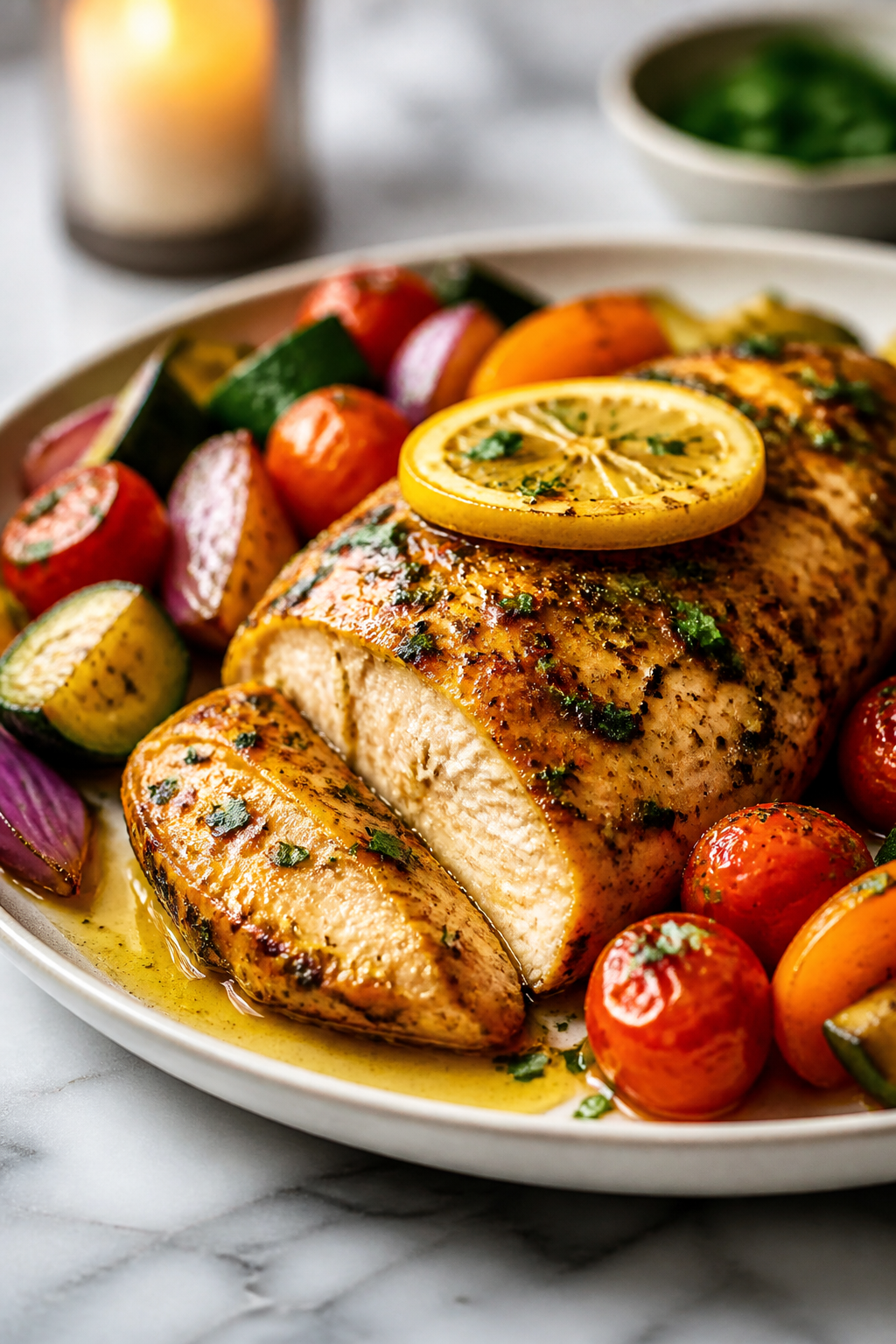
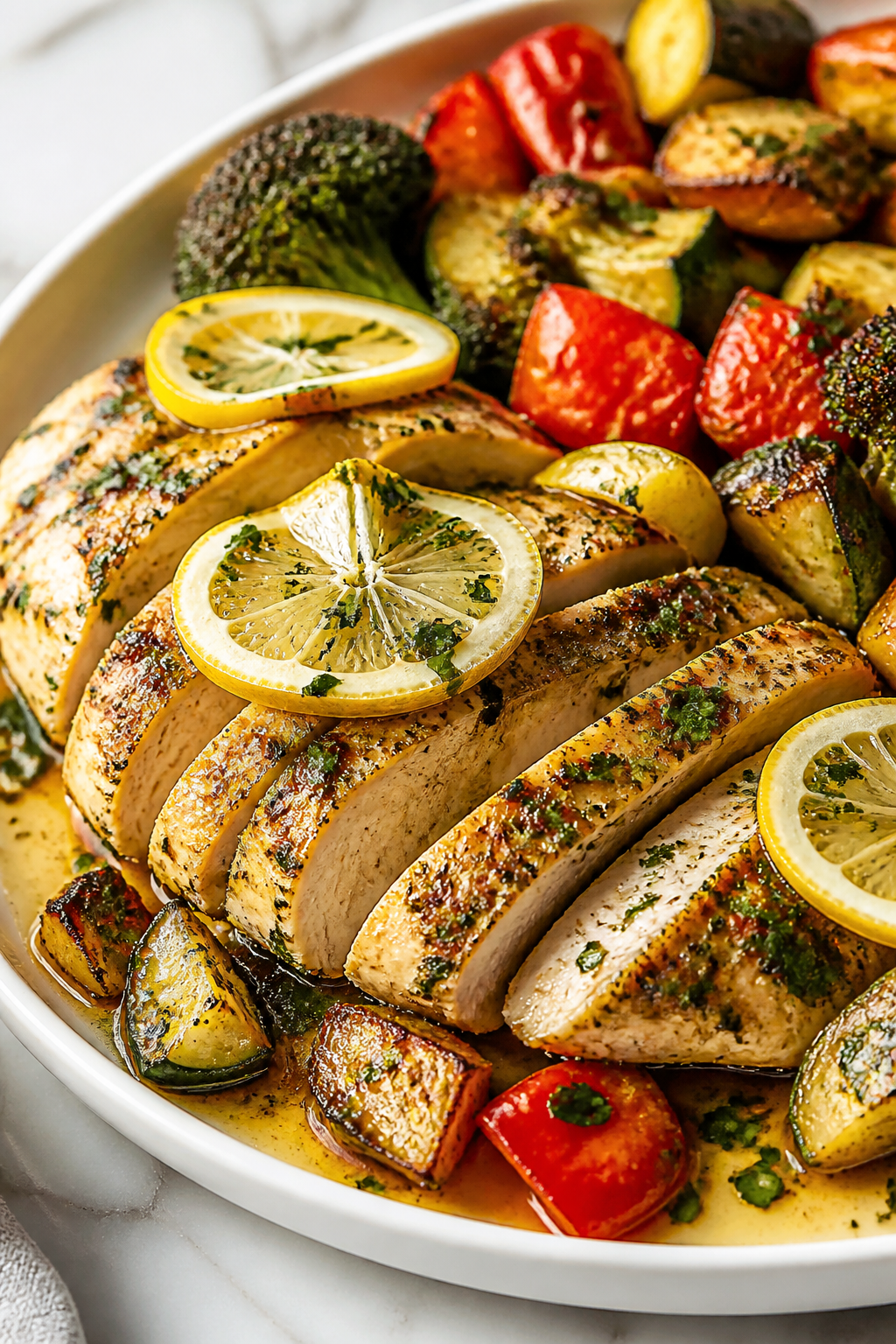
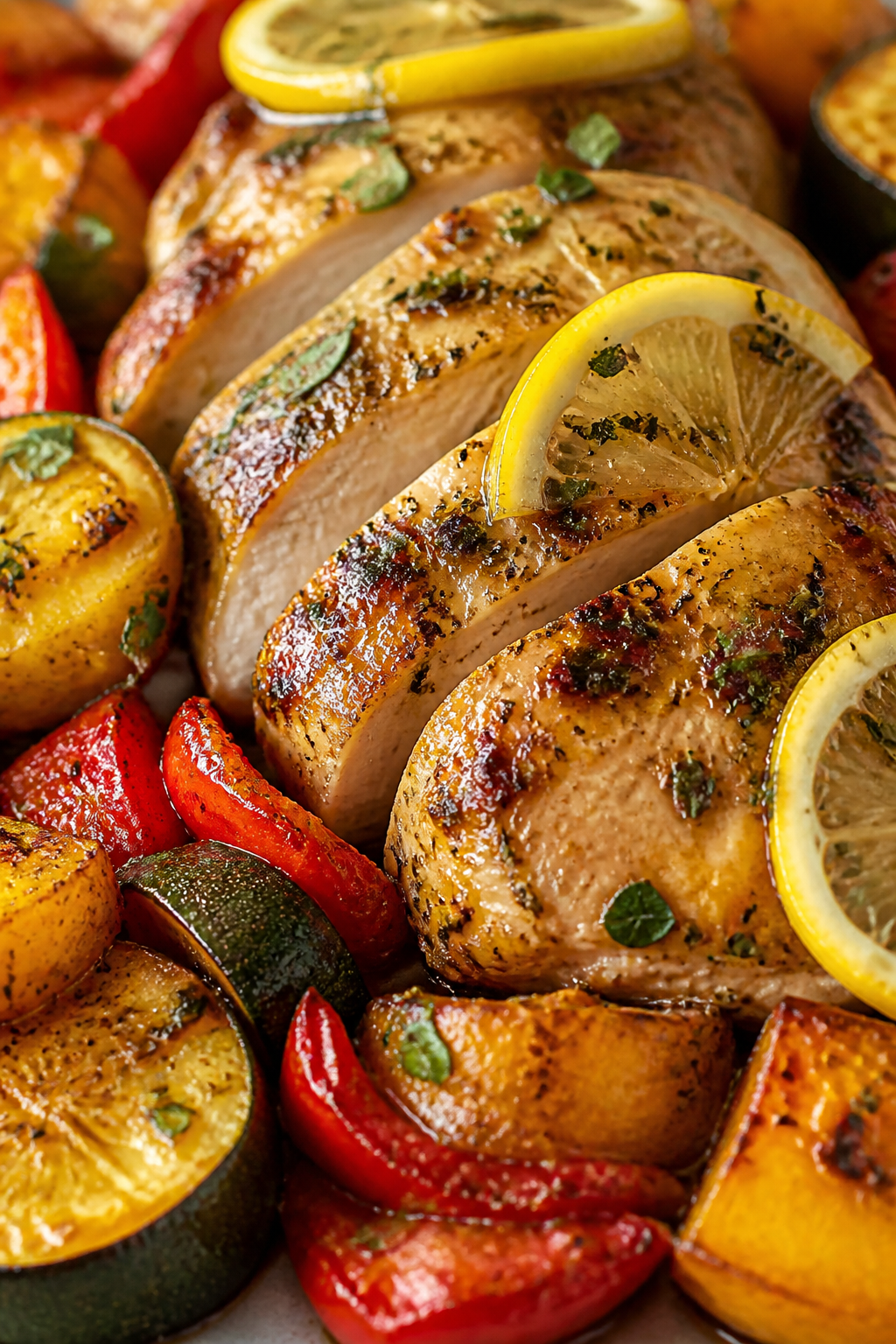
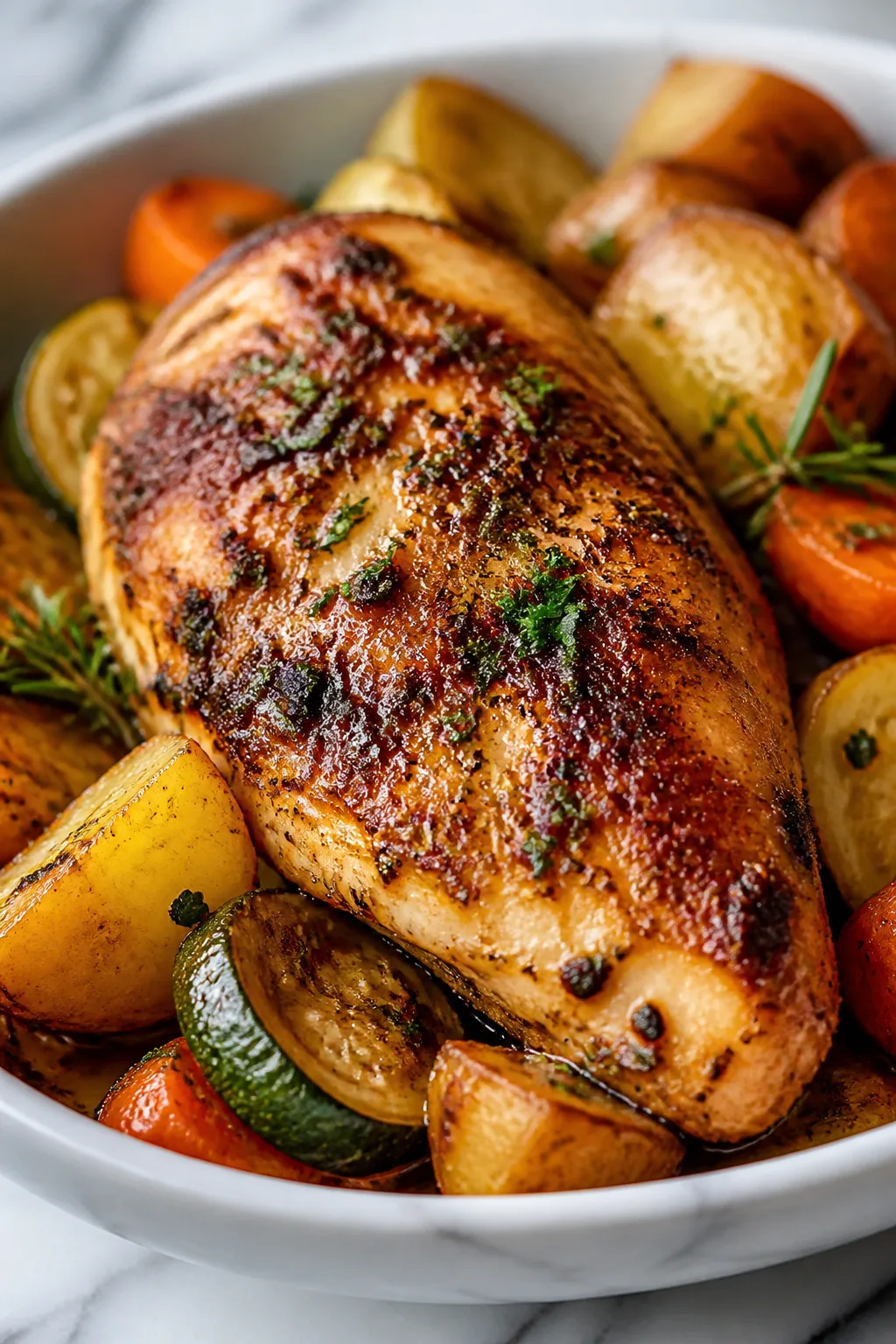
This lemon herb chicken breast is super juicy and packed with fresh flavors from lemon zest and herbs. Roasted veggies caramelize perfectly alongside, making it a simple, satisfying weeknight dinner you’ll want to make again and again.
Introduction
I first stumbled upon this lemon herb chicken recipe one summer evening when I wanted something light but still satisfying. I’d tried lemon chicken before, but it often came out dry or lacking punch. What makes this version stand out is the fresh lemon zest combined with a mix of herbs — thyme and rosemary — that really brighten the flavor without overpowering the chicken. Plus, roasting the veggies alongside the chicken lets their natural sweetness come through, creating a perfect balance. The trick I learned early on was to let the chicken marinate briefly with the lemon juice and herbs. This not only infuses flavor but keeps the meat juicy and tender. I remember the first time I tried this, my family devoured it and asked for seconds — a rare compliment from picky eaters! The finished dish has a gorgeous golden crust with a fresh, zesty aroma and tender veggies that melt in your mouth. It’s easy enough for a weeknight but fancy enough to serve guests. I love how the lemon and herbs make it feel fresh and bright, especially after a long day. I think you’ll enjoy how simple ingredients come together to create something special and comforting.
How To Do It
Step 1
Start by prepping the chicken breasts. Pat them dry with paper towels to ensure the olive oil and marinade will stick properly. In a small bowl, mix 1 tablespoon olive oil, lemon zest, lemon juice, minced garlic, chopped thyme, rosemary, salt, and pepper. Coat each chicken breast evenly with this mixture. Let the chicken marinate at room temperature for 10-15 minutes. This step is crucial because the lemon juice tenderizes the meat while the herbs infuse flavor. Avoid marinating too long as lemon juice can start 'cooking' the chicken and change its texture.
⏱ Time: 15 minutes
✓ Doneness: Chicken breasts are evenly coated and slightly glossy from the marinade.
Step 2
Preheat your oven to 425°F (220°C). While it heats, toss the chopped mixed vegetables with the remaining 1 tablespoon olive oil, dried oregano, salt, and pepper. Spread the veggies evenly on a large rimmed baking sheet. Arrange the marinated chicken breasts on top of the veggies, ensuring they aren’t crowded for even cooking. Roasting at a high temperature allows the chicken skin to develop a golden, slightly crisp crust while the veggies caramelize and soften. If you skip the high heat, the chicken won’t brown properly and the veggies may steam instead of roast.
⏱ Time: 5 minutes
✓ Doneness: Oven is fully preheated and ingredients are arranged evenly on the baking sheet.
Step 3
Place the baking sheet in the preheated oven and roast for about 20-25 minutes. Halfway through, flip the chicken breasts to ensure even browning on both sides and stir the veggies gently. This helps promote caramelization and even cooking. Keep an eye on the chicken’s internal temperature; it should reach 165°F (74°C) for safe eating. Overcooking will dry it out, so using a meat thermometer is recommended. The veggies should be tender and slightly browned around the edges at this point.
⏱ Time: 20-25 minutes
✓ Doneness: Chicken has a golden crust and an internal temperature of 165°F; veggies are tender and caramelized.
Step 4
Once cooked, remove the chicken and veggies from the oven. Let the chicken rest for 5 minutes before slicing. Resting allows the juices to redistribute within the meat, keeping it moist. If you cut into it immediately, all the juices will run out and the chicken will be dry. Meanwhile, you can toss the veggies gently again to redistribute any caramelized bits stuck to the pan, enhancing their flavor.
⏱ Time: 5 minutes
✓ Doneness: Chicken rests and juices settle; veggies look glossy and tender.
Step 5
Slice the chicken breasts against the grain to maximize tenderness. Arrange the sliced chicken on a serving platter with the roasted veggies. Optionally, sprinkle chopped fresh parsley over the top for a pop of color and freshness. Serving sliced chicken also makes it easier to portion and ensures every bite is tender. This final presentation step brings the dish together beautifully and makes it inviting on the plate.
⏱ Time: 5 minutes
✓ Doneness: Chicken slices are tender and juicy; dish is visually appealing with fresh garnish.
Step 6
If you want an extra burst of brightness, squeeze a little fresh lemon juice over the chicken and veggies just before serving. The acidity will lift the flavors and add a fresh zing that complements the herbs perfectly. Adding lemon at the end keeps its brightness sharp and prevents it from becoming too mellow or bitter, which can happen if cooked too long.
⏱ Time: 1 minute
✓ Doneness: Dish has a fresh citrus aroma and vibrant flavor notes.
Step 7
Serve this lemon herb chicken and roasted veggies with a simple side like steamed rice, quinoa, or crusty bread to soak up the juices. This dish pairs well with light sides because it’s already flavorful and satisfying. Choosing the right accompaniment balances the meal and rounds out the textures and flavors on your plate.
⏱ Time: 2 minutes
✓ Doneness: Plate looks balanced and complete with side dish.
Step 8
For leftovers, cool the chicken and veggies completely before storing in an airtight container. This prevents condensation and sogginess. Refrigerate within two hours of cooking to maintain freshness and food safety. Proper storage helps keep the chicken juicy and the veggies tender for the next meal.
⏱ Time: 5 minutes
✓ Doneness: Leftovers are cooled and sealed properly.
Step 9
To reheat, warm the chicken and veggies gently in a skillet over medium heat or in the oven at 350°F (175°C) until heated through. Avoid microwaving if possible, as it can dry out the chicken and make veggies mushy. Adding a splash of water or broth when reheating helps keep moisture locked in. Reheating carefully preserves the dish’s texture and flavor.
⏱ Time: 10 minutes
✓ Doneness: Chicken and veggies are warmed evenly without drying out.
Pro Tips
Always pat chicken dry before marinating.
Removing surface moisture helps the marinade stick better and promotes browning. If the chicken is wet, it will steam rather than roast, resulting in less flavorful meat and a soggy texture.
Don’t skip resting the chicken after roasting.
Resting lets juices redistribute inside the meat, making it juicy and tender. Cutting immediately causes juice loss, drying out the chicken and diminishing flavor.
Use a meat thermometer to check doneness.
Chicken is perfectly cooked at 165°F internal temperature. This prevents overcooking and drying out, ensuring juicy results every time.
Flip chicken halfway through roasting.
Turning the chicken ensures even browning on both sides and prevents one side from drying out or burning, resulting in a more attractive and flavorful dish.
Chop vegetables into uniform pieces.
Uniform size ensures even cooking and caramelization. Mixed sizes cause uneven texture, with some veggies undercooked and others burnt.
Add fresh lemon juice just before serving.
Adding lemon at the end preserves its bright, fresh flavor and prevents bitterness that can develop if cooked too long.
Use fresh herbs rather than dried when possible.
Fresh herbs provide vibrant aroma and flavor that dried herbs can’t replicate. They also look prettier as a garnish, enhancing presentation.
Common Mistakes to Avoid
Over-marinating the chicken in lemon juice.
Why it happens Many think longer marinating means more flavor, but the acid in lemon juice can start to 'cook' and break down the chicken proteins excessively.
Fix Limit marinating time to 15-20 minutes to balance flavor infusion without altering texture. If you want more flavor, add herbs and garlic to the marinade instead of extending lemon juice exposure.
Skipping the resting step after cooking.
Why it happens In the rush to eat, it’s tempting to cut the chicken immediately, but this causes juice loss and dryness.
Fix Set a timer to rest the chicken for at least 5 minutes. This simple wait dramatically improves juiciness and tenderness.
Roasting chicken and veggies at too low a temperature.
Why it happens Some assume low heat is gentler and safer but it prevents proper browning and caramelization.
Fix Use a high temperature (425°F) to trigger Maillard browning for flavor. Keep an eye to avoid burning.
Uneven vegetable chopping.
Why it happens Inconsistent size leads to uneven cooking, with some veggies mushy and others raw.
Fix Cut vegetables into similar-sized pieces for uniform roasting and texture.
Using bottled lemon juice instead of fresh.
Why it happens Bottled lemon juice lacks brightness and can taste harsh or artificial.
Fix Always opt for fresh lemon juice and zest to maximize flavor and aroma.
Variations
Spicy Lemon Herb Chicken
Add a pinch of red pepper flakes or cayenne to the marinade for a subtle heat that complements the lemon and herbs. This variation adds a warming kick without overpowering the fresh flavors. Serve with a cooling yogurt sauce to balance the spice.
Note: Adjust spice level carefully; too much heat can mask the delicate herb flavors.
Mediterranean Style
Incorporate chopped kalamata olives, sun-dried tomatoes, and crumbled feta cheese into the roasted veggies. These ingredients add briny, tangy notes that elevate the dish to Mediterranean flair while keeping it fresh and vibrant.
Note: Add olives and tomatoes midway through roasting to prevent burning; sprinkle feta just before serving.
Garlic Butter Lemon Chicken
After roasting, brush the chicken with melted garlic butter infused with parsley for a richer, more indulgent flavor. This twist makes the dish feel more decadent while keeping the bright lemon notes intact.
Note: Use unsalted butter to control salt levels and add fresh minced garlic for intensity.
Herb-Marinated Grilled Chicken
Instead of roasting, marinate the chicken as usual and grill it over medium-high heat for a smoky char. This variation adds a smoky depth and crispy exterior that pairs beautifully with fresh herb flavors.
Note: Grill chicken about 6-7 minutes per side, checking for internal temperature to avoid dryness.
Vegetarian Roasted Veggie Medley
Skip the chicken and roast a larger batch of mixed vegetables with lemon, herbs, and garlic. Serve over quinoa or couscous for a vibrant, plant-based meal that’s equally satisfying and flavorful.
Note: Increase roasting time slightly to ensure all veggies are tender and caramelized.
Nutrition
Per Serving:
Nutritional values are estimates and may vary based on specific ingredients used.
Storage & Tips
Room Temperature
This dish can safely sit out covered at room temperature for up to 2 hours. Beyond that, bacteria growth increases, so it’s best to refrigerate promptly after serving.
Refrigerator
Store leftovers in an airtight container for up to 3 days. Chicken may firm up when cold but reheats well. Veggies might soften further but retain flavor. Reheat gently to avoid drying.
Freezer
Freeze cooked chicken and veggies in a freezer-safe container or bag for up to 2 months. Wrap tightly to prevent freezer burn. Thaw overnight in the fridge before reheating.
Reheating
Reheat in a skillet over medium heat or in a 350°F oven until warmed through, about 8-10 minutes. Add a splash of water or broth if needed to maintain moisture. Avoid microwave reheating to prevent drying and uneven heat.
Make Ahead
Marinate the chicken up to 1 day ahead and store in the fridge. Chop veggies in advance but toss with oil and seasoning right before roasting. This saves time and keeps flavors fresh.
FAQ
Can I use chicken thighs instead of breasts?
Absolutely! Chicken thighs are more forgiving and stay juicy even if slightly overcooked. Adjust cooking time to about 30-35 minutes at 425°F, checking for an internal temperature of 165°F. Thighs have more fat, so the flavor will be richer.
What if I don’t have fresh herbs?
You can substitute dried herbs, using about one-third the amount since they’re more concentrated. The flavor won’t be as bright or fresh, but it will still be delicious. Add dried herbs to the marinade and sprinkle fresh parsley at the end if you have it.
How do I prevent the chicken from drying out?
Pat the chicken dry before marinating, don’t over-marinate in lemon juice, roast at a high temperature for a short time, and always let the chicken rest after cooking. Using a meat thermometer to check doneness helps avoid overcooking.
Can I prepare this recipe in advance for meal prep?
Yes! Marinate the chicken and chop vegetables a day ahead. On the day you want to eat, roast everything fresh for best texture. You can also cook it fully, then refrigerate and reheat gently when ready to eat.
What sides go well with this dish?
Simple sides like steamed rice, quinoa, couscous, or crusty bread work well. A light salad or some garlic mashed potatoes also complement the lemon herb flavors nicely.
Is it possible to make this gluten-free?
Definitely! This recipe is naturally gluten-free as long as you avoid any seasoning mixes or sides containing gluten. Double-check any pre-packaged ingredients for hidden gluten.
Can I grill the chicken instead of roasting?
Yes, grilling works beautifully. Marinate as usual and grill over medium-high heat about 6-7 minutes per side until internal temperature reaches 165°F. Grilling adds a smoky flavor that pairs well with the lemon and herbs.
What vegetables are best for roasting with this chicken?
Firm vegetables like carrots, bell peppers, zucchini, broccoli, and potatoes roast well. Choose veggies that cook in a similar time frame and cut them into uniform pieces for even cooking.
Final Thoughts
I hope you give this lemon herb chicken with roasted veggies a try — it’s become a favorite in my house! Let me know how yours turns out and what variations you love.