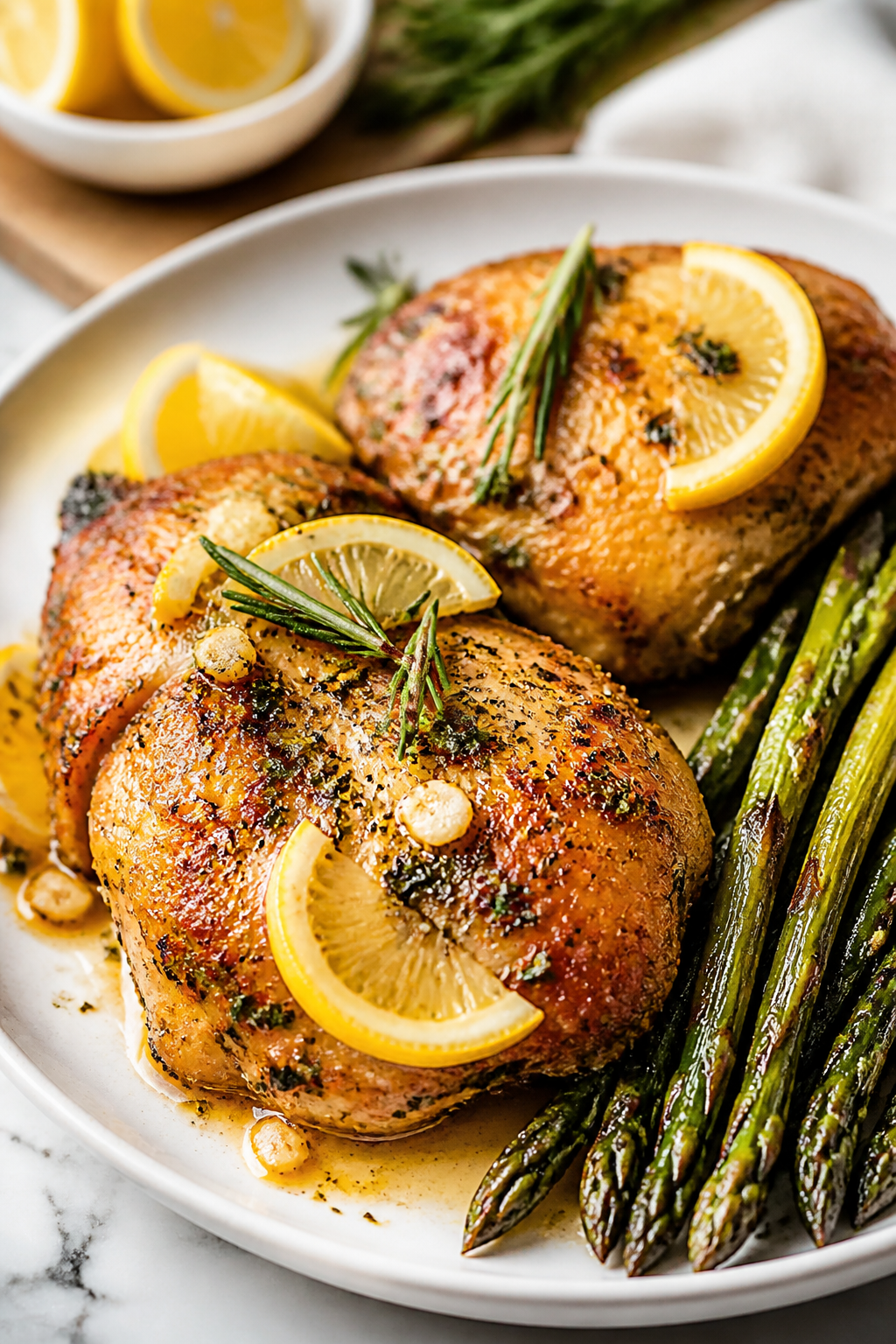
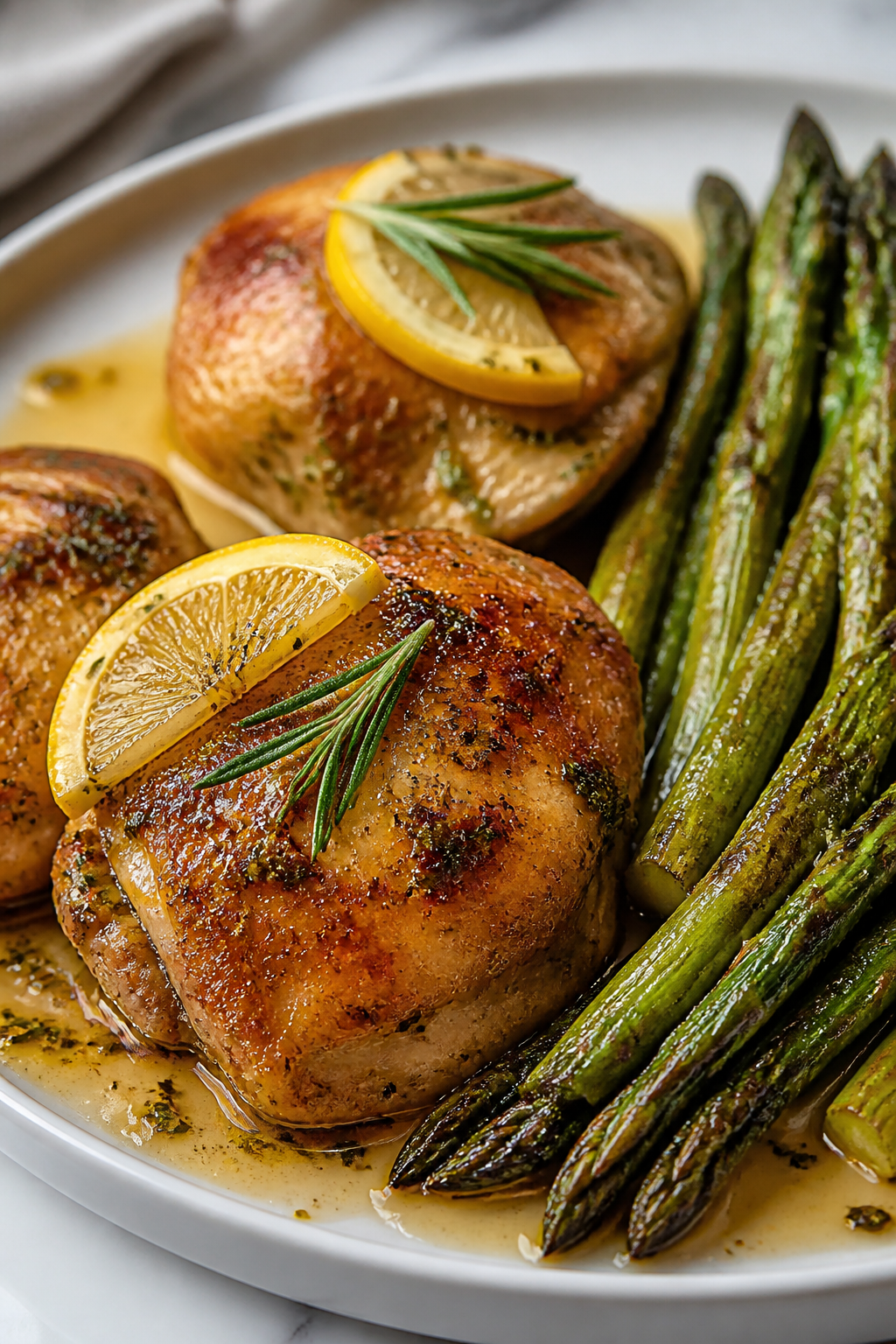
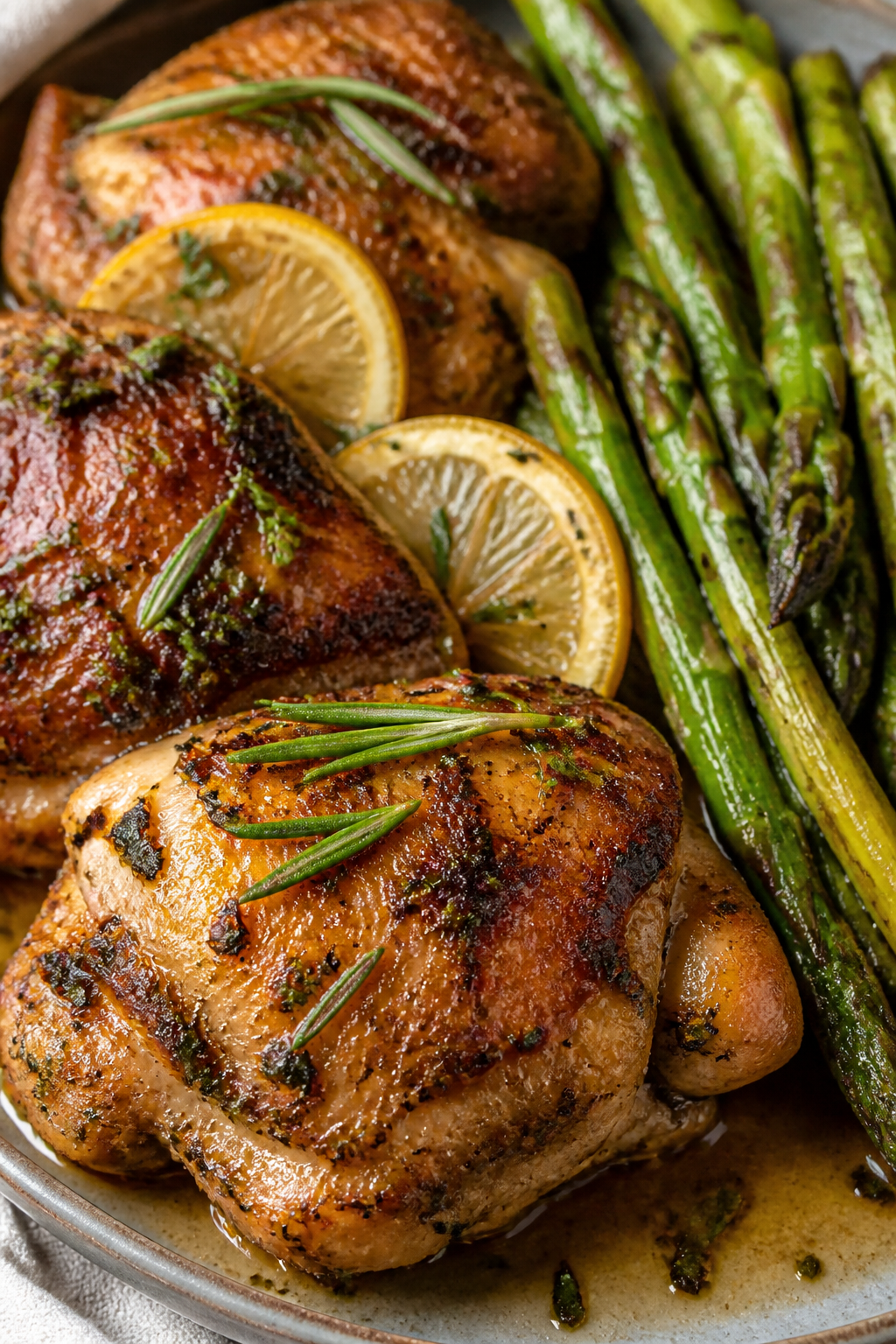
This lemon rosemary chicken is juicy and bursting with fresh flavors, paired with perfectly roasted asparagus. It’s my favorite quick dinner when I want something tasty but simple. Great for weeknights or casual weekends!
Introduction
I first made this lemon rosemary chicken thighs recipe on a whim when I wanted something flavorful but simple after a long day. It quickly became a favorite because it’s juicy and bright without a ton of fuss. What makes this version stand out is the fresh lemon juice and zest—those little bursts of citrus really lift the whole dish. Plus, roasting the chicken skin-side down at the start ensures it crisps up beautifully. I’ve tried many chicken thigh recipes, but this one nails the balance of juicy meat and crispy skin while keeping the flavors fresh and herbaceous. The asparagus roasting alongside the chicken is a bonus—it comes out perfectly tender with just a hint of char. I love how this meal feels special yet comes together in about 45 minutes from start to finish, making it an ideal weeknight dinner. My family always asks for seconds, and honestly, it’s one of those recipes I’ll keep coming back to because it’s reliable and delicious every time. If you’re looking for something that’s fuss-free but still impressive, this is it!
How To Do It
Step 1
Preheat your oven to 425°F (220°C). Pat the chicken thighs dry with paper towels—this helps the skin crisp up during cooking. Season both sides generously with salt and pepper. Dry skin is key because moisture creates steam, preventing a crispy crust. Place the chicken thighs skin-side down in a cold oven-safe skillet or baking dish, then drizzle with 1 tablespoon of olive oil. Starting skin-side down allows the fat to render slowly, crisping the skin perfectly. Avoid overcrowding the pan to ensure even cooking and browning.
⏱ Time: 10 minutes
✓ Doneness: Chicken skin should look golden and crisp, with rendered fat pooling slightly around the pieces.
Step 2
While the chicken starts cooking skin-side down on the stovetop over medium heat, mix lemon juice, lemon zest, chopped rosemary, garlic, and remaining olive oil in a small bowl. This marinade adds bright, herbal notes that infuse the chicken during roasting. Don’t skip the zest—it packs a ton of citrus flavor without extra acidity. If you rush this step or skip the zest, the dish will lack its signature brightness.
⏱ Time: 5 minutes
✓ Doneness: The mixture should be fragrant, with visible bits of rosemary and garlic evenly combined.
Step 3
After the skin crisps (about 7-10 minutes), flip the chicken thighs over so the skin side is up. Pour the lemon rosemary mixture evenly over the chicken, making sure each piece is coated. This step helps the acid from the lemon tenderize the meat and adds a fresh glaze. If you pour too early, the lemon juice can prevent crisp skin; too late and the flavor won’t penetrate.
⏱ Time: 2 minutes
✓ Doneness: Chicken skin remains crisp and lemon mixture covers the meat with no pooling on the pan bottom.
Step 4
Trim the asparagus by snapping off the woody ends, then toss the spears lightly with salt, pepper, and a drizzle of olive oil. Arrange the asparagus around the chicken in the same skillet or transfer everything to a roasting pan if needed. Roasting asparagus alongside the chicken makes for a simple, complete meal with minimal cleanup.
⏱ Time: 5 minutes
✓ Doneness: Asparagus spears are evenly coated and arranged in a single layer for even roasting.
Step 5
Transfer the skillet or pan to the preheated oven and roast everything for about 20 minutes. The chicken will finish cooking through, and the asparagus will become tender but still slightly crisp. Keep an eye on the asparagus to avoid overcooking; you want a slight bite, not mush. If the chicken skin starts to darken too fast, loosely tent with foil.
⏱ Time: 20 minutes
✓ Doneness: Chicken registers 165°F internally, skin is golden, asparagus is tender with some browning.
Step 6
Remove the pan from the oven and let the chicken rest for 5 minutes before serving. Resting lets the juices redistribute, keeping the meat moist and tender instead of drying out when cut. Don’t skip this step—it makes a big difference in texture.
⏱ Time: 5 minutes
✓ Doneness: Chicken feels firm but juicy when gently pressed, and juices run clear.
Step 7
Serve the chicken thighs with the roasted asparagus, adding a squeeze of fresh lemon juice or extra rosemary if you like. This final touch brightens the dish and adds freshness. I like to serve it with crusty bread or a simple grain on the side for a complete meal.
⏱ Time: 2 minutes
✓ Doneness: Dish looks vibrant with fresh herbs and lemon wedges for garnish.
Step 8
If you want to make this ahead, you can prepare the lemon rosemary mixture and marinate the chicken for up to 2 hours in the fridge before cooking. This helps deepen the flavors without compromising texture. Just be sure to bring the chicken to room temperature before cooking for even roasting.
⏱ Time: Varies
✓ Doneness: Chicken is marinated evenly and ready for roasting.
Step 9
For a crispier skin after resting, pop the chicken back under the broiler for 1-2 minutes, watching carefully to avoid burning. This quick broil adds extra crunch and caramelization, enhancing the texture and flavor.
⏱ Time: 1-2 minutes
✓ Doneness: Skin is deeply golden and crisp, no signs of burning.
Pro Tips
Always pat chicken skin dry before cooking.
Removing moisture from the skin prevents steaming and allows the Maillard reaction to occur, which crisps the skin and develops deeper flavor. Wet skin traps steam and results in soggier, less appetizing texture.
Start cooking chicken skin-side down in a cold pan.
This technique slowly renders fat and crisps the skin evenly without burning. Jumping straight to high heat causes uneven cooking and can scorch the skin before the fat has rendered.
Use both lemon juice and zest for balanced citrus flavor.
Zest contains essential oils that add fragrance and brightness without extra acidity. Juice adds tang and tenderizing acid. Combining both layers the citrus flavor, making the dish more vibrant.
Don’t overcrowd the pan when roasting.
Crowding traps steam and prevents browning. Leaving space allows hot air to circulate, crisping skin and roasting asparagus evenly for the best texture and flavor.
Let chicken rest after roasting for at least 5 minutes.
Resting redistributes juices inside the meat, keeping it moist and tender. Cutting immediately causes juices to run out, resulting in drier chicken.
Trim woody ends off asparagus before roasting.
Woody ends are tough and unpleasant to eat. Removing them ensures tender stalks that cook evenly and taste fresh.
Use fresh rosemary finely chopped for best aroma.
Chopping releases essential oils that infuse the chicken during cooking. Larger pieces can be overpowering or bitter.
Common Mistakes to Avoid
Cooking chicken without drying skin first
Why it happens Many assume seasoning is enough and skip drying, but moisture on skin causes steaming instead of crisping.
Fix Pat the chicken skin thoroughly with paper towels before seasoning and cooking. This simple step helps achieve that coveted crispy texture.
Adding lemon juice too early
Why it happens Some add lemon juice before searing, which can prevent browning due to acid interfering with Maillard reaction.
Fix Add lemon juice after the chicken skin crisps or as a finishing touch to preserve crispness and still get bright flavor.
Overcrowding the pan
Why it happens Trying to fit too much in one pan to save time, but it traps steam and prevents browning.
Fix Use a larger pan or roast in batches to keep space between pieces for even cooking and crispy skin.
Skipping resting time
Why it happens Impatience leads to cutting chicken right away, causing juices to escape.
Fix Let the chicken rest for 5 minutes covered loosely with foil to keep juices locked in and meat tender.
Overcooking asparagus
Why it happens Not timing asparagus properly with chicken roasting leads to mushy veggies.
Fix Trim asparagus well and add it to the pan during the last 15-20 minutes of roasting to keep it tender-crisp.
Variations
Spicy Lemon Rosemary Chicken
Add 1/2 teaspoon red pepper flakes to the lemon rosemary marinade for a gentle kick. This variation adds warmth without overpowering the fresh citrus and herb flavors. The heat pairs beautifully with the crispy chicken skin and tender asparagus.
Note: Incorporate red pepper flakes when mixing the lemon rosemary sauce to evenly distribute heat and infuse the chicken during roasting.
Garlic Butter Lemon Chicken
After roasting, brush the chicken thighs with melted garlic butter for an extra layer of richness and flavor. This variation is indulgent but still bright thanks to the lemon juice and zest. Great for a special occasion.
Note: Melt butter with minced garlic, then brush over chicken immediately after roasting before resting.
Herb Mix Upgrade
Swap out rosemary for a mix of thyme and oregano, or add fresh parsley at the end. This changes the aromatic profile and adds complexity while keeping the recipe fresh and vibrant.
Note: Adjust herb quantities to taste and add delicate herbs like parsley after cooking to preserve brightness.
Sheet Pan with Potatoes
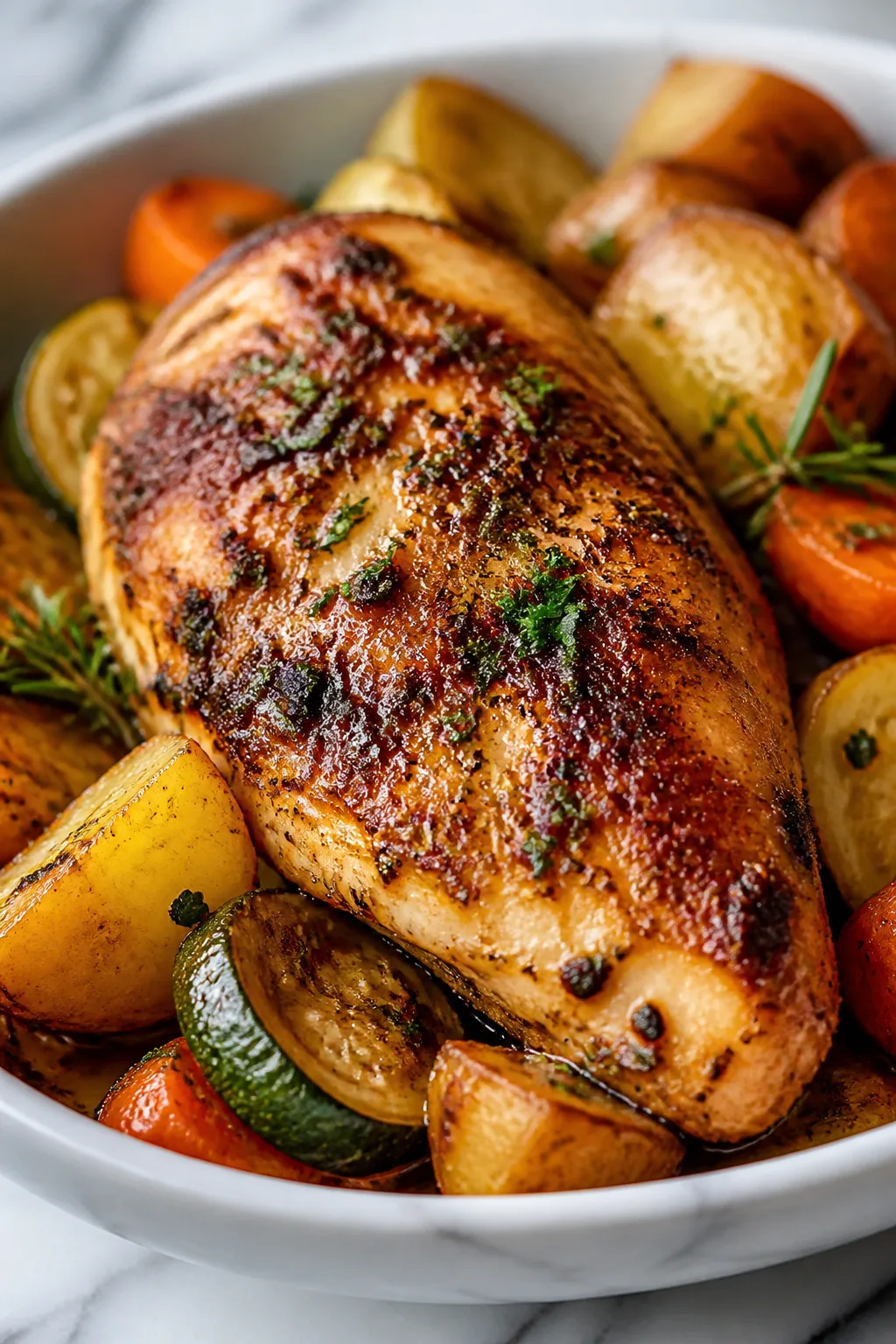
Add halved baby potatoes tossed in olive oil and seasoning to the pan for a heartier meal. Roast alongside chicken and asparagus for a complete dinner with minimal effort.
Note: Cut potatoes small enough to cook through in 30 minutes, and toss them with the asparagus to ensure even roasting.
Grilled Lemon Rosemary Chicken
Marinate chicken thighs in lemon rosemary mixture, then grill over medium heat for smoky flavor and crispy skin. Serve with grilled asparagus for a summer twist.
Note: Preheat grill and cook chicken skin-side down first to render fat and crisp skin, flipping carefully to avoid flare-ups.
Nutrition
Per Serving:
Nutritional values are estimates and may vary based on specific ingredients used.
Storage & Tips
Room Temperature
You can keep cooked chicken and asparagus at room temperature, covered loosely, for up to 2 hours. Beyond that, bacteria growth increases, so refrigerate promptly for safety.
Refrigerator
Store leftovers in an airtight container for up to 3 days. The chicken skin may lose crispness, but reheating gently in the oven can restore some texture. Asparagus might soften but still tastes great cold or warmed.
Freezer
Freeze cooked chicken thighs wrapped tightly in foil or plastic wrap, then placed in a freezer bag for up to 3 months. Asparagus doesn’t freeze well and is best enjoyed fresh. Thaw chicken overnight in the fridge before reheating.
Reheating
Reheat chicken in a 350°F oven for 10-15 minutes, uncovered to help crisp skin. Add a splash of water or broth if it seems dry. Avoid microwaving as it can make skin rubbery and meat unevenly heated.
Make Ahead
Prepare the lemon rosemary marinade and trim asparagus a day ahead. Marinate chicken in the fridge for up to 2 hours before cooking. This saves time and deepens flavors. Assemble and roast on the day you plan to serve.
FAQ
Can I use chicken breasts instead of thighs?
Yes, but chicken breasts cook faster and can dry out more easily. Use bone-in, skin-on breasts for best results, and reduce oven time by 5-10 minutes. Watch carefully to avoid overcooking and losing juiciness.
How do I know when the chicken is fully cooked?
Use a meat thermometer to check for an internal temperature of 165°F. Alternatively, juices should run clear when pierced, and meat should be firm but not rubbery.
Can I make this recipe gluten-free?
Absolutely! This recipe contains no gluten, so it’s naturally gluten-free. Just double-check any pre-packaged ingredients like chicken or seasoning blends to ensure they don’t contain hidden gluten.
How do I keep the chicken skin crispy after reheating?
Reheat in a hot oven (around 350°F) uncovered to help restore crispness. Avoid microwaving, which can make skin soggy. If needed, broil for 1-2 minutes at the end but watch closely to prevent burning.
Can I use frozen chicken thighs?
You can, but thaw completely before cooking for even roasting and crispy skin. Cooking from frozen will cause uneven cooking and soggy skin.
Is it okay to marinate the chicken overnight?
Marinating longer than 2 hours can make the chicken texture mushy due to the acid in lemon juice breaking down proteins too much. For best texture, stick to 1-2 hours.
What can I serve with this meal besides asparagus?
Roasted potatoes, rice pilaf, or a simple green salad all pair well. The lemon rosemary flavors complement many sides, so feel free to customize based on your pantry.
How do I prevent asparagus from getting soggy?
Roast at high heat and avoid overcrowding the pan. Trim tough ends and toss lightly with oil so they roast evenly. Remove from oven when tender but still firm.
Final Thoughts
I hope you give this lemon rosemary chicken a try soon—it’s one of those recipes that feels like a treat but is so easy. Let me know how it turns out!