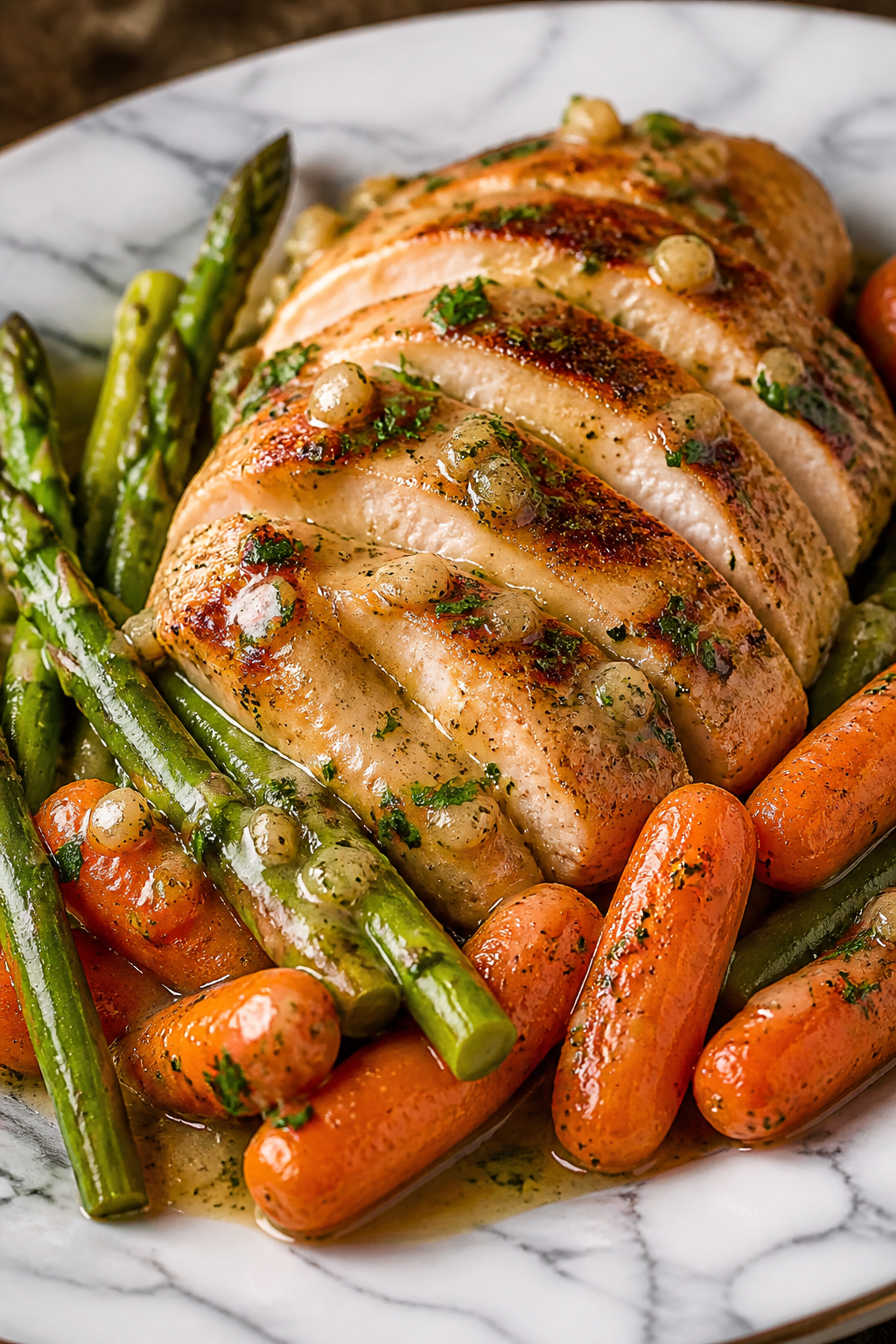
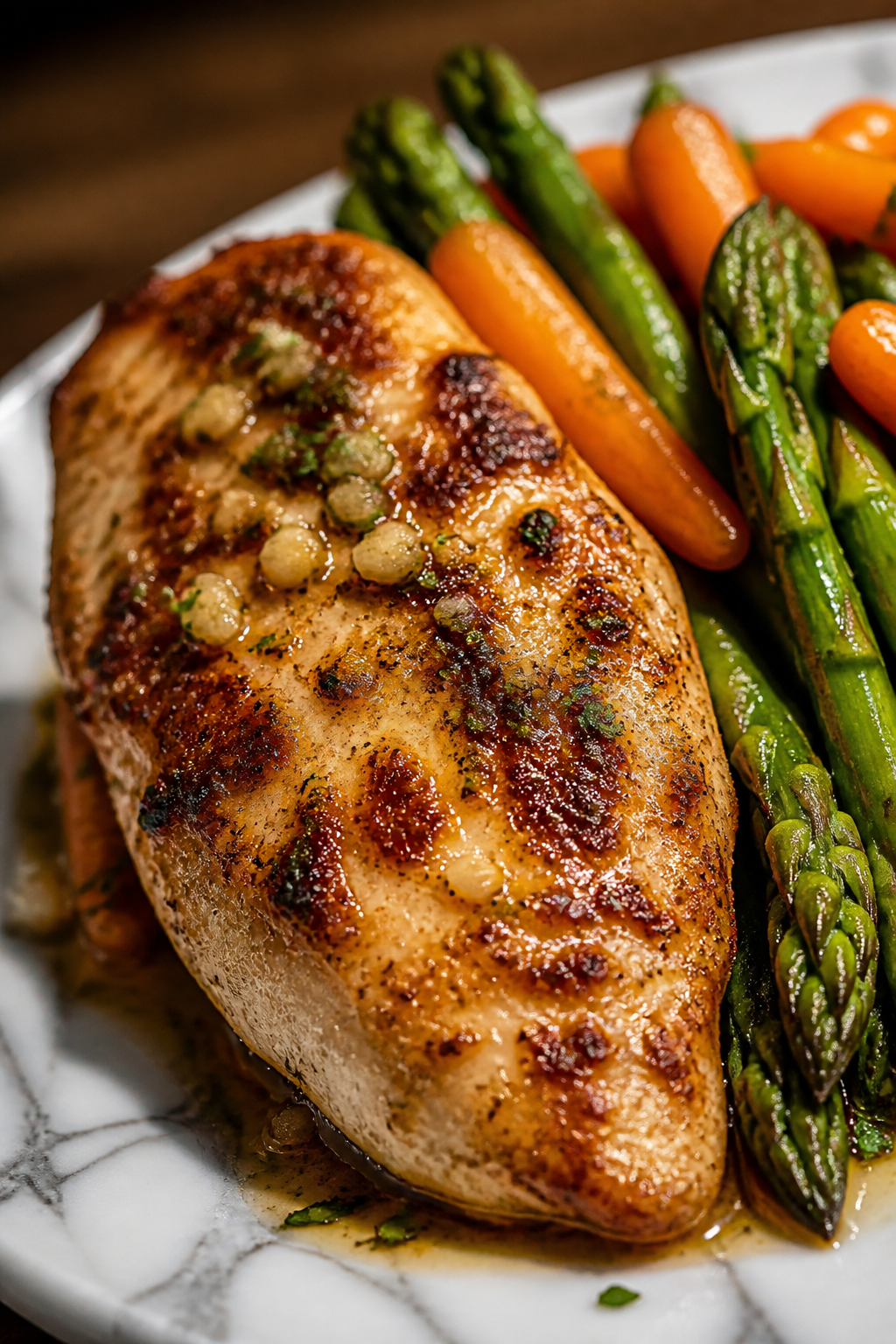
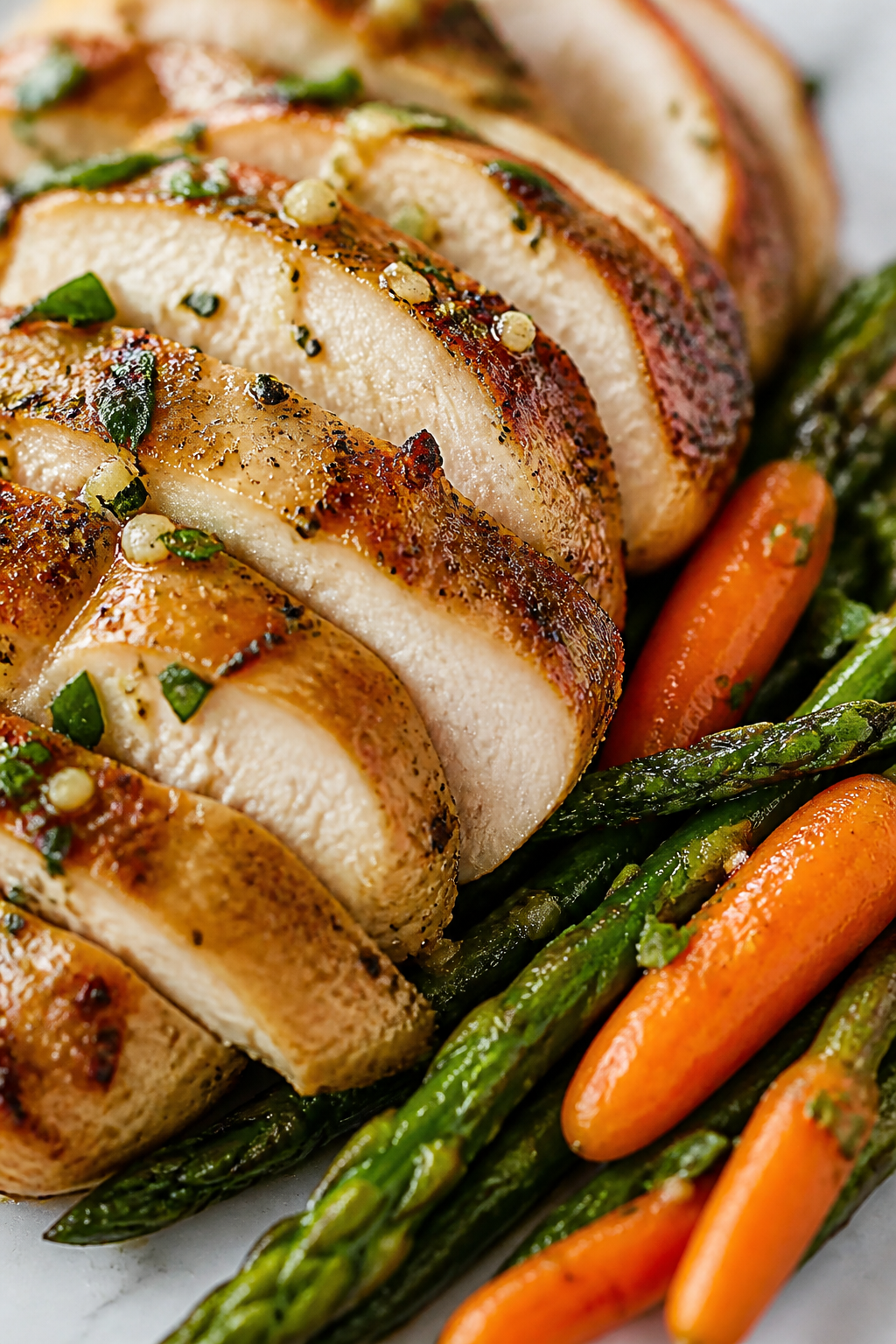
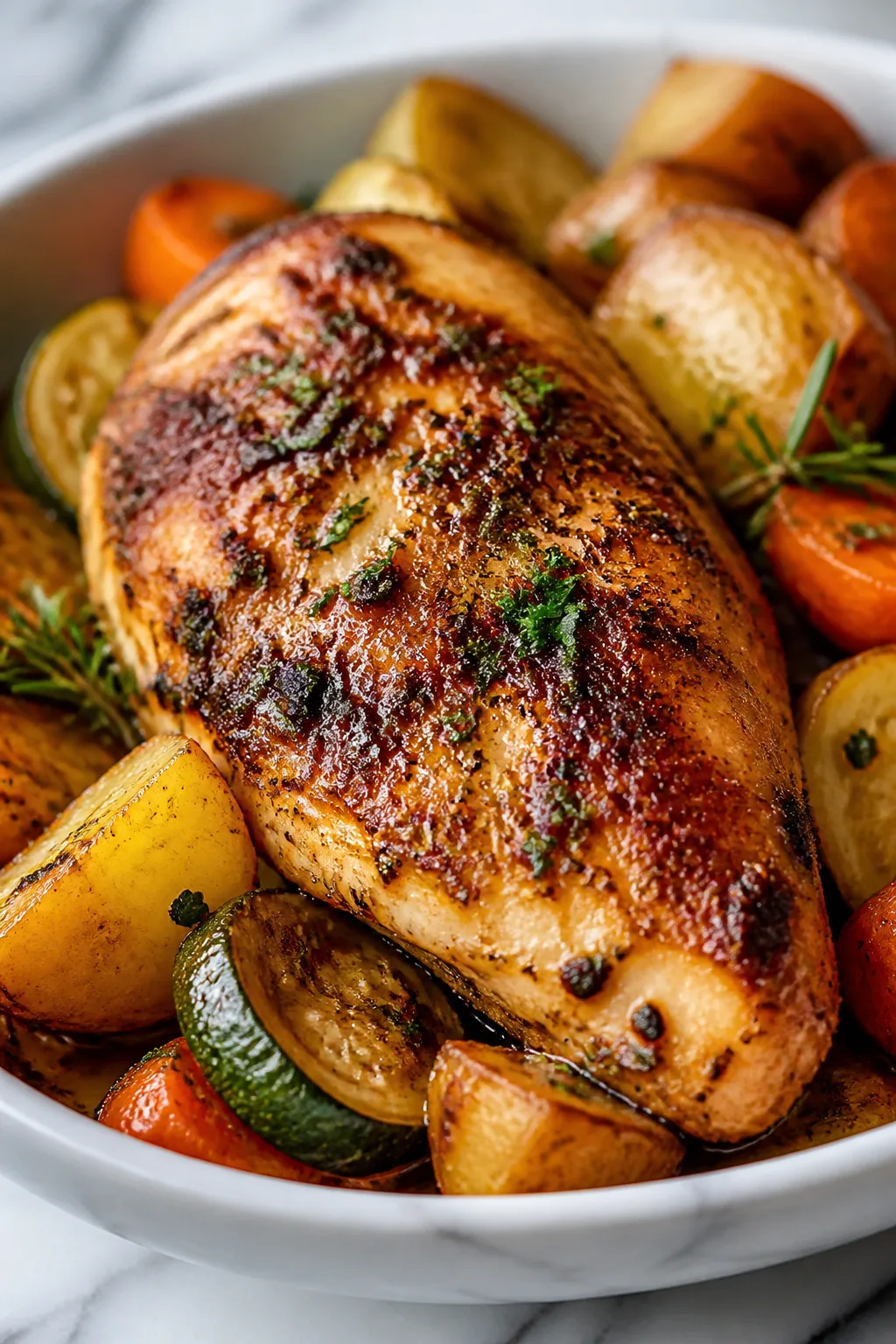
This light garlic chicken is a healthy, cozy dinner that comes together in 45 minutes. The fresh asparagus and baby carrots add a sweet crunch, making it a perfect weeknight meal you’ll want to make again!
Introduction
I first stumbled upon this garlic chicken recipe a few years ago when I was craving something light but satisfying after a long day. What I love about this dish is how it balances simple, fresh ingredients with cozy, comforting flavors. Unlike heavier chicken dinners loaded with cream or butter, this version feels fresh and bright thanks to the lemon and garlic combo. One trick I learned early on is to cook the chicken just right so it stays juicy and tender—overcooking makes it dry, and no one wants that! Adding fresh asparagus and baby carrots brings a sweet crunch that pairs perfectly with the garlicky warmth of the sauce. It’s become my go-to for weeknights when I want something healthy but still feel like I’m treating myself. Plus, it comes together in about 45 minutes, which is perfect for busy evenings. The finished dish looks colorful and inviting, with bright veggies and golden chicken that’s bursting with flavor. I think you’ll love how easy it is but still feels special enough for company or a cozy dinner at home.
How To Do It
Step 1
Start by patting the chicken breasts dry with paper towels; this helps the olive oil and garlic stick better and promotes even browning. Season both sides generously with salt, pepper, and dried thyme. Heating 1 tablespoon of olive oil in a large skillet over medium heat, add the chicken breasts once the oil shimmers. Cook without moving them for about 6-7 minutes per side, depending on thickness, until golden brown and cooked through. Avoid flipping too often—this ensures a nice crust forms. Use a meat thermometer to check for 165°F internal temperature to avoid drying out the meat. Transfer the chicken to a plate and tent with foil to keep warm.
⏱ Time: 15 minutes
✓ Doneness: Chicken is golden brown on both sides and registers 165°F internally
Step 2
In the same skillet, lower heat to medium-low and add the remaining tablespoon of olive oil. Toss in the minced garlic and sauté gently for about 30 seconds until fragrant but not browned, as burnt garlic tastes bitter. Add the baby carrots first since they take longer to soften. Stir occasionally for 5 minutes, then add the asparagus pieces. Continue cooking for another 5-7 minutes, stirring often, until the vegetables are tender-crisp and bright green. Adding the veggies after cooking the chicken lets them soak up the flavorful pan juices. Season with a pinch of salt and freshly ground pepper. Finish by squeezing the lemon juice over everything to brighten the flavors.
⏱ Time: 15 minutes
✓ Doneness: Vegetables are tender but still crisp, garlic is fragrant without browning
Step 3
Return the cooked chicken breasts to the skillet nestling them among the vegetables. Spoon some of the garlicky pan sauce over the top to keep chicken moist and flavorful. Let everything warm together on low heat for 2-3 minutes so the flavors meld. This final step ensures the chicken stays juicy and the veggies are perfectly coated. Avoid heating on high to prevent drying out the chicken or overcooking the veggies.
⏱ Time: 3 minutes
✓ Doneness: Chicken is reheated through, sauce glistens over chicken and veggies
Step 4
Transfer the chicken and vegetables to a serving platter. Sprinkle freshly chopped parsley on top for a pop of color and fresh herb flavor. This little garnish adds brightness and makes the dish feel extra special. Serve immediately with your favorite side like rice, quinoa, or even crusty bread to soak up the delicious garlic sauce.
⏱ Time: 2 minutes
✓ Doneness: Dish looks vibrant with fresh herbs, ready to enjoy
Step 5
Optional step: If you want a saucier dish, deglaze the skillet after cooking the veggies with 1/4 cup chicken broth or white wine. Scrape up any browned bits from the pan bottom to add depth and richness to the sauce. Let it simmer for a couple minutes until slightly reduced, then pour over chicken and veggies before serving. This adds an extra layer of flavor without heaviness.
⏱ Time: 3 minutes
✓ Doneness: Sauce thickens slightly and coats the back of a spoon
Step 6
For extra flavor, marinate the chicken breasts in olive oil, minced garlic, lemon juice, salt, pepper, and thyme for at least 30 minutes before cooking. This infuses the meat with brightness and garlic aroma, making it even more tender and tasty. If short on time, seasoning just before cooking is fine, but marinating elevates the dish noticeably.
⏱ Time: 30 minutes (optional)
✓ Doneness: Chicken feels slightly more tender and aromatic after marinating
Step 7
When selecting asparagus, look for firm, bright green stalks with tightly closed tips. Thicker stalks can be tougher and woody, so choose medium-thin ones for the best texture. Trim the dry ends before cooking to avoid bitterness. Proper prep ensures the asparagus stays tender and sweet after sautéing.
⏱ Time: 5 minutes
✓ Doneness: Asparagus stalks snap easily and look fresh green
Step 8
Use fresh garlic instead of pre-minced or powdered for the best flavor. Fresh garlic releases essential oils when sautéed, giving the dish that cozy, homey garlic taste. Mince finely to ensure it cooks evenly and infuses the oil. Be careful not to burn it; garlic turns bitter quickly if overcooked.
⏱ Time: 1 minute prep
✓ Doneness: Garlic is fragrant and golden but not brown
Step 9
Let the chicken rest at room temperature for 5 minutes after cooking before slicing or serving. Resting allows the juices to redistribute throughout the meat, keeping it moist and tender. Slicing immediately can cause the juices to run out, resulting in dry chicken.
⏱ Time: 5 minutes
✓ Doneness: Chicken feels slightly firmer and juicy when touched
Pro Tips
Use a meat thermometer to check chicken doneness.
Chicken breasts can dry out quickly if overcooked. A thermometer ensures you hit the perfect 165°F internal temperature, keeping the meat juicy and safe to eat. This simple tool prevents guesswork and improves results every time.
Don’t overcrowd the skillet when cooking chicken.
Crowding traps steam and prevents proper browning. Cooking the chicken in batches or using a large pan helps develop a nice crust and more complex flavor through the Maillard reaction.
Sauté garlic gently over medium-low heat.
Garlic burns easily, turning bitter and ruining the dish’s flavor. Cooking it slowly releases its sweetness and aroma without charring, which is crucial for this recipe’s cozy garlic flavor.
Trim asparagus ends before cooking.
The bottom ends are woody and tough, which negatively affects texture and taste. Removing them ensures all asparagus pieces cook evenly and remain tender-crisp.
Rest chicken after cooking before slicing.
Resting lets juices redistribute inside the meat, resulting in tender, moist chicken. Cutting immediately causes juice loss and dry texture, so a 5-minute rest is worth the wait.
Add lemon juice at the end of cooking.
Acidic ingredients like lemon brighten flavors and balance richness. Adding it too early can dull its freshness and cause bitterness, so adding it last preserves its bright, zesty punch.
Use fresh, high-quality ingredients for best flavor.
Fresh chicken, vegetables, and garlic bring natural flavors and textures that pre-packaged or frozen alternatives can’t match. Quality ingredients make the biggest difference in a simple dish like this.
Common Mistakes to Avoid
Overcooking the chicken breasts
Why it happens Many cooks rush to cook chicken quickly or flip too often, assuming it speeds up the process. This leads to dry, tough meat.
Fix Use a meat thermometer to monitor internal temperature and cook chicken over medium heat without flipping multiple times. Let the chicken sear undisturbed to develop a golden crust and retain juices.
Burning the garlic
Why it happens Garlic cooks quickly and easily burns if cooked over high heat or too long.
Fix Sauté garlic over medium-low heat and watch closely. Remove from heat as soon as it becomes fragrant and lightly golden to avoid bitterness.
Not trimming asparagus ends
Why it happens Some assume the whole asparagus stalk is edible, but the ends are often woody and tough.
Fix Always snap or cut off the bottom 1-2 inches of asparagus before cooking for tender results.
Skipping resting time for chicken
Why it happens Eager to eat, cooks slice chicken immediately after cooking, losing juices.
Fix Let chicken rest for 5 minutes under foil before slicing to keep it juicy and tender.
Overcrowding the pan
Why it happens Trying to cook everything at once leads to steaming instead of browning.
Fix Cook chicken and veggies in batches if needed, leaving space for proper searing and caramelization.
Variations
Spicy Garlic Chicken with Chili Flakes
Add 1/2 teaspoon red chili flakes when sautéing garlic to give this recipe a spicy kick. The heat pairs wonderfully with the garlic and lemon, adding depth and warmth without overpowering. Great if you like a little spice in your meals.
Note: Be careful not to burn the chili flakes along with garlic as it can create bitterness. Add them early and stir quickly.
Creamy Garlic Chicken with Coconut Milk
Stir in 1/4 cup coconut milk after cooking the veggies and garlic to create a creamy sauce. This adds richness and a subtle sweetness that complements the garlic and lemon beautifully, transforming it into a comforting dish.
Note: Simmer gently to avoid curdling and adjust seasoning as coconut milk softens flavors.
Herb-Infused Garlic Chicken
Mix fresh herbs like rosemary, thyme, and oregano into the marinade and sprinkle on top before serving. The fresh herbs elevate the dish with aromatic notes and make it feel more elegant and fresh.
Note: Use fresh herbs sparingly to avoid overpowering the garlic flavor.
Garlic Chicken Stir-Fry with Bell Peppers
Add sliced bell peppers and snap peas for a colorful stir-fry twist. This variation adds crunch and sweetness, making the dish more vibrant and nutrient-dense while keeping the garlic-forward flavor.
Note: Adjust cooking time to keep veggies crisp and avoid sogginess.
Lemon Garlic Chicken Sheet Pan Dinner
Roast chicken, asparagus, and carrots on a sheet pan with garlic and lemon for an easy one-pan meal. This method caramelizes the veggies and chicken skin for extra flavor and simplifies cleanup.
Note: Ensure even spacing on the pan and flip veggies halfway through roasting for uniform cooking.
Nutrition
Per Serving:
Nutritional values are estimates and may vary based on specific ingredients used.
Storage & Tips
Room Temperature
This dish is best enjoyed fresh. It can safely sit at room temperature covered for up to 2 hours. Beyond that, bacteria growth becomes a concern, so refrigerate promptly.
Refrigerator
Store leftovers in an airtight container for up to 3 days. The chicken may firm slightly and veggies soften, so reheat gently to preserve texture. It can be eaten cold but tastes best warmed.
Freezer
Freeze cooked chicken and vegetables separately in airtight containers or heavy-duty freezer bags for up to 3 months. Wrap tightly to prevent freezer burn. Thaw in the refrigerator overnight before reheating.
Reheating
Reheat gently on the stovetop over low heat or microwave in short bursts. Add a splash of water or broth to prevent drying. Avoid overheating which can toughen chicken and mush the veggies.
Make Ahead
Marinate the chicken up to 24 hours ahead and store in the fridge. Chop vegetables and mince garlic in advance to save time. Cook the dish fresh for best texture but components can be prepped earlier.
FAQ
Can I use chicken thighs instead of breasts?
Absolutely! Chicken thighs are juicier and more forgiving if slightly overcooked. Adjust cooking time to ensure they reach 165°F internally. They also add richer flavor but may change the dish’s lighter profile.
What can I substitute for asparagus if it’s not in season?
Green beans, broccoli florets, or zucchini make great substitutes. Choose vegetables that cook quickly and retain some crunch. Adjust cooking times slightly to avoid over or undercooking.
Is it okay to use pre-minced garlic from a jar?
While convenient, pre-minced garlic lacks the fresh, vibrant flavor of fresh garlic and can be less aromatic. Use fresh garlic for best results, but if using jarred, reduce quantity and add it later in cooking to avoid bitterness.
How do I prevent the chicken from drying out?
Cook chicken over medium heat without flipping too often, and use a meat thermometer to avoid overcooking. Rest the chicken after cooking to let juices redistribute. These steps keep it tender and juicy.
Can I make this recipe gluten-free?
Yes! This recipe uses naturally gluten-free ingredients. Just ensure any seasoning blends or broth you use are gluten-free to avoid cross-contamination.
What side dishes pair well with this chicken?
Rice, quinoa, mashed potatoes, or crusty bread are great to soak up the garlicky sauce. Light salads or steamed grains also complement the flavors without overpowering the dish.
How long can leftovers be stored safely?
Store leftovers in the refrigerator within two hours of cooking and consume within 3 days. For longer storage, freeze within 2 hours and use within 3 months for best quality.
Can I prepare this recipe in advance?
You can marinate the chicken and prep vegetables 1-2 days ahead to save time. However, cooking fresh yields the best texture and flavor. If cooking ahead, store components separately and reheat gently.
Final Thoughts
I hope you enjoy making this garlic chicken as much as I do! It’s a simple, healthy dinner that feels special — let me know how it turns out!