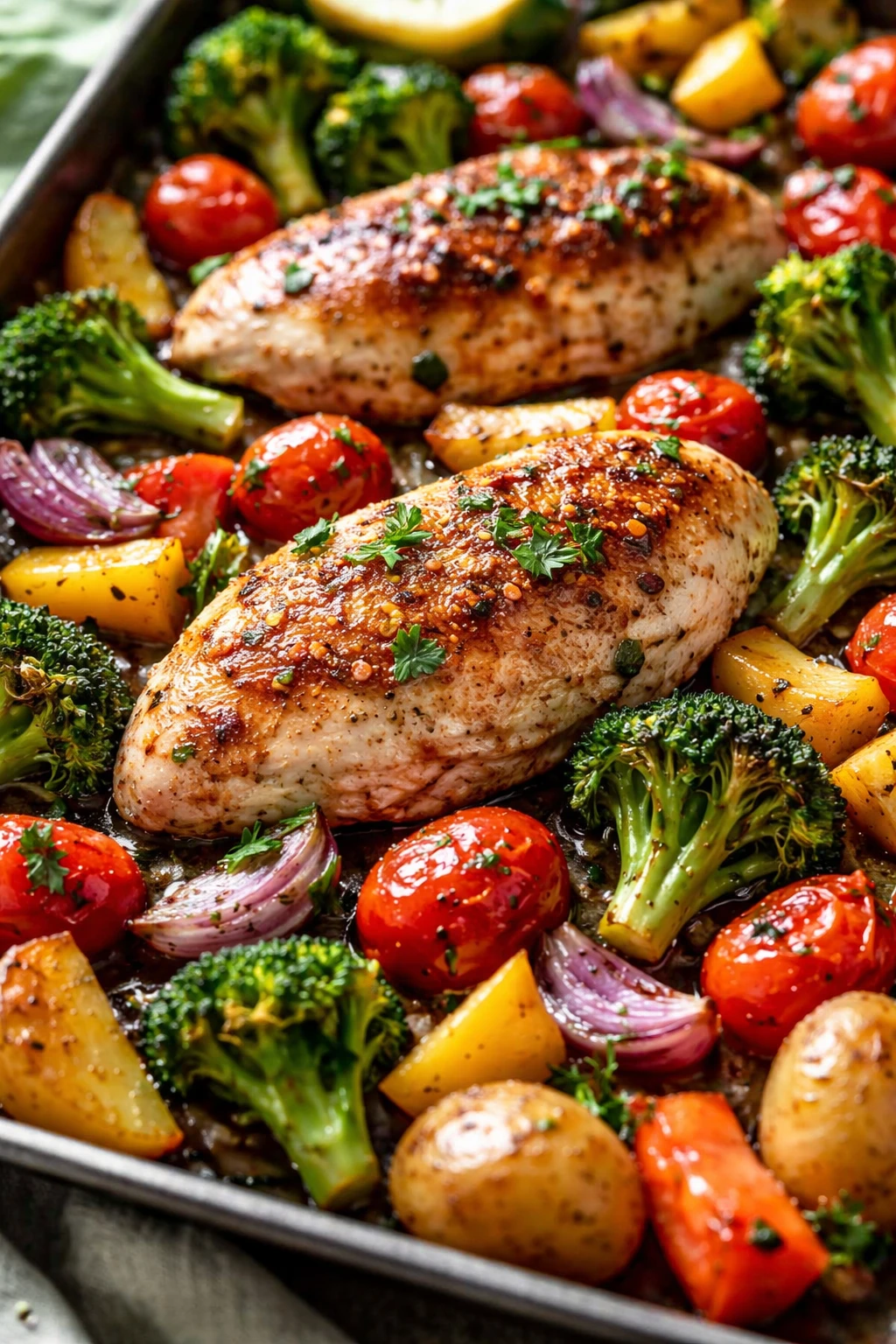
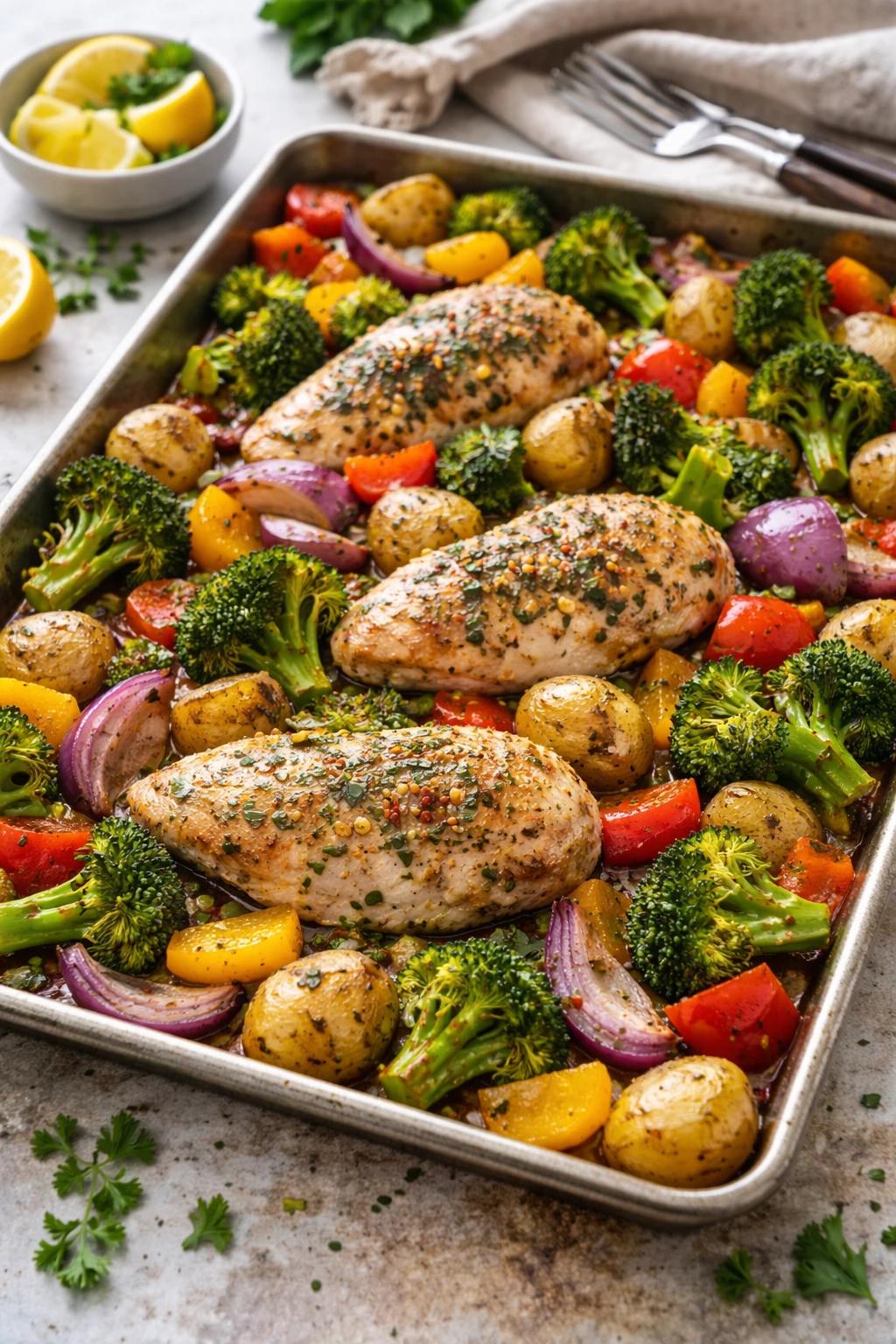
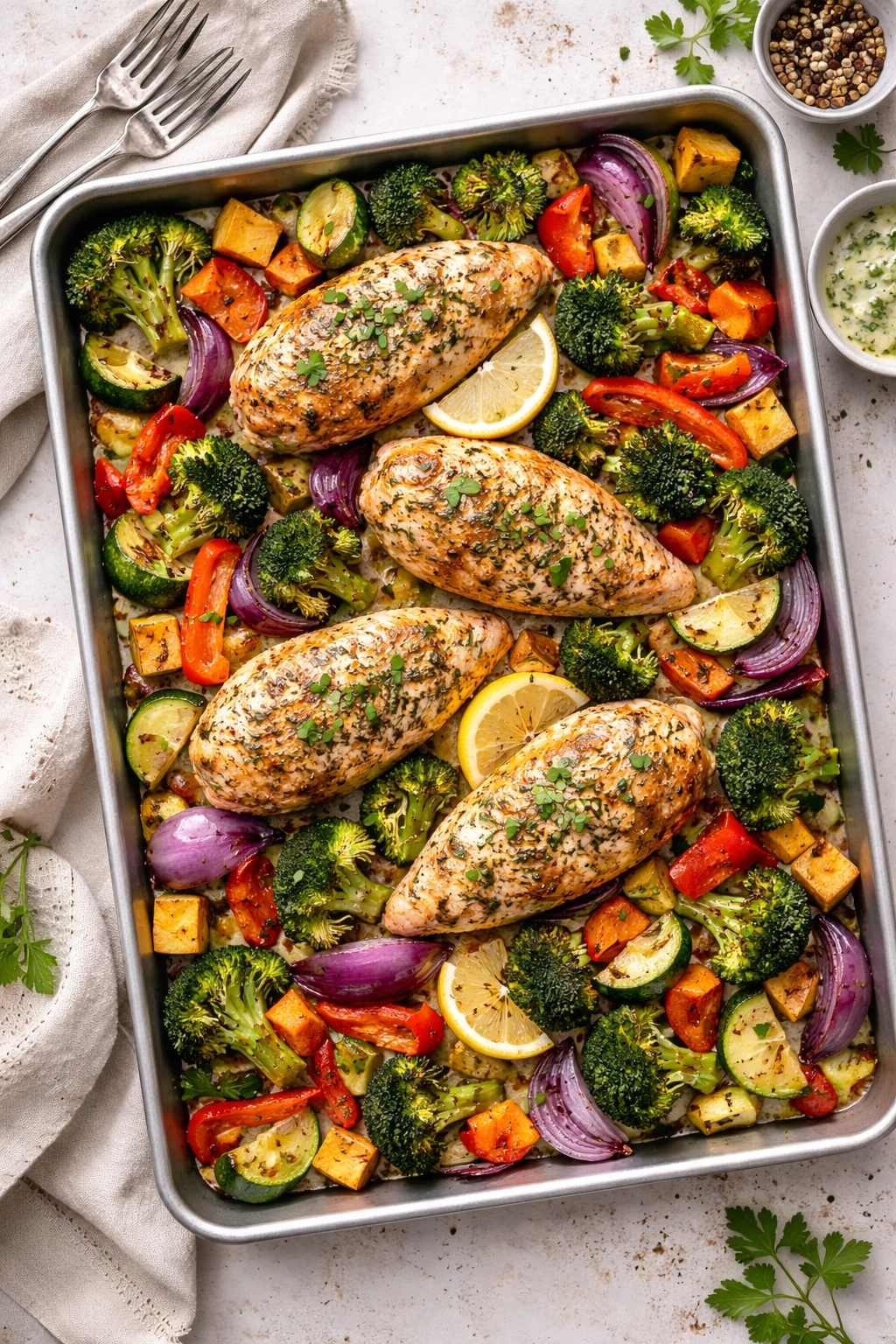
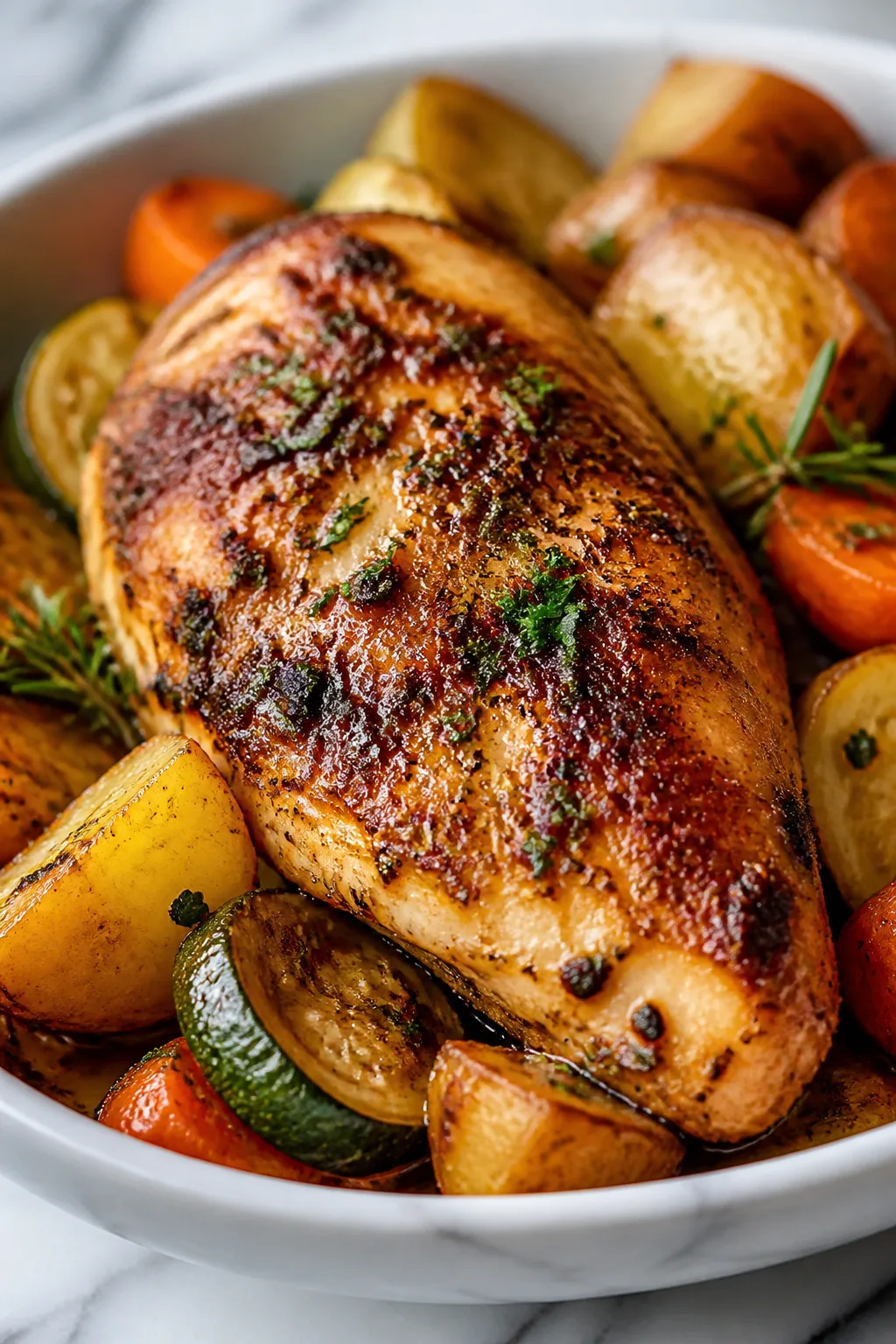
This sheet pan chicken dinner is a lifesaver on hectic weeknights. Roasting chicken and vibrant veggies together makes a super flavorful, protein-packed meal that’s ready in under an hour. Great for family dinners or meal prep!
Introduction
I first stumbled upon sheet pan dinners when I was desperately trying to get a wholesome meal on the table during my busiest week. This sheet pan chicken with roasted veggies quickly became a favorite in my house because it’s just so simple yet packed with flavor. What I love about this recipe is how roasting everything together lets the flavors really mingle — the chicken stays juicy and the veggies caramelize beautifully. One trick I learned is to make sure you don’t overcrowd the pan; giving space helps everything roast evenly and crisp up just right. Plus, tossing the veggies in smoked paprika and garlic powder adds a little smoky depth that makes this dish special. It’s a perfect weeknight meal that feels a bit fancy but requires very little effort. You get vibrant colors on your plate and a comforting, satisfying dinner without spending hours in the kitchen. I think you’ll love how easy it is to customize with your favorite veggies too. This dinner always feels like a little win after a long day!
How To Do It
Step 1
Preheat your oven to 425°F (220°C). This high temperature helps to get a nice roast on the chicken and veggies, locking in juices and bringing out their natural sweetness. Line a large baking sheet with parchment paper or foil for easy cleanup. Make sure the oven is fully heated before you put the pan in; otherwise, the cooking time and texture can be off.
⏱ Time: 10 minutes
✓ Doneness: Oven reaches 425°F, hot air circulating
Step 2
Pat the chicken breasts dry with paper towels. This step is crucial because removing excess moisture helps the chicken brown better rather than steam. Season both sides generously with salt, pepper, smoked paprika, and garlic powder. The paprika adds a smoky warmth, while the garlic powder gives depth without overpowering. Set aside while you prep the veggies.
⏱ Time: 5 minutes
✓ Doneness: Chicken is evenly coated with seasoning and looks dry on the surface
Step 3
In a large bowl, toss the baby carrots, bell peppers, zucchini slices, and red onion wedges with olive oil, a pinch of salt, and pepper. The olive oil helps the veggies roast evenly and develop those delicious browned edges. Don’t skimp on the oil here; it’s key to prevent sticking and add flavor.
⏱ Time: 5 minutes
✓ Doneness: Veggies are evenly coated and glistening with oil
Step 4
Spread the veggies out on the baking sheet in a single layer, leaving room for the chicken breasts. Overcrowding will cause steaming instead of roasting, which means soggy veggies. Arrange the chicken on the pan so there’s space between each piece for even heat circulation.
⏱ Time: 5 minutes
✓ Doneness: Ingredients are spaced out and not piled on top of each other
Step 5
Place the sheet pan in the preheated oven and roast for about 20 minutes. Halfway through, flip the chicken breasts to ensure even cooking and stir the veggies gently. This flipping helps develop a golden crust on the chicken and ensures the veggies roast evenly on all sides.
⏱ Time: 20 minutes
✓ Doneness: Chicken has golden brown edges and veggies start caramelizing
Step 6
Check the internal temperature of the chicken with a meat thermometer; it should read 165°F (74°C) for safe consumption. If it’s not quite there, return to the oven and check every 3–5 minutes. The juices should run clear when pierced. Avoid overcooking to keep the chicken juicy and tender.
⏱ Time: 5 minutes
✓ Doneness: Thermometer reads 165°F, juices run clear
Step 7
Once cooked, remove the pan from the oven and let the chicken rest for 5 minutes. Resting allows the juices to redistribute, making the chicken more tender and moist. Meanwhile, give the veggies a final toss to coat them in the pan juices and olive oil, enhancing their flavor.
⏱ Time: 5 minutes
✓ Doneness: Chicken feels slightly firm but not tough, veggies glisten
Step 8
Transfer the chicken and veggies to plates or a serving platter. Sprinkle freshly chopped parsley on top for a pop of color and fresh aroma. This simple garnish adds brightness without overpowering the smoky, roasted flavors.
⏱ Time: 2 minutes
✓ Doneness: Dish looks vibrant and inviting
Step 9
Serve immediately while warm. This dish pairs well with a simple green salad or crusty bread to soak up any pan juices. Enjoy the balance of tender chicken and crisp-tender veggies for a wholesome, satisfying meal.
⏱ Time: Serve right away
✓ Doneness: Dish is warm and fresh, ready to eat
Pro Tips
Don’t overcrowd the pan when roasting.
Leaving space between the chicken and veggies allows hot air to circulate freely, promoting even roasting and caramelization. Overcrowding traps steam, resulting in soggy veggies and less flavorful chicken. This simple step makes a big difference in texture.
Pat chicken dry before seasoning.
Removing surface moisture helps the seasoning stick better and allows the chicken to brown properly. Wet chicken tends to steam instead of roast, which can lead to a rubbery texture and dull flavor. It’s a small but crucial detail.
Flip chicken halfway through roasting.
Turning the chicken ensures both sides develop a golden crust and cook evenly. Skipping this can lead to one side drying out or cooking unevenly. Flipping also helps the chicken retain juiciness by evenly distributing heat.
Use a meat thermometer to check doneness.
Relying on temperature rather than guesswork prevents overcooking, which dries out chicken breasts. A thermometer ensures the chicken is safe to eat (165°F) but still juicy and tender, improving the overall eating experience.
Toss veggies in olive oil and seasoning thoroughly.
Even coating ensures all pieces roast evenly and develop flavor. Oil helps conduct heat and prevents sticking, while seasoning enhances taste. Skimping on oil or uneven distribution can result in dry, bland veggies.
Let chicken rest after roasting.
Resting allows juices to redistribute throughout the meat, making it more tender and moist. Cutting into chicken immediately can cause juices to run out, resulting in drier meat and less flavor.
Use parchment paper or foil on your baking sheet.
This makes cleanup a breeze and prevents sticking without adding extra oil. It also protects your pan from burnt bits, saving you time and effort post-meal.
Common Mistakes to Avoid
Overcrowding the baking sheet
Why it happens Many cooks try to fit all ingredients on one pan without spacing, thinking it saves time. It’s easy to overlook how this affects heat circulation.
Fix Use a larger baking sheet or roast veggies in batches. Make sure there’s at least half an inch of space between pieces to allow hot air to circulate, ensuring proper roasting and crispy edges.
Skipping the step of patting chicken dry
Why it happens It’s tempting to skip drying to save time, but wet chicken won’t brown well.
Fix Always use paper towels to thoroughly dry chicken before seasoning. This step is key to getting a flavorful crust and juicy interior.
Not flipping chicken halfway
Why it happens Sometimes cooks forget or think one side will cook through evenly without turning.
Fix Set a timer to remind yourself to flip the chicken halfway through roasting. This ensures both sides brown evenly and cook properly.
Using too low oven temperature
Why it happens Lower temperatures are common for baking but not ideal for roasting chicken and veggies.
Fix Always preheat your oven to at least 425°F for roasting. This high heat creates the Maillard reaction that develops flavor and texture.
Not letting chicken rest after cooking
Why it happens Eagerness to eat can make cooks cut into the chicken immediately.
Fix Rest the chicken for 5 minutes after roasting. This step helps retain juices and results in tender, juicy meat.
Variations
Add Sweet Potatoes and Brussels Sprouts
Swap in cubed sweet potatoes and halved Brussels sprouts for a fall-inspired twist. These veggies roast beautifully alongside chicken and add sweetness and a slight crunch. Expect a heartier texture and richer flavor profile.
Note: Sweet potatoes take slightly longer to roast, so cut them small and consider parboiling briefly or roasting veggies separately if needed.
Mediterranean Style with Olives and Feta
Add olives and sprinkle crumbled feta over the chicken and veggies after roasting for a Mediterranean flair. Use oregano and lemon zest in the seasoning to brighten flavors. The feta adds a creamy salty punch.
Note: Add feta only after cooking to prevent melting, and toss olives with veggies before roasting to infuse flavor.
Spicy Sheet Pan Chicken with Chili Flakes
Mix chili flakes or cayenne pepper into the seasoning blend for a spicy kick. This variation works great if you like bold, warming flavors. Balance heat with a squeeze of fresh lime before serving.
Note: Adjust chili quantity to taste; start small to avoid overpowering the dish.
Herb-Infused with Rosemary and Thyme
Add fresh rosemary and thyme sprigs to the pan before roasting. These herbs infuse the chicken and veggies with an aromatic earthiness that elevates the whole dish. It’s perfect for a cozy dinner.
Note: Tuck herbs under chicken breasts and among veggies for maximum flavor release.
Use Bone-In Chicken Thighs for Juicier Meat
Swap boneless breasts for bone-in thighs for a more tender and flavorful result. Thighs stay juicy longer and have richer taste, but may require 5-10 extra minutes roasting time.
Note: Monitor internal temperature closely; thighs are safe at 165°F but may take longer to reach it.
Nutrition
Per Serving:
Nutritional values are estimates and may vary based on specific ingredients used.
Storage & Tips
Room Temperature
This dish can safely sit at room temperature for up to 2 hours if covered loosely with foil or a clean kitchen towel. Beyond that, bacteria growth increases, so refrigerate leftovers promptly.
Refrigerator
Store leftovers in an airtight container for up to 4 days. The chicken may firm up slightly when cold, so reheat gently. Veggies might lose some crispness but still taste great warmed.
Freezer
Freeze cooked chicken and veggies in a sealed container or heavy-duty freezer bag for up to 3 months. Wrap tightly to avoid freezer burn. Thaw overnight in the fridge before reheating.
Reheating
Reheat in a 350°F oven for 10-15 minutes until warmed through. Alternatively, microwave on medium power in short bursts, adding a splash of water or broth to keep chicken moist. Avoid overheating to prevent drying out.
Make Ahead
You can prep and season the chicken and veggies a day ahead, storing them separately in the fridge. Assemble on the sheet pan right before roasting for fresher texture and flavor.
FAQ
Can I use frozen chicken breasts for this recipe?
It’s best to use fresh or fully thawed chicken breasts for even cooking. Frozen chicken releases extra water when cooked, which can prevent proper browning and make the veggies soggy. If using frozen, thaw completely in the fridge overnight before roasting.
What if I don’t have smoked paprika?
You can substitute regular paprika or a mix of paprika and a tiny pinch of cumin for some smokiness. While smoked paprika adds a unique depth, regular paprika will still give nice color and mild flavor.
How do I know when the veggies are done?
The veggies should be tender when pierced with a fork but still hold their shape with some slight caramelized edges. Overcooking will make them mushy, so check around 20-25 minutes and adjust as needed.
Can I use other vegetables?
Absolutely! This recipe is very flexible. Try broccoli florets, green beans, or asparagus, but adjust roasting times since some veggies cook faster or slower. Cut veggies into uniform sizes for even cooking.
Is it okay to use bone-in chicken thighs instead of breasts?
Yes, bone-in thighs add more flavor and stay juicy longer. They may need 5-10 extra minutes in the oven and take longer to reach safe internal temperature, so use a meat thermometer to check.
Can I marinate the chicken ahead of time?
You can marinate the chicken for up to 2 hours before roasting to boost flavor. However, avoid acidic marinades for too long as they can change the chicken’s texture. For best results, season with dry spices as in the recipe.
How do I prevent the chicken from drying out?
Patting the chicken dry, not overcooking, and letting it rest after roasting are key. Using a meat thermometer ensures you pull it out at the perfect time when it’s cooked through but still juicy.
What side dishes go well with this meal?
This sheet pan chicken pairs nicely with a simple green salad, quinoa, or crusty bread to soak up the pan juices. You can also add a light yogurt or tzatziki sauce for extra creaminess.
Final Thoughts
Give this sheet pan chicken with veggies a try for your next busy night — it’s easy, tasty, and sure to become a family favorite. I’d love to hear how it turns out for you!