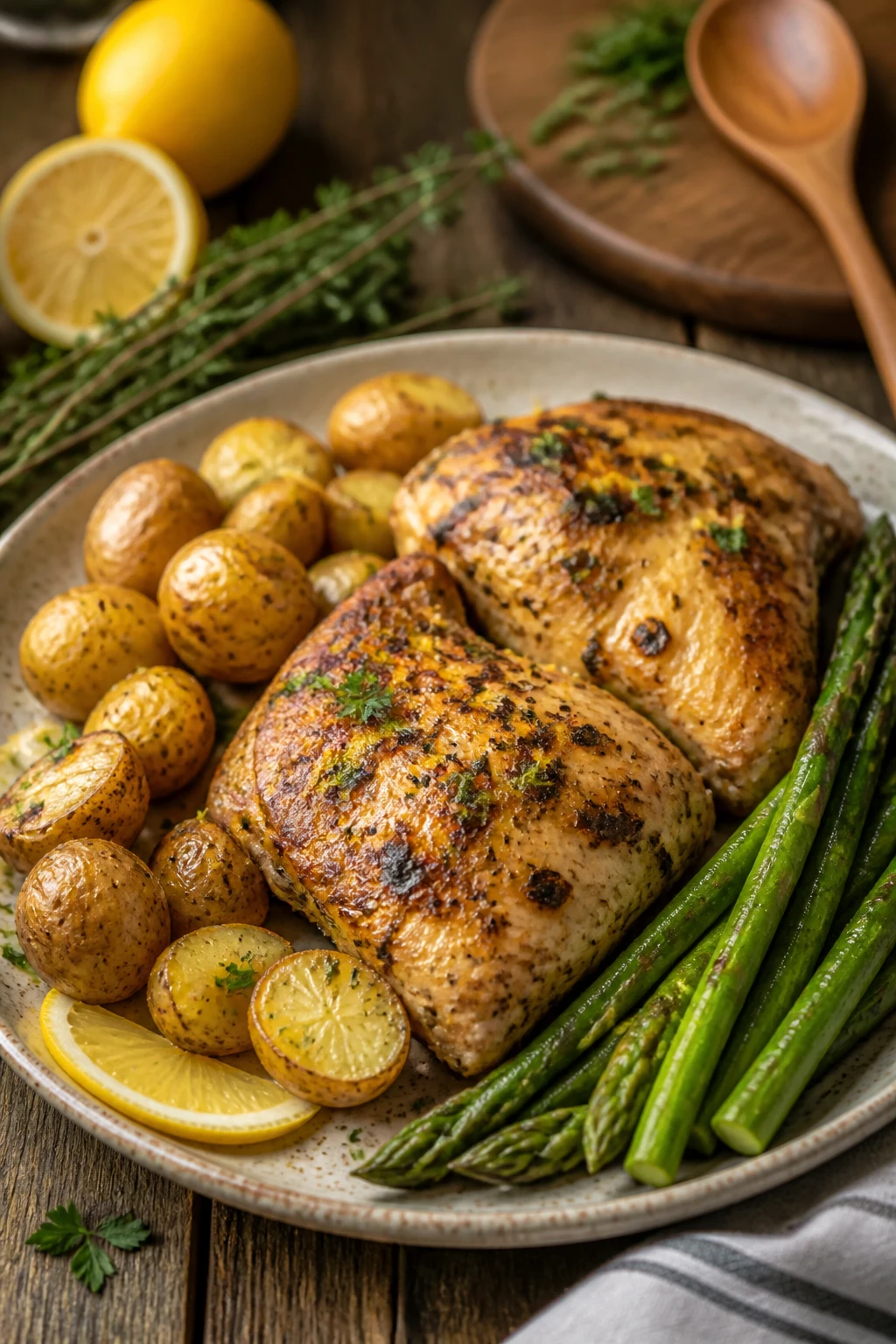
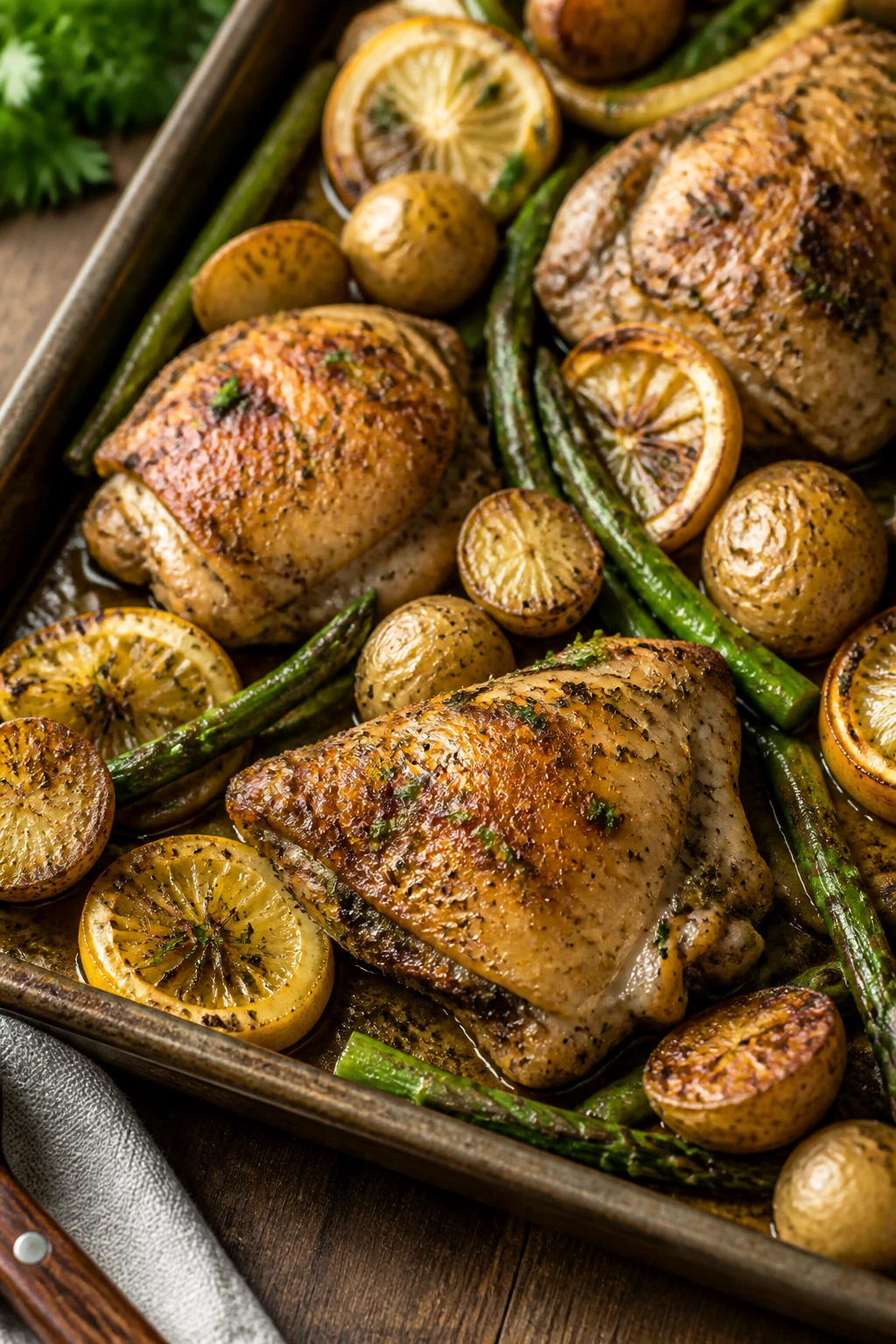
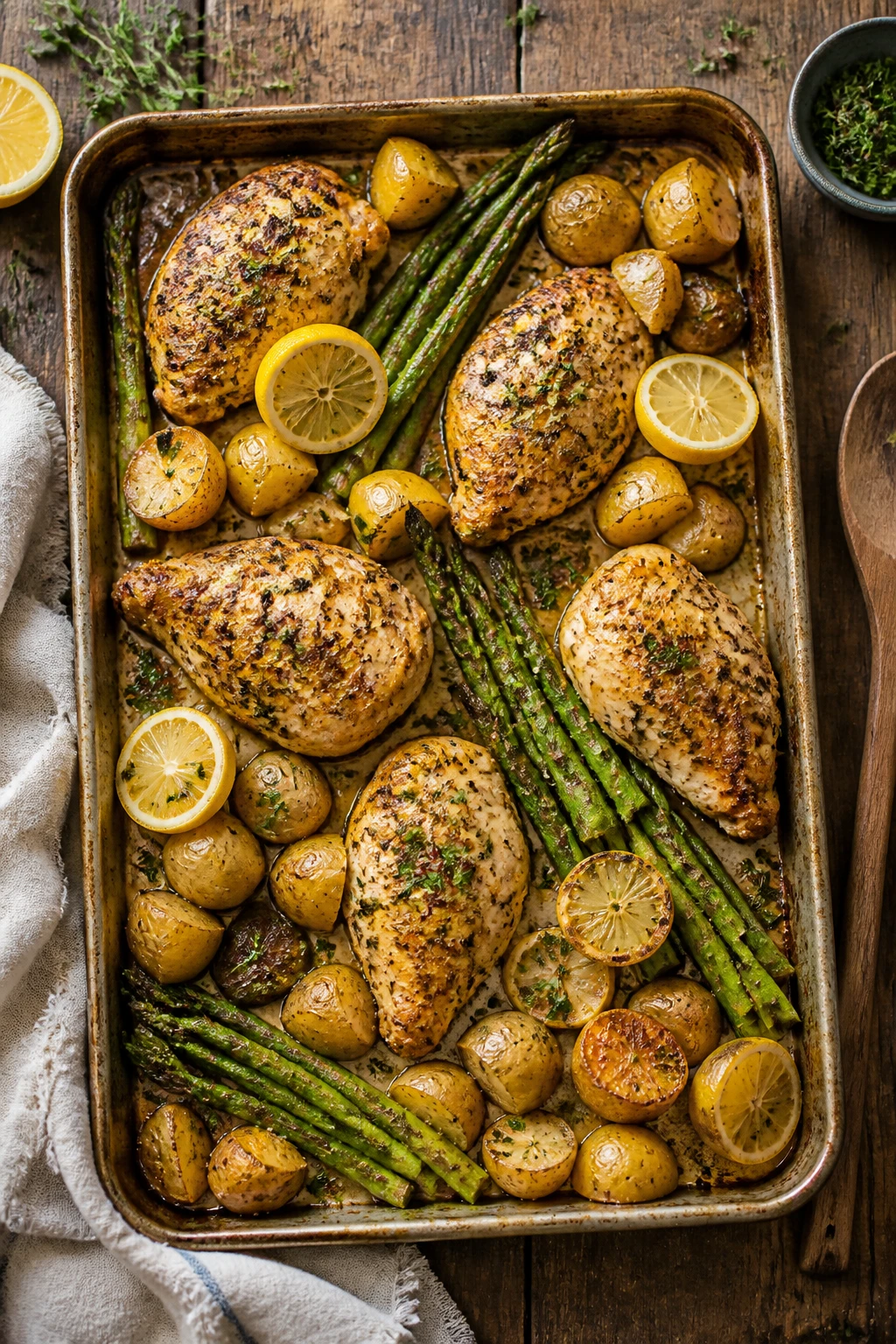
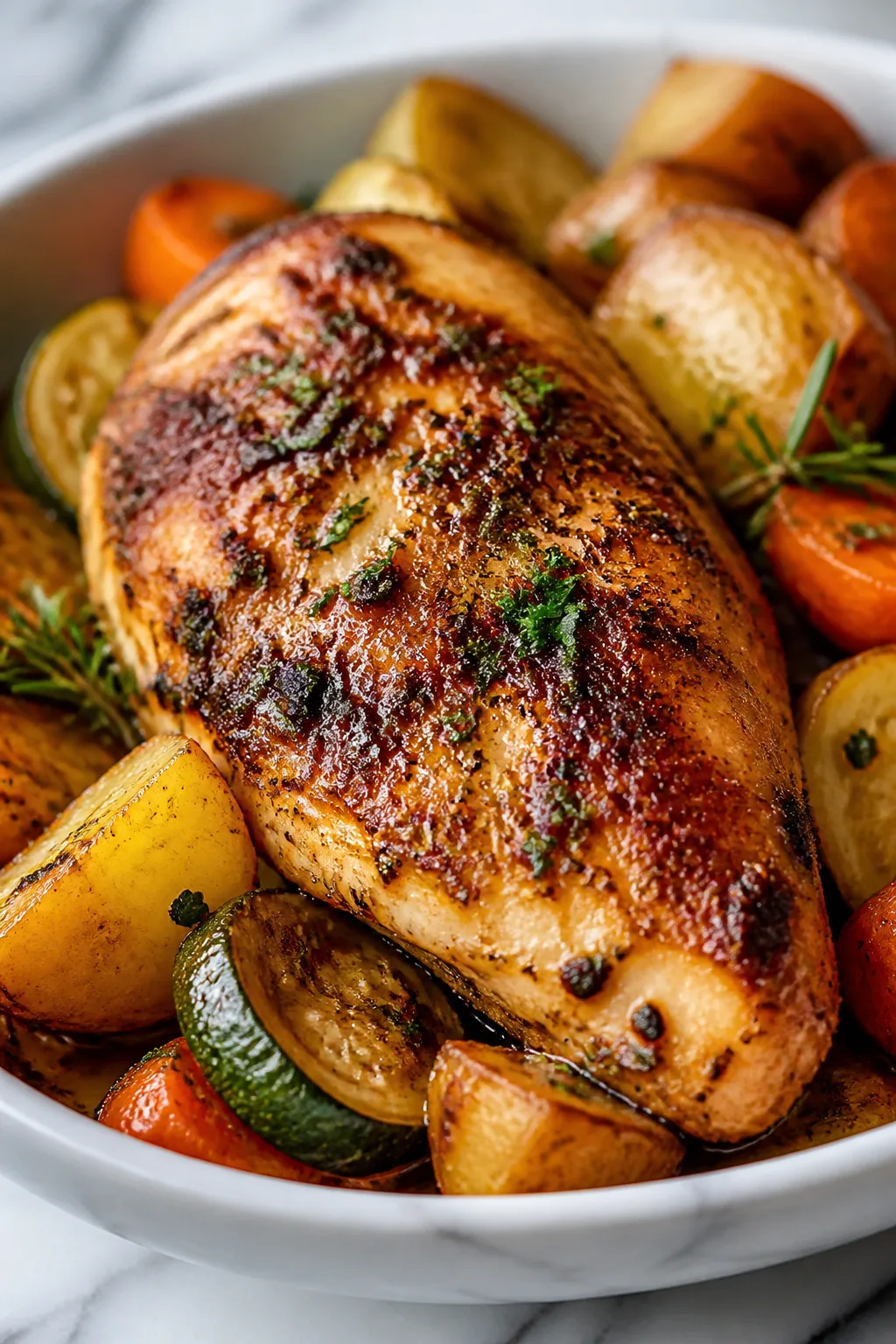
This sheet pan dinner is a total lifesaver when you want dinner on the table fast. Juicy chicken with bright lemon zest, tender potatoes, and crisp asparagus all roast together for an easy, fresh meal. Great for busy weeknights or relaxed weekends!
Introduction
I first made this lemon herb chicken sheet pan dinner on a busy weeknight when I barely had time to cook. I wanted something quick but fresh and satisfying. Roasting everything together on one pan means minimal cleanup and maximum flavor. What makes this recipe stand out is the fresh lemon zest and juice that really brighten the whole dish, plus the mix of tender potatoes and crisp asparagus that roast alongside the juicy chicken breasts. I’ve tried versions without the lemon, and honestly, it just doesn’t have the same zing. A little garlic and Italian herbs add just the right depth without overpowering the bright citrus notes. The trick I learned is to toss the potatoes in olive oil and herbs first and give them a head start in the oven before adding the chicken and asparagus. This ensures the potatoes get perfectly tender and golden while the chicken stays juicy and the asparagus crisp. The finished dish is colorful, fresh, and so satisfying — it feels like a special meal but comes together in under an hour. I love serving this with a simple green salad or crusty bread when I want a fuss-free dinner that still impresses. Plus, leftovers reheat well, making it a great option for meal prep too!
How To Do It
Step 1
Preheat your oven to 425°F (220°C). This high temperature is key for getting a nice roast on the potatoes and chicken. Line a large sheet pan with parchment paper or lightly grease it to prevent sticking. Toss the halved new potatoes with 1 tablespoon of olive oil, half the minced garlic, salt, pepper, and 1 teaspoon of Italian herbs. Spread them out in a single layer on the sheet pan. Starting the potatoes first gives them a head start to become tender and golden without overcooking the chicken later. Avoid crowding the pan to ensure even roasting.
⏱ Time: 10 minutes
✓ Doneness: Potatoes start to turn golden and feel slightly tender when pierced with a fork
Step 2
After the potatoes have roasted for 10 minutes, remove the pan from the oven. Arrange the chicken breasts on the pan, nestling them among the potatoes. Drizzle the remaining olive oil over the chicken and sprinkle with salt, pepper, the rest of the garlic, lemon zest, juice, and the remaining Italian herbs. Toss the trimmed asparagus with a little olive oil and season lightly with salt and pepper, then add them to the pan around the chicken and potatoes. The lemon juice adds bright acidity that keeps the chicken juicy and flavorful while the herbs infuse the veggies.
⏱ Time: 5 minutes
✓ Doneness: Chicken breasts coated evenly with lemon and herb mixture; asparagus looks glossy but not soggy
Step 3
Return the sheet pan to the oven and roast everything together for about 20 minutes, or until the chicken reaches an internal temperature of 165°F (74°C) and the asparagus is tender-crisp. Roasting all together allows the flavors to mingle and the natural juices from the chicken to keep the potatoes and asparagus moist. Keep an eye on the asparagus so it doesn’t become mushy — it should still have a little snap when done.
⏱ Time: 20 minutes
✓ Doneness: Chicken is cooked through and juices run clear; asparagus is bright green and tender-crisp
Step 4
Remove the sheet pan from the oven and let the chicken rest for 5 minutes before slicing. This rest period helps the juices redistribute inside the meat, keeping it moist and tender. Meanwhile, you can toss the potatoes and asparagus gently to coat them in the flavorful pan juices. Serving everything warm with a squeeze of extra lemon juice on top really brings the dish to life.
⏱ Time: 5 minutes
✓ Doneness: Chicken feels firm but springy; potatoes and asparagus glisten with pan juices
Step 5
For extra flavor, sprinkle some fresh chopped parsley or basil over the finished dish before serving. This adds a fresh herbal note and a pop of color that makes the meal look even more inviting. I like to serve this with a simple side like a green salad or crusty bread to soak up any leftover juices on the plate.
⏱ Time: 2 minutes
✓ Doneness: Fresh herbs look vibrant and evenly distributed
Step 6
If you want to prep ahead, you can toss the potatoes with oil and herbs and store them in the fridge overnight. Then add the chicken and asparagus fresh on cooking day. This cuts down on prep time and keeps the veggies fresh. Just be sure to bring the chicken to room temperature before roasting for even cooking.
⏱ Time: Varies
✓ Doneness: Potatoes coated and stored in airtight container without discoloration
Step 7
To check doneness precisely, use a meat thermometer inserted into the thickest part of the chicken breast. This ensures the chicken is safely cooked but not overdone, which can make it dry. If you don’t have a thermometer, cut into the thickest part to check that the juices run clear and the meat is opaque.
⏱ Time: Varies
✓ Doneness: Thermometer reads 165°F (74°C) or no pink juices when sliced
Step 8
Avoid overcrowding the pan by using a large enough sheet pan or roasting in batches if necessary. Overcrowding traps steam and prevents crisping, leading to soggy potatoes and less roasted flavor. Spread everything in a single layer for best results.
⏱ Time: Pre-cooking prep
✓ Doneness: Ingredients laid out with space between pieces
Step 9
For a little extra crispness on the potatoes, you can broil the sheet pan for 2-3 minutes at the end of cooking. Just watch carefully so nothing burns. This step is optional but adds a lovely golden finish and texture contrast to the tender insides.
⏱ Time: 2-3 minutes
✓ Doneness: Potatoes have golden, slightly crispy edges without charring
Pro Tips
Pat the chicken dry before seasoning to get a better roast.
Removing excess moisture from the chicken surface allows it to brown properly during roasting. Moisture creates steam which inhibits browning and can make the chicken soggy rather than crisp. A dry surface encourages the Maillard reaction, giving you that beautiful golden color and deeper flavor.
Use a meat thermometer to avoid overcooking.
Chicken breasts can dry out quickly if overcooked. A thermometer lets you pull the chicken at exactly 165°F (74°C), ensuring safety while keeping it juicy. Guesswork often leads to either undercooked or dry meat, so this tool is a game-changer for consistent results.
Give potatoes a head start in the oven before adding other ingredients.
Potatoes take longer to cook through than chicken or asparagus. Roasting them alone for 10 minutes helps them soften and get golden before the faster-cooking ingredients join. This prevents uneven cooking where potatoes remain hard while chicken is done.
Trim woody ends off asparagus and toss with oil just before roasting.
Woody ends are tough and unpleasant to eat. Removing them ensures tender stalks. Tossing asparagus in oil right before roasting helps it crisp up nicely and roast evenly, preserving its bright green color and snap.
Use fresh lemon zest and juice instead of bottled lemon juice.
Fresh lemon zest contains essential oils that add vibrant, aromatic notes missing in bottled juice. Fresh juice has brightness and complexity that enhances the chicken and vegetables, balancing richness and adding freshness.
Don’t overcrowd the sheet pan to allow proper roasting.
Crowding traps steam and prevents ingredients from crisping up. Spreading everything in a single layer exposes surfaces to hot air, encouraging browning and caramelization for better texture and flavor.
Let the chicken rest after roasting before slicing.
Resting allows juices to redistribute inside the meat, preventing them from spilling out when cut. This keeps the chicken moist and tender, improving texture and flavor.
Common Mistakes to Avoid
Skipping the head start for potatoes
Why it happens Many cooks underestimate how much longer potatoes take to roast compared to chicken and asparagus, leading them to add everything at once.
Fix Start roasting the potatoes alone for 10 minutes before adding the chicken and asparagus. This ensures potatoes become tender and golden without overcooking the other ingredients.
Overcrowding the sheet pan
Why it happens Trying to fit too much on one pan to save time or dishes, which causes steaming instead of roasting.
Fix Use a large enough pan or roast in batches. Make sure ingredients have space around them so hot air can circulate and produce crisp, caramelized surfaces.
Not drying chicken before seasoning
Why it happens Skipping this step saves time or is overlooked, but it leads to soggy skinless chicken.
Fix Pat chicken breasts dry with paper towels before applying oil and seasoning. This removes excess moisture and promotes browning.
Adding asparagus too early
Why it happens Asparagus cooks quickly, so adding it with potatoes can make it mushy and dull in color.
Fix Add asparagus during the last 10 minutes of roasting to keep it tender-crisp and bright green.
Using bottled lemon juice instead of fresh
Why it happens Convenience or habit leads cooks to use bottled juice, which lacks zest and freshness.
Fix Always use fresh lemon zest and juice for brighter, more complex flavor and aroma.
Variations
Garlic Butter Lemon Herb Chicken
Swap olive oil for melted garlic butter to add richness. Toss the potatoes and asparagus in the garlic butter before roasting, then baste the chicken with it during cooking. Expect a deeper, buttery flavor and a slight crispiness from the butter’s milk solids.
Note: Butter has a lower smoke point than olive oil, so watch the oven temperature closely to avoid burning. A slightly lower oven temp (400°F) can help.
Spicy Lemon Herb Chicken
Add crushed red pepper flakes or cayenne to the herb mixture for a gentle heat kick. This variation pairs well with a cooling side like cucumber salad. The spice elevates the fresh lemon notes and makes the dish more vibrant.
Note: Be careful with spice amounts; start small to avoid overpowering the delicate lemon flavor.
Mediterranean Style with Olives and Feta
Add halved kalamata olives and crumbled feta cheese over the finished chicken and veggies. The briny olives and creamy feta complement the lemon herb seasoning beautifully, giving a Mediterranean twist.
Note: Add olives before roasting but sprinkle feta only after cooking to prevent melting.
Sheet Pan Chicken with Sweet Potatoes and Broccoli
Swap new potatoes for cubed sweet potatoes and asparagus for broccoli florets. This adds a sweet, earthy flavor and a different texture. Sweet potatoes take a bit longer to roast, so adjust timing accordingly.
Note: Cut sweet potatoes into smaller cubes to match cooking time of chicken and broccoli.
Honey Mustard Lemon Chicken
Mix lemon juice with honey and Dijon mustard to create a tangy glaze for the chicken. Brush it on before roasting for a sticky, flavorful crust. This variation adds sweetness balanced with lemon’s acidity.
Note: Honey can brown quickly; watch the chicken closely to avoid burning.
Nutrition
Per Serving:
Nutritional values are estimates and may vary based on specific ingredients used.
Storage & Tips
Room Temperature
You can keep this dish covered at room temperature for up to 2 hours safely. Beyond that, bacteria growth increases. Use foil or an airtight cover to protect from contaminants but refrigerate soon after.
Refrigerator
Store leftovers in an airtight container for up to 3 days. The chicken may firm up and the asparagus soften when cold. Reheat gently to preserve texture, or enjoy cold in salads.
Freezer
Freeze cooked chicken, potatoes, and asparagus separately in airtight containers or heavy-duty freezer bags for up to 2 months. Wrap tightly to prevent freezer burn. Thaw overnight in the fridge before reheating.
Reheating
Reheat gently in a 350°F oven for 10-15 minutes or microwave on medium power with a splash of water or lemon juice to keep chicken moist. Avoid overheating to prevent drying out.
Make Ahead
You can prep the potatoes tossed in oil and herbs 1-2 days ahead and store in the fridge. Assemble the chicken and asparagus fresh before roasting. This speeds up cooking day prep and keeps veggies fresh.
FAQ
Can I use chicken thighs instead of breasts?
Absolutely! Boneless, skinless thighs work well and stay juicy due to higher fat content. They may take a few extra minutes to cook through, so check internal temperature to ensure doneness. The flavor will be richer and the texture a bit more tender.
What if I don’t have new potatoes?
You can substitute small red potatoes or fingerlings, which have a similar waxy texture and roast nicely. Avoid starchy potatoes like russets unless cut smaller and roasted longer, as they can become mushy or fall apart.
How do I prevent asparagus from becoming mushy?
Add asparagus to the sheet pan during the last 10 minutes of roasting. This short cooking time preserves its bright color and crisp-tender texture. Also, trim woody ends before cooking to avoid toughness.
Can I make this recipe gluten-free?
Yes, this recipe is naturally gluten-free as it contains no wheat or gluten ingredients. Just ensure that your Italian herbs and any additional seasonings are gluten-free, which most are.
Is it okay to use bottled lemon juice instead of fresh?
While you can, fresh lemon zest and juice provide much brighter, fresher flavor and aroma. Bottled juice tends to be flat and sometimes bitter. For best results, always use fresh lemons when possible.
How do I reheat leftovers without drying out the chicken?
Reheat gently in the oven at 350°F with a splash of water or lemon juice to create steam. Cover loosely with foil to keep moisture in. Avoid high heat or microwave reheating at full power, which can dry the chicken quickly.
Can I add other vegetables to this sheet pan dinner?
Definitely! Vegetables like bell peppers, carrots, or zucchini work well. Just consider their roasting times and add them accordingly so everything finishes cooking together. Cut veggies into similar-sized pieces for even cooking.
What’s the best way to store leftovers?
Store leftovers in airtight containers in the fridge for up to 3 days. Separate components if possible to preserve texture, especially asparagus. For longer storage, freeze leftovers in portions and thaw before reheating.
Final Thoughts
I hope you enjoy making this lemon herb chicken sheet pan dinner as much as I do. It’s a simple, fresh, and satisfying meal that’s perfect any night of the week. Let me know how it turns out!